
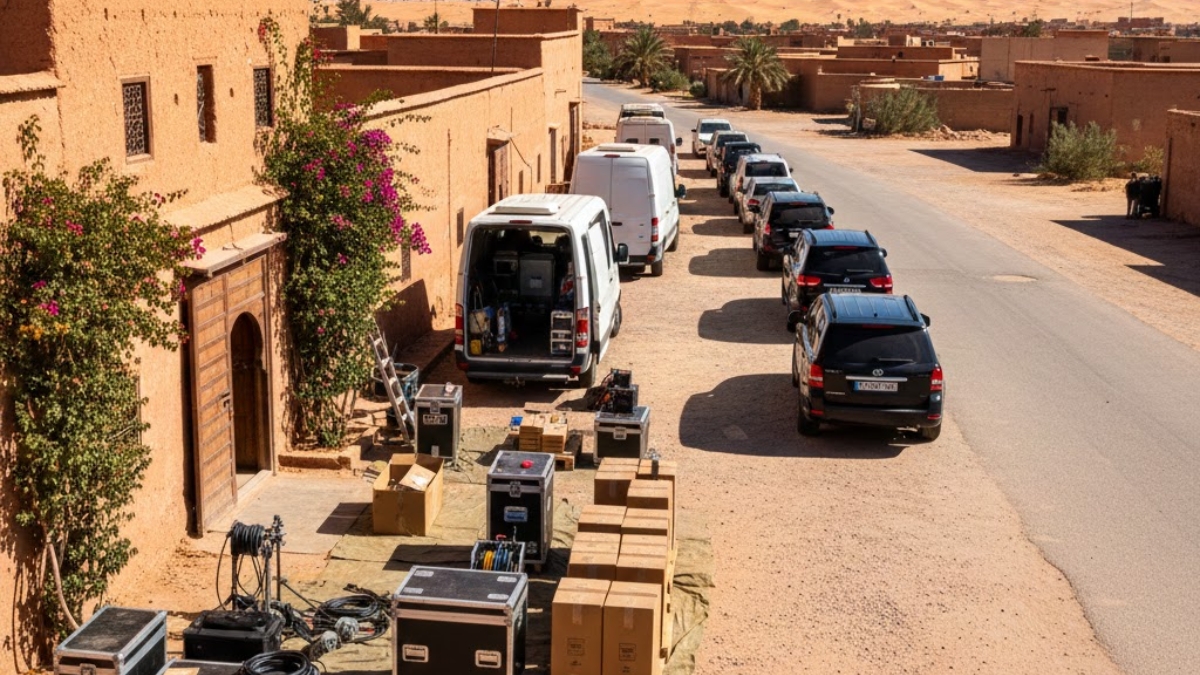
Productions shooting in Marrakech, whether commercials, films, documentaries, or digital campaigns, need more than just a fleet of cars. A successful operation requires well-organized logistics, reliable vehicles, permit awareness, scheduling precision, and local expertise. Marrakech’s mix of medina streets, desert outskirts, and fast access to Ouarzazate or Agafay makes strategic transport planning essential.
This guide breaks down everything production teams need to know about car rental in Marrakech, from permits and multiple vehicles to scheduling and crew coordination.
Table of Contents
- Why Specialized Car Rental Matters for Film Crews
- Quick Overview: What Productions Need in Marrakech
- Permits You Should Know About
- Multi-Car Fleet Planning & Types
- Scheduling Vehicles For Shoots & Transfers
- Airport and Crew Arrival Logistics
- Medina & Historic Site Accessibility
- Fuel & Service Planning for Shoot Days
- Vehicle Support and Local Driver Options
- Common Mistakes Productions Make
- Local Partnerships & Production Support
- FAQs About Car Rental for Film Crews in Marrakech
- Conclusion
Why Specialized Car Rental Matters for Film Crews
Film and media productions operate on tight schedules, high stakes, and unpredictable needs. Unlike standard tourist rentals, production teams must balance:
- Multiple vehicles arriving and departing together
- Crew transport, equipment loads, and pickups from various sites
- Driver coordination across locations
- Permits for filming inside restricted areas
Regular rental reservations often lack the flexibility and coordination capacity required by professional shoots. This is where specialized services like MarHire in Marrakech become essential partners.
Quick Overview: What Productions Need in Marrakech
Production transport needs commonly include:
- Vehicle fleets of mixed types
- Long-term rentals with flexible schedules
- Airport transfers for staggered arrivals
- Crew vans with luggage/equipment capacity
- Clear coordination with drivers and dispatch
- Fuel plan with reimbursements or corporate billing
Before we dive into specifics, it helps to understand the basics of permits, particularly for urban or historic areas where filming usually requires approval.
Permits You Should Know About
If your production involves any public filming, drones, or support vehicles in controlled zones like the medina or Jemaa el-Fna, you may need permits from local authorities.
Official information on audiovisual filming permissions in Morocco, including general requirements, licensing structures, and categories, is detailed in guidance provided by the Moroccan Cinema Centre (Centre Cinématographique Marocain).
https://ccm.ma/
The CCM regulates film production-related permissions, including traffic access and city coordination for shooting in cultural and heritage areas.
Key permit considerations for transport:
- Municipality approval for parking and vehicle staging
- Permits for camera vehicles in historic areas
- Approvals for traffic control or temporary closures
- Notifications for drone support vehicles
Although car rentals themselves generally don’t require a permit, film-specific transport situations do when vehicles are part of on-camera shots or parked as part of set needs.
Multi-Car Fleet Planning & Types
Film productions rarely need only one vehicle, logistics often require a fleet that serves multiple functions.
1. Crew Vans & Minibuses
Essential for moving talent and large groups without dismantling equipment.
2. Equipment Transport Vehicles
Cargo vans or panel trucks handle lighting, cameras, and grip gear.
3. Production Cars (A-cams & B-cams)
Standard sedans, SUVs, or crossovers for director moves, site scouting, and urban pickups.
4. Support Cars
Small cars for runners, assistants, drivers, and local coordinators.
Accounts with local rental providers can bundle these vehicles under a single contract, essential for scheduling and billing.
Scheduling Vehicles For Shoots & Transfers
Efficient scheduling requires planning that aligns with your shooting timetable, call sheets, and turnaround needs.
Tips for Solid Scheduling:
- Stagger vehicles by call times
- Use a fleet manifest for accountability
- Build in buffer hours for traffic and setup
- Confirm pickup and return windows daily
- Communicate ETA updates with production staff
Digital tools like shared dashboards or scheduling apps help manage multi-location moves and ensure everyone knows where each vehicle is throughout the shoot.
Airport and Crew Arrival Logistics
Marrakech Menara Airport (RAK) is the production hub for international arrivals. Crew members might land in staggered windows, requiring coordinated pickups that avoid airport congestion.
To streamline this:
- Provide flight numbers to your rental partner
- Include ETA tracking for delayed flights
- Schedule drivers to meet crews at meeting points, not just “baggage claim”
- Confirm vehicle identification before arrival
This saves time and avoids missed connections, common pain points when multiple flights arrive close together.
Medina & Historic Site Accessibility
Marrakech’s historic core, including the medina and Djemaa el-Fna, has tight streets and restricted access. While city traffic isn’t always a permit issue, production vehicles often need guidance from local authorities for filming access.
Most large productions request:
- Parking space near set locations
- Driver familiarity with narrow lanes
- Coordination with local fixers or production managers
Vehicle tracking and advance route planning prevent last-minute rerouting.
Fuel & Service Planning for Shoot Days
Production vehicles burn more fuel than tourist rentals, especially when carrying gear and traveling between dispersed locations.
Production Fuel Policy Strategies:
- Prepay fuel packages if planning high mileage
- Fuel reimbursement agreements with local cards
- Fuel buffers for mid-day returns
- Coordinate refueling points near highways
Using a neutral resource on fuel pricing and policies (not tied to rentals) helps teams budget accurately. The U.S. Energy Information Administration regularly publishes fuel price data that can be referenced for planning realistic fuel budgets and forecasting costs.
https://www.eia.gov/
Monitoring regional price trends helps you estimate fuel invoices for large fleets over multi-day shoots.
Vehicle Support and Local Driver Options
Some productions prefer local drivers:
- Familiar with Moroccan driving habits
- Fluent in local geography
- Capable of handling permits and staging needs
Drivers trained for film logistics can assist with:
- Transport coordination between sites
- Crew pick-ups and drop-offs
- Load-in/load-out timing
Local knowledge reduces delays, especially on days with early call times or complex urban access.
Common Mistakes Productions Make
Even experienced teams sometimes underestimate:
- Traffic timing near medina areas
- Permit requirements affecting staging
- Inbound fleet arrival overlap
- Return windows at night
- Fuel budgeting for multi-vehicle use
Avoiding these mistakes starts with early planning, ideally before production arrives in Marrakech.
Local Partnerships & Production Support
Choosing the right local partner makes a difference. Reputable rental partners can:
- Reserve multi-car fleets under single coordination
- Manage permit discussions with authorities
- Provide logistics support staff
- Offer detailed pickup & drop schedules
Collaboration between your production logistics team and a local agency ensures both operational control and practical responsiveness.
FAQs About Car Rental for Film Crews in Marrakech
Do film productions need special driving permits?
Car rentals don’t require extra permits, but production vehicles filmed or staged in controlled zones usually do.
Can all production vehicles enter the medina?
Not without coordination and traffic guidance due to narrow streets.
Is Marrakech good for large fleets?
Yes, especially with early bookings and centralized scheduling.
Are local drivers recommended?
Yes, they improve efficiency and reduce risk.
How do we manage staggered arrivals?
Provide flight details early and use fleet tracking tools.
Can rentals be billed to production accounts?
Yes, with corporate or project billing agreements.
Conclusion
Car rental for film crews and productions in Marrakech is far more complex than booking a single tourist vehicle. It’s about efficient logistics, permit awareness, precise scheduling, and strategic planning.
Whether you’re shooting in the medina, scouting real-estate outside the city, or coordinating large fleets for staggered call sheets, a trusted local partner with production experience makes the difference between smooth execution and costly delays.
With the right planning, clear communication, and knowledgeable support, Marrakech becomes a reliable base for high-end productions, no matter the scale.