
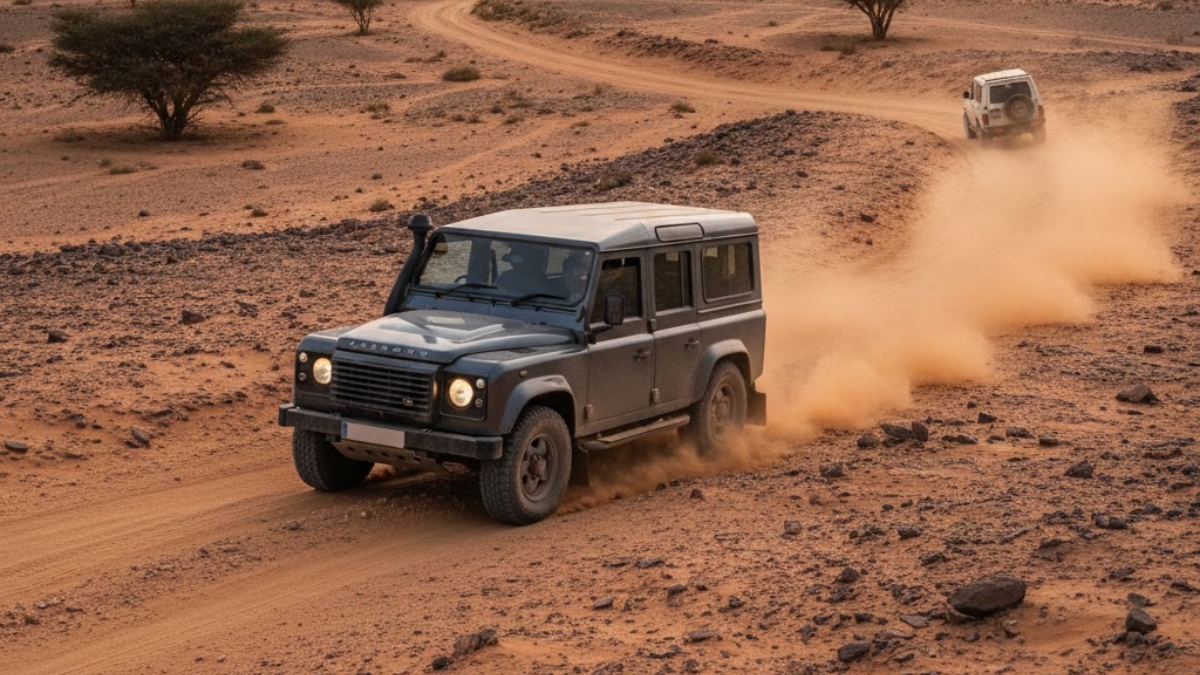
Most travelers don’t need a 4×4 for Agafay, Ourika Valley, or Imlil, but some trips become easier, safer, and less stressful with extra ground clearance. The right choice depends on where you’ll drive (main road vs tracks), the season, and how comfortable you are on narrow mountain roads.
Here’s the honest, practical rule:
- Agafay Desert: Usually no 4×4 needed if you stick to main access roads and reputable camp/hotel directions.
- Ourika Valley: No 4×4 needed for the main valley road and typical day-trip stops; an SUV helps if you plan detours or rougher side roads.
- Imlil: Often no 4×4 needed in good weather if you drive carefully; in winter, conditions can change fast and an SUV (or sometimes a 4×4) becomes more sensible.
If you want a simple decision in 20 seconds: choose a normal car for classic day trips in good weather; choose an SUV when you want flexibility, comfort, and less “road anxiety,” especially outside summer.
Table of contents
- Quick answer by destination (Agafay vs Ourika vs Imlil)
- What “SUV vs 4×4” really changes in Morocco
- Road reality: what you’ll actually drive on
- When an SUV is worth it
- When a 4×4 is truly necessary
- Best car choice by season
- Driver comfort checklist
- FAQs
Quick answer by destination
Agafay Desert (near Marrakech)
Agafay is rocky desert, not dunes like Merzouga. Many popular camps and viewpoints are reachable via normal roads or compacted tracks.
You don’t need a 4×4 for standard visits, especially if you’re going to a well-known camp/hotel and following proper directions.
An SUV helps if you’re worried about potholes, want a smoother ride, or you’ll drive off the main approach roads.
Ourika Valley
The Ourika route is a classic day trip, and the main road is commonly driven by standard cars.
A normal compact or sedan is usually enough if your plan is: stop at viewpoints, riverside cafés, and the typical valley route.
An SUV becomes useful if you plan to explore side roads, remote guesthouses, or you want extra comfort for uneven patches.
Imlil (High Atlas gateway)
Imlil sits in the High Atlas region (part of the wider Atlas Mountains
) and road conditions vary most here.
In good weather, many drivers reach Imlil with a normal car by driving calmly and avoiding aggressive passing.
In winter, rain/snow/ice can turn a “fine road” into a stressful one. That’s when an SUV (and sometimes a 4×4) can be the smarter choice, mainly for traction and clearance.
What “SUV vs 4×4” really changes
A lot of people say “4×4” when they really mean “higher car.”
SUV (crossover) benefits
- Higher ground clearance (less fear of scraping)
- More comfortable on broken pavement and potholes
- Better visibility on mountain roads
- Often more luggage space for families
True 4×4 benefits (4WD/AWD as designed for grip)
- Better traction on slippery surfaces (mud, snow, loose rock)
- More control on steep or uneven tracks
- Extra confidence when weather turns bad
Key point: Most of the time, clearance matters more than 4WD. You’ll feel the benefit of an SUV every day. A true 4×4 is only “needed” in specific conditions.
Road reality: what you’ll actually drive on
The “main route” scenario (most tourists)
- Paved roads + some rough patches
- Speed bumps, potholes, and occasional gravel sections
- Narrow mountain roads around bends
For this scenario:
- Small car is fine if you drive slowly on rough sections
- SUV is more comfortable, not mandatory
The “detour explorer” scenario
- Side roads to viewpoints, small villages, or quiet picnic spots
- Occasional uneven tracks, loose gravel, and sharper ruts
For this scenario:
- SUV is often worth it
- 4×4 only if you’re intentionally going off-road or it’s wet/wintery
The “winter risk” scenario (Imlil especially)
- Rain becomes mud at the edges
- Night temperatures create ice in shaded areas
- Snow can appear unpredictably at higher altitudes
For this scenario:
- SUV with good tires is a strong upgrade
- Consider 4×4 if conditions are actively bad, or if locals advise it
A smart habit: check the forecast before you commit to a mountain drive. Morocco’s national meteorology site is a reliable place to start: marocmeteo.ma
.
When an SUV is worth it (even if not “required”)
Pick an SUV if any of these sound like you:
- You’re traveling with kids, parents, or anyone who hates bumpy rides
- You have 4 people + luggage and want space
- You plan to visit more than one destination (Ourika + another stop)
- You’re not confident with narrow roads and want higher visibility
- You’ll drive early/late and prefer extra stability and comfort
- You’re visiting outside summer and want a safer “all-rounder”
In practice, an SUV is often the best balance for Morocco day trips because it reduces stress even when the road is “technically fine.”
When a 4×4 is truly necessary
You may actually want a true 4×4 if:
- You’re going off the main access routes into rough tracks on purpose
- There has been heavy rain and you expect mud/washed sections
- You’re going to Imlil in winter and conditions include snow/ice
- You’re driving to a place where the final approach is steep and unpaved
- A local host/camp clearly tells you: “You need 4×4 for the last part”
If your plan is classic “go, take photos, eat lunch, return,” a 4×4 is usually overkill.
Best car choice by season
Spring (Mar–May)
Great for all three. Roads are usually manageable.
Best choice: compact or SUV (SUV for comfort).
Summer (Jun–Aug)
Hot, dry, and generally easy road conditions.
Best choice: compact for budget, SUV for comfort + A/C performance.
Autumn (Sep–Nov)
Good travel season, but rain can start later in the period.
Best choice: SUV if you’ll do Imlil or frequent detours.
Winter (Dec–Feb)
This is where the answer changes fast, especially for Imlil.
Best choice: SUV; consider 4×4 if weather is rough or you plan higher/remote routes.
Driver comfort checklist
Before you decide “SUV or not,” ask yourself:
- Am I comfortable driving on narrow roads with curves?
- Can I handle night driving if plans shift late?
- Will I be stressed if I hear the car scrape once?
- Do I want comfort, or maximum savings?
- Is my group the type that wants stops and detours?
If you answered “yes” to stress, scraping fear, or detours, an SUV is usually money well spent.
FAQs
Is Agafay “real desert” that needs 4×4?
Agafay is rocky desert terrain. For typical camps and standard visits, 4×4 is usually not necessary. Stick to main routes and confirmed directions.
Can I do Ourika with a small rental car?
Yes, for the main valley route and common stops. Drive slowly on rough patches and avoid random detours onto uneven tracks.
Is Imlil safe to drive to in a normal car?
Often yes in good weather. In winter, conditions can change quickly, SUV (and sometimes 4×4) becomes a smarter option.
What matters more: SUV height or 4×4 traction?
Most of the time, height/clearance and comfort matter more. True 4×4 traction is mainly for bad weather or intentional off-road.