
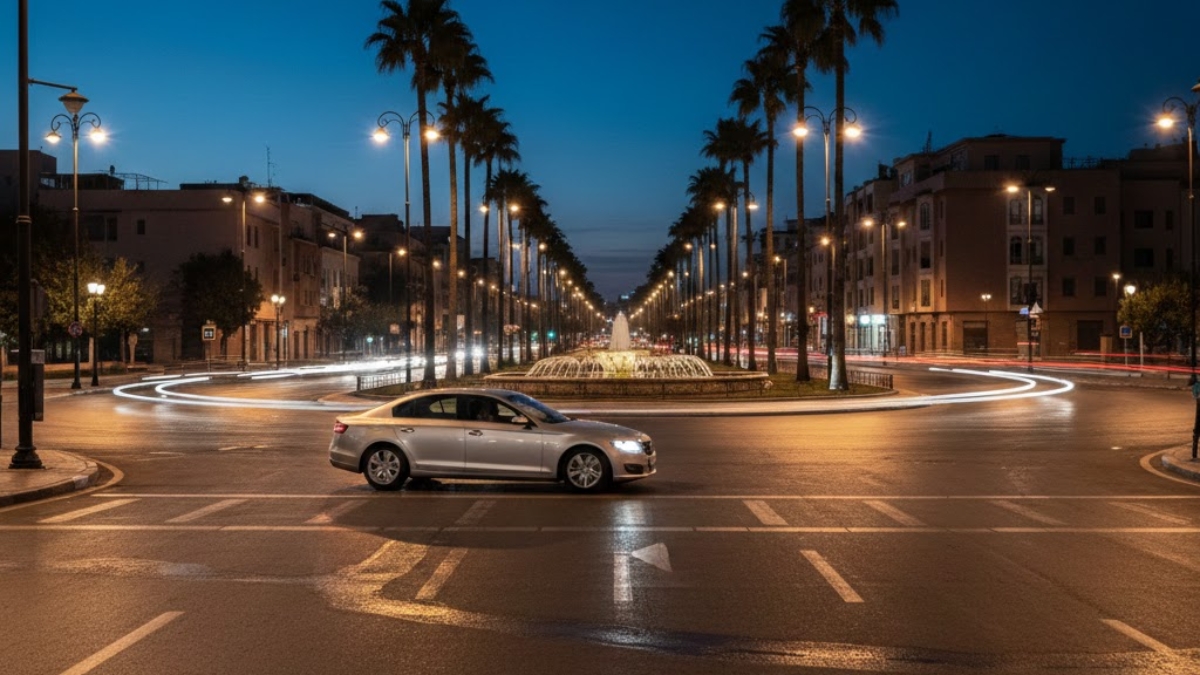
Night driving in Marrakech can be totally doable, and sometimes even calmer than daytime, if you understand what changes after sunset. The city has bright main avenues in Gueliz and Hivernage, but also darker side streets, sudden pedestrian crossings, scooters that appear fast, and a different rhythm around roundabouts and police checks.
If you’re driving to a late dinner, returning from Agafay, arriving on a late flight, or doing hotel delivery, this guide will help you drive more confidently with practical, Marrakech-specific habits.
Table of contents
- Is night driving in Marrakech safe for tourists?
- The real risks after dark (what’s different vs daytime)
- Police checks: what to expect and what to carry
- Lighting: headlights, glare, and how to see better
- Route choice: which roads feel easiest at night
- Road etiquette: honking, flashing, merging, and scooters
- Parking at night: how to avoid scratches and stress
- Quick checklist before you drive
- FAQ
Is night driving in Marrakech safe for tourists?
In central Marrakech, many tourists drive at night without problems, especially if they stay on well-lit roads and drive defensively. The bigger issue is not “danger,” it’s visibility + unpredictability: people crossing where you don’t expect, scooters filtering close, and occasional poorly lit vehicles on the edges.
If you’re not comfortable, there’s no shame in using a driver for late hours, especially if your route includes rural roads. Official travel advice for Morocco also encourages extra caution around road safety and night conditions (useful context for planning): https://www.gov.uk/foreign-travel-advice/morocco/safety-and-security
The real risks after dark (what’s different vs daytime)
1) Visibility drops, even when the road looks “bright”
Streetlights can create strong contrast: bright patches + dark patches. Hazards hide in the dark patches:
- pedestrians in dark clothing
- scooters without strong lights
- potholes or uneven road edges
Tourist habit: slow down slightly more than you think you need. Your stopping distance becomes your safety margin.
2) More “last-second” movement near cafés and hotels
Night is when people:
- step off curbs suddenly
- open doors into the street
- stop taxis without warning
Tourist habit: keep a wider following distance, especially behind taxis and small vans.
3) Fatigue (the silent risk)
Most tourist mistakes happen when you’re tired after a flight or a long day trip. If you feel heavy-eyed, don’t push it, take a break, swap drivers, or use a driver option. If you want a simple general refresher on night driving risks like fatigue and visibility, the National Safety Council has a clear overview here (not Morocco-specific, but very practical): https://www.nsc.org/road/safety-topics/driving-at-night
Police checks: what to expect and what to carry
Police checks and checkpoints can happen day or night. They’re usually routine: document checks, basic questions, then you continue.
What to keep accessible (not buried in luggage)
- Driver’s license
- Passport or ID (some carry a copy and keep the original secure, your choice)
- Rental agreement/contract
- Insurance/coverage paper if provided
- A working phone number (WhatsApp helps if your rental company needs to confirm anything)
How to act at a stop
- Pull over safely, stay calm, keep hands visible
- Be respectful and answer simply (where you’re going, where you’re staying)
- Don’t debate on the roadside
- If you don’t understand something, ask politely and call your rental provider if needed
Tip: If you’re with MarHire or any local agency, a quick WhatsApp message saying “Stopped at checkpoint near [area], all ok” is enough for your peace of mind.
Lighting: headlights, glare, and how to see better
Use low beams early (don’t wait until it’s “fully dark”)
In Marrakech, twilight can be tricky, your eyes adjust slowly while traffic stays busy. Turning on lights early helps other drivers see you.
Keep your windshield clean (inside and outside)
This sounds basic, but it’s one of the best night upgrades:
- a dusty windshield causes glare
- streaks amplify oncoming headlights
Aim for “smooth vision,” not “fast vision”
- Don’t stare directly into oncoming lights
- Focus slightly to the right edge of your lane when a bright vehicle approaches
- Avoid quick mirror checks right as you meet a glare source (do it before/after)
Use high beams only where appropriate
Inside Marrakech city roads, high beams are usually unnecessary and can irritate other drivers. On darker roads outside the city, high beams can help, just dip them early for oncoming vehicles.
Route choice: which roads feel easiest at night
Night driving gets easier when you plan a “simple route” instead of a “shortest route.”
Best night route strategy in Marrakech
- Prefer main avenues with lighting and clear lane markings
- Avoid medina-adjacent micro-streets if you’re unfamiliar
- Use roads with fewer turns and fewer surprise merges
Good tourist approach
If your hotel is near the medina, consider:
- driving to a known access point
- parking once
- walking the last stretch
This avoids tight lanes, unpredictable foot traffic, and stressful last-300-meter driving.
Road etiquette: honking, flashing, merging, and scooters
Honking at night
In Marrakech, a short honk often means:
- “I’m here” (especially scooters)
- “Careful” (warning)
- “I’m passing”
Don’t take it personally. Use it as information, not emotion.
Flashing headlights
Sometimes drivers flash to warn of:
- a hazard ahead
- a checkpoint
- an animal/pedestrian on the road (more common outside the city)
Don’t overreact, just scan the road ahead and keep speed controlled.
Scooters: expect them at your edges
At night, scooters may be harder to see. Assume:
- they can appear in your mirror quickly
- they may pass close on your left or right
Tourist habit: signal early, change lanes slowly, and check mirrors twice before turning.
Roundabouts at night
Roundabouts can feel calmer at night, but lane drifting still happens. The safest style:
- pick your lane early
- hold steady speed
- don’t cut across lanes to “save” an exit, go around again
Parking at night: how to avoid scratches and stress
Most tourist “damage” in Marrakech happens while parking, not while cruising.
Night parking rules that work
- Choose a spot with space, not the tightest “perfect” spot
- Park slowly, use mirrors, and don’t rush because a car is waiting
- Avoid stopping on corners, roundabout exits, or narrow lanes
- If you’re unsure, park a bit farther and walk 5–10 minutes
Before you lock the car
- Don’t leave bags visible
- Take a quick photo of where you parked (helps you find it later)
- Check you’re not blocking a gate or driveway
Quick checklist before you drive at night in Marrakech
- Windshield and mirrors clean
- Headlights on (low beams), dashboard lights comfortable
- Phone mounted (no hand-held navigation)
- Route planned on main roads (avoid tight shortcuts)
- Documents accessible for checks
- Extra following distance behind taxis and scooters
- If tired: stop, swap, or use a driver
FAQ (add this section to the end of the blog)
Is it safe to drive at night in Marrakech as a tourist?
Generally yes on main, well-lit roads (Gueliz/Hivernage and major avenues) if you drive defensively, keep speed moderate, and avoid unfamiliar narrow streets when tired.
Are police checks common at night in Marrakech?
They can happen. It’s usually routine document checks. Keep your license, rental papers, and ID/passport copy accessible and stay calm and respectful.
What documents should I carry for night driving?
Your driving license, rental agreement, and ID/passport (original or copy depending on your preference). If the rental company gives you insurance paperwork, keep it with the contract.
Do I need to worry about road lighting in Marrakech?
Yes, lighting can be uneven. Use low beams early (even at dusk), keep the windshield clean to reduce glare, and slow down on darker streets or near pedestrian-heavy areas.
How should I handle scooters and motorbikes at night?
Assume they can appear quickly at your edges. Signal early, check mirrors twice, and avoid sudden lane changes or sharp turns without a full check.