
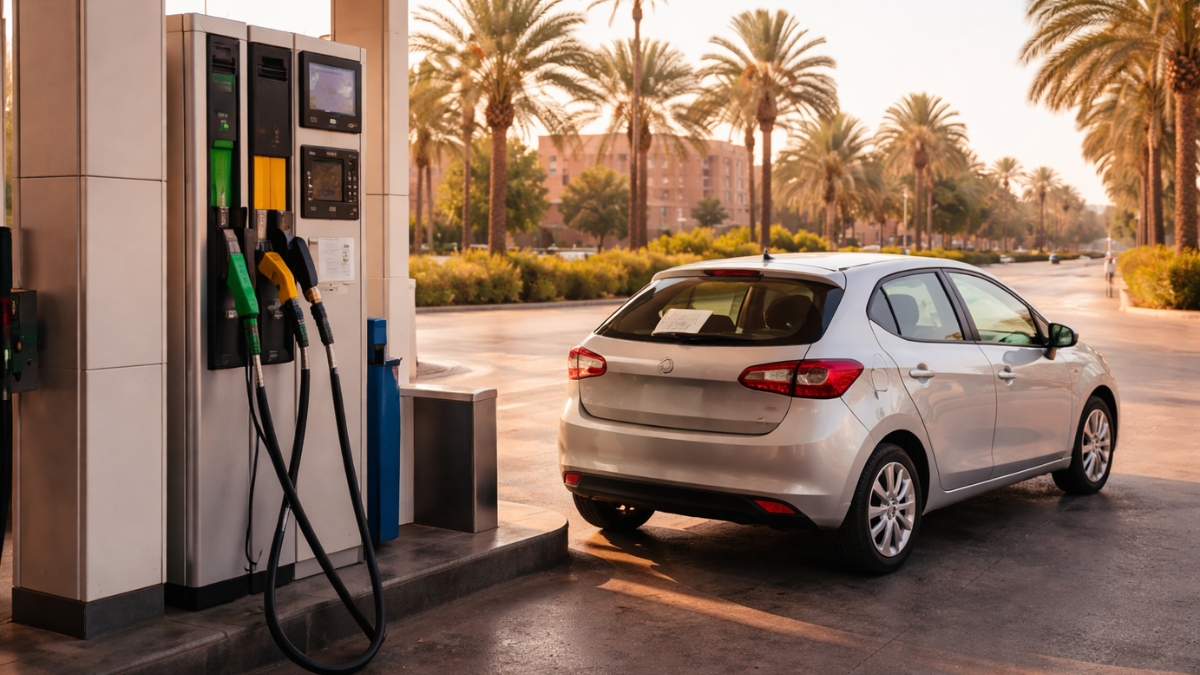
Fuel in Marrakech is easy once you know the two labels that matter, the small station habits locals use, and how rental companies usually verify “full-to-full.” Most rental disputes around fuel aren’t about big money, they’re about proof: Was it actually refueled right before return? and Was the correct fuel used?
This guide covers exactly that, without guessing prices and without complicated rules.
Table of Contents
- Diesel vs petrol in Morocco: what the pump labels really mean
- How to avoid the #1 mistake: misfueling
- Station tips in Marrakech: what to expect and how to pay
- Where to refuel before return (city vs airport side)
- Full-to-full policy: what “full” means in real life
- Receipts: what to keep and what to photograph
- Quick checklist for a stress-free fuel return
1) Diesel vs petrol in Morocco: what the pump labels really mean
At stations in Marrakech, you’ll usually see fuel written in French (often with Arabic beside it):
- Diesel is typically labeled “Gasoil” (or “Diesel”).
- Petrol/Gasoline is labeled “Sans Plomb” (unleaded). You may also see grades like SP95 (and sometimes SP98 depending on station).
If you’re unsure which your car takes, don’t rely on memory, check two places:
- the fuel door cap/label (often shows “Diesel” or “Unleaded”)
- the rental paperwork or the key tag (many agencies note it)
A simple rule: Most newer small economy rentals in Morocco are often diesel, but many automatics and smaller city cars can be petrol, so always confirm on the car itself.
2) How to avoid the #1 mistake: misfueling
Misfueling (putting petrol in a diesel or diesel in a petrol) can ruin a trip fast. The good news: you can prevent it with a 5-second routine.
Before you even pull the nozzle:
- Open the fuel door and read the label
- Say it out loud: “Diesel” or “Sans Plomb”
- Then select the pump
Extra safety habits that work well in busy Marrakech stations:
- Don’t let distractions rush you (calls, kids, directions, luggage)
- If an attendant offers help, still confirm the fuel type clearly
- If you’re tired at night, choose a bright station with clear signage
If you ever suspect a wrong fuel was started, don’t start the engine, call the rental provider immediately.
3) Station tips in Marrakech: what to expect and how to pay
Fuel stations in Marrakech range from quick neighborhood pumps to larger modern stations on main roads. Here’s what’s normal:
Payment
- Many stations accept cash and bank cards, but card terminals can be slow or temporarily unavailable, so keep some cash as backup.
- If you need a receipt, ask clearly: “Reçu, s’il vous plaît.” (Receipt, please.)
Attendants
- It’s common for staff to assist. If you prefer to pump yourself, just indicate politely and still ask for a receipt.
Service extras
- Some stations offer quick windshield cleaning and tire air. Helpful, but not required, say yes only if you want it.
Finding a station fast
If you’re new to the city or you’re trying to refuel right before a return, use the “gas station” category search in Google Maps so you’re not guessing. Here’s the official Google Maps help page that explains searching by category like gas stations: Search for gas stations on Google Maps https://support.google.com/maps/answer/3092445?hl=en
4) Where to refuel before return (city vs airport side)
The best strategy depends on where you’re returning the car:
Returning in the city
- Refuel 15–40 minutes before drop-off, then drive directly to the return point.
- Avoid refueling after you enter heavy central traffic, idling can lower the fuel gauge slightly, which can cause an argument if the gauge is right on the line.
Returning near the airport
If you’re returning around Marrakesh Menara Airport, plan a station stop before you get too close to terminal congestion. The goal is: refuel, get a receipt, and arrive without detours.
Pro move: Don’t aim for “the closest station possible.” Aim for “a station that’s easy to enter/exit.” The last 2 km is where people waste time.
5) Full-to-full policy: what “full” means in real life
“Full-to-full” usually means:
- You receive the car with a full tank
- You return it full
- If not, you pay for missing fuel (often at a higher rate) plus a service fee
But here’s the detail that matters: fuel gauges aren’t precision instruments. On many cars, “full” can mean:
- the needle exactly at the line
- the digital bars completely filled
- or the range indicator showing a typical “full” number (which varies by driving)
What to do so it’s dispute-proof
- Refuel until the pump clicks off automatically, then stop
- Don’t “round it” by adding tiny extra amounts unless you need to (it can spill or still not move the gauge)
- After refueling, drive calmly, hard acceleration right after can move the gauge slightly on some models
If your rental was handed over not full, your return should match the same level. In that case, take a clear dashboard photo at pickup and return.
6) Receipts: what to keep and what to photograph
Receipts are your best friend because they prove time + location + liters/amount.
Keep these 3 proofs (takes 20 seconds)
- Photo of the receipt (make sure date/time is visible)
- Photo of the pump screen after fueling (no personal info needed)
- Dashboard photo showing fuel level after refuel
Where to store it: Save the receipt photo in a dedicated album called “Rental Return” so you can pull it up instantly at drop-off.
Why receipts matter so much
If a rental agent says “it’s not full,” you can respond calmly with:
- “Here’s the receipt from [time], and here’s the dashboard right after fueling.”
If you want a quick explanation of why “diesel vs petrol” is not interchangeable (useful if you’re explaining to someone in your group why you’re being careful), this overview is simple and widely referenced: Diesel fuel https://en.wikipedia.org/wiki/Diesel_fuel
(That’s it—no extra links needed.)
7) Quick checklist for a stress-free fuel return
Use this as a final 60-second routine:
- Confirm fuel type at the fuel door (Diesel/Gasoil vs Sans Plomb)
- Refuel until the pump clicks off
- Ask for a receipt (“Reçu, s’il vous plaît.”)
- Photograph: receipt + pump screen + dashboard fuel gauge
- Drive straight to drop-off (avoid long idling in traffic)
- Keep the receipt photo ready to show at handover
If you do only one thing: keep the receipt photo. It prevents 90% of fuel arguments.