
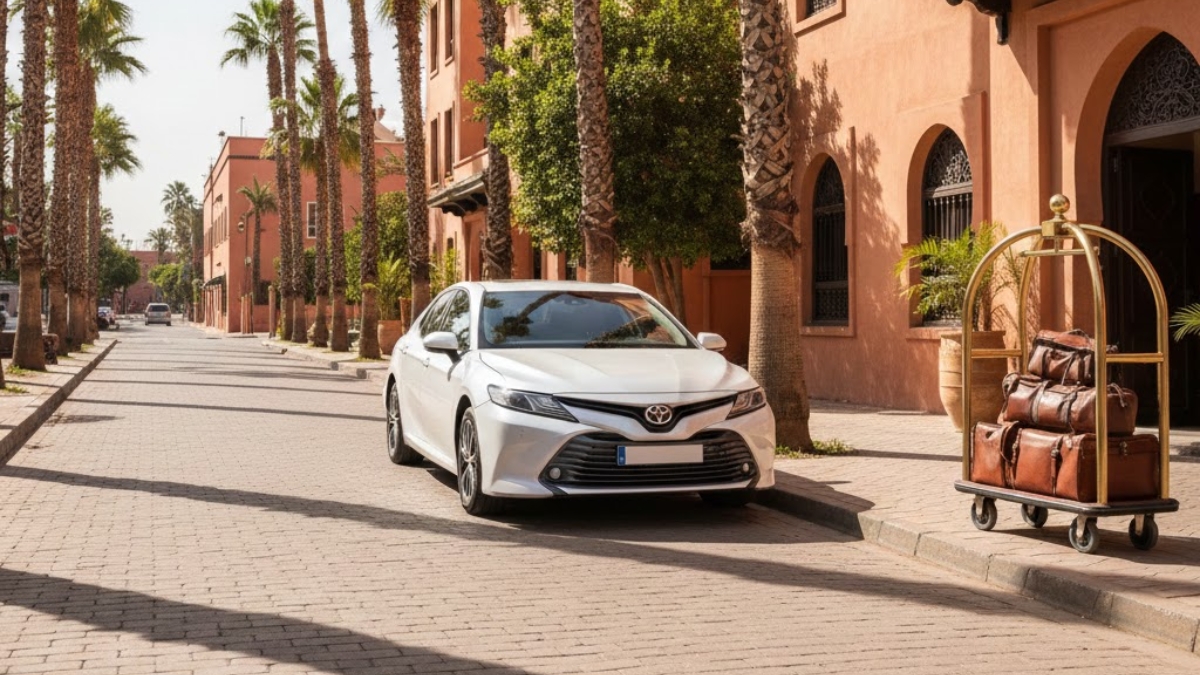
Car delivery in Marrakech sounds simple, until real life happens. A flight lands early, baggage is slow, a medina riad is not car-accessible, or traffic locks up around Gueliz at the exact moment your driver is meant to arrive. Most “delivery delays” are not negligence; they are predictable friction points that can be managed when the process is designed properly.
This article explains the most common causes of car delivery delays in Marrakech and the specific operational steps MarHire uses to prevent problems and keep handovers smooth.
Table of Contents
- Quick Answer
- The 7 Most Common Causes of Delivery Delays in Marrakech
- Why Marrakech Is Different: Medina Access and Pickup Reality
- How MarHire Prevents Delivery Problems
- What You Can Do to Make Delivery Faster
- If a Delay Happens: The Best Way to Handle It
- Practical Checklists
- FAQ
- Conclusion
- SEO Pack
- Image Prompt (No people)
Quick Answer
Marrakech car delivery delays usually come from one of five issues: traffic waves, unclear pickup pins, flight timing changes, medina/riad access limits, or slow coordination (no WhatsApp confirmation). MarHire prevents these problems by using flight tracking when relevant, confirming exact meeting points in writing, building buffer windows, using a call-the-agent approach at handover, and keeping a fallback plan (alternate meeting spot or vehicle swap) if conditions change.
The 7 Most Common Causes of Delivery Delays in Marrakech
1) Traffic waves in Gueliz, Hivernage, and major boulevards
Marrakech traffic is not constant, it comes in waves. A route that takes 12 minutes can take 35 minutes during peak movement. The most common mistake is promising a precise “minute exact” delivery time without a buffer.
Typical impact: The driver arrives late, the customer waits outside, and frustration escalates, even though the delay was predictable.
2) Wrong or “approximate” location pins
Many delays are simply navigation errors caused by:
- A hotel name shared without the correct entrance
- A riad pin dropped inside pedestrian-only lanes
- A WhatsApp location sent from a moving phone that updates incorrectly
If the driver arrives at a back entrance or a blocked street, the last 300 meters can take longer than the previous 5 km.
3) Medina and riad access limitations
This is a Marrakech classic: the customer expects door-to-door delivery, but the riad is accessible only by foot for the final stretch. Even when cars can get “close,” small alleys, bollards, and pedestrian zones create a hard limit.
Typical impact: The driver is “nearby,” but the customer cannot see them, and both parties think the other is in the wrong place.
4) Flight changes and baggage timing (airport deliveries)
Airport deliveries fail when people treat “landing time” as “ready time.” Readiness depends on immigration lines, baggage delivery, and the time it takes to exit.
For airport arrivals, the best practice is to base coordination on official airport information and live flight status rather than assumptions. If you want a reliable reference for the airport itself, use Marrakech Menara Airport for official airport details and traveler information (useful for confirming the correct airport and context).
5) Communication gaps (no confirmation message)
A delivery process breaks down fast when:
- The customer’s phone is on airplane mode
- WhatsApp messages are not seen
- The driver is not told about a gate change, a different hotel entrance, or a new arrival time
Typical impact: The car is at the right zone, but not at the right point, and the final coordination takes 10–25 minutes.
6) Payment or document surprises at handover
Even with fast arrival, the handover slows down if documents are not ready:
- Passport/ID not available
- License not ready
- Payment method confusion
- Deposit expectations not aligned
This is not “delay” in driving; it is delay in process.
7) Peak-demand congestion (high season and weekend cycles)
When demand is high, the network is under pressure: more deliveries, more airport pickups, more traffic, and more last-minute changes. Agencies that do not schedule properly create a domino effect.
Why Marrakech Is Different: Medina Access and Pickup Reality
Marrakech’s geography and street logic matter. The medina is not designed for car circulation, and even outside it, parking and stopping can be tightly regulated or practically difficult. That means the best delivery process is not “we will meet exactly at your door.” It is:
- “We will meet at the nearest car-accessible point.”
- “We will use a precise pin and a backup pin.”
- “We will confirm when you are physically ready to meet.”
When agencies ignore this, the customer experiences it as a “delay.” In reality, it is a planning mismatch.
How MarHire Prevents Delivery Problems
MarHire’s approach is to treat delivery as a controlled operation, not a casual drop-off.
1) Confirmation-first scheduling
MarHire confirms:
- Exact pickup time window (not a single minute)
- Exact location pin (and the correct entrance)
- Customer contact number + WhatsApp confirmation
This removes the biggest cause of delay: guessing.
2) Medina-aware meeting logic
If the address is a riad in or near the medina, MarHire coordinates delivery at:
- A car-accessible boundary point
- A nearby landmark that is easy to find
- A spot where stopping is feasible without conflict
This prevents the “driver is nearby but unreachable” loop.
3) Flight-aware airport coordination
When delivery is tied to an arrival, MarHire uses flight-aware coordination:
- Confirm flight number
- Align handover to “ready time,” not just landing time
- Use a “message when you have bags” protocol
This reduces dead waiting and avoids the two most common airport failures: early arrival mismatch and missed connection due to slow baggage.
4) Call-the-agent handover system
MarHire uses a simple operational discipline:
- Driver confirms they are en route
- Driver sends arrival message
- Customer confirms they are walking out / coming down
- Handover happens quickly with documents ready
This avoids silent waiting on both sides.
5) Buffer planning and fallback options
When conditions become unstable (traffic spike, street closure, customer timing shift), MarHire prevents escalation by activating a fallback:
- Alternate meeting point (nearby and simpler)
- Short re-route with a confirmed ETA
- Vehicle swap or reassignment if the original driver is trapped in traffic
The goal is continuity of service, not excuses.
What You Can Do to Make Delivery Faster
If you want the smoothest possible delivery in Marrakech, do these four things:
- Send an exact pin at the entrance (not just the hotel name).
- Tell MarHire if you are in the medina and expect a short walk.
- Keep documents ready (passport/ID, license, payment method).
- Confirm “I am ready” before the car arrives, especially at hotels.
If you are using Google Maps for precision, you can share a stable live location or drop a pin correctly; Google’s official instructions can help: Share your location in Google Maps.
If a Delay Happens: The Best Way to Handle It
Delays get worse when communication becomes emotional instead of operational. The fastest resolution is:
- Ask for the exact current location (or live location) of the driver
- Confirm your exact waiting point (photo of the entrance helps)
- Agree on a nearby fallback meeting point if access is restricted
- Stay reachable on WhatsApp for 10–15 minutes until the handover is completed
This is how you turn a 30-minute confusion cycle into a 5-minute correction.
Practical Checklists
Customer checklist (send before delivery)
- Exact pin at the entrance
- Backup landmark name (hotel lobby, main gate, café name)
- Passenger count + luggage count (if relevant)
- Documents ready (ID + license)
- “I’m ready” confirmation message
MarHire delivery checklist (what you should expect)
- Confirmed time window
- Confirmed pickup pin and entrance
- Medina-access logic if needed
- Arrival message and quick handover process
- Fallback plan if the street is blocked or traffic spikes
FAQ
Q: What is the most common reason for delivery delays in Marrakech?
A: Incorrect pickup pin or unclear entrance, followed closely by traffic waves around central districts.
Q: Can you deliver directly to a riad inside the medina?
A: Often the final stretch is pedestrian-only. The smooth approach is meeting at the nearest car-accessible point and walking the last few minutes.
Q: Why does airport delivery timing feel inconsistent?
A: Landing time is not the same as exit time. Immigration and baggage delivery can vary significantly.
Q: What should I send to avoid delays?
A: A precise entrance pin, your WhatsApp number, and a short message confirming you are ready to meet.
Q: What if my hotel has multiple entrances?
A: Specify the exact entrance and add a photo or a clear landmark (main lobby door, porte cochère, valet zone).
Q: If there is a delay, what is the fastest fix?
A: Confirm the exact waiting point, share a live location or entrance pin, and accept a nearby fallback meeting point if stopping at the original spot is difficult.
Conclusion
Marrakech car delivery delays are usually preventable. The causes are known, traffic waves, medina access, unclear pins, airport timing variability, and slow coordination. MarHire prevents problems by using confirmed meeting points, medina-aware delivery logic, flight-aware coordination when relevant, and a clear handover process with fallback options. The result is simple: fewer misunderstandings, faster handovers, and a calmer start to your Marrakech drive.