
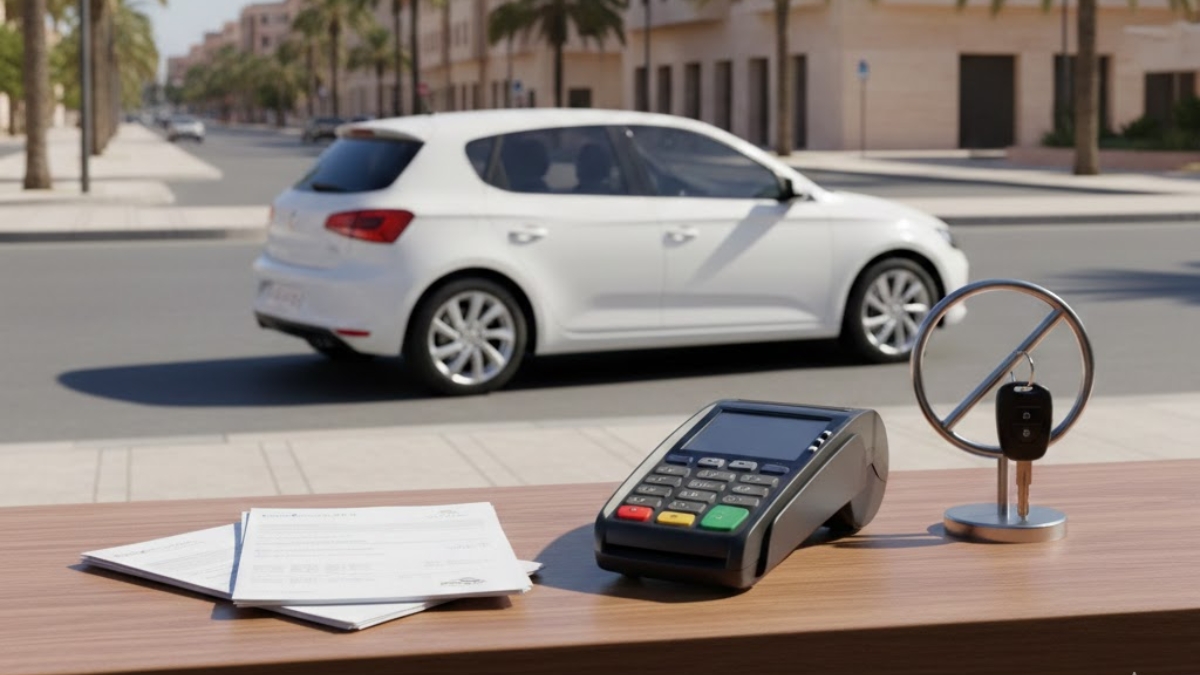
If you’re trying to rent a car in Marrakech and you keep seeing phrases like “no credit card hold,” “no preauthorization,” “no deposit,” or “pay on pickup,” it’s normal to wonder what’s real and what’s marketing.
Because in practice, “no hold” can mean several different things:
- no card preauthorization (the temporary lock on funds)
- no big deposit (but maybe a small one)
- no credit card required (but still some verification rules)
- or simply “no hold on this category” (not every car)
This guide explains the difference in plain language, how Marrakech agencies usually apply these rules, what you should confirm before landing, and how to avoid surprises at pickup.
Table of contents
- Quick answer: what “no hold” usually means
- Card hold vs deposit vs payment: the 3 things tourists mix up
- The 5 common “no hold” scenarios in Marrakech
- When agencies still require a hold (even if the ad says no)
- Debit card, cash, and proof rules: what replaces the hold
- How to confirm “no hold” in writing (WhatsApp checklist)
- Avoiding disputes: inspection and fuel rules
- FAQs
Quick answer: what “no hold” usually means
In Marrakech, “no credit card hold” usually means:
The agency does not place a preauthorization hold on your card at pickup for certain cars, and instead uses another security method (cash deposit, reduced deposit, passport/ID verification, or strict insurance terms).
It does not automatically mean:
- you can rent any car category without a hold
- you can rent with no verification
- you can ignore damage responsibility
- there will be zero security amount in every situation
Better way to think of it: “No hold” is often a policy on specific categories, not a universal promise.
Card hold vs deposit vs payment: the 3 things tourists mix up
1) Card hold (preauthorization)
A preauthorization hold is a temporary lock on funds. It’s common with credit cards and sometimes with debit cards. The exact release timing depends on the bank.
If you want a clear explanation of preauthorization holds (and why release times vary), Stripe’s guide is one of the simplest: https://stripe.com/resources/more/preauthorization-charges-on-credit-cards-what-they-are-and-how-long-they-last
2) Deposit (security amount)
A deposit is a security amount that may be:
- held on a card (preauthorization)
- paid in cash and returned later
- reduced or waived for some categories or driver profiles
3) Payment for the rental itself
This is your rental cost (daily/weekly total). Some agencies allow:
- pay on pickup
- partial deposit to confirm booking
- cash in MAD or EUR (rules vary)
Important: “Pay on pickup” does not always mean “no security.” It only describes how you pay the rental fee.
The 5 common “no hold” scenarios in Marrakech
When someone says “no hold,” it often means one of these five realities:
Scenario A: No hold + cash deposit (small security)
You don’t get a card preauth hold, but you may leave a small cash deposit that’s returned after inspection.
Best for: tourists without a credit card who want simple terms.
Scenario B: No hold on economy/manual cars only
Economy cars are lower-risk for agencies, so they sometimes waive holds for these categories, especially if you meet age/experience requirements.
Best for: budget travelers, couples, city + day trip driving.
Scenario C: No hold if you accept “basic insurance + strict exclusions”
Instead of holding money, the agency relies on:
- clear responsibility rules for damage
- exclusions (tires, glass, underbody) unless you add extra coverage
This can still be fair, but you need to understand what’s excluded.
Scenario D: No hold if you provide stronger verification
Some agencies replace a hold with:
- full ID/passport details
- hotel confirmation
- flight details
- reachable phone number
- sometimes an additional driver requirement for certain categories
Scenario E: No hold for repeat customers or verified profiles
If you’ve rented before, or your profile looks low-risk, some agencies may offer easier conditions. (Not guaranteed, but common.)
When agencies still require a hold (even if the ad says no)
Here are the situations where a hold is most likely to appear:
1) Automatics
Automatics are limited in supply and expensive to replace/repair. Many agencies prefer a hold for automatics.
2) SUVs and 4×4
Higher value + higher trip risk (people take them farther, drive rougher roads).
3) 7-seaters and vans
Family/group category usually involves heavier usage and higher replacement cost.
4) One-way rentals or long-distance itineraries
If you’re doing Marrakech → another city or a long route, agencies often increase security requirements.
5) High season and last-minute bookings
When cars are scarce, policies become stricter. In high season, “no hold” offers can shrink to only a few categories.
Practical takeaway: if your trip needs an automatic SUV in August and you want “no hold,” that combination is the hardest to secure.
Debit card, cash, and proof rules: what replaces the hold?
When an agency doesn’t use a credit card hold, they usually replace it with one or more of these:
- Cash deposit (returned after inspection)
- Debit card payment (sometimes accepted for the rental fee, not always for security)
- Strict documentation (license, passport, hotel address, phone)
- Clear inspection process (photos, checklist)
- Add-on coverage options to reduce risk for both sides
Tip: If you’re paying cash, keep exact bills ready to avoid delays at pickup.
How to confirm “no hold” in writing (WhatsApp checklist)
Before you land, ask these questions in one message:
- Is there any credit card preauthorization hold at pickup? (Yes/No)
- If no hold: What security replaces it? (cash deposit / none / other)
- Exact amount of any deposit/security (in MAD)
- Car category this applies to (economy, compact, automatic, SUV, 7-seater)
- Payment methods accepted (cash/card/debit)
- What’s included in insurance and what’s excluded?
- How return inspection works and how long security return takes
If the agency answers clearly, you’ll avoid 99% of airport surprises.
Avoiding disputes: inspection and fuel rules
“No hold” doesn’t mean “no responsibility,” so protect yourself with simple habits:
1) Do a 2-minute photo inspection
Take photos of:
- front bumper
- rear bumper
- both sides
- wheels
- dashboard fuel level
2) Confirm fuel policy
Common setups:
- full-to-full (best)
- same-to-same (acceptable if documented)
3) Ask what counts as “damage”
Every agency has rules. The easiest way to avoid confusion is to confirm:
- how they treat small scratches
- wheel scuffs
- interior stains
FAQs (AEO-friendly)
What does “no credit card hold” mean for Marrakech car rentals?
It usually means the agency won’t place a preauthorization hold on your card for certain categories, and may use another security method like a cash deposit or stricter verification.
Is “no hold” the same as “no deposit”?
Not always. “No hold” refers to no card preauthorization. There can still be a cash deposit or other security arrangement.
Can I rent in Marrakech with a debit card and no hold?
Sometimes yes, especially for economy/manual categories. But policies vary and higher categories often still require a credit card hold or a larger security method.
Which cars are most likely to still require a hold?
Automatics, SUVs, 7-seaters, premium cars, one-way rentals, and peak-season bookings.
How do I avoid surprises at pickup?
Get the “no hold” terms in writing: whether a hold exists, exact deposit/security amount, what category it applies to, and insurance exclusions.