
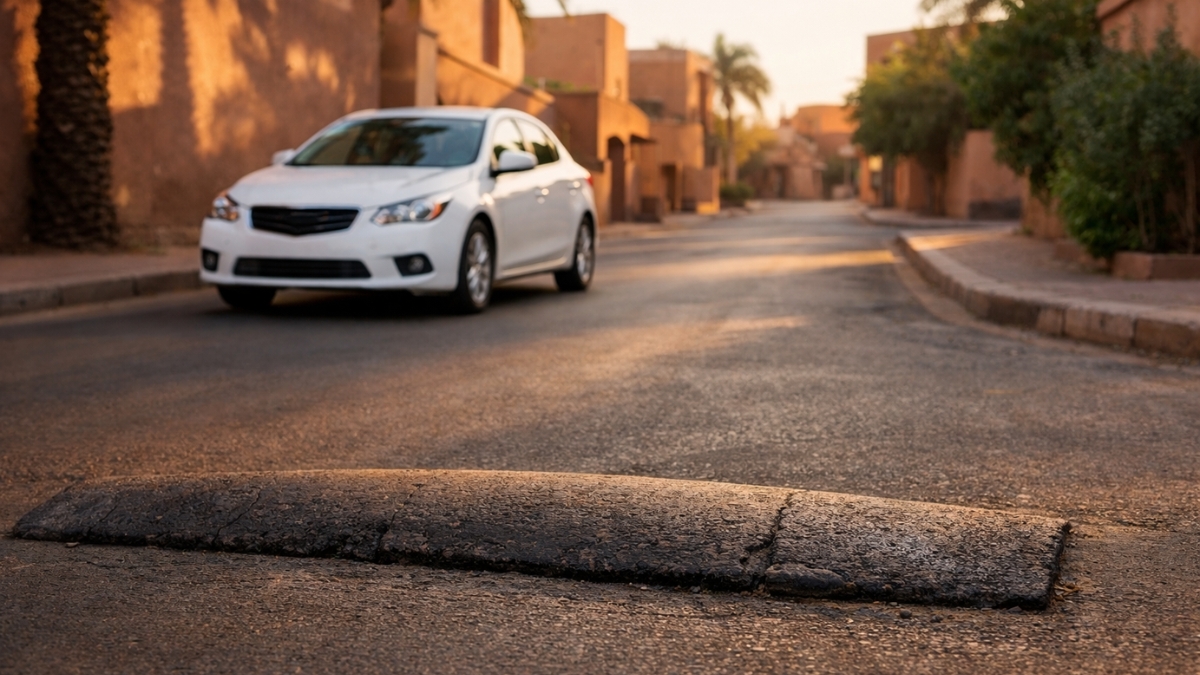
Marrakech has a special kind of road “surprise”: speed bumps that show up fast, sit higher than expected, or come in clusters right after a turn. Some are well-painted and easy to read. Others blend into the asphalt, especially at dusk, after rain, or on streets with patchy resurfacing. If you’re driving a small car, a loaded family SUV, or anything with a low front lip, learning how Marrakech bumps behave will save your suspension, and your mood.
This guide tells you where they’re usually worst, how to spot them earlier than your headlights do, and the practical habits that keep shocks, springs, and tires happier.
Table of contents
- Why Marrakech speed bumps feel “different”
- Where they’re worst: neighborhoods and road types
- The hidden bump patterns to watch for
- How to spot bumps early (day, night, and rain)
- Suspension-friendly driving tips that actually work
- Tire pressure and load: the quiet suspension killers
- What to do if you hit one too hard
- FAQ
1) Why Marrakech speed bumps feel “different”
It’s not just that there are many bumps, it’s the variety:
- Height and shape change a lot from street to street. Some are long and gentle; others are short and sharp (the ones that “kick” the rear).
- Paint and reflectors aren’t consistent. A bump can be freshly marked on one block and nearly invisible on the next.
- They’re often paired with real-world chaos: scooters cutting in, pedestrians stepping out, taxis stopping, or lane lines fading.
The result: even good drivers get caught out when they assume “the next bump will look like the last one.”
2) Where they’re worst: neighborhoods and road types
Instead of naming one single street (which can change with roadworks), it’s more reliable to think in “road types” that consistently produce the worst bumps.
Urban boulevards with frequent crossings
On wide avenues with lots of pedestrian movement, bumps often appear in sets, a few hundred meters apart, especially near schools, markets, and busy intersections. You’ll feel like you’re driving in chapters: accelerate, brake, roll, repeat.
Residential cut-throughs near main corridors
Smaller streets that people use to avoid traffic often get taller, sharper bumps to discourage speeding. These are the ones most likely to scrape a low front end.
Approaches to roundabouts and junctions
In Marrakech, bumps like to live before decision points, just when you’re scanning for lanes, scooters, and exits. This is where drivers misjudge speed because their attention is split.
Patchy resurfaced streets
When you see uneven asphalt patches, expect one of two things:
- a bump that’s “melted” into the road and hard to read, or
- a bump that’s been rebuilt and now sits higher than it used to.
3) The hidden bump patterns to watch for
These patterns show up again and again:
- Two bumps close together (you slow for the first, then bounce on the second).
- Bumps immediately after a turn (you straighten the wheel and, surprise).
- Bumps in shadow bands from trees, walls, or streetlights (your eyes miss the height change).
- Bumps with no warning signs on quieter streets.
Once you expect these patterns, you’ll spot them earlier, without needing to crawl everywhere.
4) How to spot bumps early (day, night, and rain)
In daylight
- Watch the car ahead: brake lights + a small nose dip often signals a bump even before you see it.
- Look for surface texture changes: bumps often have a slightly different asphalt shade.
- Scan for pedestrian “gather points” (crossings, school gates, market edges). Bumps love these places.
At night
- Don’t overdrive your headlights. If you can’t stop smoothly within what you can see, you’re too fast.
- Use reflections: a bump can create a thin highlight line across the lane.
- Stay calm behind taxis, many locals already “know” where the bumps are.
After rain or on wet roads
Wet asphalt creates glare that hides height changes. Reduce speed earlier than you think you need. A light sheen can make a sharp bump look flat until you’re right on it.
5) Suspension-friendly driving tips that actually work
Here’s what protects your car most, without turning the trip into a crawl.
Approach speed: slow earlier, not harder
Brake before the bump, not on it. Harsh braking right at the bump loads the front suspension and increases the chance of scraping.
Roll the bump at a steady, low speed
Aim for a smooth “roll-over” instead of a stop-and-go lurch. Your passengers will feel the difference instantly.
Avoid braking on the bump
If you’re still on the brakes as you go over, the front suspension is compressed and more likely to bottom out. Release gently just before the bump so the suspension can move.
Keep wheels straight when possible
Turning while climbing a bump can stress suspension components and makes the car feel like it “falls” off the edge.
Use the “follow the locals” method (carefully)
If a local driver slows in a spot that seems random, copy the slowdown. They’re often reacting to a bump you haven’t seen yet, just keep a safe distance.
Don’t straddle unknown bumps
Some bumps are asymmetrical or broken on one side. If you’re unsure, take it centered and slow.
6) Tire pressure and load: the quiet suspension killers
A car that’s overloaded or running the wrong tire pressure will feel every bump harder, and take more wear.
- Overloading increases bottoming-out risk (especially rear shocks).
- Underinflated tires can make impacts harsher at the rim and increase sidewall stress.
- Overinflated tires can make bumps feel sharper and reduce grip on uneven surfaces.
A simple habit: check pressures when tires are cold and follow your vehicle’s door-sticker recommendations. If you want a quick refresher on the basics, this guide on checking tyre pressure correctly is straightforward: RAC guide to checking tyre pressure.
Also, pack smarter:
- Heavy luggage low and centered, not stacked high.
- Don’t put all weight on one side of the trunk.
- If your car has multiple load-pressure settings, use the correct one.
7) What to do if you hit one too hard
Don’t panic, do a quick “post-impact check” when safe.
- Listen for new clunks over small bumps.
- If the steering feels off-center, or the car pulls, check alignment soon.
- Look for fresh scrapes under the front bumper and near the exhaust path.
- If you feel a new vibration at speed, inspect tires for a bulge or rim damage.
Road safety isn’t just about comfort, rough impacts can reduce control and increase risk, especially on busy urban roads. For context on why reducing hard impacts and sudden maneuvers matters, the WHO road traffic injuries fact sheet is a solid reference: WHO: Road traffic injuries.
FAQ
Why are some Marrakech speed bumps unpainted or hard to see?
Markings fade quickly with heat, dust, traffic, and resurfacing. Some bumps are rebuilt without fresh paint, so you notice them late.
Are bumps worse in certain parts of the city?
They’re typically worst on residential cut-throughs, near crossings, and on roads with patchy resurfacing where bumps blend into the asphalt.
What speed should I take a speed bump at in Marrakech?
There isn’t one perfect number because bump shapes vary. The safest approach is slow enough to roll smoothly without scraping or bouncing, brake early, release before the bump, and roll steadily.
Do speed bumps damage suspension, or is that a myth?
Repeated sharp impacts can accelerate wear on shocks, bushings, and mounts, especially if you hit them fast, brake on them, or drive overloaded.
Should I change tire pressure for Marrakech city driving?
Stick to your manufacturer’s recommended pressures. The bigger wins are checking pressure when tires are cold and avoiding overload.
What if my car is low (sport trim) or loaded with luggage?
Slow earlier, take bumps straight, avoid braking on the bump, and consider unloading unnecessary weight. Low cars are more likely to scrape on sharp bumps and broken edges.