
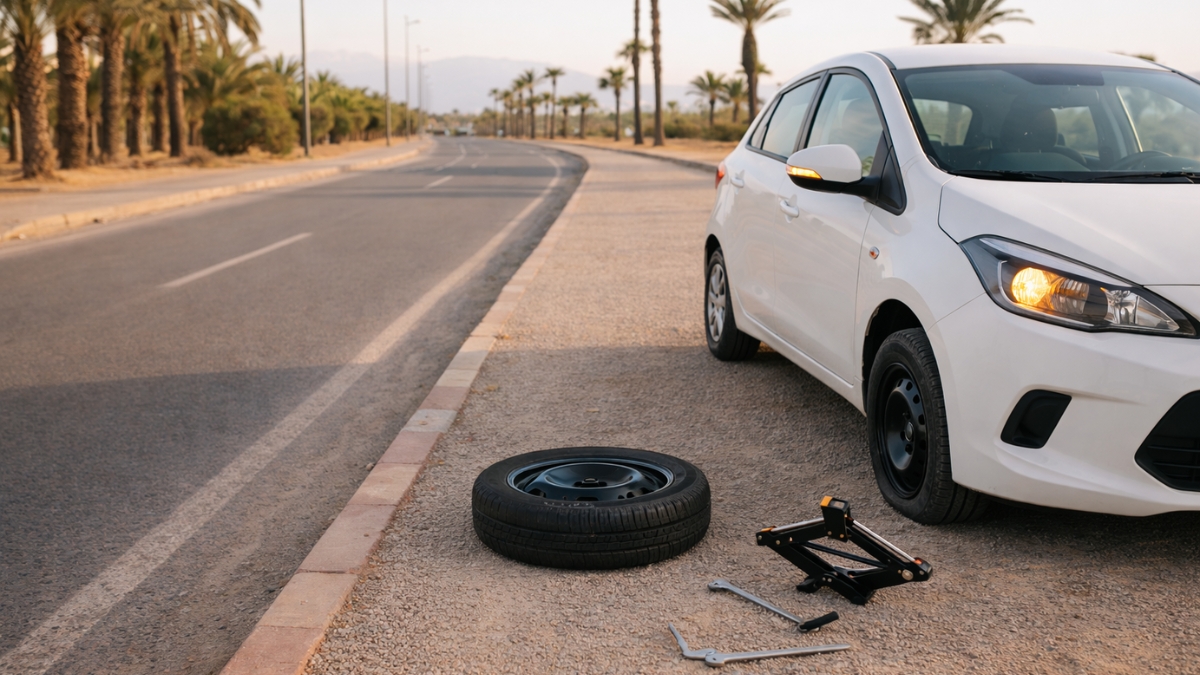
A flat tire in Marrakech is annoying, but it doesn’t have to ruin your day. The key is to do two things in the right order: get safe, then follow the rental’s process so you don’t accidentally create a dispute (for example, using the wrong repair shop or not documenting the tire).
This guide explains what’s usually included with rentals, who to call first, and the practical steps that work whether you’re in central Marrakech, outside the city, or on the motorway.
Table of Contents
- First priority: get safe (what to do in the first 60 seconds)
- What’s usually included (and what often isn’t)
- Who to call in Marrakech (in the correct order)
- How to document the flat (photos that protect you)
- If you have a spare: quick change vs calling help
- If you don’t have a spare: repair kit, tow, or roadside service
- Flats on the autoroute: special rules and safer choices
- Payment and receipts: what to keep for reimbursement
- Common mistakes that create extra charges
1) First priority: get safe (what to do in the first 60 seconds)
The safest response depends on where you are, but the order stays the same:
- Slow down smoothly (no hard braking)
- Signal and move to a safe spot: shoulder, wide pull-off, or parking area
- Turn on hazard lights immediately
- Do not stop in a blind curve or narrow lane if you can roll to a safer area
- If you have passengers, keep everyone calm and away from traffic
If you’re on a busy road, it’s often safer to drive slowly to a wider shoulder than to stop instantly in a risky spot.
2) What’s usually included (and what often isn’t)
This is where many rental misunderstandings start.
Often included (but varies)
- A spare tire or tire repair kit (sealant + compressor)
- A jack and tools
- Basic assistance instructions in the rental paperwork
- Guidance on which workshop to use (or approval process)
Often NOT included automatically
- Free tire replacement if the tire is damaged beyond repair
- Free roadside call-out if the flat was caused by road damage or misuse
- Coverage for wheel/rim damage (curb hits)
Key idea: Some rentals treat tires as “wear items” unless you bought specific coverage. That’s why documentation and approval matter.
3) Who to call in Marrakech (in the correct order)
When you get a flat in a rental, the right call order prevents “you didn’t follow procedure” arguments.
Call order that usually works best
- The rental provider / WhatsApp number on your contract
- Tell them: your location, the car plate/model, and whether you have a spare.
- If you’re on the autoroute, also follow the motorway assistance process (see section 7).
- Only then go to a repair shop if the rental approves it.
If your rental company has a 24/7 help number, use it. If not, message them with a clear note and photos so there’s a timestamped record.
Practical message you can copy/paste:
- “I have a flat tire. Location: [pin]. Car: [model]. Tire: [front left/right]. I’m safe. Please advise: spare change or approved repair.”
4) How to document the flat (photos that protect you)
These photos can save you money later:
- Wide photo showing the car safely parked and the environment
- Close-up of the flat tire (puncture area if visible)
- Photo showing the wheel/rim condition (to prove no curb smash)
- Photo of the dashboard (time and mileage if possible)
- Photo of the spare tire / repair kit in the trunk (what’s available)
If you go to a shop, also photograph:
- the tire before repair
- the repair invoice/receipt (even if handwritten)
5) If you have a spare: quick change vs calling help
If you have a spare tire, you have two options:
Option A: Change it yourself (only if it’s safe and you’re confident)
Do this only if:
- you’re on a wide shoulder or safe parking area
- the ground is stable and flat
- you have the correct tools
- you’re not in fast traffic or poor visibility
If you’re not confident, don’t “learn” beside traffic.
Option B: Call for help (often the smartest choice)
If you’re in Marrakech city traffic, narrow streets, or at night, calling the rental’s support is usually safer and faster than improvising.
6) If you don’t have a spare: repair kit, tow, or roadside service
Many newer cars use a tire repair kit instead of a full spare.
If you have a repair kit
- It can work for small punctures
- It usually won’t help if the sidewall is damaged or the tire is shredded
- Follow the kit instructions and drive slowly to a repair point
If the tire can’t be repaired
Your rental may arrange:
- a tow
- a replacement tire
- a replacement vehicle (depends on policy and availability)
This is why you should call the rental first: they decide the approved path.
7) Flats on the autoroute: special rules and safer choices
On Moroccan autoroutes, it’s best to avoid risky roadside repairs. If you can safely reach a service area, do that.
If you need help on the motorway, the operator has established assistance processes. Autoroutes du Maroc provides official information and support services, and you can also use their traffic/assistance information channels:
- Official ADM traffic site: https://admtrafic.ma/ (admtrafic.ma)
For route navigation and nearest service area guidance, Google Maps “search nearby” is useful when you’re stationary and safe. Here’s the official guide:
https://support.google.com/maps/answer/144360?hl=en (support.google.com)
8) Payment and receipts: what to keep for reimbursement
If you pay anything out of pocket, get proof.
Keep:
- receipt/invoice with date and location
- photo of the repaired/replaced tire
- chat approval from the rental provider (“OK, proceed”)
Even if the shop receipt is basic, a photo plus the WhatsApp approval usually helps with reimbursement discussions.
9) Common mistakes that create extra charges
Avoid these traps:
- Driving too far on a fully flat tire (can damage the rim)
- Not telling the rental first and then claiming reimbursement later
- Repairing at a random shop without approval (especially if you’re billed high)
- Throwing away the receipt
- Returning the car without reporting the incident (it becomes a “mystery damage” case)