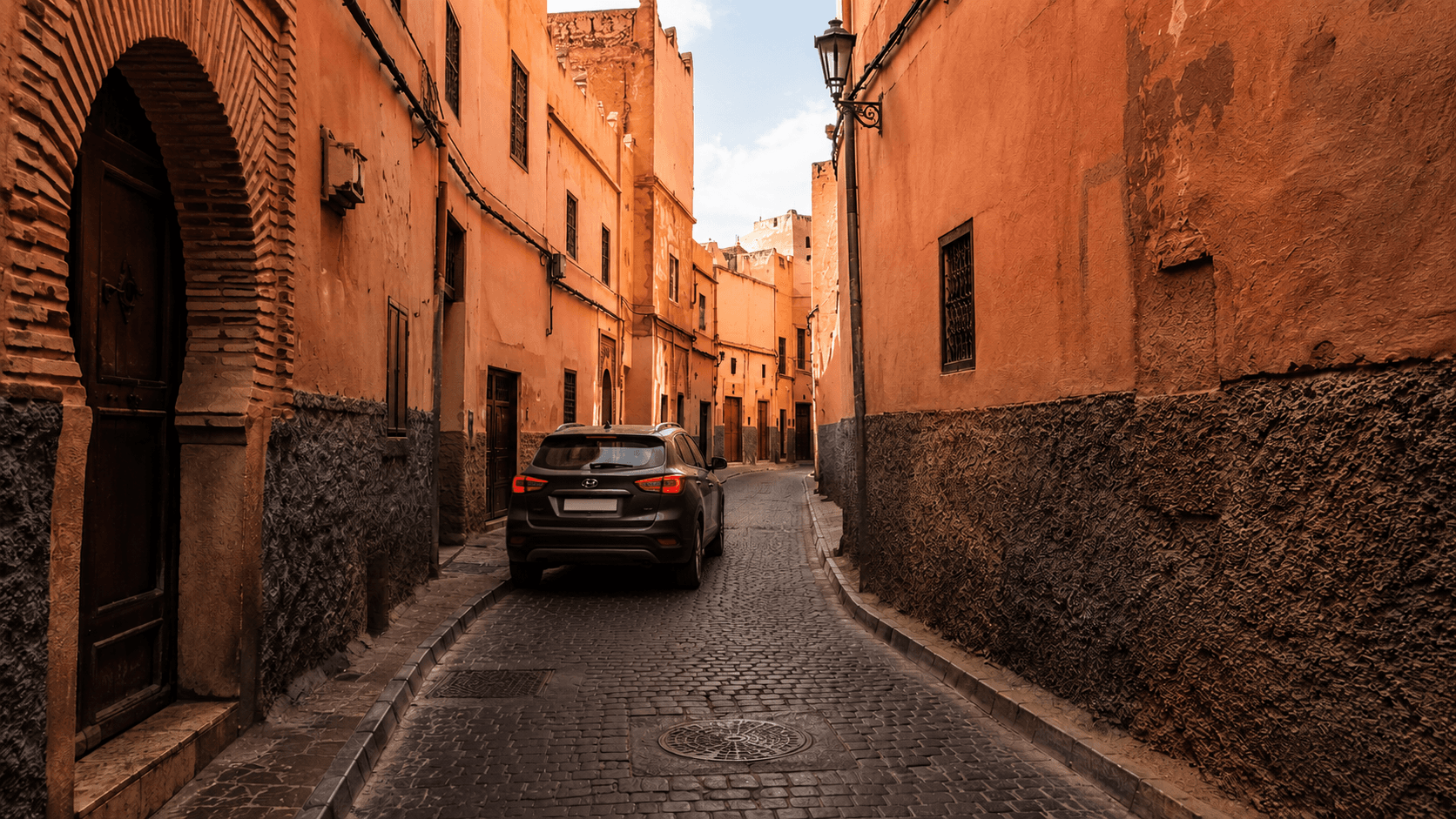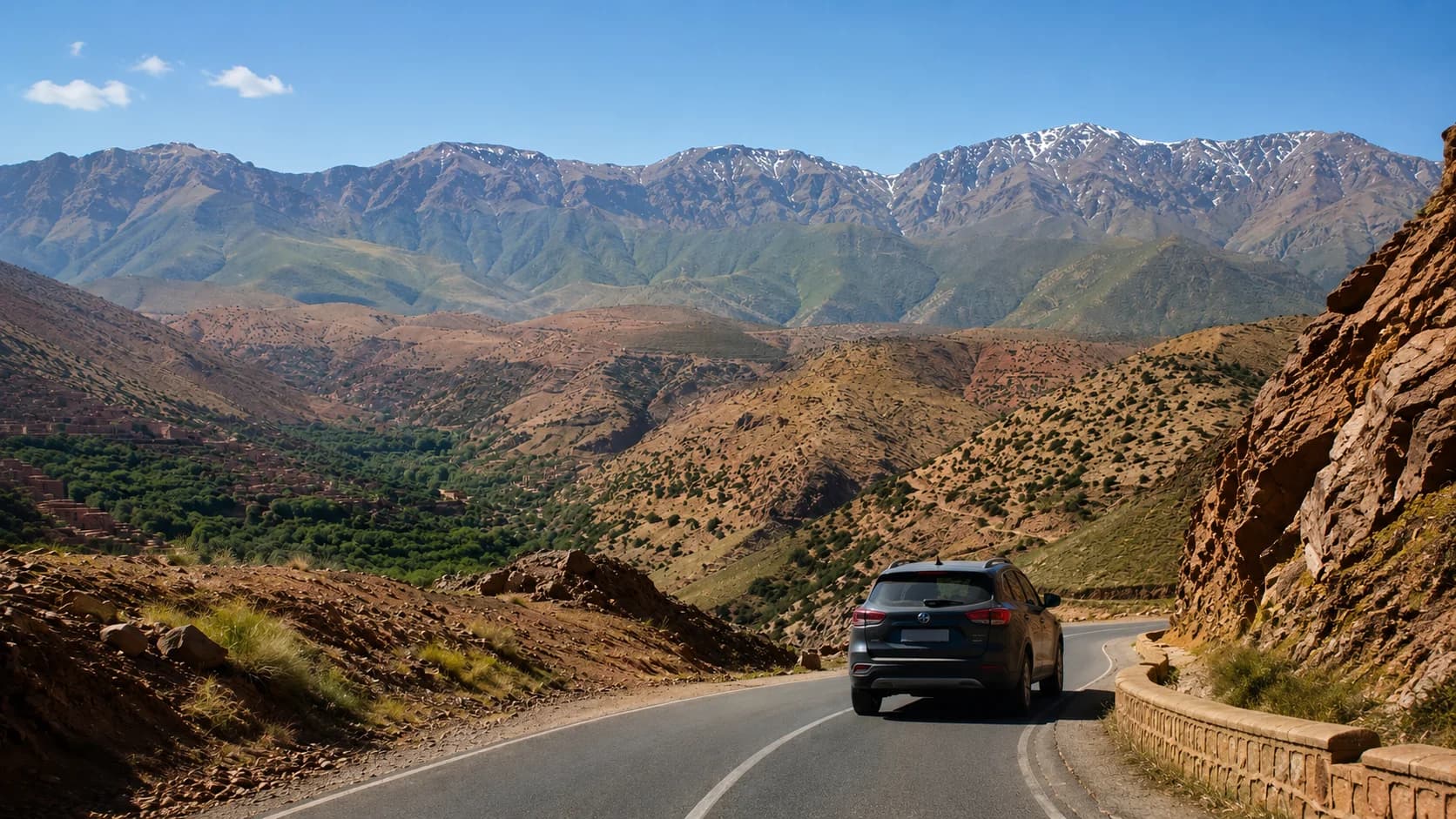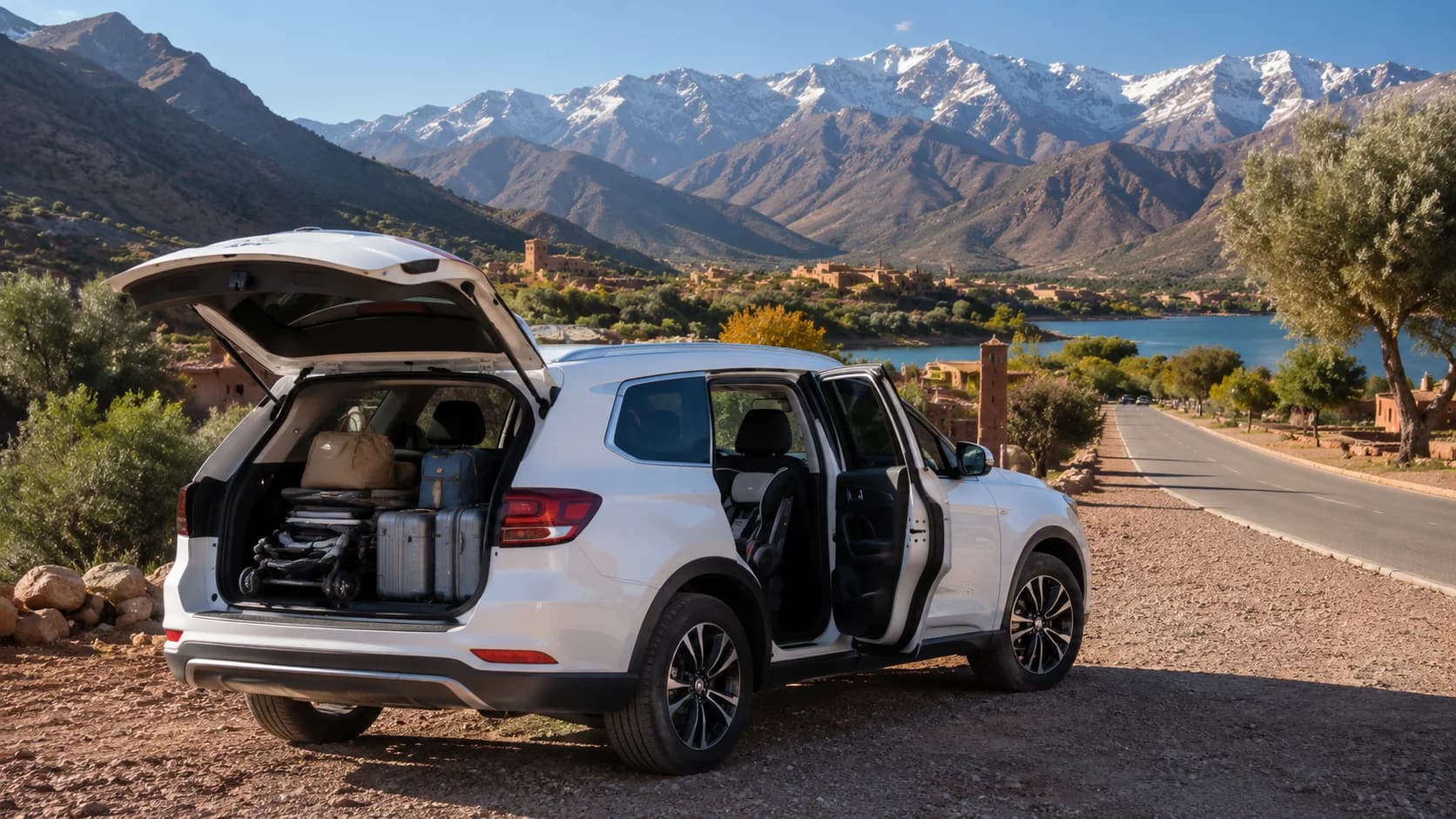







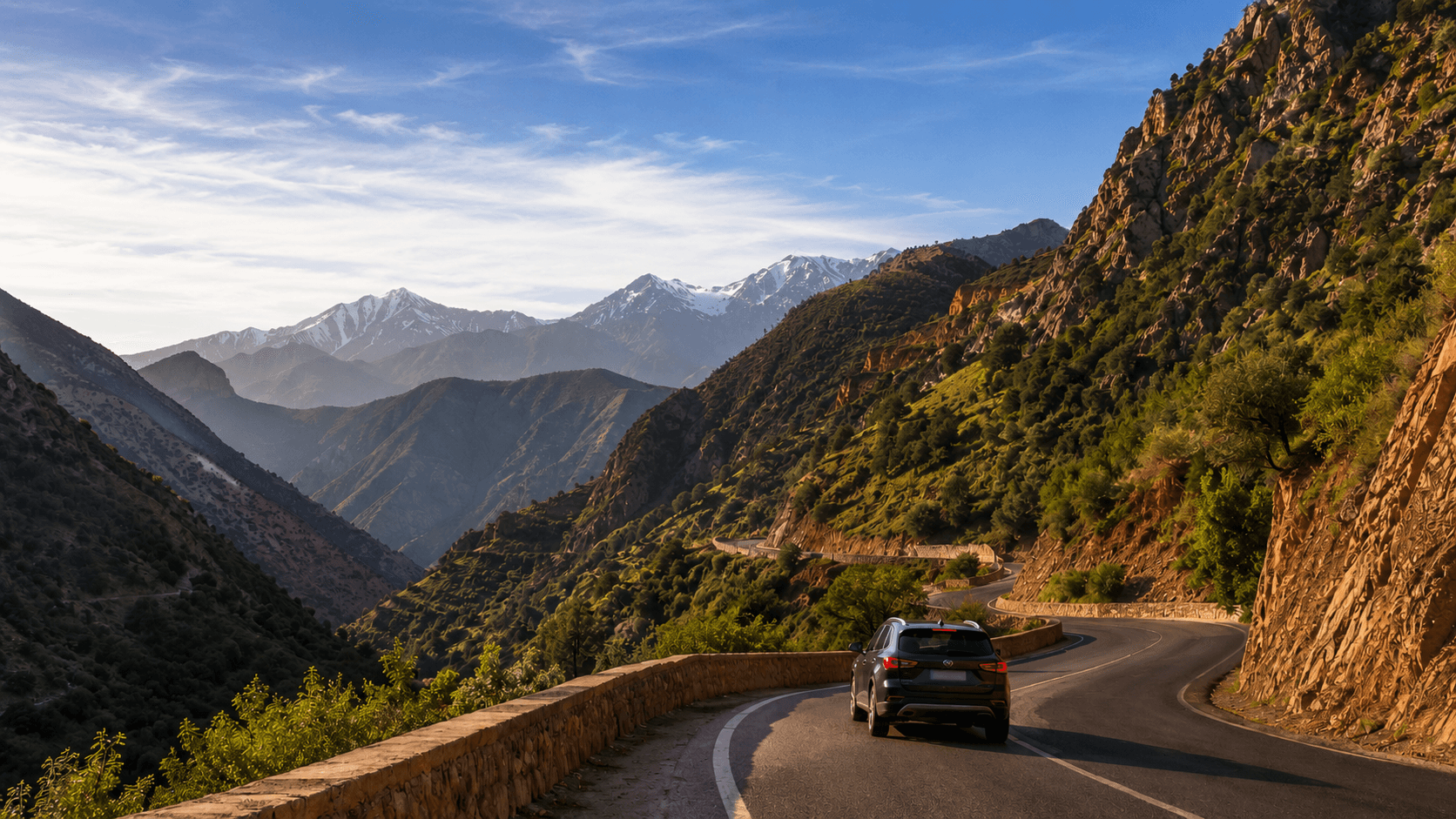
Few destinations in Morocco are as rewarding for drivers as the Atlas Mountains. Less than an hour from Marrakech, the landscape transforms from busy city streets into green valleys, mountain villages, winding roads, and panoramic viewpoints that rank among North Africa's most spectacular scenery.
An Atlas Mountains road trip from Marrakech offers travelers the freedom to stop wherever they want, discover local cafés, explore hidden valleys, and experience the High Atlas at their own pace. While guided tours can be convenient, self-driving offers something they cannot: complete flexibility.
Whether you're planning a half-day drive to Ourika Valley, a full-day journey to Imlil, or an unforgettable crossing of Tizi n'Tichka Pass, this guide covers the best routes, driving advice, seasonal conditions, and the ideal vehicle for mountain roads.
Why the Atlas Mountains Are Perfect for a Self-Drive Trip
The Atlas Mountains begin just south of Marrakech, making them one of Morocco's easiest mountain destinations to reach independently.
Unlike desert routes that require long driving days, many of the Atlas highlights are within 30 minutes to 2 hours from the city. Roads are generally paved, signposted, and well-maintained, allowing visitors to enjoy dramatic scenery without needing extensive off-road experience.
Advantages of driving yourself include:
- Freedom to stop at viewpoints
- Flexible departure times
- Easier access to remote villages
- Better photography opportunities
- More authentic local experiences
- Lower cost for families and groups
The mountains reward slow travel. Some of the most memorable moments happen unexpectedly: a roadside tea stop, a mountain market, or a panoramic overlook that isn't listed in any guidebook.
Ourika Valley: The Easy Half-Day Escape
For many visitors, the Marrakech-to-Ourika Valley drive is the perfect introduction to the Atlas Mountains.
Located approximately 35–45 km from Marrakech, Ourika Valley can be reached in about one hour depending on traffic.
Why Visit Ourika Valley?
The valley offers:
- Riverside cafés
- Berber villages
- Terraced agriculture
- Easy mountain scenery
- Waterfalls near Setti Fatma
Because the route follows a wide valley, driving is straightforward compared with some higher mountain roads.
Recommended Stops
Tnine Ourika
A traditional market town that offers a glimpse into everyday mountain life.
Riverside Restaurants
Many restaurants place tables directly beside the river during warmer months.
Setti Fatma
The most popular destination in the valley. Visitors can park and walk toward the famous waterfalls.
Driving Notes
- Mostly paved roads
- Light mountain curves
- Suitable for all vehicle types
- Easy day trip from Marrakech
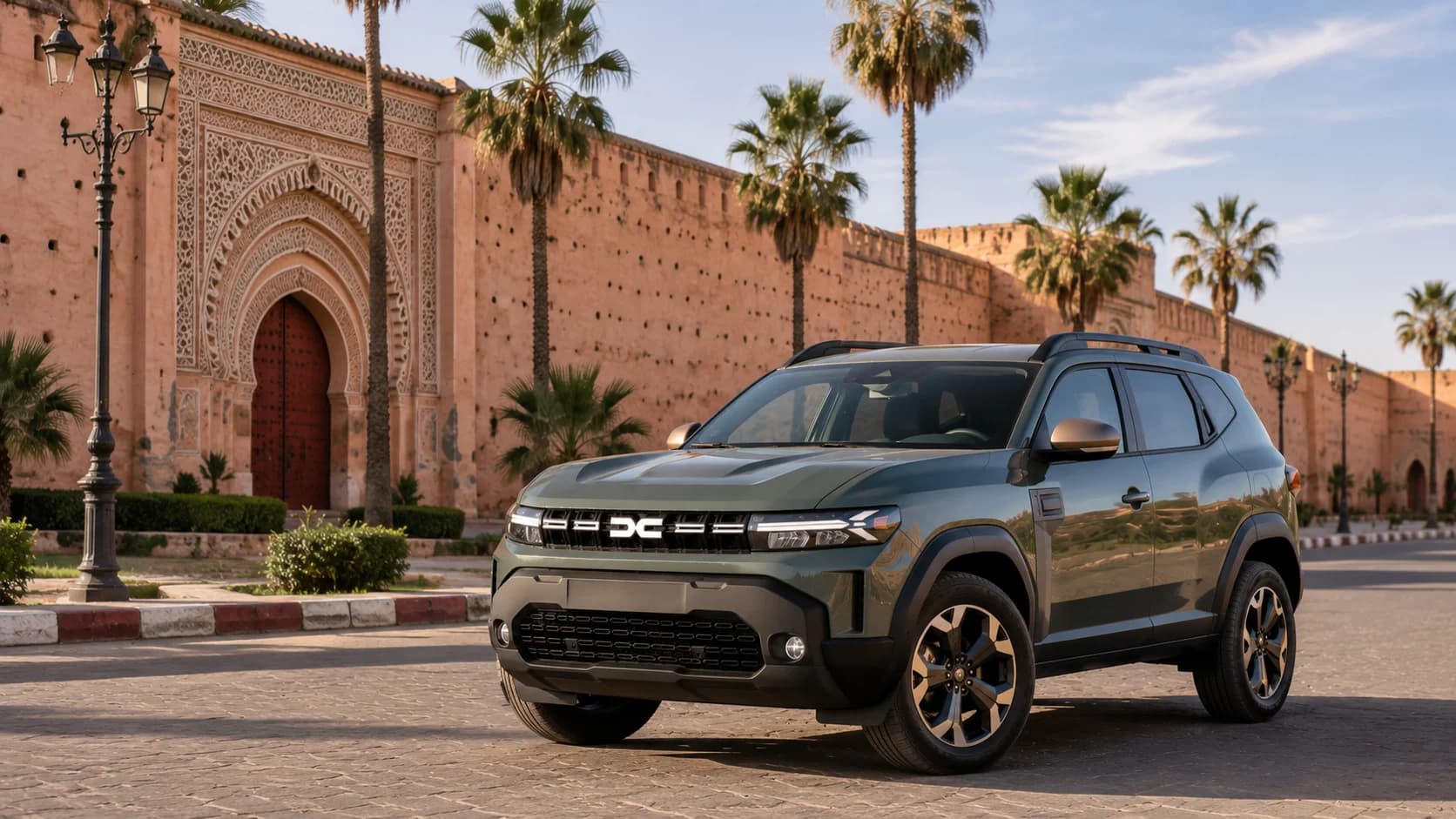
For travelers wanting extra comfort and visibility, a modern SUV from the SUV Rental Marrakech category is an excellent choice.
Imlil and the Toubkal Foothills
If Ourika is the easiest mountain excursion, Imlil offers the classic High Atlas experience.
Located roughly 65 km south of Marrakech, Imlil serves as the gateway to the foothills of Mount Toubkal, North Africa's highest peak.
Can You Reach Imlil by Car?
Yes.
Many travelers searching for imlil by car are surprised to learn that paved roads reach the village itself.
The drive takes approximately:
- 1 hour 30 minutes
- 2 hours with stops
Why Imlil Is Worth the Drive
Highlights include:
- Traditional mountain villages
- Toubkal viewpoints
- Walking trails
- Cooler temperatures
- Authentic Berber culture
Unlike Ourika, Imlil feels significantly more mountainous and remote.
Parking in Imlil
Visitors typically park near the village entrance before exploring on foot.
Parking attendants are common and usually charge a small fee.
Ouirgane and the Tizi n'Test Direction
Ouirgane remains one of the Atlas Mountains' hidden gems.
Located west of Imlil, this peaceful valley attracts travelers seeking fewer crowds and beautiful landscapes.
Why Visit Ouirgane?
The region offers:
- Pine forests
- Reservoir views
- Scenic mountain roads
- Boutique lodges
- Relaxed atmosphere
The drive itself is part of the attraction.
Continuing Toward Tizi n'Test
Adventurous drivers can continue south toward Tizi n'Test, one of Morocco's most scenic mountain passes.
The road becomes:
- Narrower
- More winding
- Less trafficked
But rewards drivers with exceptional mountain scenery and panoramic viewpoints.
Tizi n'Tichka: Morocco's Most Famous Mountain Pass
No Atlas Mountains road trip guide would be complete without Tizi n'Tichka.
Connecting Marrakech to Ouarzazate, this legendary pass reaches approximately 2,260 meters above sea level.
What Makes It Special?
The route offers:
- Dramatic switchbacks
- Snow-capped peaks in winter
- Traditional mountain villages
- Endless panoramic views
- Access to Ait Ben Haddou
Best Stops Along the Route
Mountain Viewpoints
Numerous overlooks allow drivers to safely stop for photos.
Artisan Shops
Roadside cooperatives sell:
- Argan products
- Carpets
- Handcrafted goods
Ait Ben Haddou
One of Morocco's most famous kasbahs and a UNESCO World Heritage Site.
Many travelers combine the pass with a full-day excursion to Ait Ben Haddou.
Mountain Driving Technique: Gears, Brakes and Bends
Mountain driving differs significantly from city driving.
Use Engine Braking
When descending:
- Shift to lower gears
- Avoid riding the brakes continuously
This prevents overheating and improves control.
Approach Bends Carefully
Many mountain roads feature:
- Blind corners
- Sharp turns
- Occasional livestock crossings
Reduce speed before entering bends.
Expect Mixed Road Users
Drivers may encounter:
- Motorcycles
- Cyclists
- Donkeys
- Shepherds
- Trucks
Remain alert, especially near villages.
Avoid Aggressive Overtaking
Mountain roads often have limited visibility.
Only overtake when completely safe.
Weather and Seasonal Road Notes
The Atlas Mountains can experience dramatically different weather from Marrakech.
Spring (March–May)
Many travelers consider spring the best season.
Expect:
- Green valleys
- Mild temperatures
- Excellent visibility
Summer (June–August)
Advantages:
- Dry roads
- Long daylight hours
Mountain temperatures remain cooler than Marrakech.
Autumn (September–November)
Excellent for road trips due to:
- Pleasant weather
- Fewer crowds
- Clear mountain views
Winter (December–February)
Higher passes may experience:
- Snow
- Ice
- Temporary delays
Road conditions should always be checked before long mountain journeys.
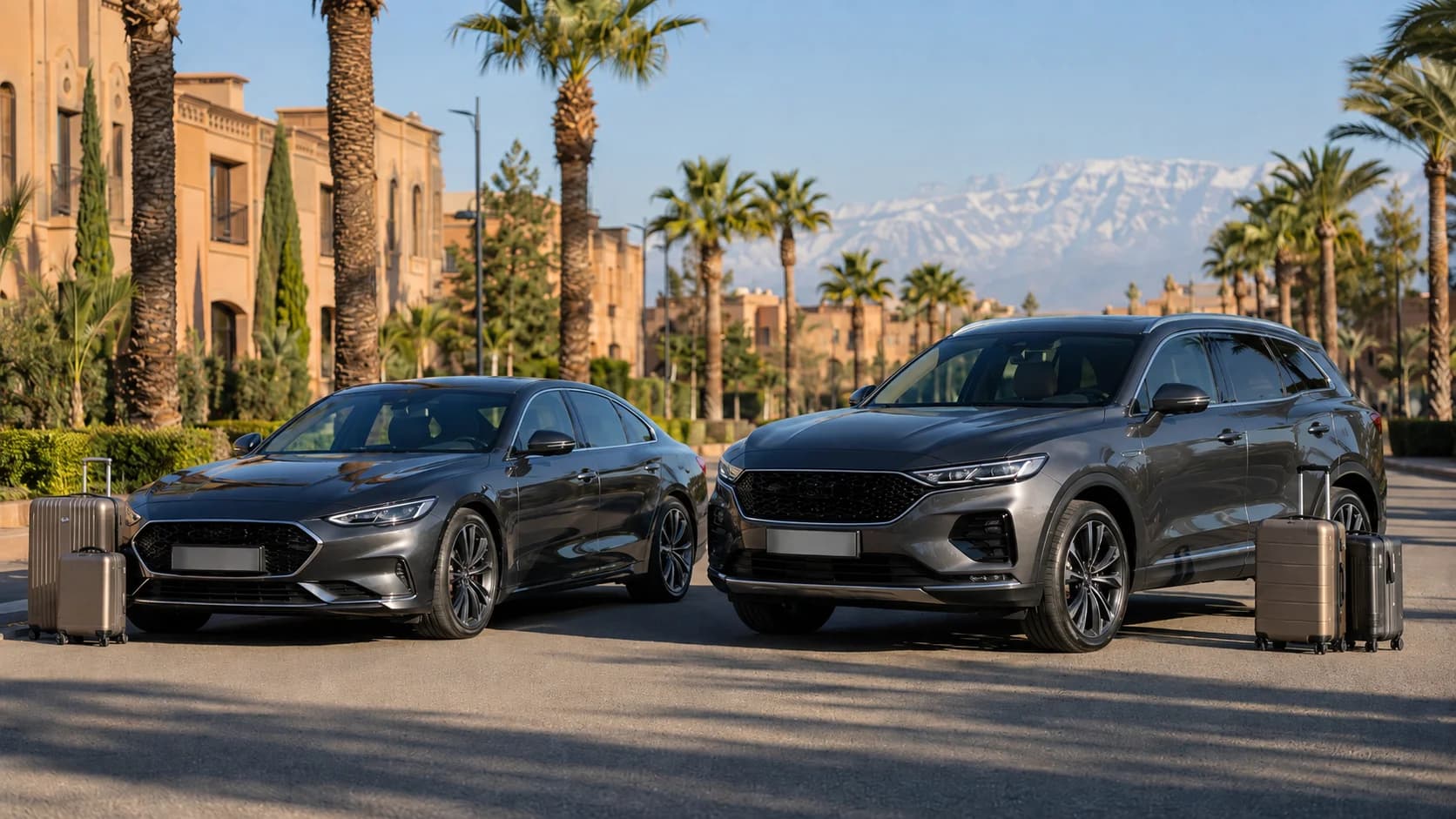
Best Car for Atlas Mountain Roads
One of the most common questions involves vehicle selection.
Economy Cars
Suitable for:
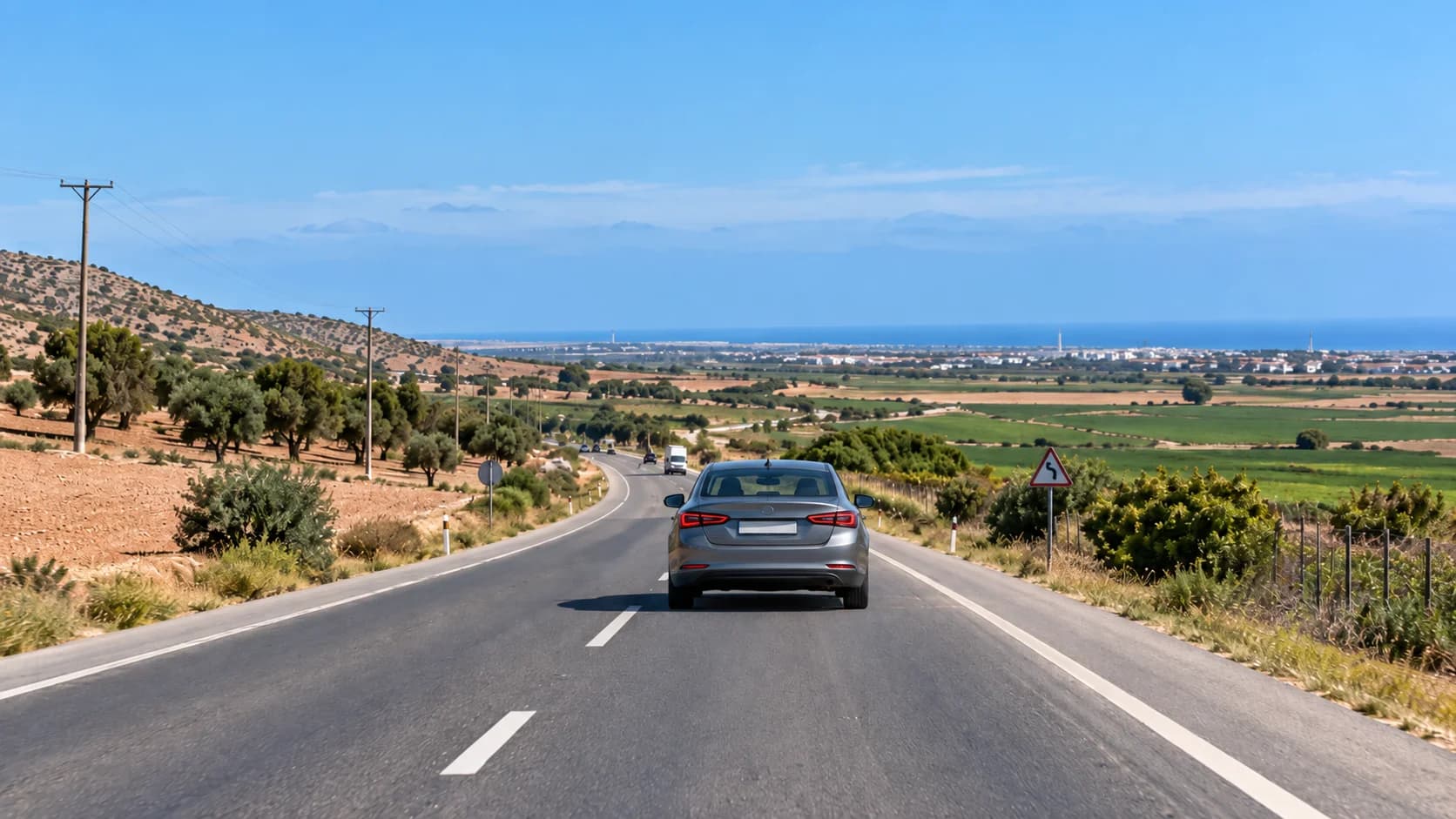
- Ourika Valley
- Main paved routes
- Budget-conscious travelers
Travelers can find affordable options through the Cheap Car Rental Marrakech category.
SUVs
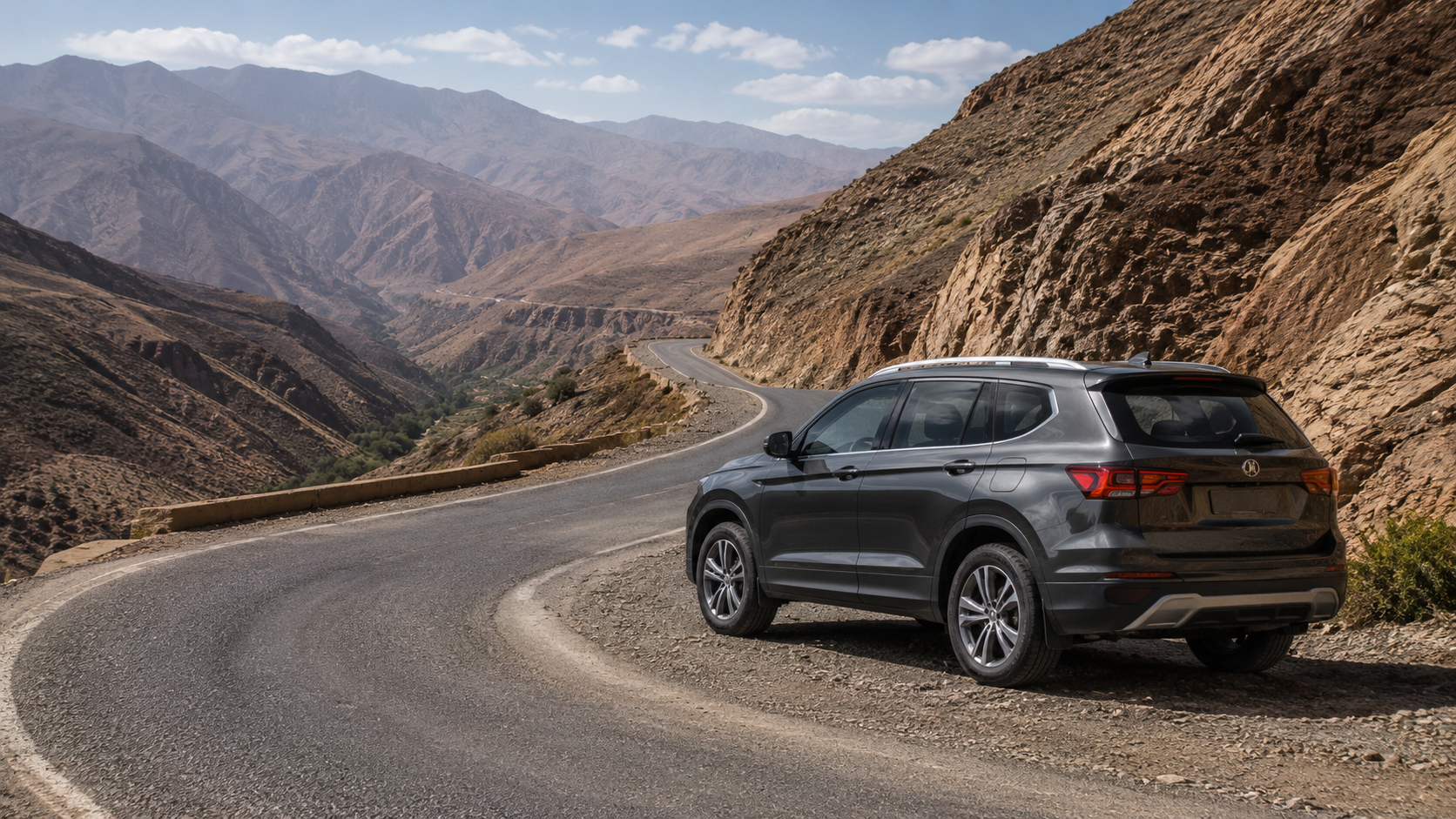
For most visitors, SUVs provide the best balance of:
- Comfort
- Safety
- Visibility
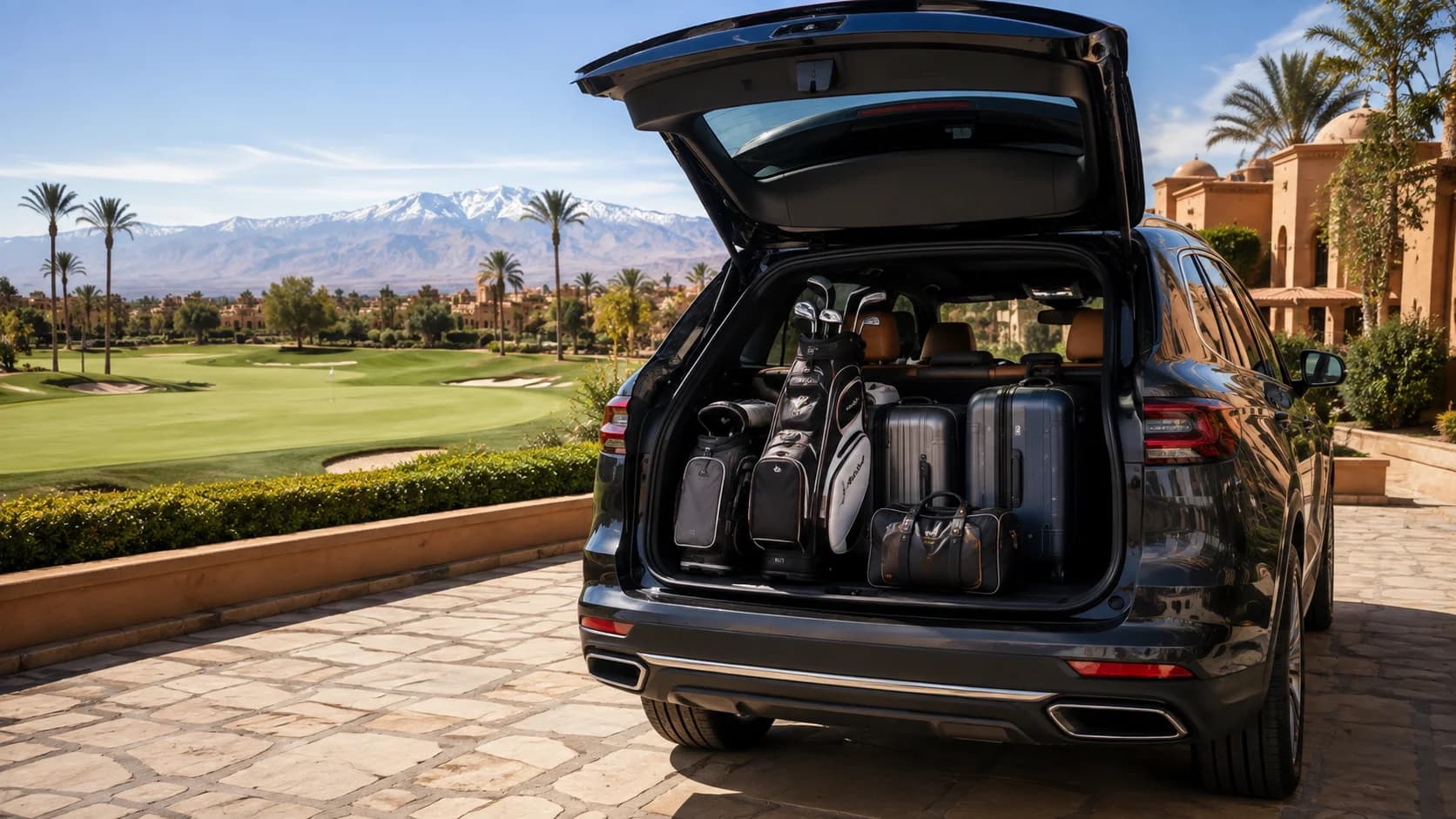
- Luggage space
They are particularly useful for longer mountain drives.
Browse available models at SUV Rental Marrakech.
Do You Need a 4x4?
For normal tourist routes:
Usually not.
However, a true 4x4 can be useful for:
- Winter travel
- Remote tracks
- Poor weather conditions
Travelers planning more adventurous routes may prefer the vehicles available through 4x4 Rental Marrakech.
Where to Stop, Eat and Refuel
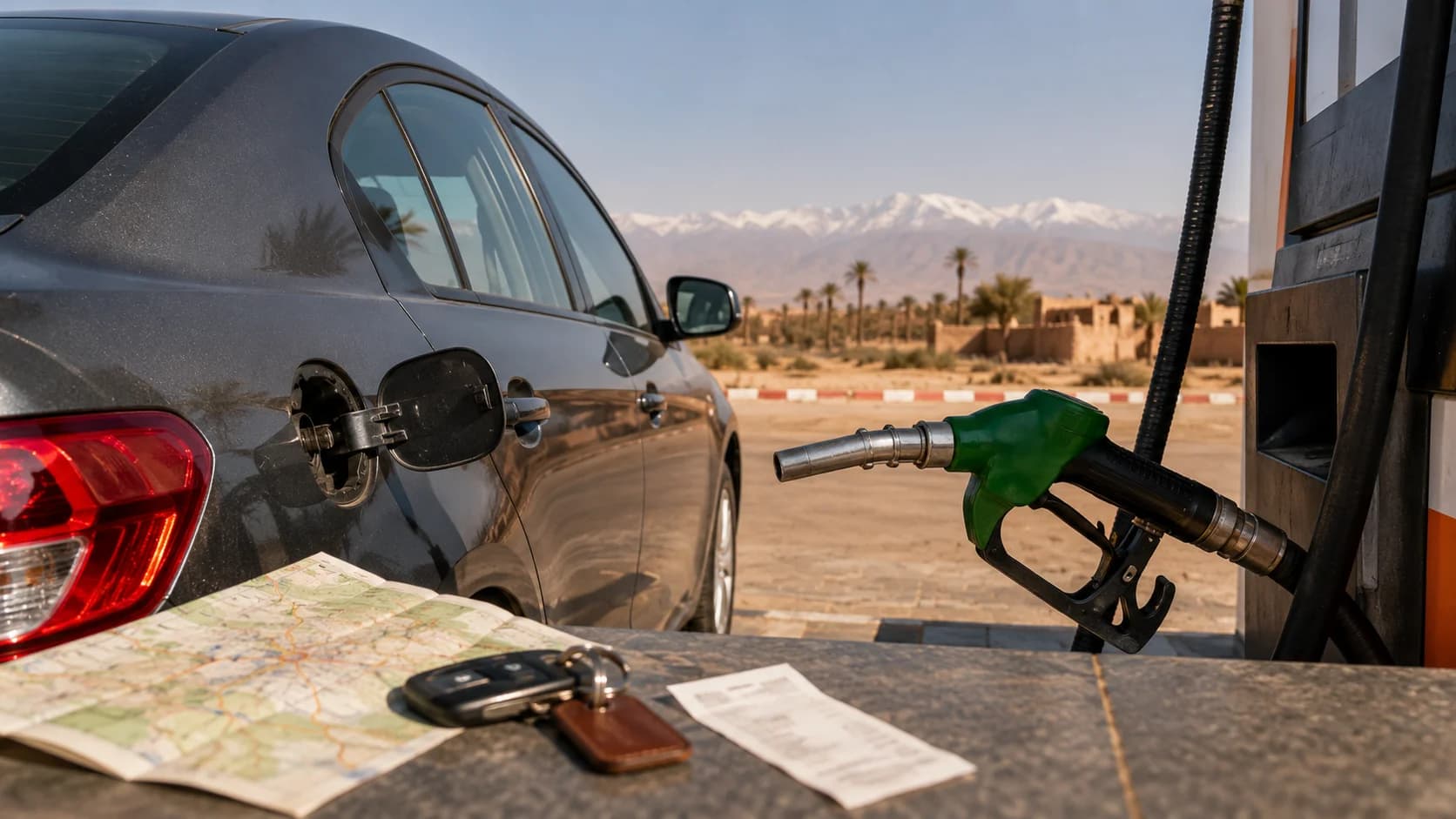
Fuel Stations
Always refuel before heading deep into mountain regions.
Large stations are easy to find near Marrakech and along major routes.
Coffee Stops
Popular areas include:
- Asni
- Ourika
- Ouirgane
- Taddert
Local Restaurants
Mountain restaurants typically serve:
- Tagines
- Grilled meats
- Fresh bread
- Mint tea
Many offer spectacular terrace views overlooking valleys and mountains.
Scenic Photo Stops
Some of the best viewpoints are found:
- Along Tizi n'Tichka
- Near Imlil
- Around Ouirgane Reservoir
- Above Setti Fatma
Allow extra time because you'll likely stop more often than expected.
Sample Atlas Mountain Road Trip Itineraries
Half-Day Route: Ourika Valley
Distance: Approx. 80 km round trip
Route:
Marrakech → Ourika → Setti Fatma → Marrakech
Ideal for travelers with limited time.
Full-Day Route: Imlil
Distance: Approx. 130 km round trip
Route:
Marrakech → Asni → Imlil → Mountain Lunch → Marrakech
Perfect for experiencing authentic High Atlas scenery.
Two-Day Atlas Loop
Day 1
Marrakech → Ouirgane → Tizi n'Test → Overnight
Day 2
Continue toward Tizi n'Tichka → Ait Ben Haddou → Marrakech
This itinerary showcases some of Morocco's most spectacular mountain landscapes.
Final Thoughts
The Atlas Mountains are one of Morocco's greatest driving destinations. Within a short distance of Marrakech, travelers can discover waterfalls, valleys, Berber villages, mountain passes, and some of the country's most dramatic scenery.
The beauty of a self-drive trip is freedom. You decide where to stop, how long to stay, and which route to follow.
Whether you're planning a relaxed excursion to Ourika Valley or a full High Atlas adventure across Tizi n'Tichka, the journey itself becomes one of the highlights of your Morocco trip.
The Atlas rewards travelers who leave the city behind and explore at their own pace.
Frequently Asked Questions
Can I drive to the Atlas Mountains myself?
Yes. Most Atlas Mountain routes near Marrakech are paved and accessible to independent drivers.
Do I need a 4x4 for the Atlas?
Not for standard tourist routes such as Ourika Valley, Imlil, or Tizi n'Tichka. A modern SUV is usually sufficient.
How far is Ourika Valley from Marrakech?
Ourika Valley is approximately 35–45 km from Marrakech and takes around one hour to reach by car.
Are mountain roads dangerous to drive?
Most roads are safe when driven carefully. Drivers should reduce speed on bends and remain alert for changing conditions.
Can I reach Imlil by car?
Yes. Paved roads connect Marrakech directly to Imlil village.
What's the best season for an Atlas road trip?
Spring and autumn generally offer the best weather, clear visibility, and comfortable temperatures.
Ready for Your Atlas Adventure?
The High Atlas Mountains are best explored with the freedom of your own vehicle. MarHire Car Marrakech offers comfortable SUVs and capable 4x4s with full insurance, unlimited kilometers, and free hotel delivery, helping you enjoy Morocco's most spectacular mountain roads with confidence.