







Driving in Marrakech can feel intimidating the first time, but it is not impossible. The city is busy, scooters appear from every direction, lanes are not always treated strictly, and the Medina can be confusing if you do not know where to stop. But with the right expectations, a calm driving style, and the right rental car, many tourists manage Marrakech driving without serious stress.
The best approach is simple: use the car when it makes your trip easier, avoid forcing it into the busiest old-city streets, and choose a compact automatic if you want a smoother first day. This guide explains what driving in Marrakech really feels like, where it makes sense, where walking is better, and how to stay confident behind the wheel.
Table of Contents
-
Is Marrakech driving hard?
-
Which side of the road and the basics
-
What city traffic really feels like
-
Roundabouts and unmarked junctions
-
The Medina: where not to drive
-
When driving makes sense vs parking and walking
-
Should you choose an automatic for the city?
-
Confidence tips for your first day
-
When to let someone else drive
-
FAQs about driving in Marrakech
Is Marrakech driving hard?
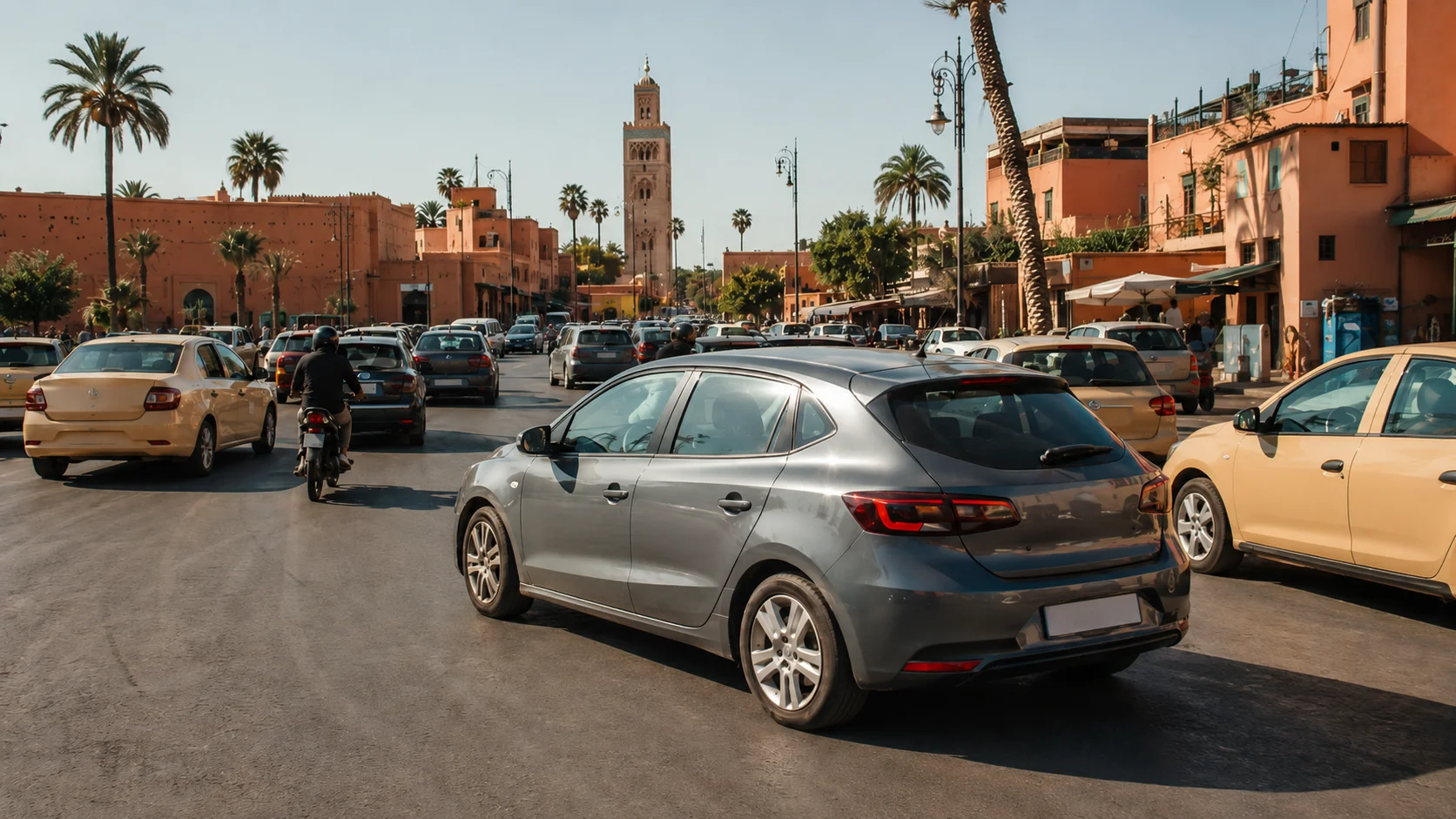
Driving in Marrakech is not dangerous by default, but it is different from driving in a quiet European town or a well-marked suburban city. The challenge is not usually high speed. The challenge is movement from every side.
Cars, taxis, scooters, bicycles, pedestrians, delivery carts, buses, and sometimes horse carriages can all share the same space. This is why first-time visitors often feel nervous during the first 20 minutes. The traffic has its own rhythm, and once you understand that rhythm, the city becomes easier to handle.
For tourists, the biggest mistake is expecting every driver to follow lanes perfectly. In Marrakech, lanes can feel more flexible. Drivers often communicate with small movements, horn taps, eye contact, and positioning. This does not mean you should copy risky behavior. It means you should drive slowly, leave space, and avoid sudden moves.
The good news is that Marrakech driving becomes much easier outside the most central areas. Roads around newer districts, hotels, shopping areas, the airport route, and day-trip exits are usually more manageable than the narrow streets near the Medina.
Which side of the road and the basics
Morocco drives on the right-hand side of the road. The steering wheel is usually on the left side of the car, and overtaking is generally done on the left.
For many visitors from Europe, North America, or the Middle East, this feels familiar. For visitors from the UK, Ireland, Australia, New Zealand, South Africa, or other left-side driving countries, the biggest adjustment is road position. Take your first few minutes slowly, especially at turns and roundabouts.
Basic points to remember:
Morocco drives on the right side.
Seat belts should be used by everyone in the car.
Speed limits are posted and should be respected.
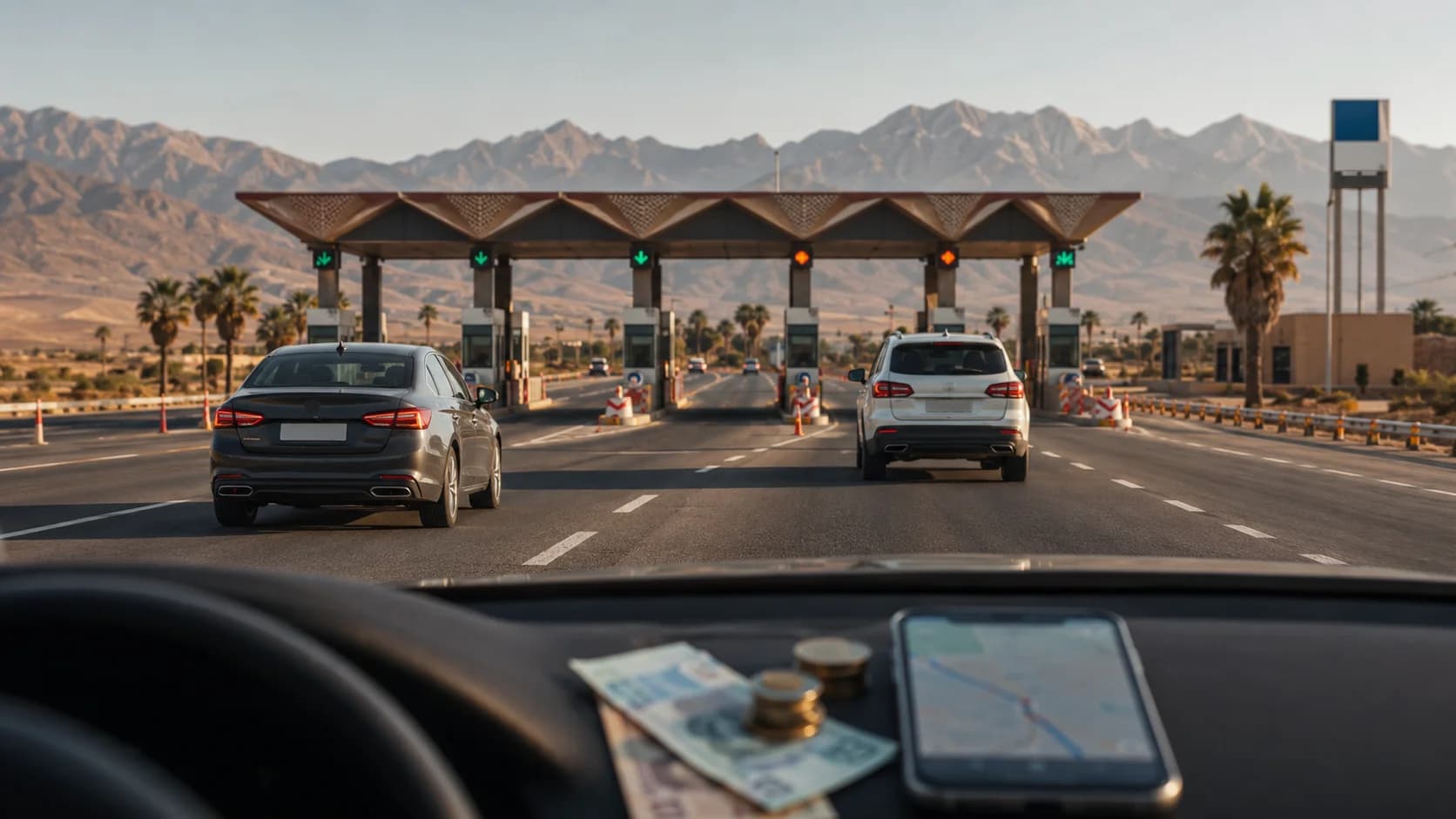
Police checks can happen on city roads and routes outside Marrakech.
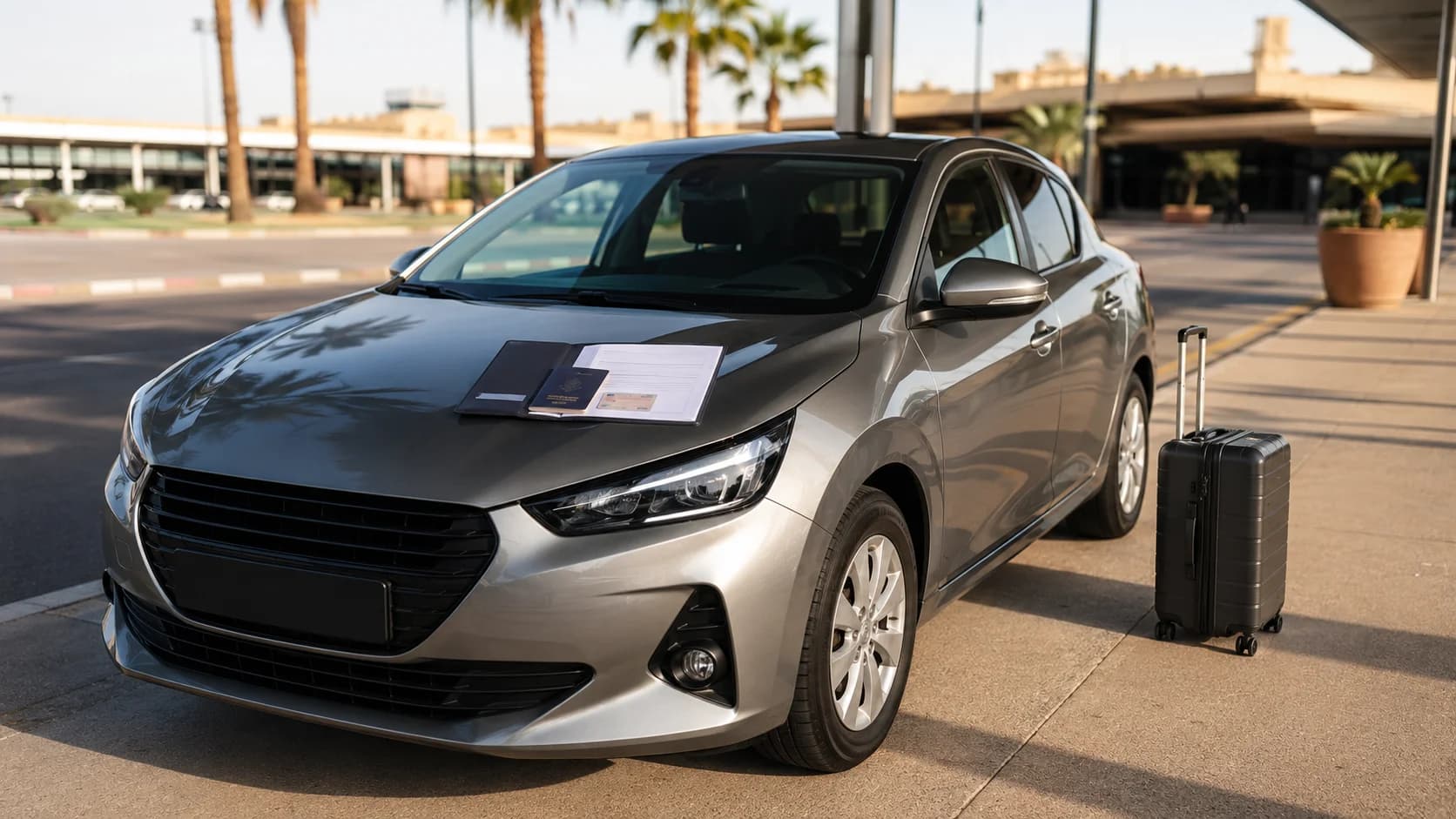
Keep your passport or ID, driving license, rental contract, and insurance documents available.
At traffic lights, do not follow scooters through gaps. Wait for your clear signal and move only when safe.
For first-timers, the safest mindset is defensive driving. Let impatient drivers pass, avoid arguing for space, and never rush just because someone behind you honks.
What city traffic really feels like
Marrakech traffic is active, noisy, and close. Horns are common, but they are not always aggressive. A horn can mean “I am here,” “move forward,” “watch out,” or “I am passing.” Do not take every horn personally.
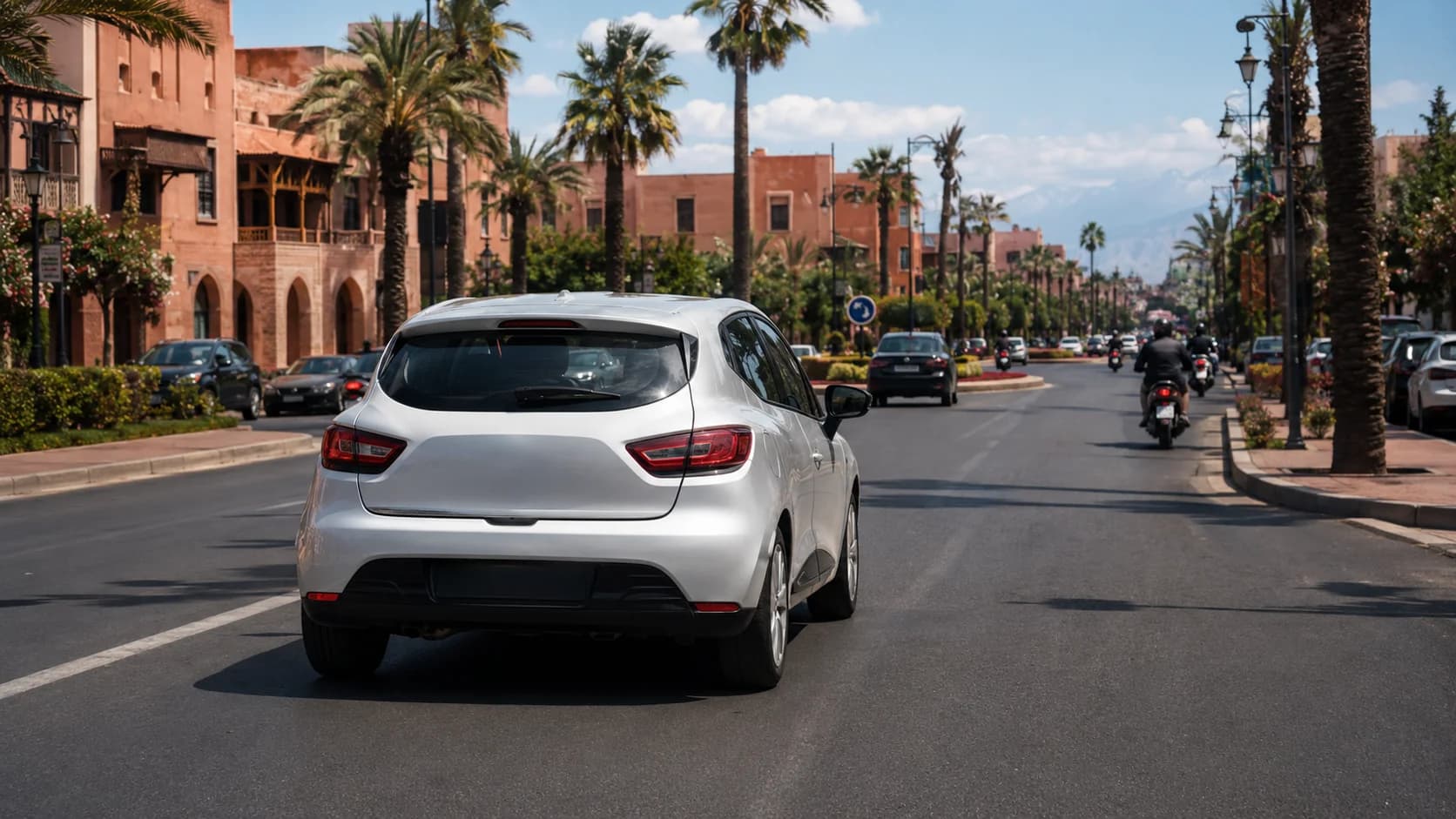
Scooters are the biggest adjustment for many tourists. They can pass on the left, pass on the right, filter between cars, stop near your blind spot, or appear when you are turning. Before every turn, check mirrors carefully and look over your shoulder when needed.
Pedestrians also require attention. People may cross outside marked crossings, especially near markets, taxi stops, cafés, and Medina entrances. Slow down early in busy areas and do not assume the road will stay clear just because you have priority.
Lanes can feel loose. A two-lane road may behave like three lanes in heavy traffic. Your job is not to “win” the lane. Your job is to keep a steady line, avoid sharp braking, and make your intentions obvious.
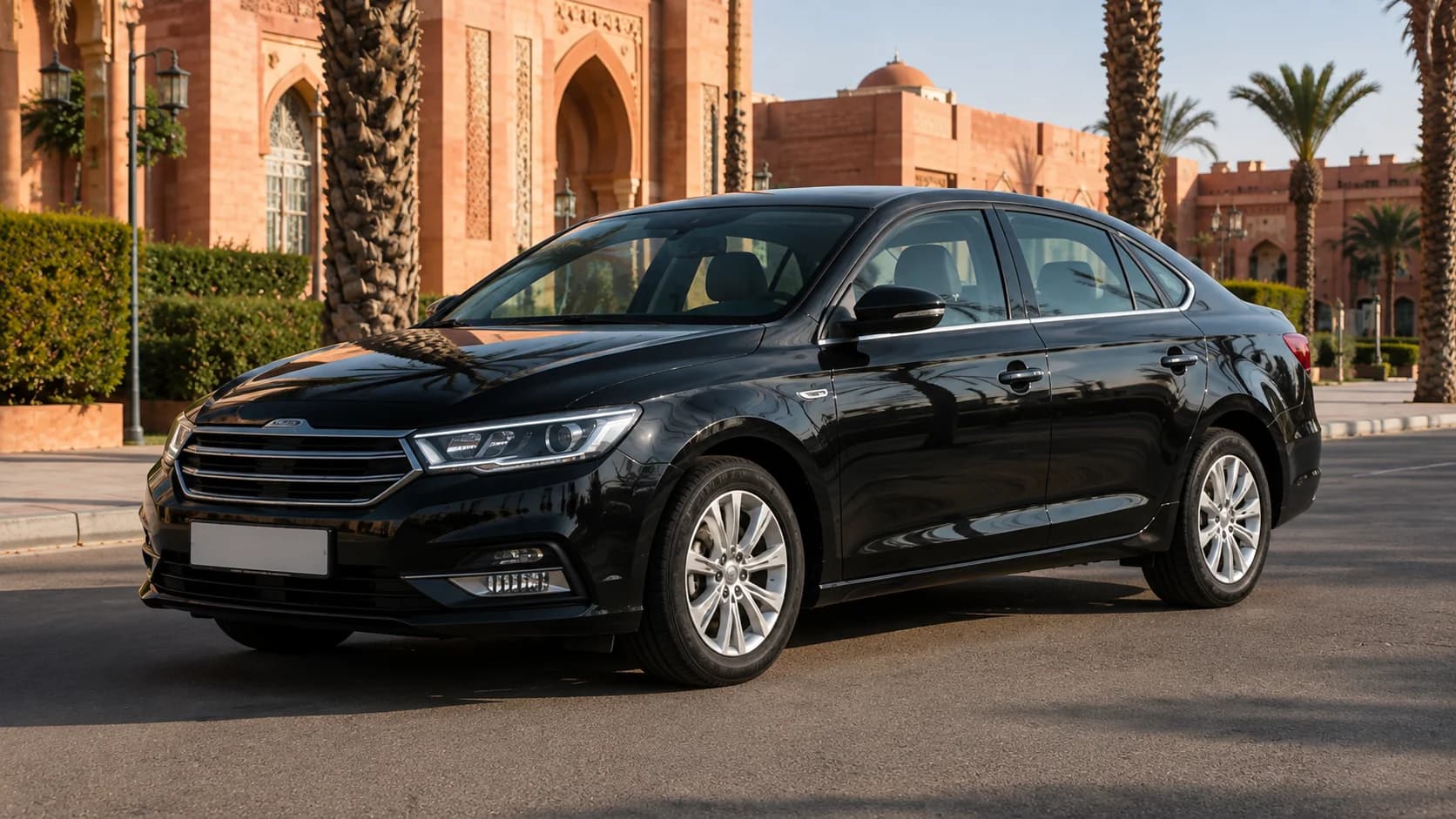
A compact car helps a lot here. It is easier to place on the road, easier to park, and less stressful in tight areas. If you are choosing a city car, a small model from cheap car rental Marrakech can make sense for short city use and simple hotel-to-attraction driving.
Roundabouts and unmarked junctions
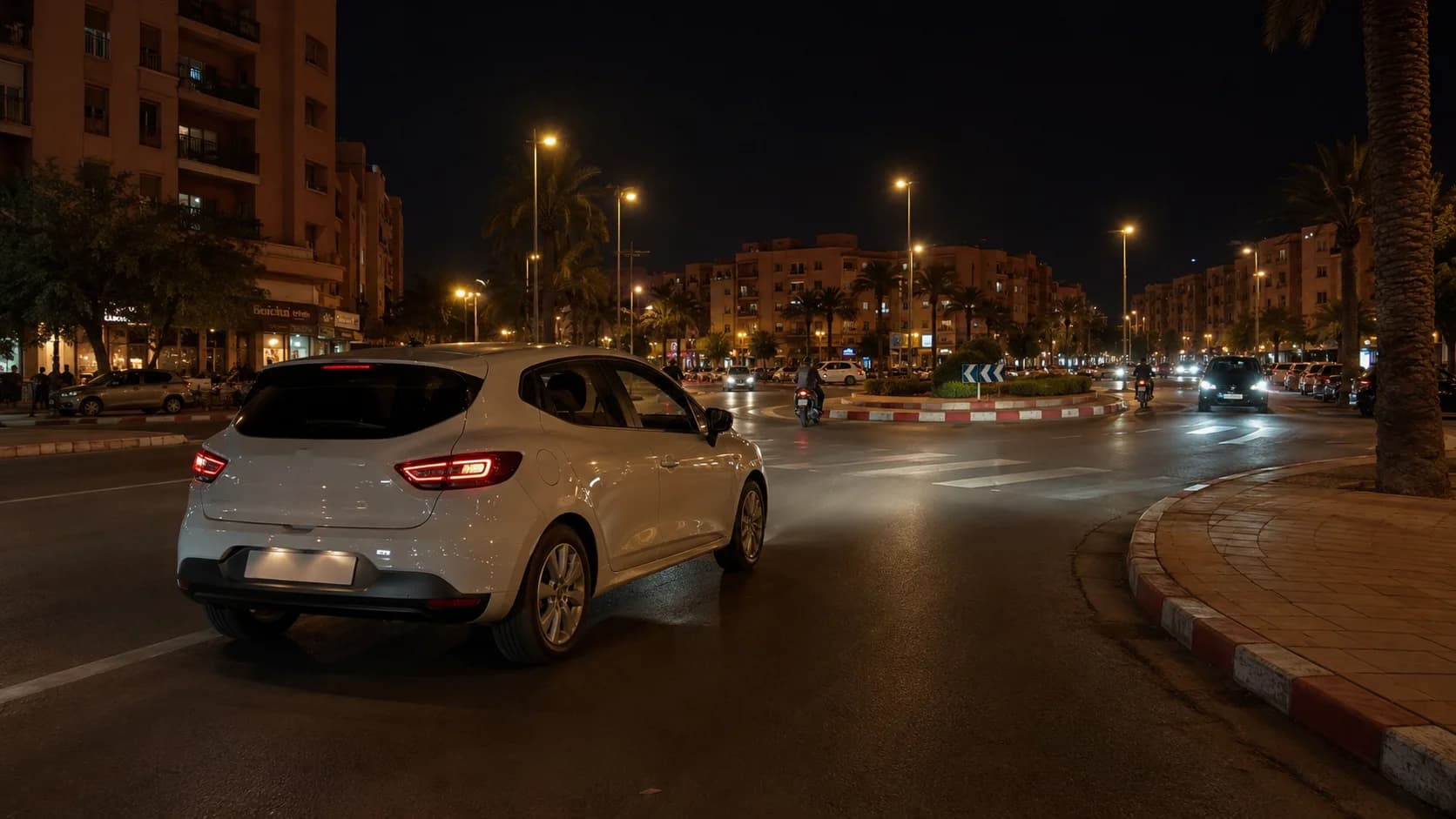
Roundabouts in Marrakech can feel confusing at first because not every driver uses indicators clearly. Some roundabouts also have traffic lights, while others depend more on flow and priority.
The safest rule is to slow down before entering, read the signs and lights, watch the vehicles already moving, and never force your way in. If you miss your exit, continue calmly and go around again. A missed exit is much safer than a sudden lane change.
Use your indicator, but do not assume everyone else will. Watch the wheels and position of nearby vehicles. A car that looks like it is staying inside may still cut out. A scooter may appear beside you just before your exit. Keep your speed low and leave space.
At unmarked junctions, approach slowly and be ready to stop. Even when you believe you have priority, another driver may move first. In Marrakech, confidence is useful, but patience is safer.
The Medina: where not to drive
The Medina is the part of Marrakech where first-time visitors should be most careful. It is historic, narrow, busy, and not designed for easy tourist driving. Some routes near the old city are fine, but deep Medina lanes can quickly become stressful.
Do not try to drive a rental car into narrow alleys just because a map app says the route exists. A lane may be technically visible on the map but too tight, crowded, blocked, or unsuitable for a car. You may meet pedestrians, scooters, delivery carts, market stalls, or dead-end turns with very little room to reverse.
The better strategy is to park near a known access point, then walk or take local transport for the final part. This is especially important if your riad is inside the Medina. Ask your accommodation for the nearest car-accessible meeting point or parking area before arrival.
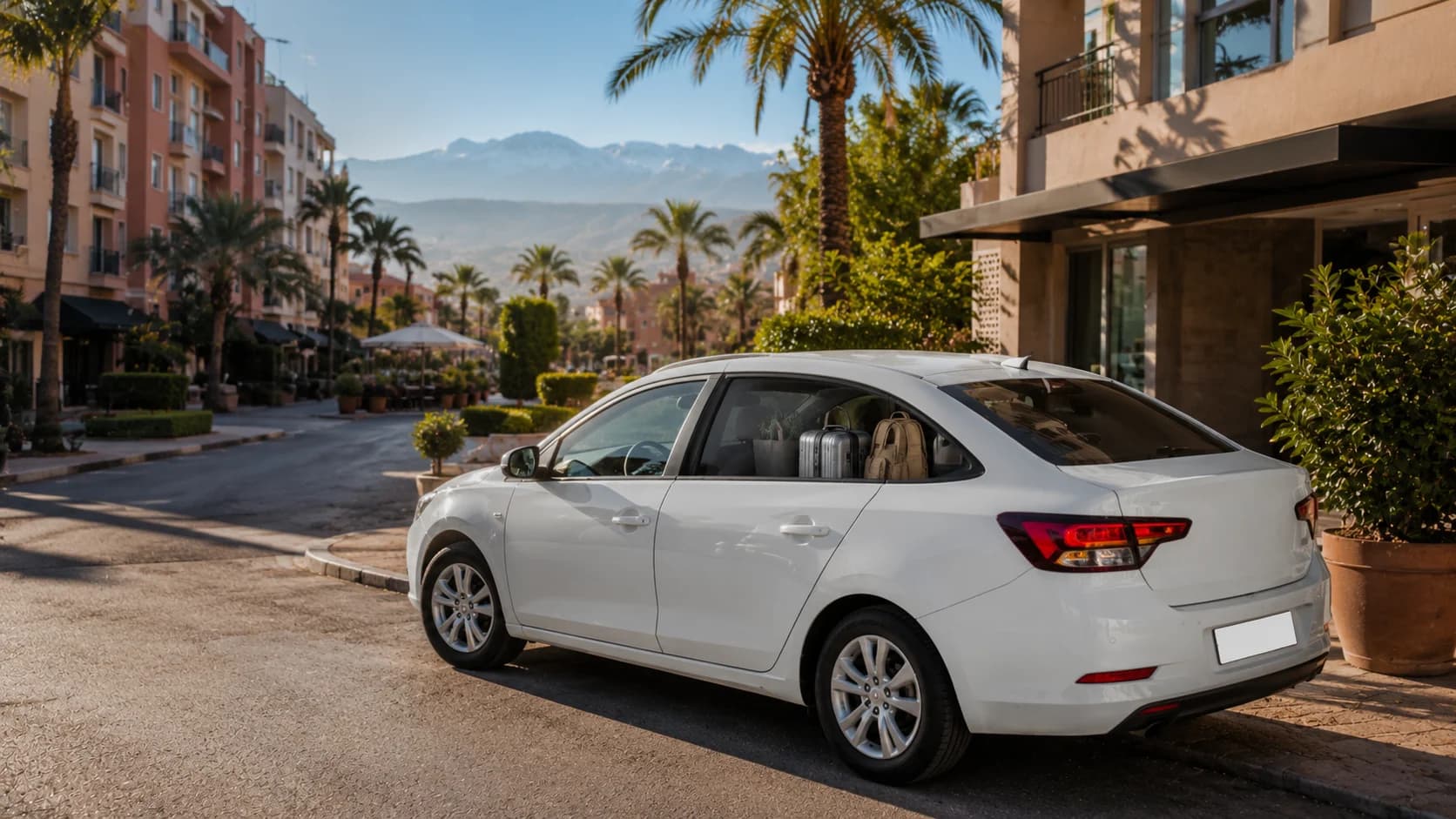
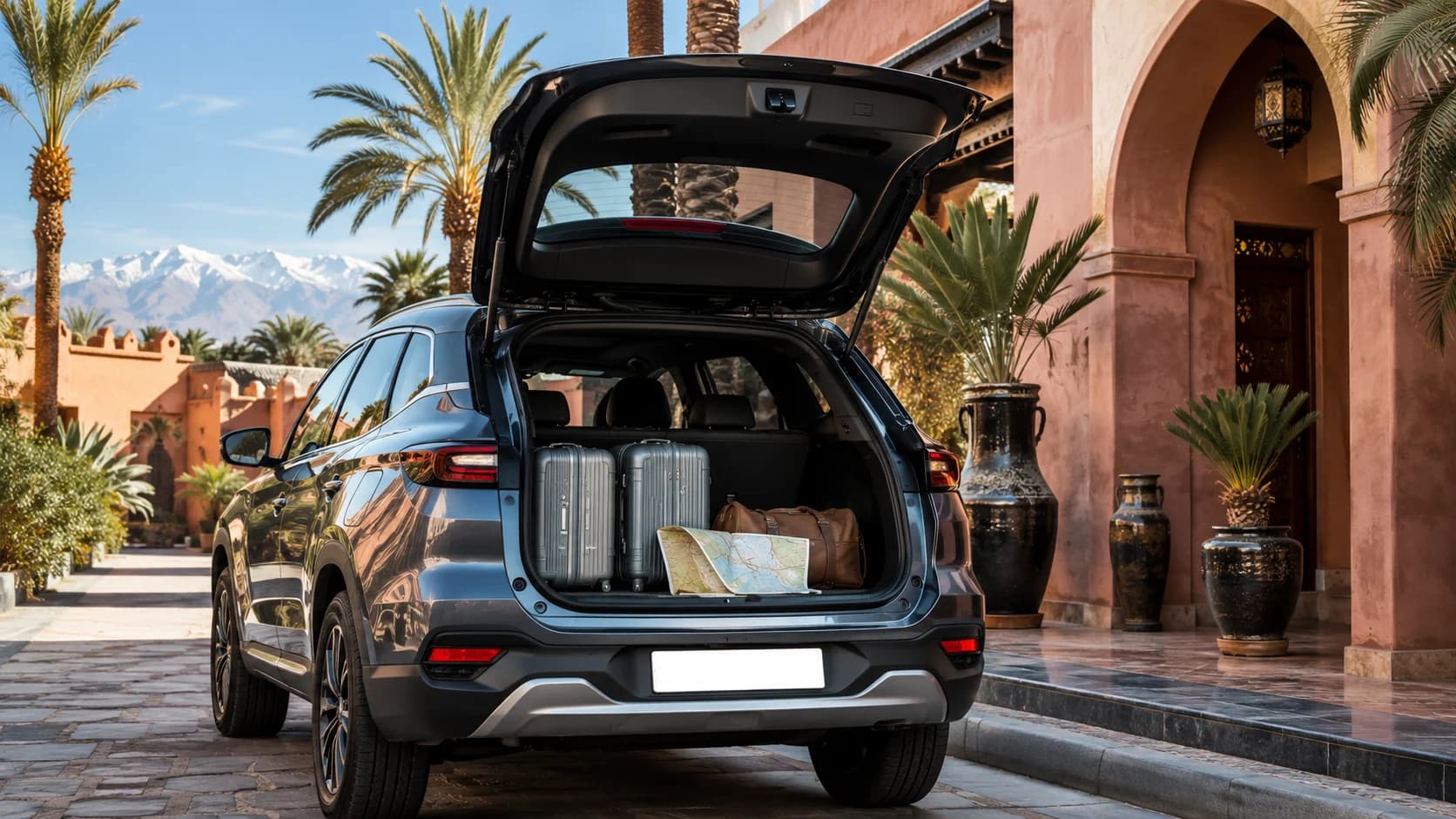
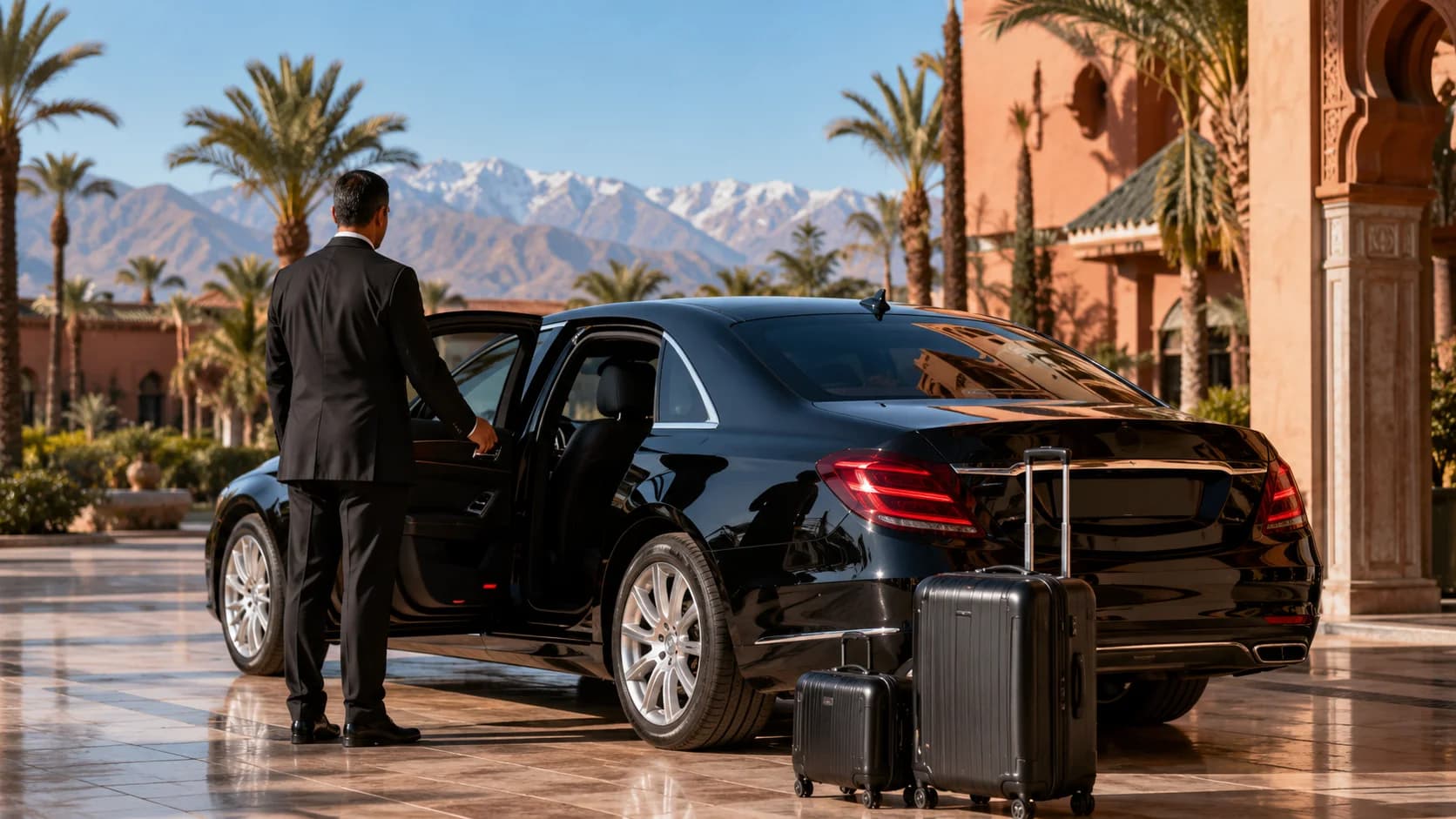
If you are arriving with luggage, plan the handover carefully. It is much easier to meet at a wider road or parking zone than to search for a tiny door in the old city while traffic builds behind you.
When driving makes sense vs parking and walking
Driving in Marrakech makes sense when the car solves a real problem. It is useful for airport arrival, hotel transfers, business meetings across the city, family travel, shopping with luggage, and day trips outside Marrakech.
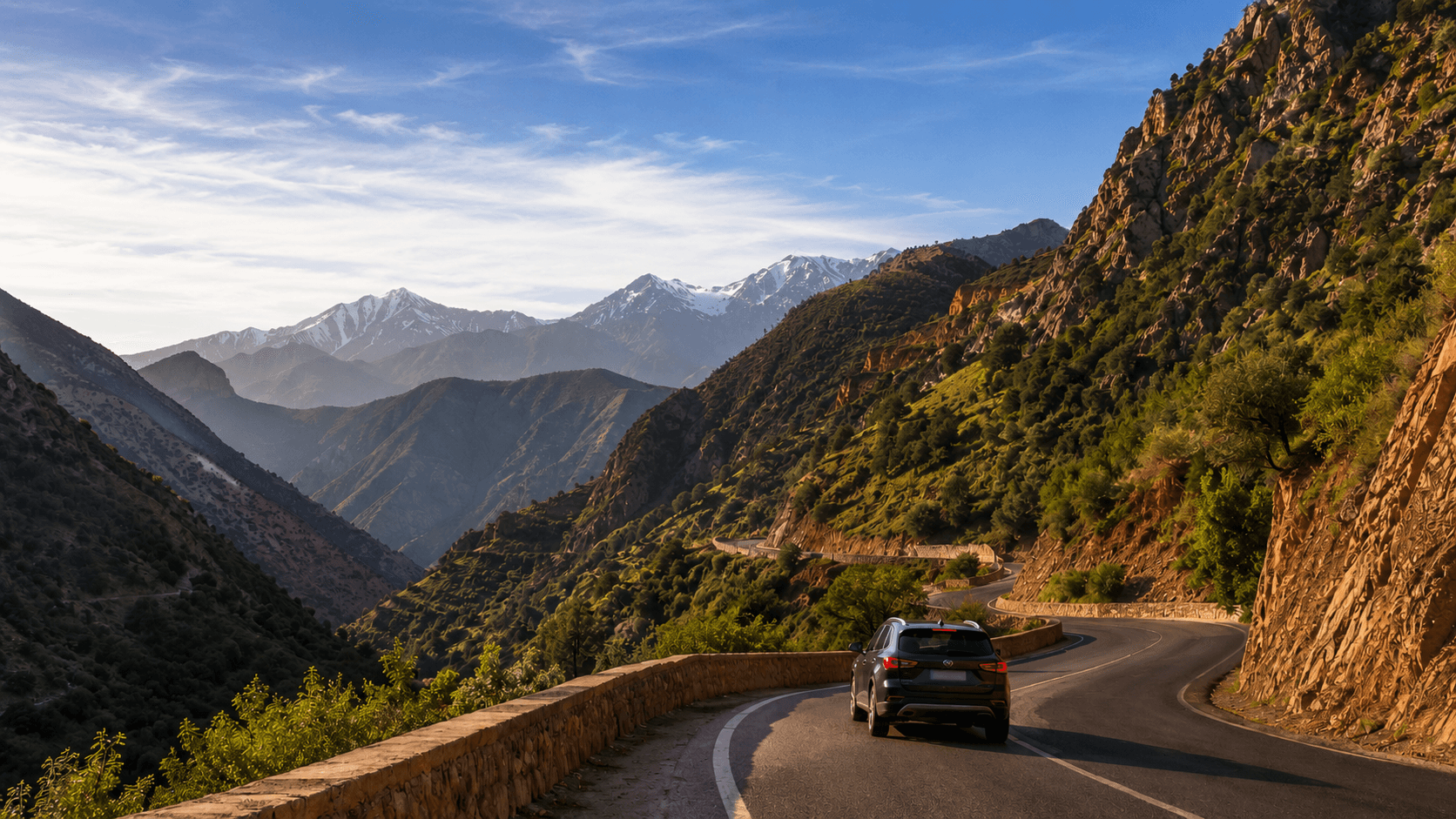
A rental car is especially helpful for routes to Agafay, Ourika Valley, Ouzoud, Essaouira, Imlil, or other places where public transport can be slower or less direct. For these trips, having your own car gives you more control over timing, stops, luggage, and comfort.
Inside central Marrakech, walking can be better. If you are visiting Jemaa el-Fnaa, souks, museums, traditional restaurants, or busy Medina streets, park first and continue on foot. This saves time, avoids tight streets, and removes parking stress.
The best plan is not “drive everywhere” or “never drive.” The smart plan is mixed. Drive between zones, park in practical areas, then walk when the streets become narrow or crowded.
Should you choose an automatic for the city?
Yes, an automatic car is usually easier for Marrakech city driving, especially for first-time visitors. The traffic involves frequent stopping, slow movement, scooters filtering around you, and quick decisions at roundabouts. With an automatic, you can focus more on mirrors, road position, and pedestrians instead of changing gears every few seconds.
A compact automatic is often the best balance for Marrakech. It is small enough for tight streets, easy to park, and comfortable enough for airport pickups or short day trips. If you are nervous about traffic, choosing automatic car rental Marrakech is one of the simplest ways to reduce pressure.
Manual cars can be cheaper and are fine for confident drivers. But if you are already worried about Marrakech traffic, saving a little money may not be worth the extra stress.
For mountain routes, family travel, or luggage-heavy day trips, an SUV rental Marrakech can be more comfortable. For pure city driving, however, a small automatic is usually easier.
Confidence tips for your first day
Start with an easy route. Do not make your first Marrakech drive a deep Medina arrival at night. Choose a simple airport-to-hotel route or a short drive on wider roads first.
Avoid peak traffic when possible. Early morning, late afternoon, and evening rush periods can feel more intense. If your schedule is flexible, drive outside the busiest times on your first day.
Keep both hands relaxed on the wheel. Nervous drivers often overcorrect. Stay steady, hold your line, and move slowly.
Use mirrors constantly. Scooters are small and can sit in blind spots. Check before turning, changing lane, opening doors, or moving away from parking.
Do not react emotionally to horns. A horn does not mean you must panic. Check your surroundings, continue safely, and move only when you are ready.
Let locals pass. If someone is impatient, let them go. Your goal is a safe trip, not proving a point.
Plan parking before you leave. Searching for parking while already stressed is one of the hardest parts of city driving. Add your parking spot to the route before you start.
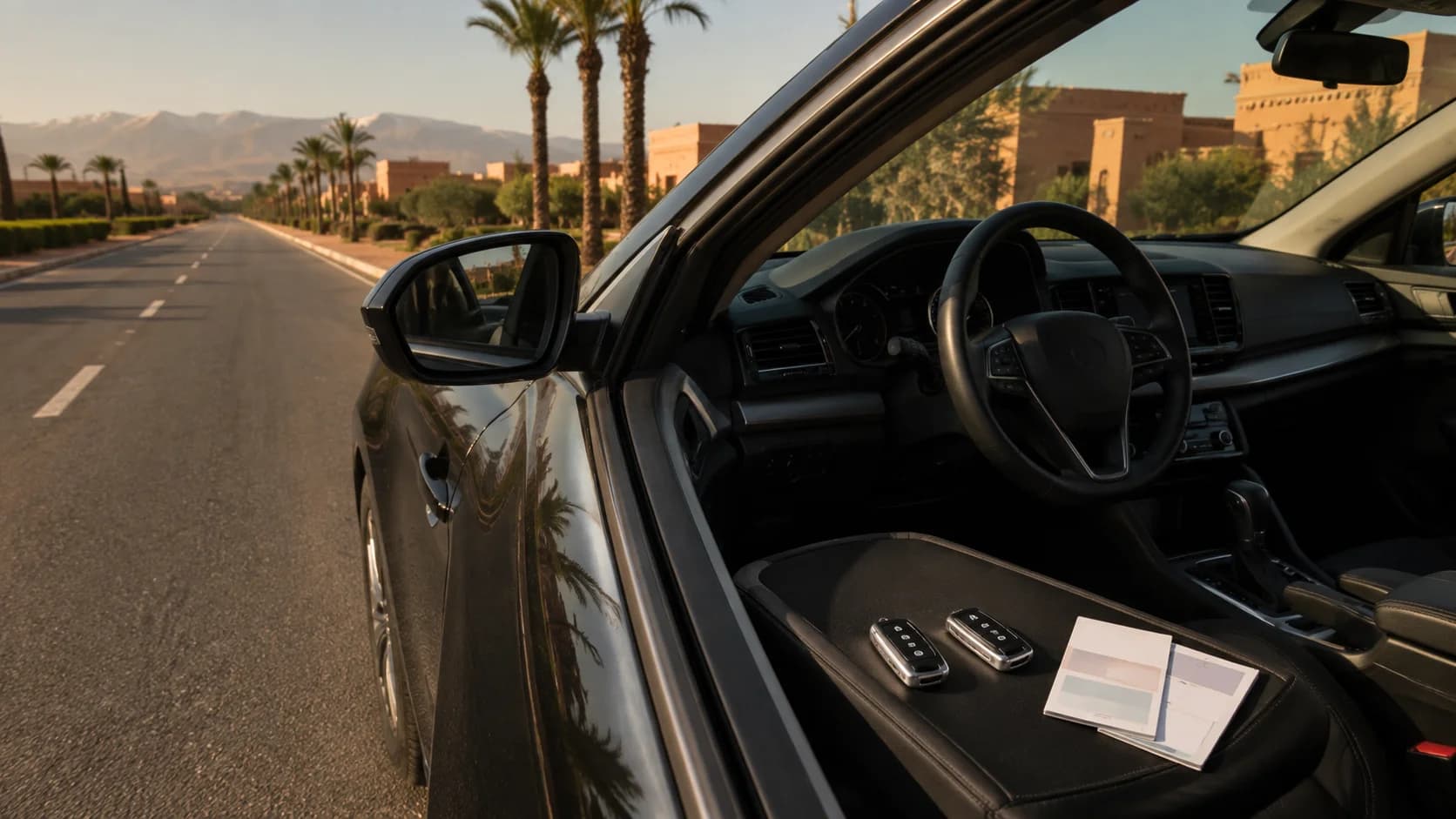
Keep WhatsApp support available. If you rent with MarHire Car Marrakech, keep the agency contact saved so you can ask for help with pickup points, return locations, or route advice.
When to let someone else drive
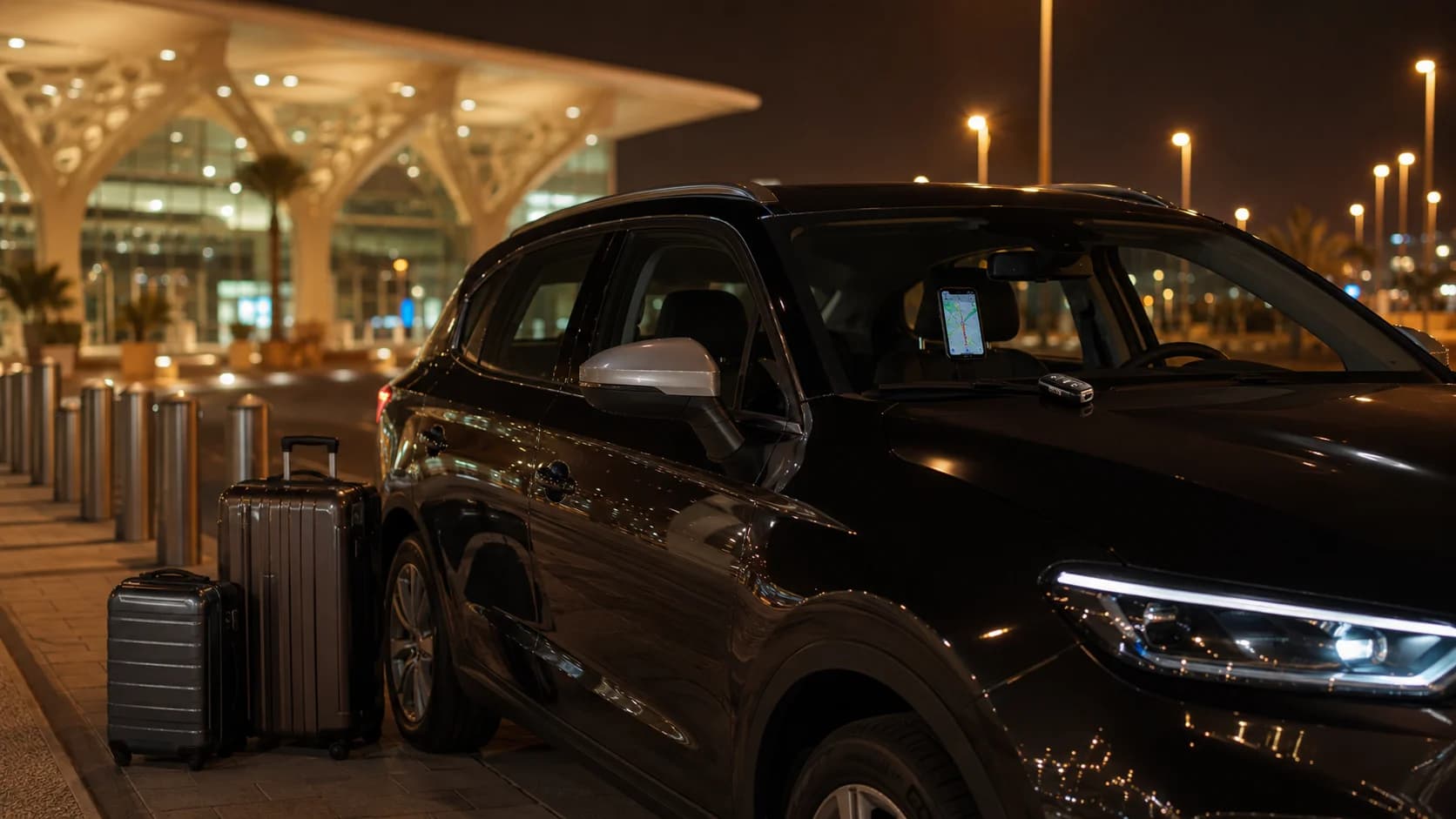
There are times when self-driving is not the best option. If you are arriving late at night after a long flight, tired, or unfamiliar with right-side driving, it may be better to arrange delivery to your hotel and start driving the next morning.
If your plan is mainly Medina sightseeing, you may not need a car every day. Walk, use taxis for short hops, and save the rental for airport transfers, shopping days, and day trips.
You should also consider a driver if your itinerary includes a long mountain route, late-night travel, or a group that needs more coordination. Marrakech is manageable, but fatigue makes any city harder.
Driving in Marrakech is easier than it looks with the right car. Pick a compact automatic from MarHire Car Marrakech for stress-free city traffic, with full insurance and 24/7 WhatsApp support if you ever need a hand.
FAQs About Driving in Marrakech
Is it safe to drive in Marrakech?
Yes, it can be safe to drive in Marrakech if you are calm, alert, and comfortable with busy city traffic. The main challenges are scooters, pedestrians, roundabouts, and narrow streets near the Medina.
Is driving in Marrakech difficult for tourists?
It can feel difficult on the first day, especially in central areas. Most tourists adjust once they understand the local traffic rhythm and avoid the narrowest Medina streets.
Which side of the road does Morocco drive on?
Morocco drives on the right-hand side of the road. The steering wheel is usually on the left side of the vehicle.
Do I need a car to get around Marrakech city?
Not always. A car is useful for airport transfers, hotels outside the center, shopping, business, families, and day trips. For the Medina and souks, parking and walking is usually easier.
Are scooters and motorbikes a problem when driving?
They can be challenging because they move between cars and may appear in blind spots. Check mirrors often, turn slowly, and leave extra space.
How do roundabouts work in Morocco?
Roundabouts vary. Some have traffic lights, some rely on signs, and some rely on local flow. Enter slowly, watch other vehicles carefully, and do not force your way in.
Can you drive inside the Marrakech Medina?
Some roads around the Medina are accessible, but tourists should avoid driving deep inside the old narrow streets. It is usually better to park near an access point and walk.
Is an automatic easier for Marrakech city traffic?
Yes. An automatic car makes stop-start traffic easier and helps first-time drivers focus on scooters, pedestrians, and road position.
Do drivers use indicators in Marrakech?
Some drivers use indicators, but not everyone signals clearly. Watch vehicle movement, wheels, and road position instead of relying only on indicators.
Should beginners avoid driving in central Marrakech?
Beginners should avoid the busiest central areas until they feel comfortable. Start on wider roads, avoid rush hour, and use parking near the Medina instead of driving into narrow streets.