








The journey to the Telouet Kasbah from Marrakech is one of the most rewarding detours across Morocco’s High Atlas Mountains. Instead of remaining on the main N9 toward Ouarzazate, drivers can leave the busier route and follow a quieter mountain road through Telouet and the Ounila Valley to Aït Ben Haddou.
This route combines dramatic mountain scenery, traditional villages, historic kasbahs and stretches of road that receive far fewer visitors than the main Tizi n’Tichka corridor. It is possible in a standard rental car during suitable conditions, but an SUV or 4x4 provides greater comfort and confidence on mountain bends and occasionally uneven surfaces.
Telouet is approximately 100 kilometres from Marrakech, although the mountain drive normally takes around three hours. From Telouet, the scenic P1506 road continues through the Ounila Valley to Aït Ben Haddou. The route is generally paved, but conditions can change after storms, roadworks or winter weather. A 4x4 is not normally essential in dry conditions, though an SUV is a practical choice for comfort, visibility and ground clearance.
Telouet: The Forgotten Glaoui Kasbah
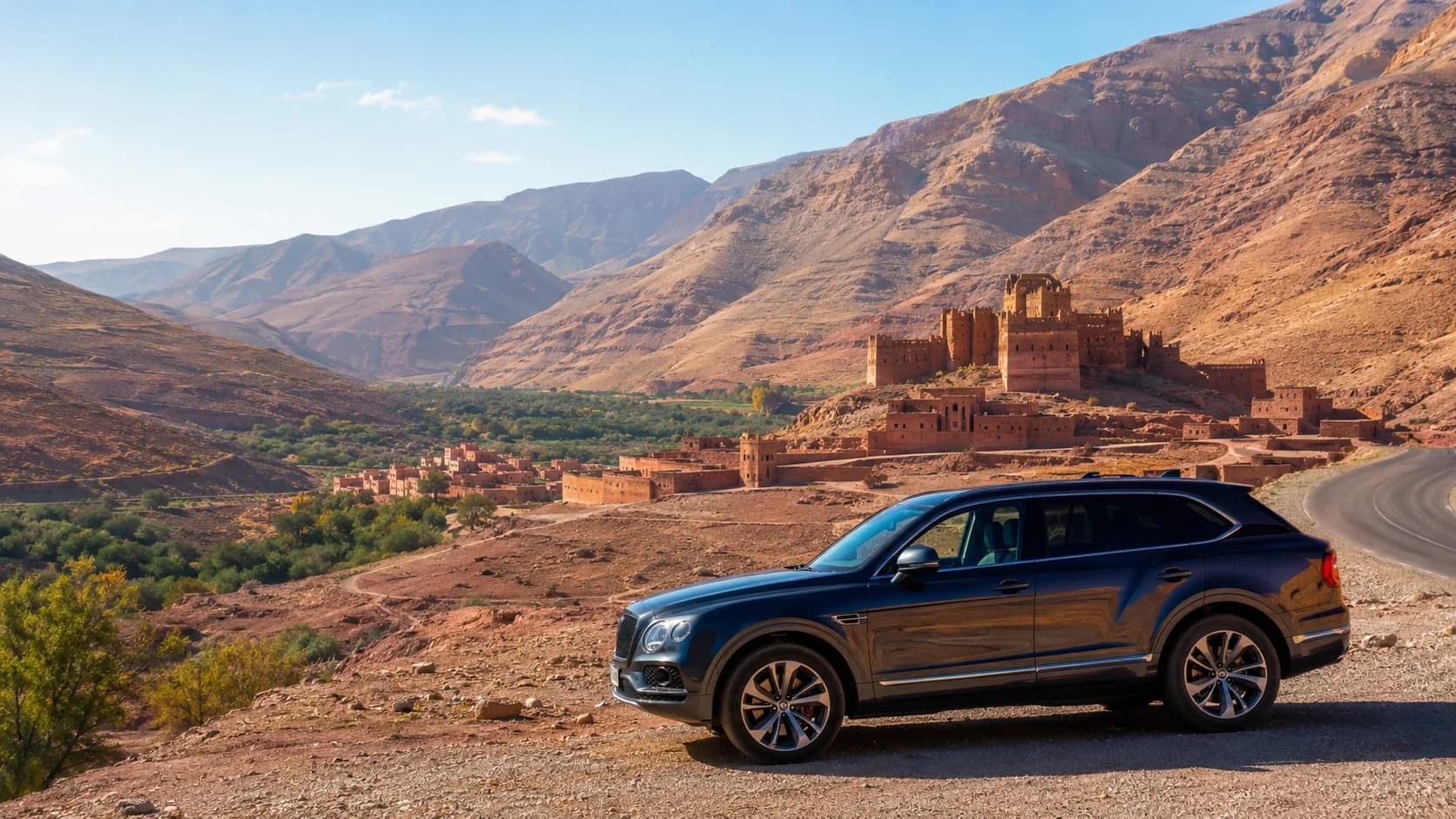
Telouet is a small High Atlas village best known for the Kasbah of Telouet, sometimes called the Glaoui Kasbah. It was associated with the powerful El Glaoui family, whose influence once extended across important routes connecting Marrakech with southern Morocco.
From the outside, much of the structure appears weathered and partially ruined. Inside, however, some rooms preserve intricate decoration, including carved plaster, painted wood, tiled floors and colourful geometric details. This contrast between the deteriorating exterior and the surviving interior is one reason the kasbah feels so memorable.
The building also reflects Telouet’s former importance on historic caravan routes. Traders travelling between Marrakech, the southern oases and areas beyond the Sahara passed through this part of the High Atlas. Telouet sits at roughly 1,800 metres above sea level and was positioned to control movement through the mountains.
Compared with Aït Ben Haddou, Telouet usually feels quieter and less commercial. Visitors may encounter small groups or private tours, but the village rarely has the same concentration of coaches, restaurants and souvenir stalls found around Morocco’s better-known ksar.
Where Telouet Sits on the Tichka Route
The usual road from Marrakech to Ouarzazate follows the N9 across the High Atlas Mountains and over the Tizi n’Tichka Pass. Telouet is reached by leaving the N9 on the southern side of the pass and following the provincial road toward the village.
The turn-off transforms the experience of the journey. Traffic becomes lighter, settlements are smaller and the landscape feels more remote. The road passes through a mixture of exposed mountain terrain, cultivated valleys and earth-coloured villages.
After visiting the kasbah, drivers have two main options:
- Return to the N9 using the same road.
- Continue from Telouet through the Ounila Valley to Aït Ben Haddou.
The second option creates a scenic loop rather than a simple return journey. It is the better choice for travellers who have enough daylight and want to experience the old Tichka road through the valley.
Distance and Drive Time from Marrakech
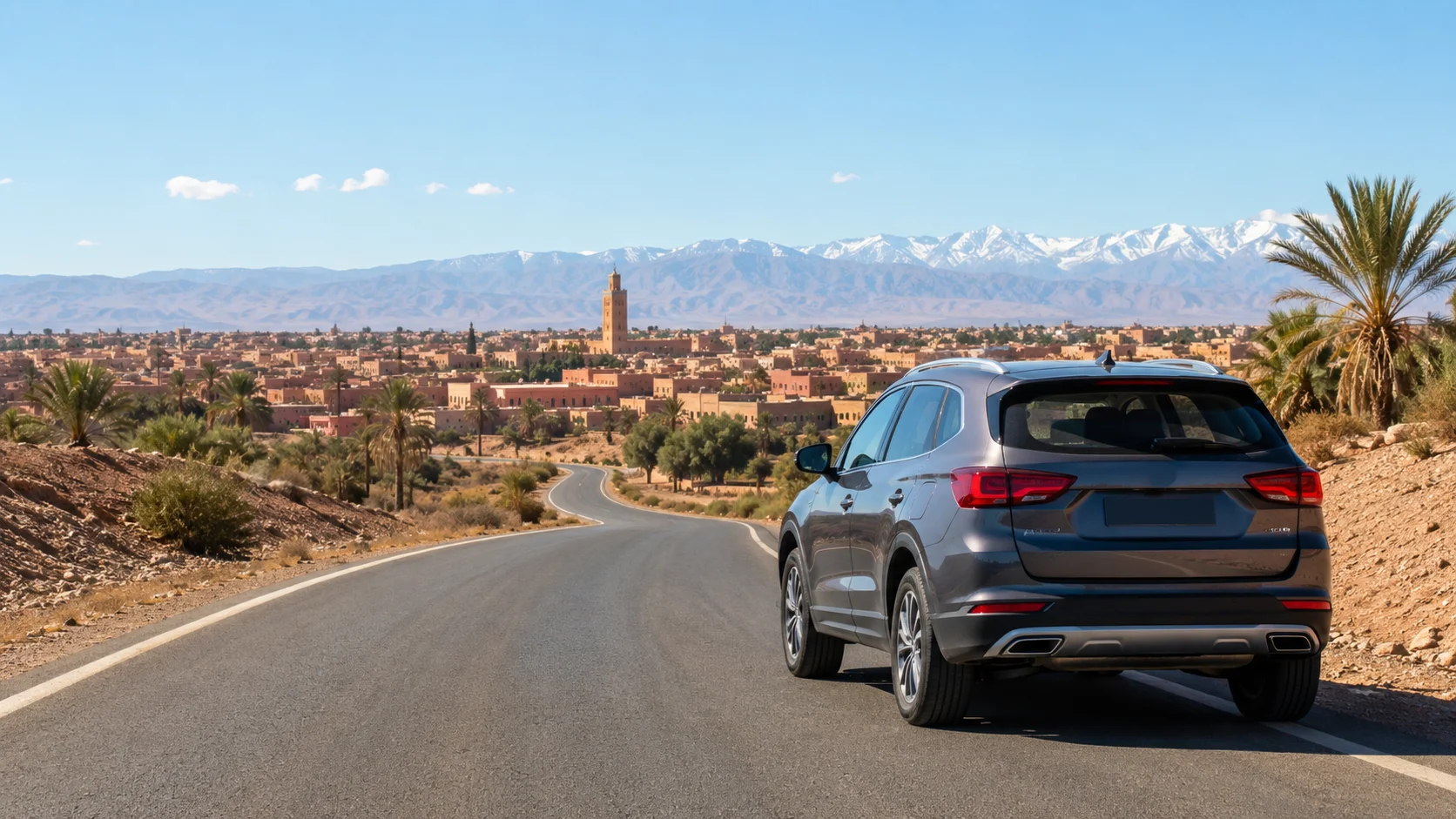
Telouet is approximately 100 kilometres from central Marrakech, but distance alone does not reflect the journey. The road climbs through the High Atlas, passes through villages and includes numerous bends, slopes and possible construction zones.
Allow around three hours from Marrakech to Telouet without counting long stops. This timing can increase because of:
- Traffic when leaving Marrakech
- Slow vehicles on the mountain road
- Photo stops at panoramic viewpoints
- Road maintenance
- Rain, fog, snow or loose material on the road
- Busy periods around the Tizi n’Tichka Pass
A realistic morning plan is to leave Marrakech between 7:00 and 8:00. That gives you enough time to cross the mountains calmly and reach Telouet before midday.
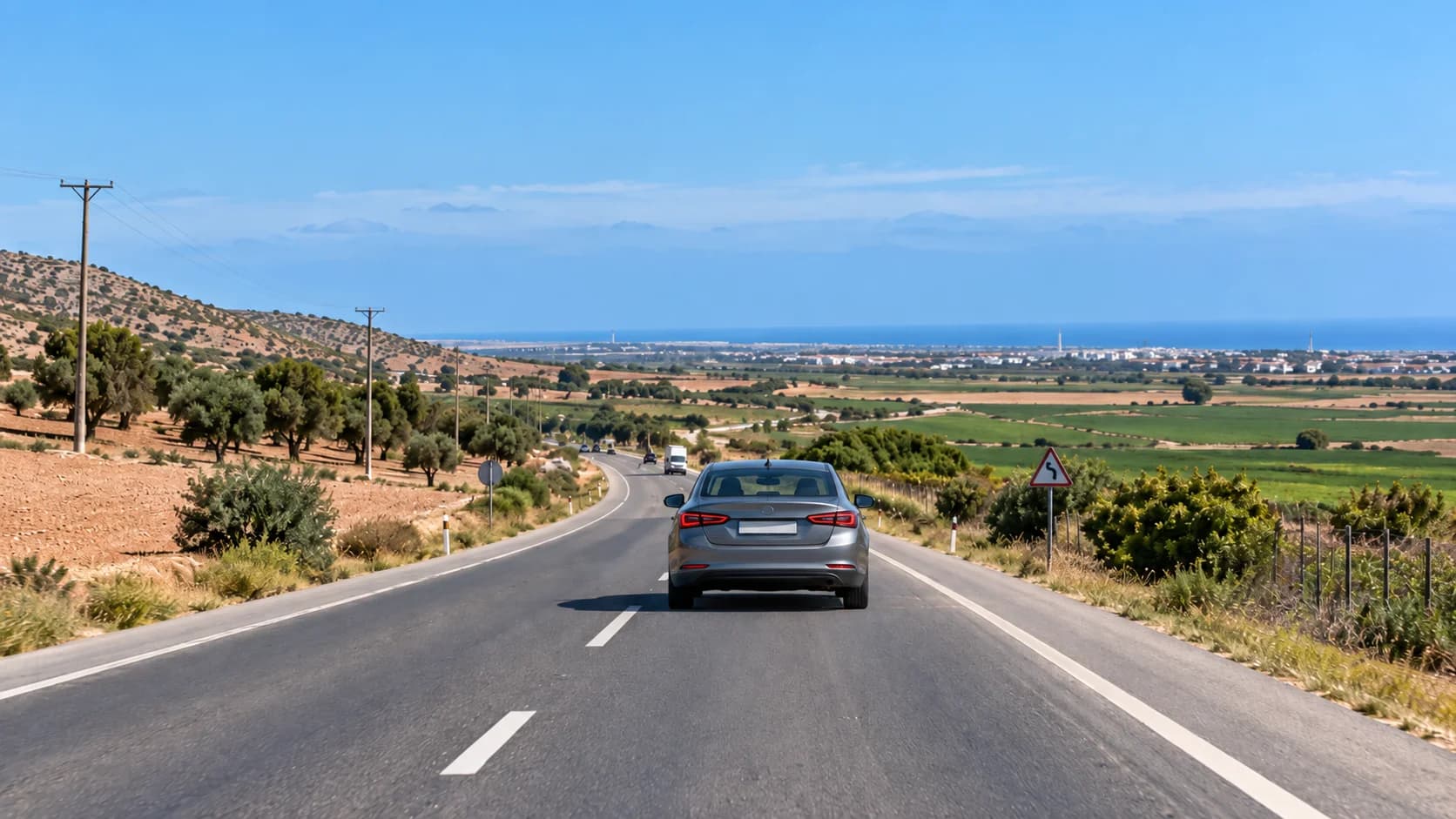
Driving speeds should remain conservative. The mountain scenery can be distracting, and sections of the route have tight curves with limited visibility. Never stop in the traffic lane for photographs. Use a proper pull-off where the vehicle is fully clear of the road.
The Turn-Off and the Old Road Condition
The road to Telouet and the route onward to Aït Ben Haddou are commonly associated with the P1506. This is a paved mountain road, not an off-road trail. However, travellers should not expect the same width, markings or consistency found on a major motorway.
Recent traveller reports have described resurfaced and improved sections of the P1506, including the route between Aït Ben Haddou and Telouet. One account from late 2024 reported that the road had been renewed and was in very good condition at the time of the journey. Conditions may still change due to construction, erosion, heavy rainfall or winter weather, so this should not be treated as a permanent guarantee.
Drivers may encounter:
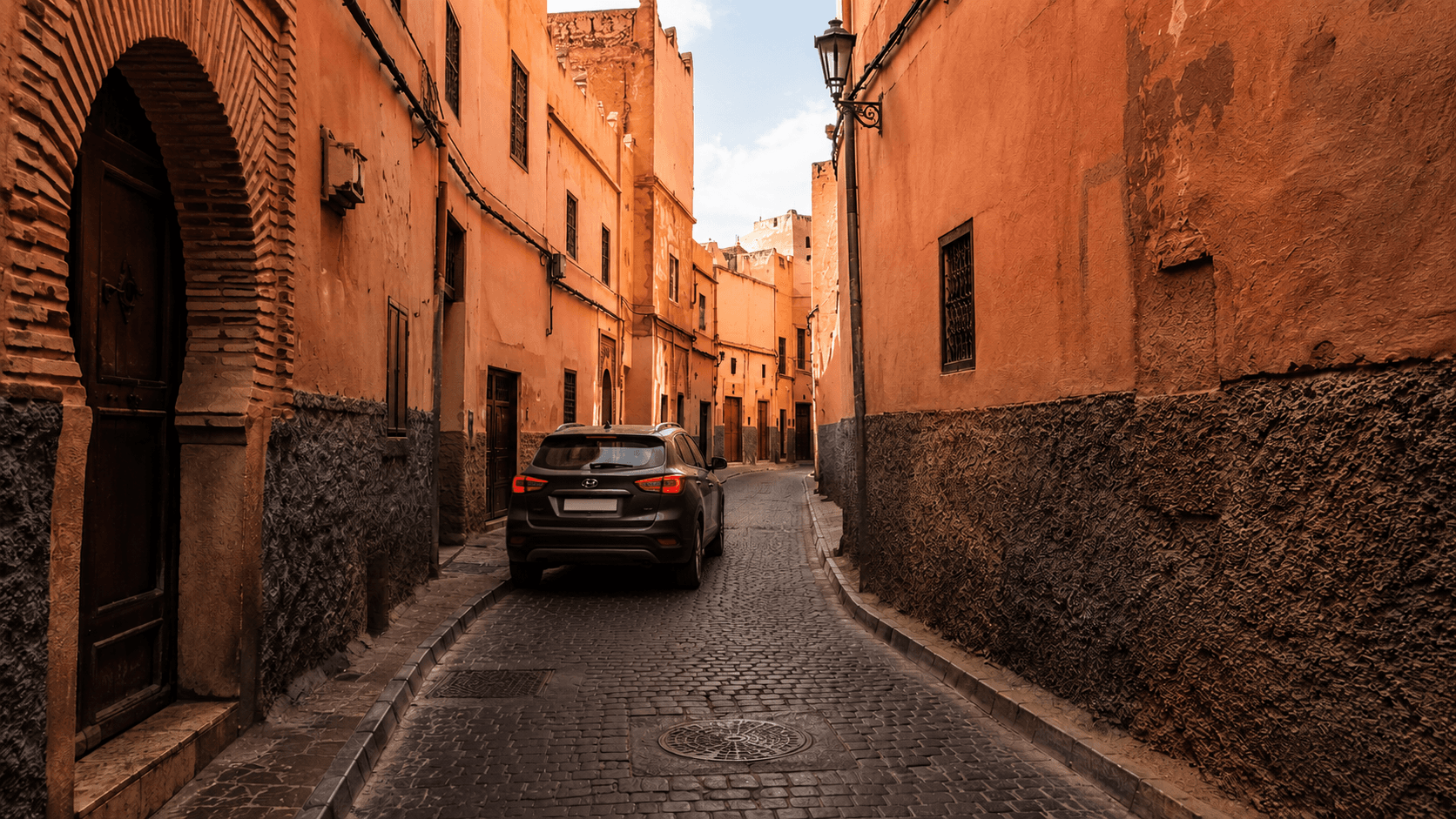
- Narrow sections through villages
- Unprotected road edges
- Sharp bends
- Livestock close to the road
- Slow local vehicles
- Small stones or loose gravel near the shoulders
- Temporary roadworks
- Mud or water after heavy rain
The route should be driven during daylight. Night driving removes much of the scenic value and makes it harder to see road edges, animals and surface damage.
Winter requires additional care. Snow and ice can affect the higher parts of the Tizi n’Tichka crossing, while fog can reduce visibility. Local authorities may restrict traffic during severe weather. Check the forecast and ask your accommodation or rental provider about current conditions before departing.
The Back Road from Telouet to Aït Ben Haddou
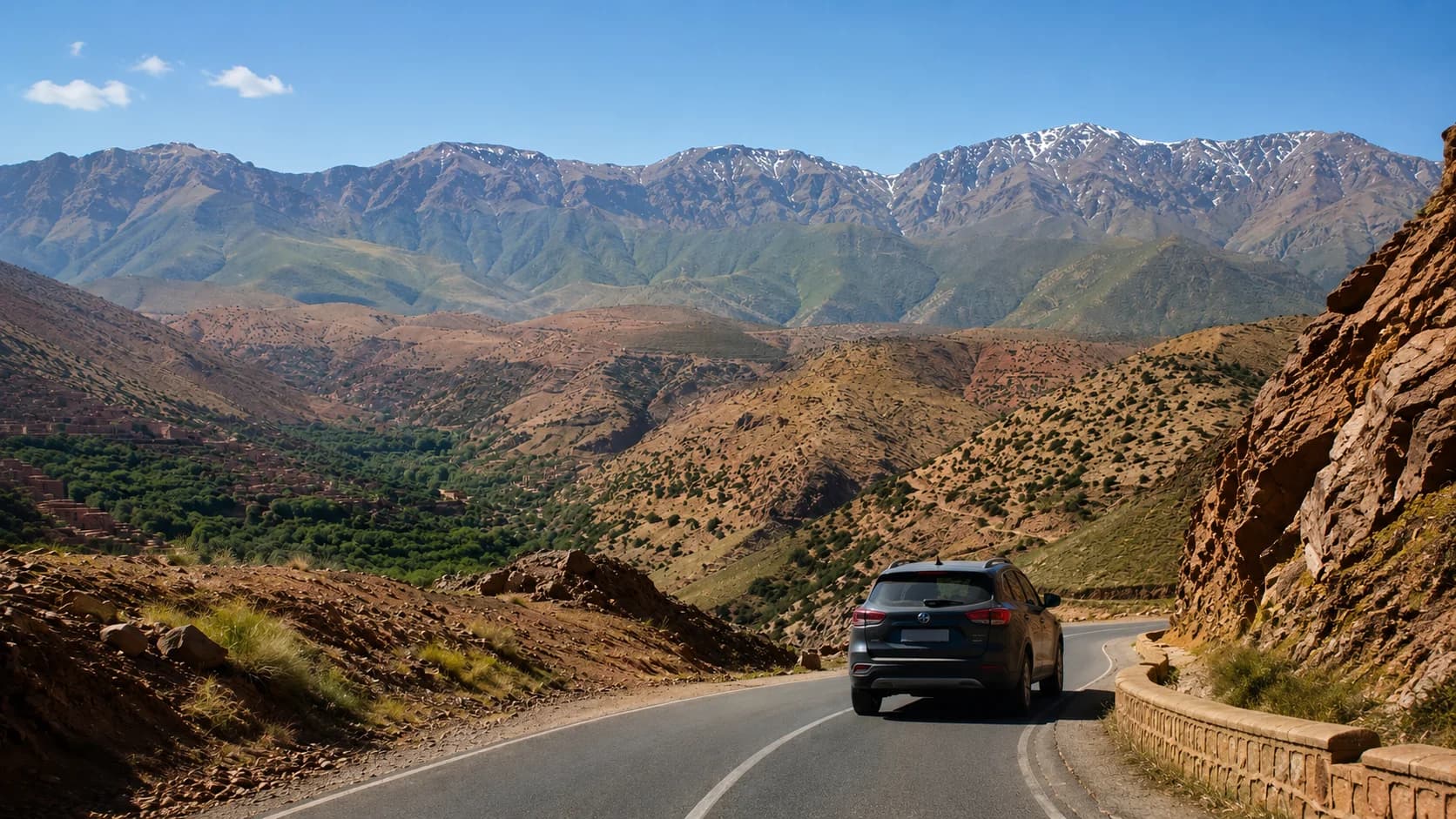
The Telouet to Aït Ben Haddou drive is the highlight of the detour. The road follows the Ounila Valley, where green cultivated areas and small villages contrast with red and ochre cliffs.
This stretch is approximately 45 to 50 kilometres, but it should not be rushed. Allow at least 90 minutes for the drive, and preferably two hours if you plan to stop for photographs.
The landscape changes constantly. At different points, the road passes above narrow valleys, beside exposed rock formations and through villages built with colours that closely match the surrounding earth. The P1506 is widely described as a scenic alternative to staying on the main N9 toward Ouarzazate.
Traffic is generally lighter than on the main highway, but this does not mean the route should be driven quickly. Village entrances, blind corners and uneven shoulders require attention.
Aït Ben Haddou appears near the southern end of the valley. Its fortified earthen buildings rise above the river and surrounding settlement, creating one of Morocco’s most recognisable architectural views.
Do You Need a 4x4 for This Detour?
A 4x4 is not normally required to reach Telouet or follow the paved road to Aït Ben Haddou in dry, stable conditions. Many travellers complete the route in ordinary cars.
However, vehicle choice affects comfort and confidence.
Sedan
A sedan can manage the route when the road is open and in good condition. It is suitable for two to four travellers carrying a moderate amount of luggage. Drivers should slow down around damaged edges, village speed bumps and rough roadside parking areas.
Travellers planning a straightforward journey mainly on paved roads can consider a sedan rental Marrakech.
SUV
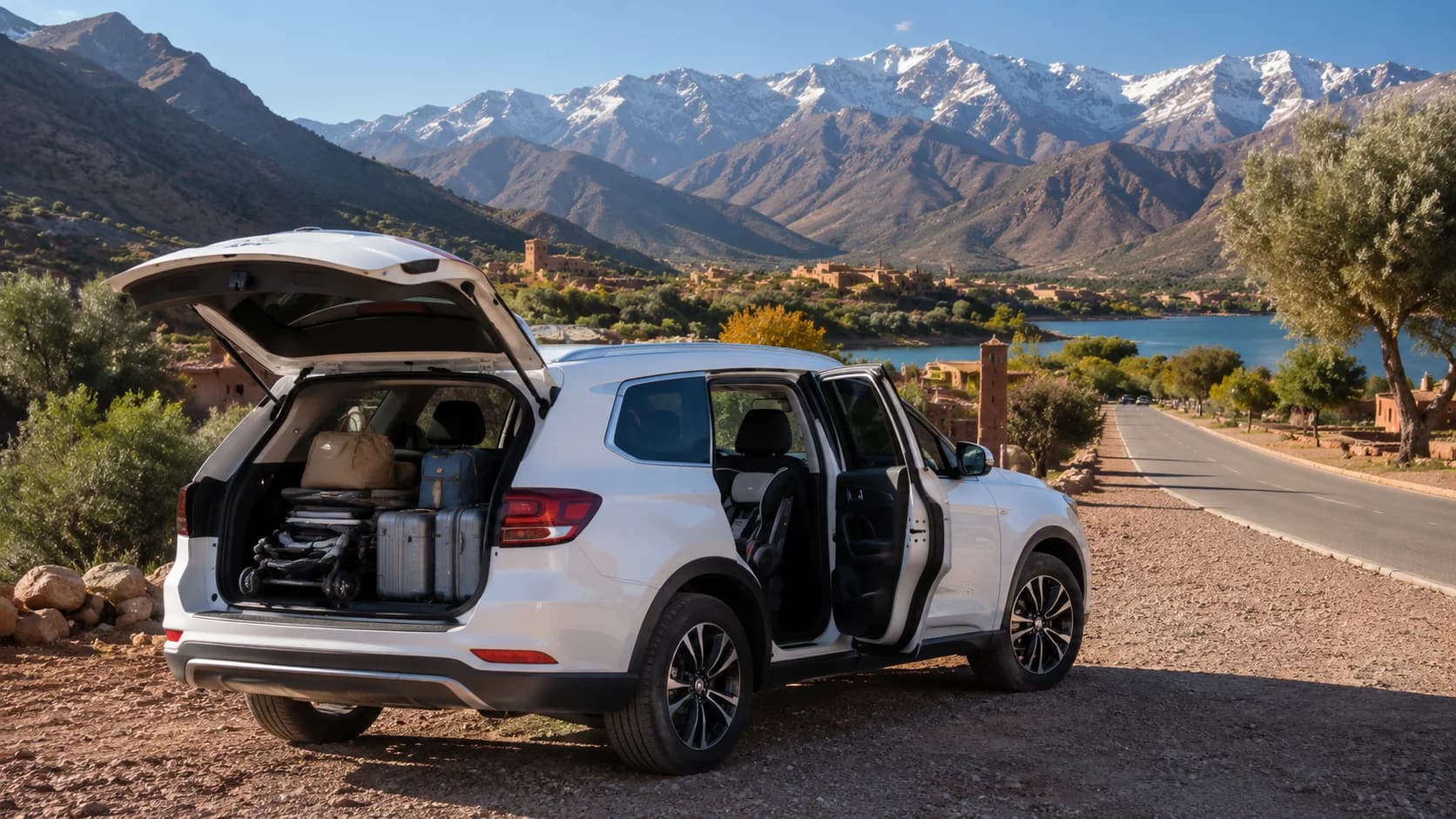
An SUV is often the best balance for this journey. The higher driving position improves visibility, while additional ground clearance provides reassurance on uneven sections and rough parking areas.
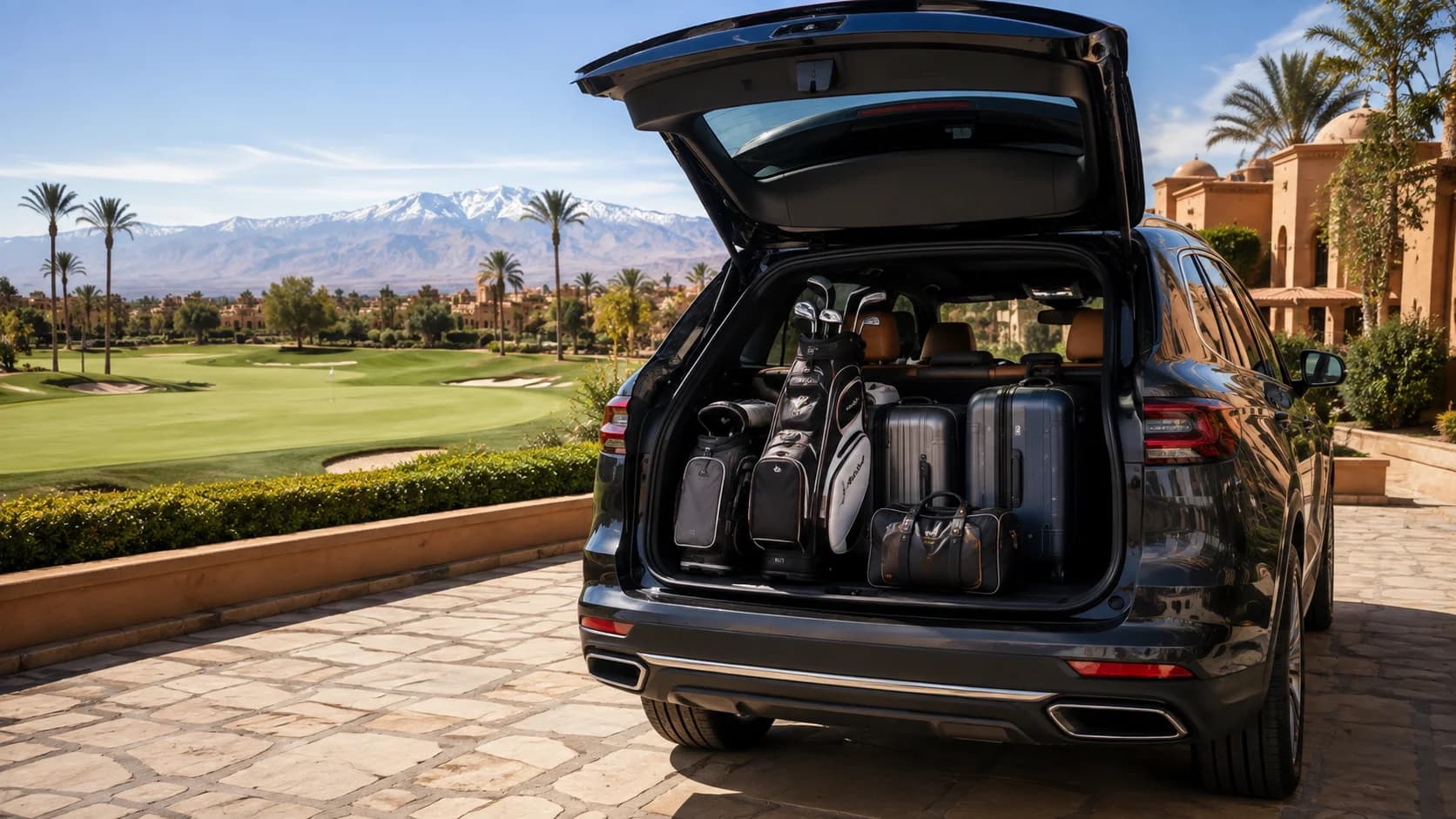
An SUV rental Marrakech is particularly useful for families, groups with luggage or travellers continuing beyond Ouarzazate.
4x4
A 4x4 provides the most confidence if the itinerary includes remote tracks, desert regions or rougher roads beyond the main Telouet route. It can also be more comfortable when road conditions are uncertain.
Choosing a 4x4 rental Marrakech does not mean that drivers should enter flooded crossings, closed roads or unsuitable tracks. Four-wheel drive improves traction, but it cannot make dangerous conditions safe.
Combining Telouet with Ouarzazate
It is possible to combine Telouet, Aït Ben Haddou and Ouarzazate in one long day, but the itinerary requires an early departure and careful time management.
A practical route is:
Marrakech → Tizi n’Tichka → Telouet → Ounila Valley → Aït Ben Haddou → Ouarzazate → Marrakech
This creates a full day of driving and sightseeing. Organised itineraries often leave Marrakech around 8:00, reach Telouet late in the morning, arrive at Aït Ben Haddou during the early afternoon and return to Marrakech in the evening.
Travellers who want to explore slowly should stay overnight in Aït Ben Haddou or Ouarzazate. An overnight journey allows time to:
- Visit Telouet without checking the clock constantly
- Stop safely at viewpoints
- Walk through Aït Ben Haddou
- Visit Ouarzazate the following morning
- Avoid crossing the mountain pass after dark
Ouarzazate is a logical addition for travellers interested in kasbah architecture, cinema locations and routes leading toward the Draa Valley, Skoura or the desert.
For a same-day trip, decide in advance which locations matter most. Trying to tour every kasbah, stop at multiple viewpoints and spend a long time in Ouarzazate can make the return journey stressful.
Best Season and Timing
Spring
March through May is one of the best periods for the drive. Temperatures are generally comfortable, valleys may appear greener and daylight hours are suitable for a full excursion. Rain is still possible, so road conditions should be checked after storms.
Summer
The mountain sections may feel comfortable in the morning, but temperatures can become much hotter toward Aït Ben Haddou and Ouarzazate. Carry water, use sun protection and avoid unnecessary walking during the hottest part of the afternoon.
Autumn
September through November can offer clear skies and comfortable driving temperatures. Daylight becomes shorter later in the season, making an early departure more important.
Winter
Winter can produce beautiful mountain scenery, but it is the least predictable period. Snow, ice, fog and temporary closures may affect the Tizi n’Tichka route. Do not rely only on a navigation application. Confirm local conditions before leaving Marrakech.
Regardless of season, the best strategy is to start early and complete the Telouet to Aït Ben Haddou section in daylight.
Telouet Detour Planner
Before leaving Marrakech
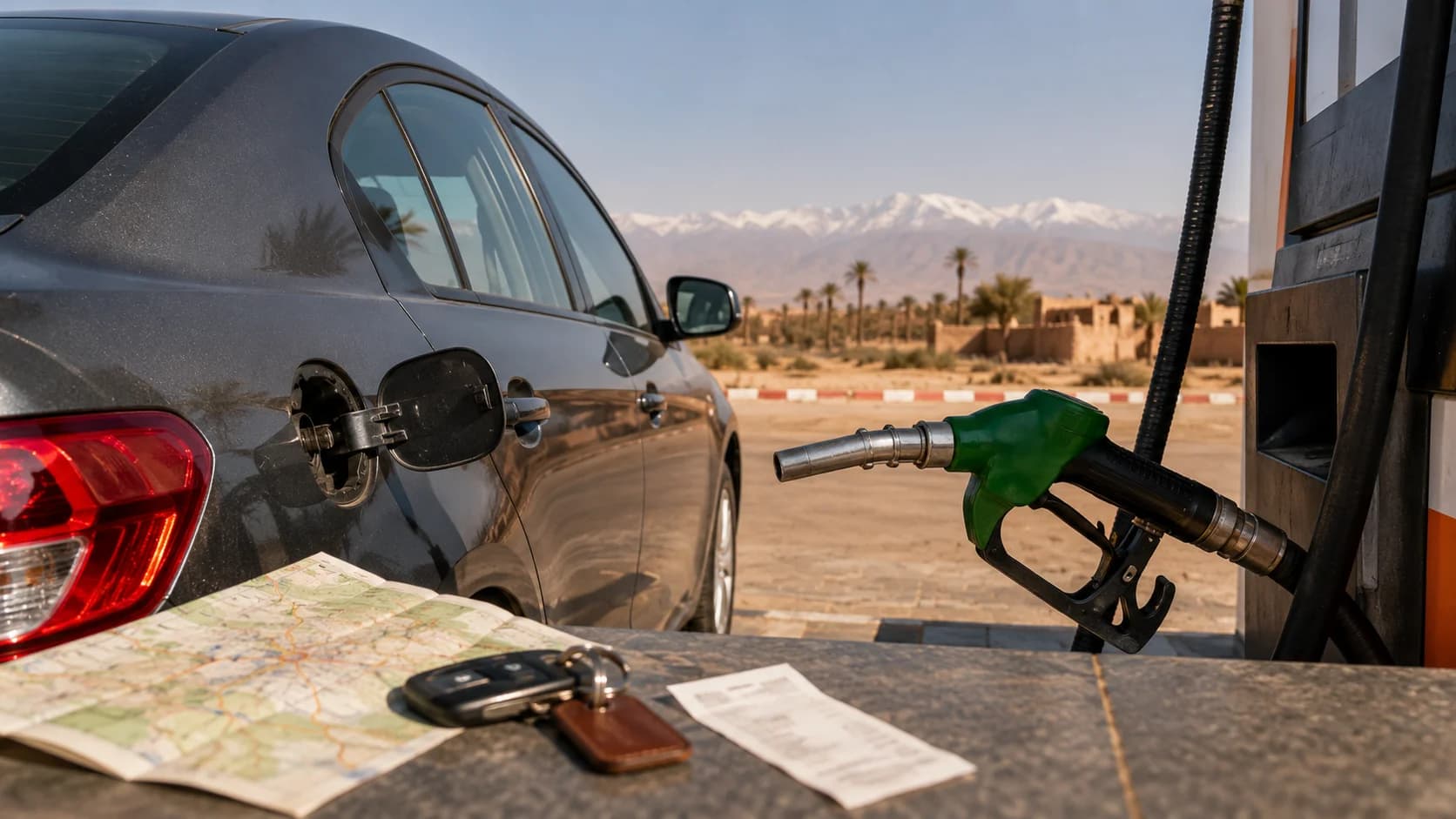
Fill the fuel tank before entering the mountains. Fuel stations are available along the broader route, but there are fewer choices after leaving the N9.
Download an offline map because mobile coverage may be inconsistent. Save the locations of Telouet Kasbah, Aït Ben Haddou and your accommodation or return route.
Carry water, snacks, sunglasses, a warm layer and comfortable walking shoes. Temperatures can vary considerably between Marrakech, the high pass and the southern side of the mountains.
At Telouet
Park in an established space near the village or kasbah entrance without blocking homes, businesses or access routes. Parking arrangements can change, so follow local signs and instructions.
Allow approximately 45 to 90 minutes for the kasbah, depending on access and how deeply you want to explore. Some areas may be restricted because of restoration work or structural conditions.
Between Telouet and Aït Ben Haddou
Drive slowly through villages and expect people, bicycles, animals and local vehicles. Stop only in locations where the car can leave the road completely.
Do not follow an unpaved shortcut simply because a navigation application suggests it. Stay on the recognised paved route unless reliable local advice confirms another road is suitable.
At Aït Ben Haddou
Allow at least 90 minutes to walk through the ksar and reach one of the elevated viewpoints. Longer visits may take two to three hours, especially when combined with lunch.
Before leaving, calculate whether there is enough daylight to continue to Ouarzazate or return across the mountains. The drive back to Marrakech remains long even after the sightseeing portion is finished.
Frequently Asked Questions
How far is Telouet from Marrakech?
Telouet is approximately 100 kilometres from Marrakech. Because the route crosses the High Atlas Mountains, the drive generally takes around three hours rather than the time expected for the same distance on a motorway.
Is the Telouet Kasbah worth visiting?
Yes. Telouet offers a quieter and more atmospheric experience than many heavily visited attractions. The combination of ruined exterior walls, preserved decorative rooms and Glaoui history makes it a worthwhile stop.
Can you drive from Telouet to Aït Ben Haddou?
Yes. The P1506 connects Telouet with Aït Ben Haddou through the Ounila Valley. It is one of the most scenic paved drives in the region, although conditions should always be confirmed locally.
Do I need a 4x4 to reach Telouet?
A 4x4 is not usually essential in dry conditions because the recognised route is paved. An SUV or 4x4 can still provide better comfort, visibility and ground clearance.
What is the road to Telouet like?
The route includes paved mountain roads, sharp curves, narrow village sections and occasional uneven surfaces. Conditions can change after bad weather or construction.
Can I combine Telouet with Ouarzazate in a day?
Yes, but it creates a long day. Leave Marrakech early, limit lengthy stops and avoid returning across the mountains after dark. Staying overnight is more comfortable.
Is Telouet less crowded than Aït Ben Haddou?
Telouet is generally quieter because fewer group tours include it. Aït Ben Haddou receives significantly more visitors and has more tourism infrastructure.
Where do you park at the Telouet Kasbah?
Visitors normally park near the village and kasbah entrance in available designated or locally managed spaces. Follow current signs and avoid blocking local access.
Is the old Tichka road safe to drive?
It can be driven safely in suitable weather by cautious and experienced drivers. The main risks are mountain weather, blind bends, animals, uneven edges and changing road conditions. Drive in daylight and do not continue if authorities close the route.
What is the best time to visit Telouet?
Spring and autumn usually provide the most comfortable conditions. In summer, begin early to avoid the hottest part of the day. During winter, check for snow, ice and road restrictions before departure.
Take the Road Less Travelled
The drive to the Telouet Kasbah from Marrakech is more than a short sightseeing diversion. It transforms the journey across the High Atlas into a complete road trip through historic villages, mountain scenery and the Ounila Valley.
Rent a capable SUV or 4x4 from MarHire Car Marrakech and explore Telouet, Aït Ben Haddou and the old mountain road at your own pace. Start early, confirm the weather and road conditions, and leave enough time to enjoy one of the most scenic detours from Marrakech.