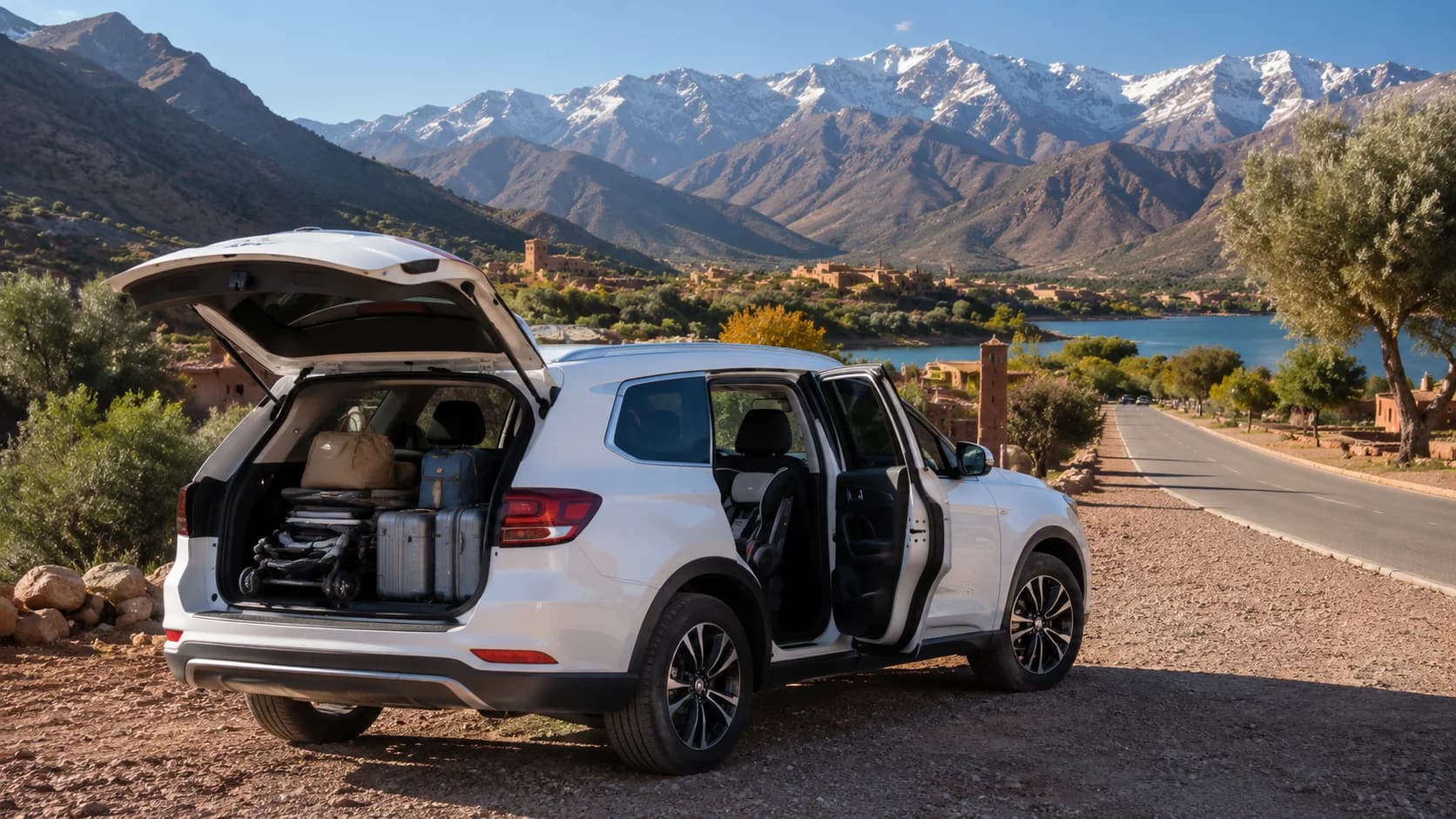









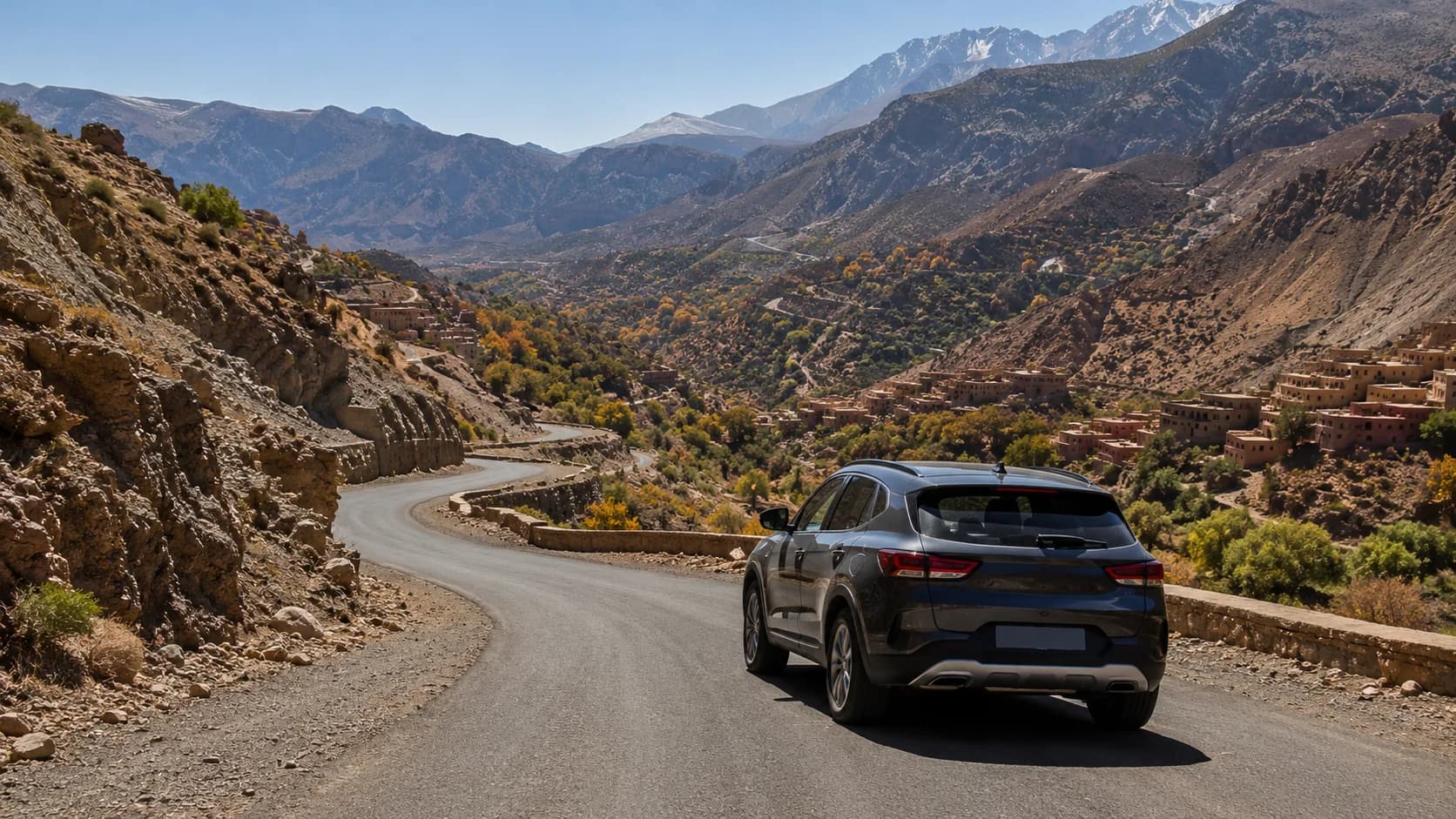
Driving from Marrakech to Tinmel by car is one of the more rewarding High Atlas road trips for travelers who want mountain scenery, traditional villages and an important piece of Moroccan history without committing to a multi-day journey.
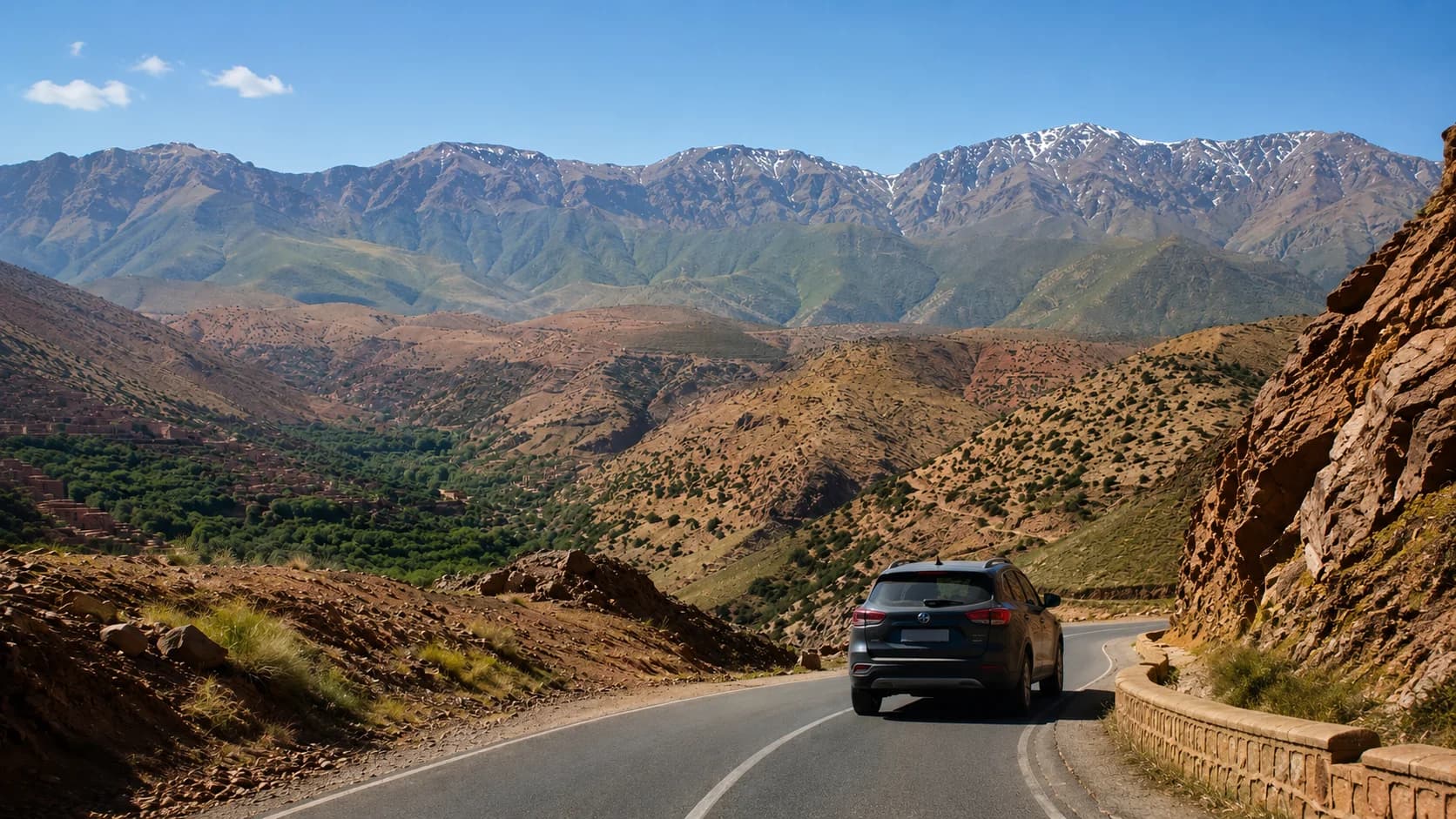
Tinmel lies roughly 100 km south of Marrakech in the N’Fis Valley, along the R203 road toward the Tizi n’Test area. The journey gradually changes from the plains outside Marrakech to increasingly dramatic mountain scenery, passing through places such as Asni, Ouirgane and villages deeper in Al Haouz Province.
However, this is not a road trip where distance alone determines your schedule. Mountain-road conditions, reconstruction work, local traffic, weather and temporary restrictions can all affect the journey. Tinmel and the surrounding area were also heavily affected by the September 2023 Al Haouz earthquake, and restoration work at the historic Tinmel Mosque continued afterward. Travelers should therefore confirm both road conditions and site access shortly before leaving Marrakech.
Can You Drive From Marrakech to Tinmel?
Yes. Tinmel is accessible from Marrakech by road, normally using the R203 through the western High Atlas.
The road distance is approximately 100 to 105 km each way. Route planners may estimate a drive of around two hours in ideal conditions, but for a self-drive mountain trip it is better to allow roughly 2.5 to 3 hours each way, especially if you plan viewpoint stops or encounter slower sections.
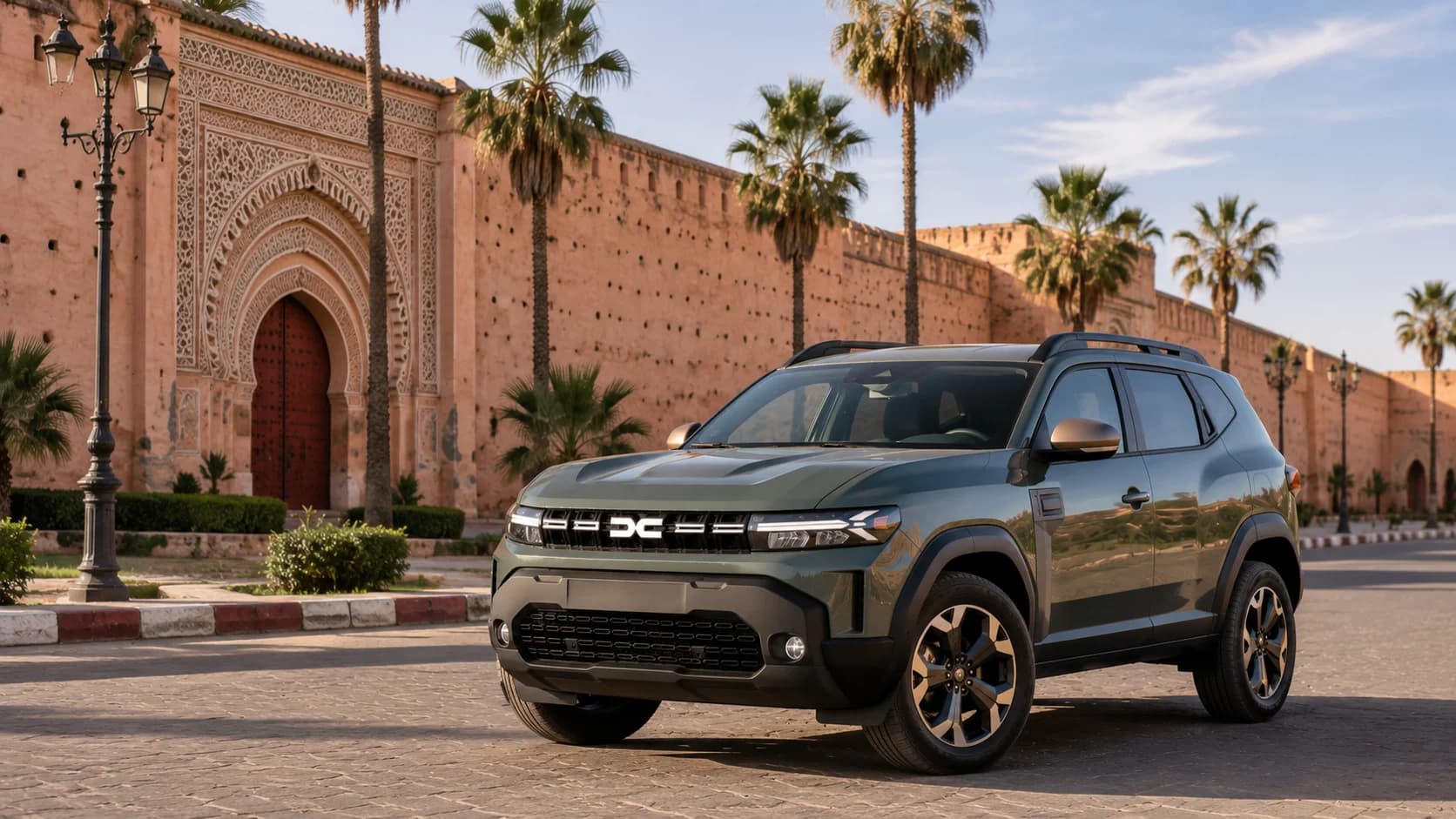
A normal sedan may be sufficient when the road is dry and conditions are good. An SUV can provide additional comfort and ground clearance, while a 4x4 may be worth considering when your itinerary includes more demanding mountain roads beyond the main Tinmel route.
Most importantly, check current road and Tinmel Mosque access before departure.
Marrakech to Tinmel Route Overview
The usual Marrakech Tinmel drive heads south from Marrakech toward the High Atlas before continuing along the R203 through the N’Fis Valley.
A typical route is:
Marrakech → Asni → Ouirgane → Ijoukak/Talat N’Yaaqoub area → Tinmel
Tinmel sits on the historic road toward Tizi n’Test, approximately 100 km from Marrakech. Marrakech's official tourism information also describes Tinmel as being around 100 km from the city.
The first part of the journey out of Marrakech is comparatively straightforward. As you approach the mountains, the landscape changes significantly and the road becomes more winding.
Beyond Asni and Ouirgane, expect a more distinctly mountainous driving environment. Villages become smaller, the valley narrows and bends become more frequent.
This transition is precisely why travelers should not treat the trip like a normal 100 km motorway journey.
Route at a glance
| Route factor | What to expect |
|---|---|
| Approximate distance | About 100–105 km each way |
| Main road | R203 |
| Direction | South/southwest from Marrakech |
| Main intermediate areas | Asni, Ouirgane, N’Fis Valley |
| Normal trip type | Full-day excursion |
| Road character | Paved mountain road with winding sections |
| Recommended departure | Morning |
| Main consideration | Current road and site access |
The route itself is part of the experience. Rather than driving directly to a single attraction, allow time to enjoy the transition from Marrakech's plains into the western High Atlas.
Driving Time and Realistic Buffers
Online route estimates can suggest that Marrakech and Tinmel are less than two hours apart. One current route planner places the road distance at roughly 105 km and calculates an ideal driving time of around 1 hour 50 minutes.
For practical trip planning, however, you should allow more time.
A reasonable planning estimate is:
Marrakech to Tinmel: approximately 2.5 to 3 hours
That does not necessarily mean the road will take three hours every day. It simply gives you a safer margin for:
-
slower mountain traffic
-
village crossings
-
roadworks or reconstruction
-
photography stops
-
livestock or local vehicles
-
temporary road management
-
weather
-
unfamiliar mountain driving
Avoid building a day trip around the fastest navigation-app estimate.
Example day-trip schedule
A comfortable itinerary might look like this:
08:00: Leave Marrakech
09:00: Reach the Asni area
09:30–10:00: Continue toward Ouirgane
10:30–11:00: Scenic or coffee stop
11:30: Continue deeper into the N’Fis Valley
12:00–12:30: Reach the Tinmel area
12:30–14:00: Visit the accessible area, lunch or explore nearby surroundings
14:00–15:00: Begin return journey
17:00–18:00: Arrive back in Marrakech
This schedule deliberately includes spare time.
If conditions are slower than expected, you can shorten one of the stops rather than being forced to drive the mountain road after dark.
High Atlas Road Characteristics
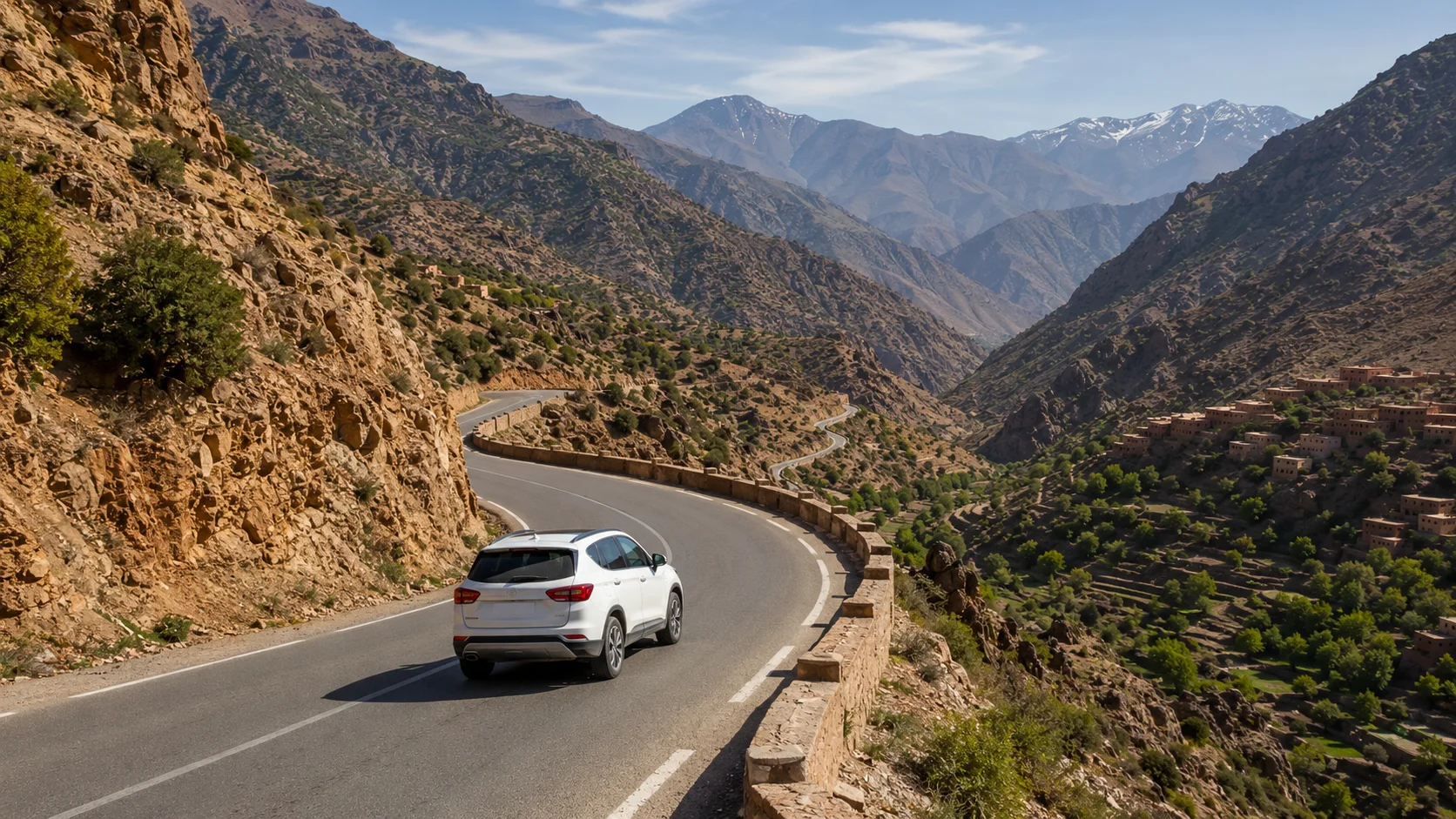
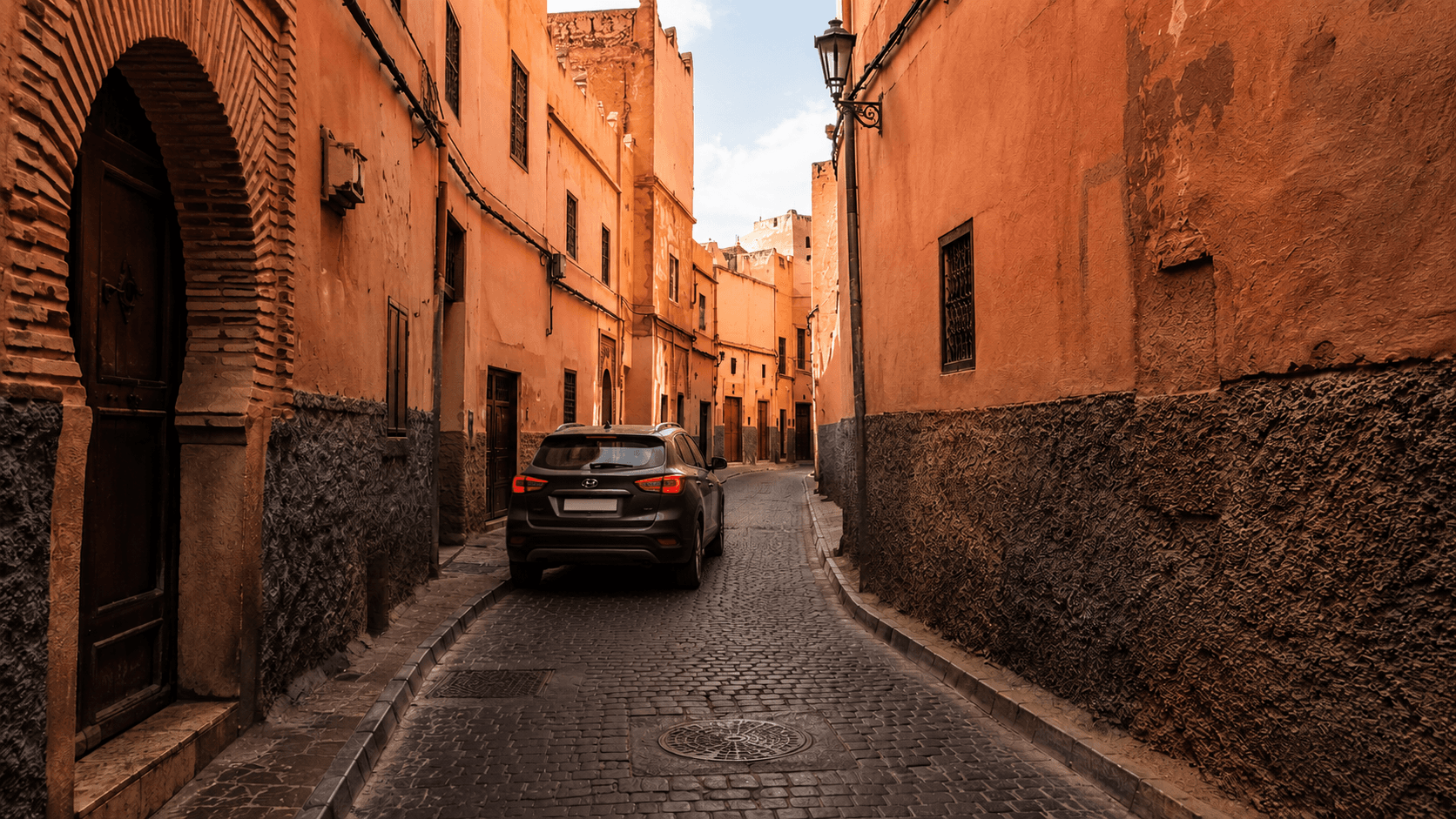
The High Atlas road to Tinmel is very different from driving around central Marrakech or using Morocco's major motorways.
The important difference is not simply road surface. It is the combination of bends, elevation changes, mountain slopes, village traffic and limited sightlines.
Expect frequent bends
Mountain roads naturally follow the terrain. Straight sections can quickly transition into curves, so overtaking opportunities are more limited than on major highways.
Do not assume that an empty-looking road ahead will remain clear around the next bend.
Expect changing road width
Some sections feel relatively spacious, while others can feel narrower because of slopes, barriers, buildings or roadside activity.
Reduce speed before entering tight sections rather than braking sharply inside a bend.
Village traffic requires patience
You may encounter pedestrians, scooters, bicycles, local taxis, agricultural vehicles or animals near settlements.
Drive according to what you can see, rather than trying to maintain a fixed average speed.
Mountain driving is more tiring
A 100 km mountain drive generally requires more concentration than 100 km of motorway driving.
This is another reason to leave Marrakech early and avoid creating an itinerary that depends on returning late at night.
Where Conditions Can Change
Road conditions in the High Atlas can change more quickly than conditions around Marrakech.
The area around Tinmel and Talat N’Yaaqoub was particularly affected by the September 2023 Al Haouz earthquake. Reconstruction has continued in the surrounding communities, so visitors should be prepared for local works or changing access arrangements.
Reconstruction and roadworks
Temporary works may result in:
-
reduced-width sections
-
construction vehicles
-
short delays
-
gravel or dust near works
-
temporary traffic controls
A road that was straightforward on one trip may therefore feel different several weeks later.
Rain
Heavy rainfall in mountain terrain can affect visibility, drainage and road surfaces.
Water, mud or small debris may appear on sections of road after poor weather.
Winter conditions
During colder periods, higher mountain routes can experience significantly different conditions from Marrakech.
Tinmel itself does not require crossing every high pass in the region, so do not confuse a drive to Tinmel with automatically continuing across Tizi n’Test.
If you intend to travel farther into the mountains, check that additional section separately.
Night driving
Whenever possible, complete the mountain portion of your journey during daylight.
A road that feels easy in daylight becomes more demanding after dark because bends, pedestrians, animals and road edges are more difficult to identify.
Stops and Viewpoints Along the Route
One of the strongest reasons to make a Marrakech Tinmel day trip by rental car is flexibility.
You can stop when conditions are safe instead of following a fixed group-tour timetable.
Asni
Asni is one of the best-known gateways to the High Atlas from Marrakech.
It works well as an early break, particularly if you want coffee, supplies or a short stop before entering more winding roads.
Ouirgane
Ouirgane is surrounded by attractive mountain and valley scenery and is one of the most natural stops along this side of the High Atlas.
Travelers who want a slower day could combine the Tinmel drive with a meal or scenic stop around Ouirgane rather than trying to add several distant attractions.
N’Fis Valley
As you continue south, the scenery increasingly becomes the main attraction.
Mountain slopes, traditional settlements and changing valley views create frequent photography opportunities.
Only stop where the vehicle can be positioned completely and safely away from moving traffic.
Avoid stopping directly after blind bends or where the road is too narrow for other vehicles to pass comfortably.
Tinmel
Tinmel has major historical significance as an important center associated with the rise of the Almohad dynasty.
The historic mosque dates to the 12th century and represents an important surviving example of Almohad architecture. Morocco's Ministry of Culture has documented restoration efforts at the site, including work planned before the 2023 earthquake.
The building was severely damaged during the September 2023 earthquake. Restoration later resumed, with renewed work reported in 2025.
Because restoration and safety arrangements can affect visitor entry, reaching Tinmel should not automatically be interpreted as confirmation that the mosque interior is accessible.
Vehicle Choice for the Journey
You do not automatically need the largest vehicle available for a car rental Marrakech Tinmel journey.
Choose according to current conditions, passenger numbers and the rest of your itinerary.
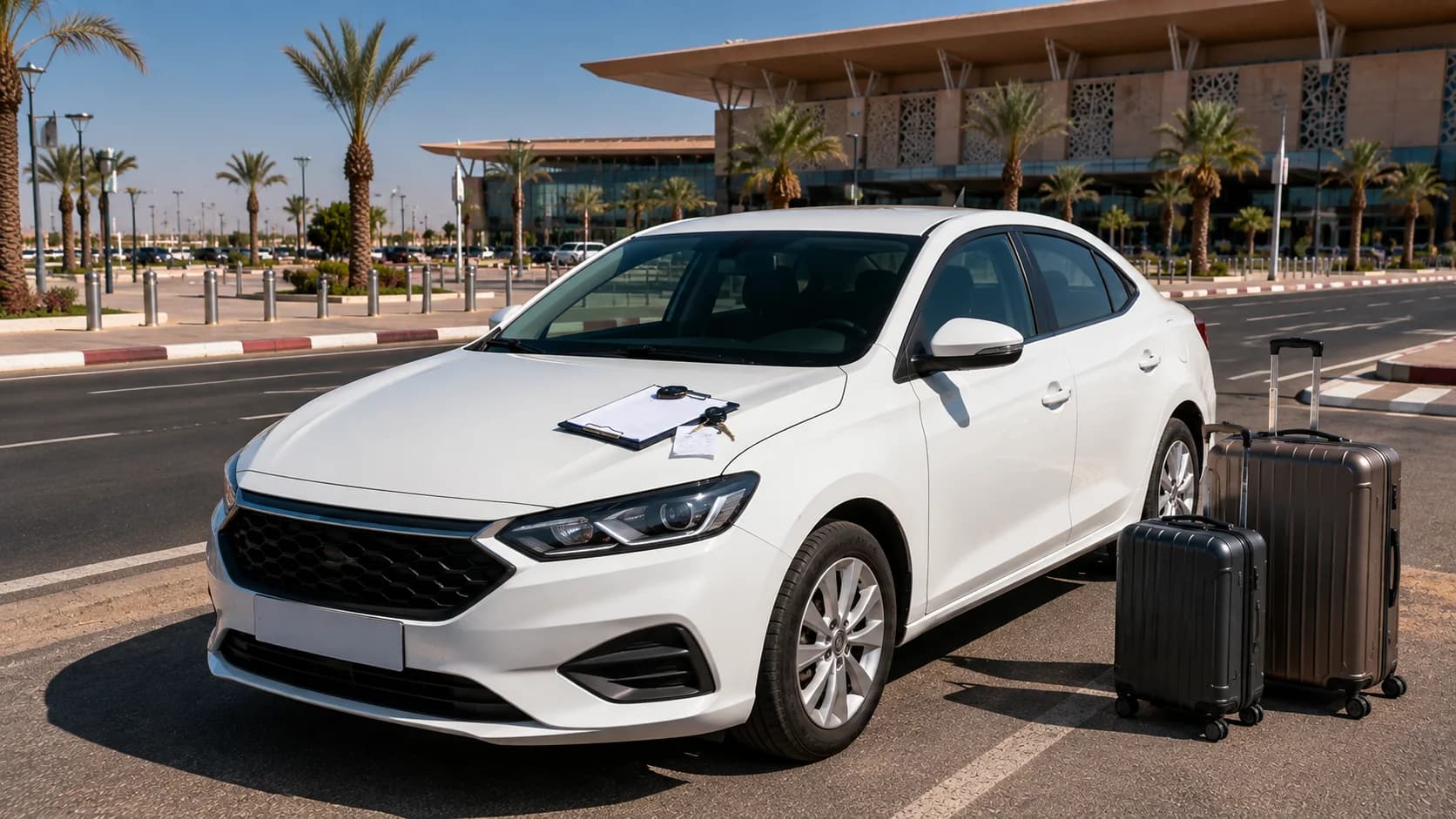
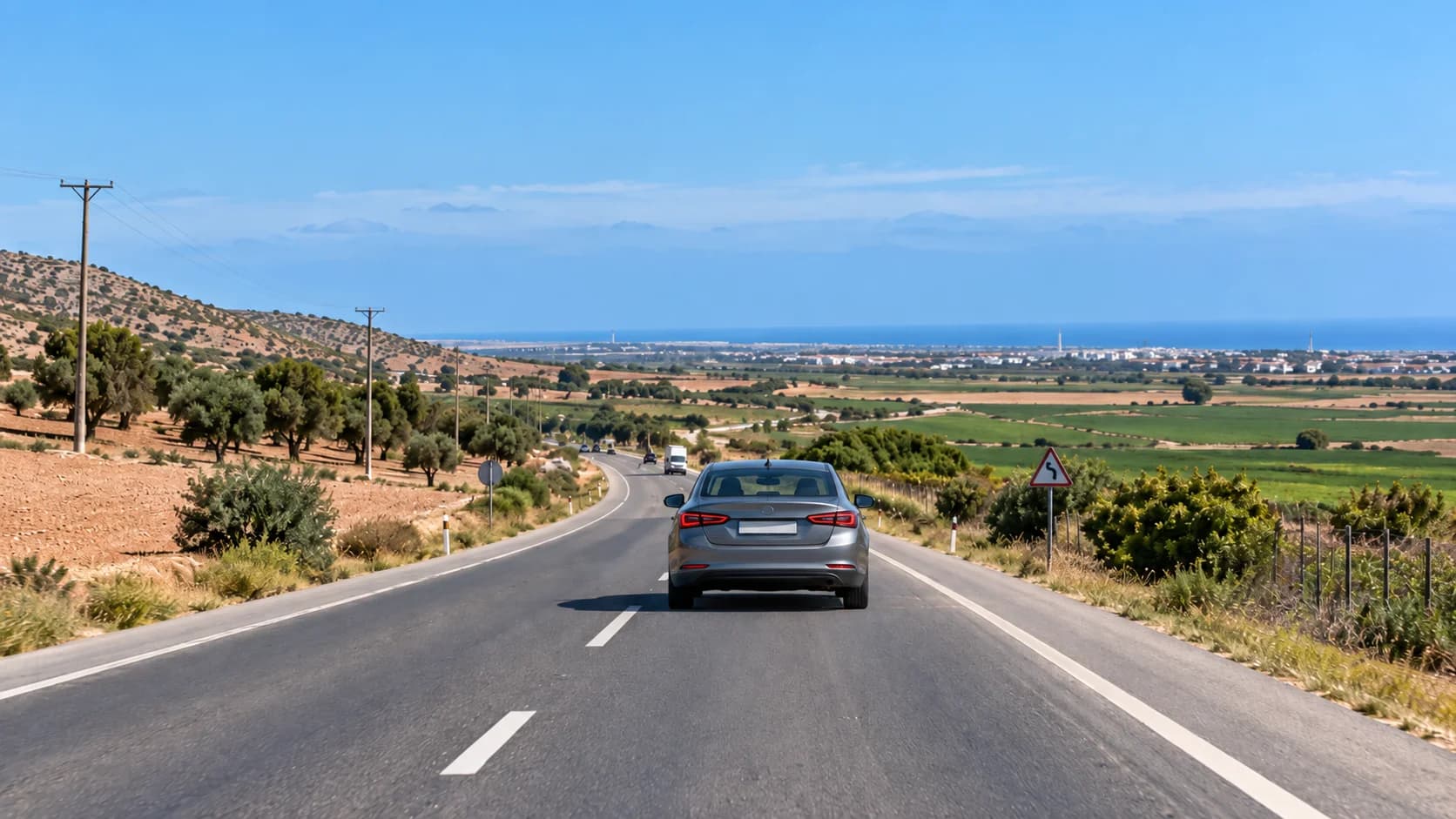
Sedan: suitable in normal conditions
A comfortable sedan can work well when:
-
the main R203 route is open
-
weather is dry
-
you are staying on paved roads
-
you are not planning rough-road detours
-
you have moderate luggage
Travelers primarily driving in Marrakech with one mountain day trip may therefore prefer a sedan rental Marrakech.
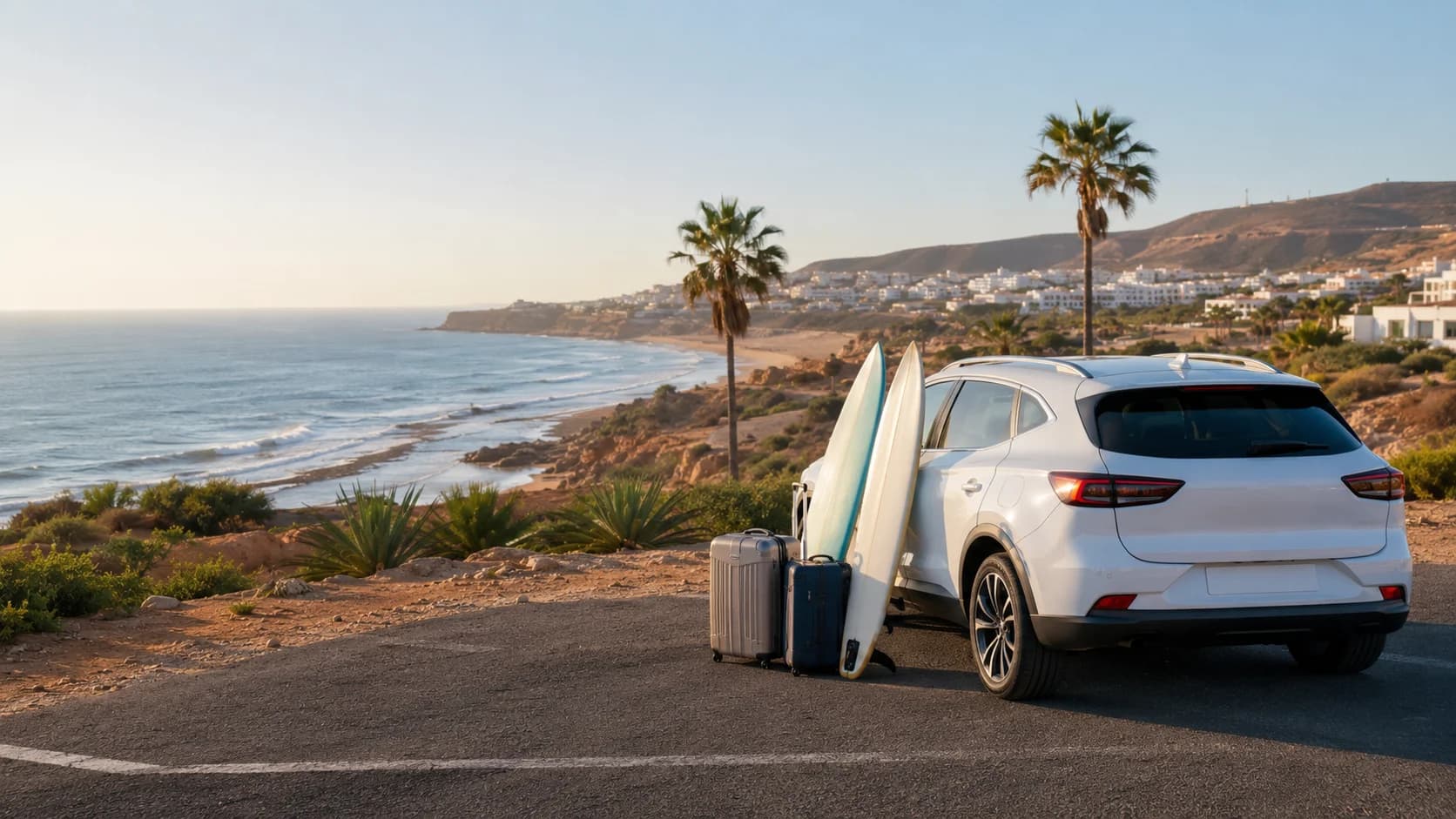
SUV: useful for comfort and clearance
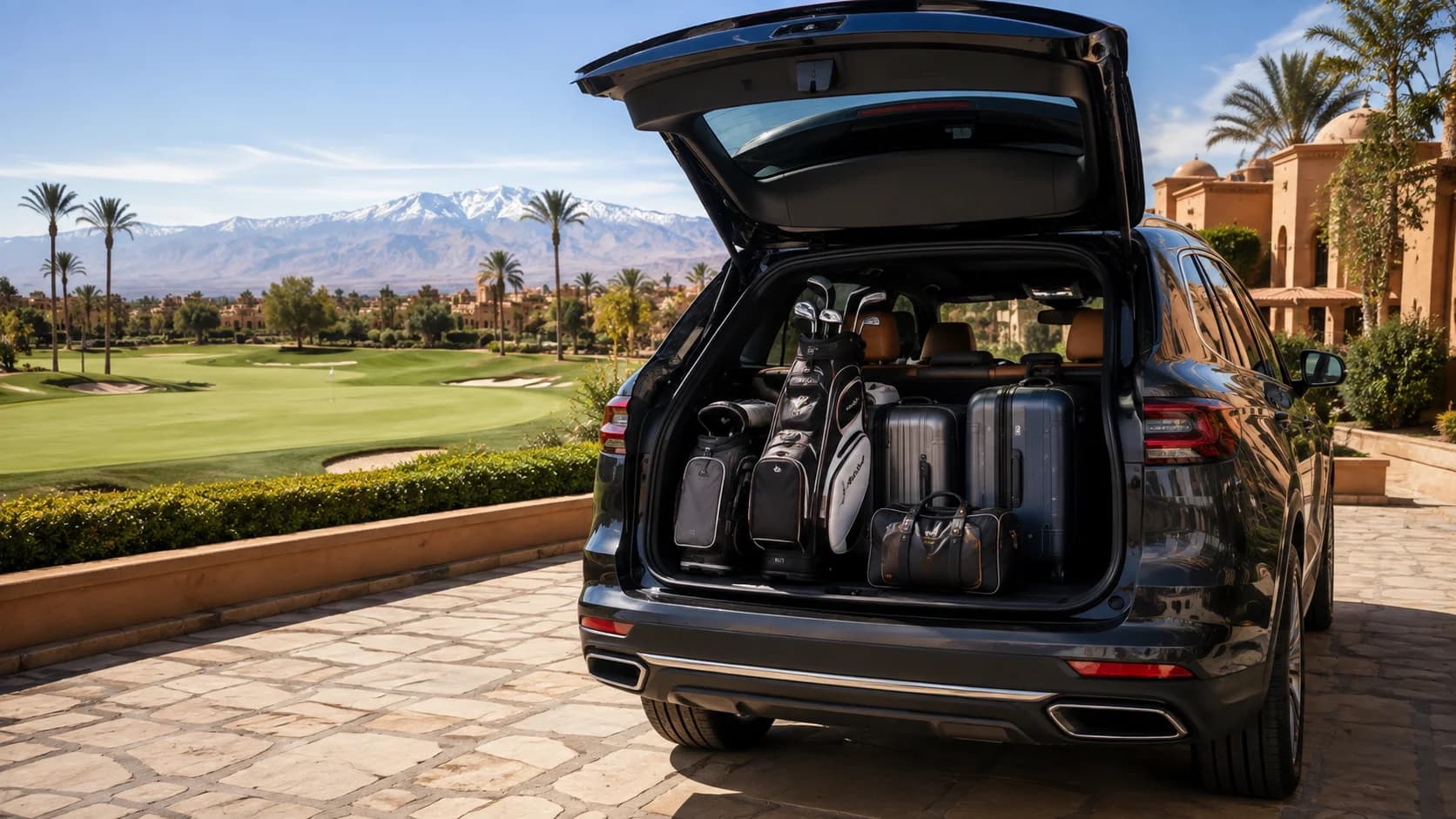
An SUV can be a strong all-round choice for a High Atlas itinerary.
Advantages can include:
-
higher driving position
-
additional ground clearance
-
more luggage capacity
-
comfortable seating
-
more confidence on imperfect road surfaces
If your Morocco itinerary contains several mountain journeys rather than only Tinmel, compare available SUV rental Marrakech options.
4x4: useful for more demanding itineraries
A 4x4 is not automatically required simply because Tinmel is in the High Atlas.
On a normal paved route in good weather, many travelers will not need four-wheel drive.
A 4x4 rental Marrakech becomes more relevant when your broader itinerary includes rougher mountain access, unpaved routes or destinations where additional traction and clearance may be useful.
Do not use a 4x4 as justification for ignoring road closures or unsafe conditions. Four-wheel drive does not make a closed or damaged mountain road safe to use.
Checking Current Road and Site Access
This is the most important planning step.
Because conditions around Tinmel have changed significantly since the 2023 earthquake, travelers should verify two separate things:
1. Is the road suitable for the planned journey?
2. Is the part of the Tinmel site you want to visit actually accessible?
These are not the same question.
A road may be open while access to a historic structure remains restricted for restoration or safety reasons.
Restoration of Tinmel Mosque was reported as having resumed in 2025 following major earthquake damage. Sources describing the site continue to recommend confirming accessibility before visiting.
Before departure, check recent information from official or local sources and ask your accommodation or rental provider if there have been significant road changes.
For road-related mountain trips, conditions reported several months earlier should not be treated as guaranteed current information.
Do not rely exclusively on navigation apps
Navigation apps are useful for orientation and estimated travel time, but they cannot always communicate the practical condition of a mountain road.
A route appearing on a map does not guarantee:
-
normal surface conditions
-
unrestricted passage
-
absence of construction
-
safe weather
-
visitor access at the destination
Use mapping as one source of information, not as your only source.
Tinmel Self-Drive Checklist
Before leaving Marrakech, check:
-
current R203 road conditions
-
recent High Atlas weather
-
Tinmel Mosque access status
-
fuel level
-
tire condition
-
spare tire or repair equipment
-
phone battery
-
offline navigation
-
water
-
enough daylight for the return drive
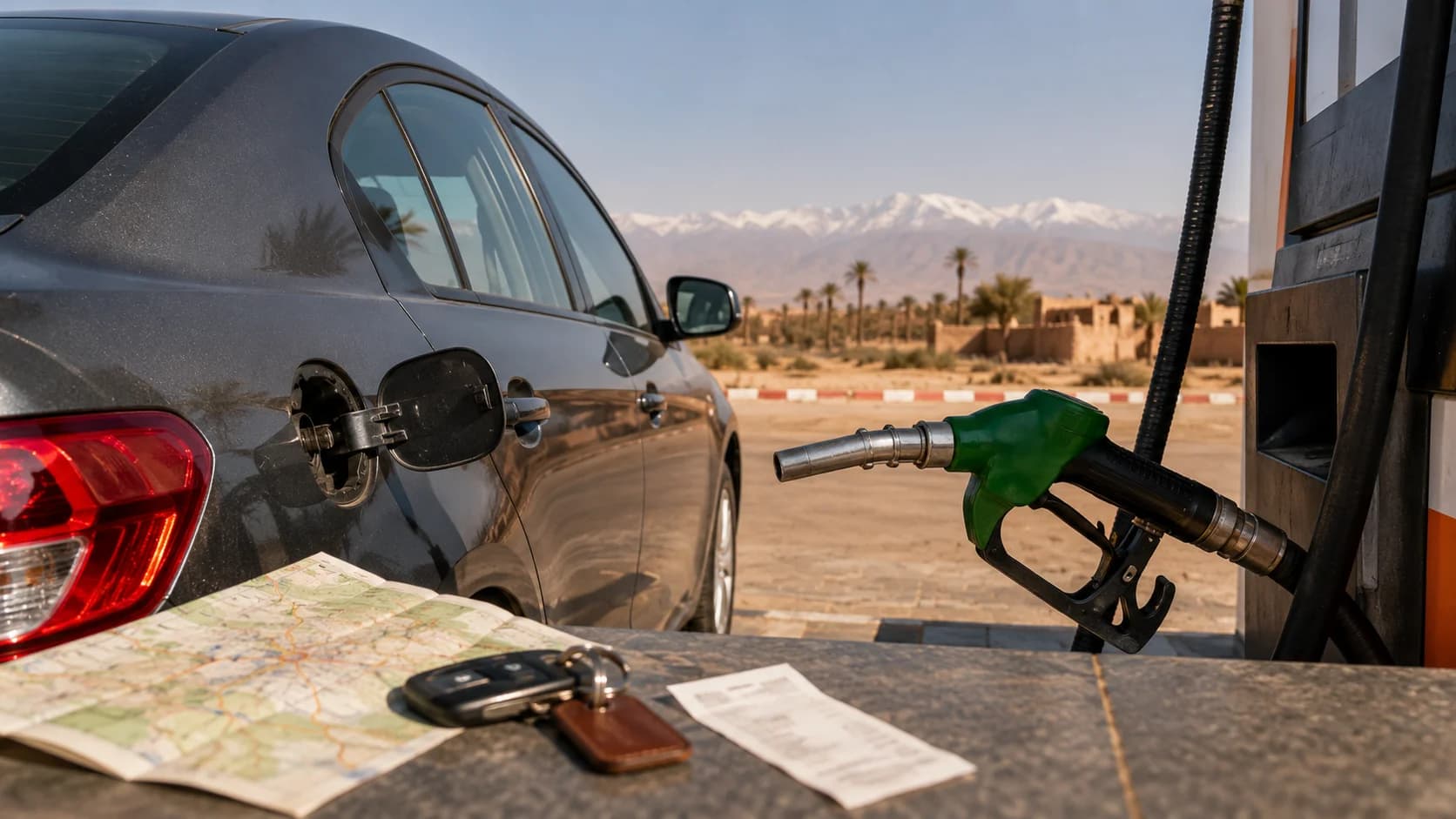
Start with a full or comfortable fuel reserve rather than planning around finding fuel at the final destination.
Download your map before entering mountain areas in case mobile coverage becomes less reliable.
Carry water even when the weather in Marrakech feels mild. Mountain driving often takes longer than expected, particularly when stops or temporary works are involved.
Most importantly, keep the itinerary flexible.
The purpose of driving to Tinmel is to experience the High Atlas landscape safely. If weather, roadworks or local restrictions make continuing inappropriate, changing the day's plan is better than forcing the original itinerary.
Is Marrakech to Tinmel Worth the Drive?
For travelers interested in Moroccan history and mountain landscapes, yes.
The route offers a very different experience from Marrakech itself. Within a single day, you can leave the busy city environment, pass through High Atlas valleys and reach an area closely connected with the history of the Almohad period.
However, Tinmel should currently be approached as a mountain route whose access conditions need verification, rather than a conventional attraction where opening conditions can simply be assumed.
Even when access to part of the historic site is restricted, the wider drive through the N’Fis Valley can still form an interesting High Atlas excursion.
Frequently Asked Questions
How far is Tinmel from Marrakech by car?
Tinmel is approximately 100 to 105 km from Marrakech by road. The exact distance varies slightly according to your starting point in Marrakech.
How long does the drive from Marrakech to Tinmel take?
Navigation estimates can be close to two hours in ideal conditions, but travelers should generally budget around 2.5 to 3 hours each way for a relaxed mountain journey with realistic buffers.
Is the road to Tinmel paved?
The main route toward Tinmel uses the R203 and is principally a paved mountain road. However, temporary works, reconstruction, weather or local damage can affect individual sections, so check conditions shortly before traveling.
Do I need a 4x4 for Tinmel?
Not necessarily. If the normal paved route is open and conditions are dry, a sedan or SUV may be sufficient. A 4x4 becomes more useful if your wider itinerary includes rougher or unpaved mountain routes.
Is an SUV recommended for the High Atlas route?
An SUV can be a comfortable choice because of its higher seating position, luggage capacity and additional ground clearance. It is useful but not automatically required for Tinmel.
Can Tinmel be visited in one day from Marrakech?
Yes. Tinmel can normally be planned as a full-day excursion from Marrakech. Leave early and maintain enough time to return through the mountain section before dark.
What should I check before leaving Marrakech?
Check current road conditions, weather, fuel, tires, navigation and the latest access information for Tinmel Mosque.
Can road conditions change in the High Atlas?
Yes. Weather, roadworks, reconstruction and local conditions can alter mountain-road travel. Information from an earlier trip should therefore not be assumed to represent today's conditions.
Where can I stop along the route?
Asni, Ouirgane and safe viewpoints through the N’Fis Valley are logical stops. Only pull over where your vehicle can be positioned completely away from moving traffic.
Should I verify access before visiting Tinmel Mosque?
Yes. Tinmel Mosque suffered major damage in the September 2023 earthquake, and restoration work subsequently continued. Confirm current visitor access before making the journey specifically to enter the monument.
Plan Your Marrakech to Tinmel Drive
A Marrakech to Tinmel by car trip combines High Atlas scenery, mountain driving and one of Morocco's most historically significant Almohad locations.
Choose your vehicle according to the route rather than simply selecting the largest category. A sedan can work for straightforward paved-road travel, an SUV adds comfort and clearance, while a 4x4 makes more sense for broader mountain itineraries.
Before departure, confirm the current road situation and Tinmel access, leave Marrakech early and keep enough daylight for the return journey.
Plan mountain routes around current conditions: compare MarHire Car Marrakech SUVs, 4x4s and sedans and confirm the route before departure.