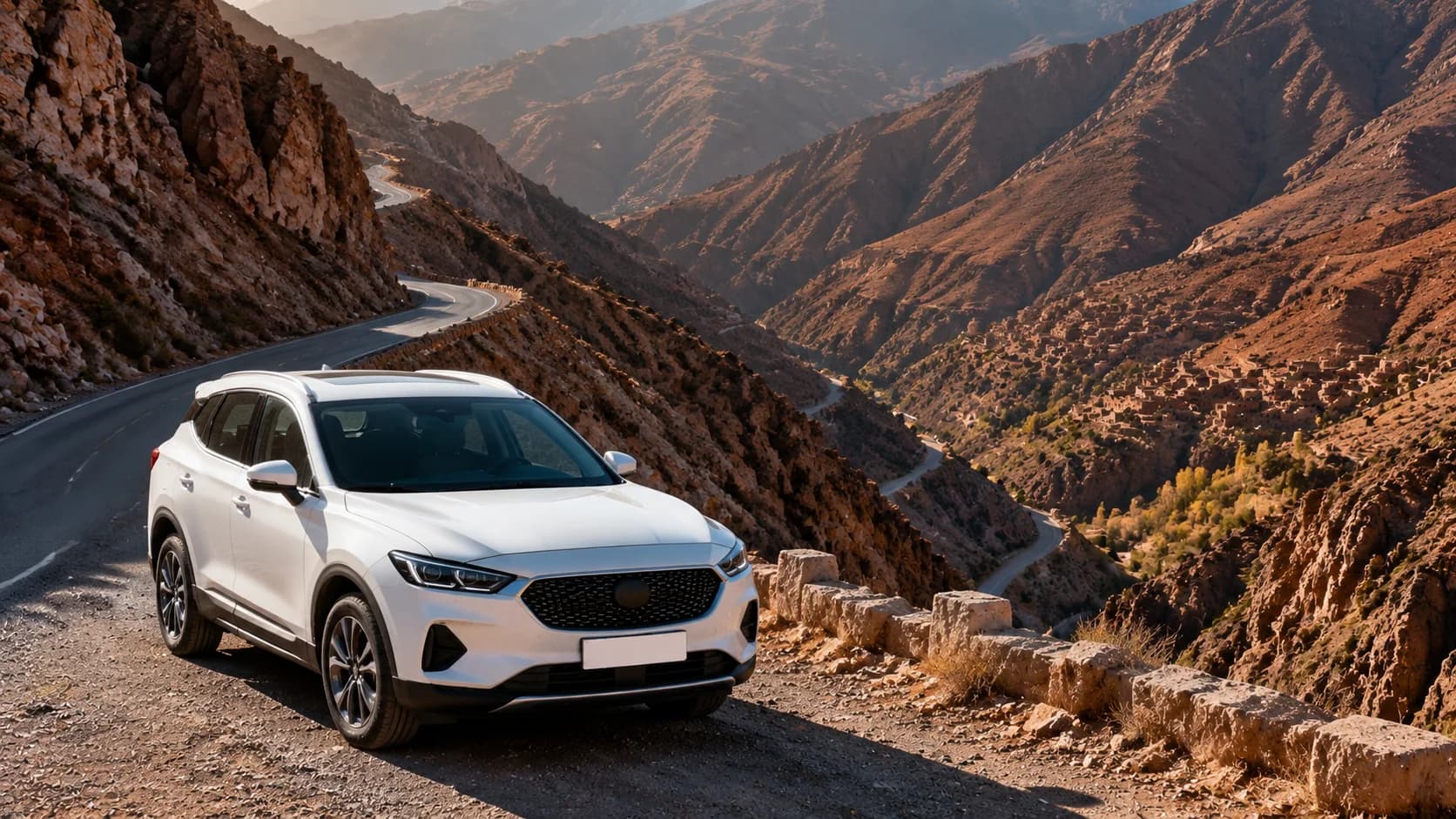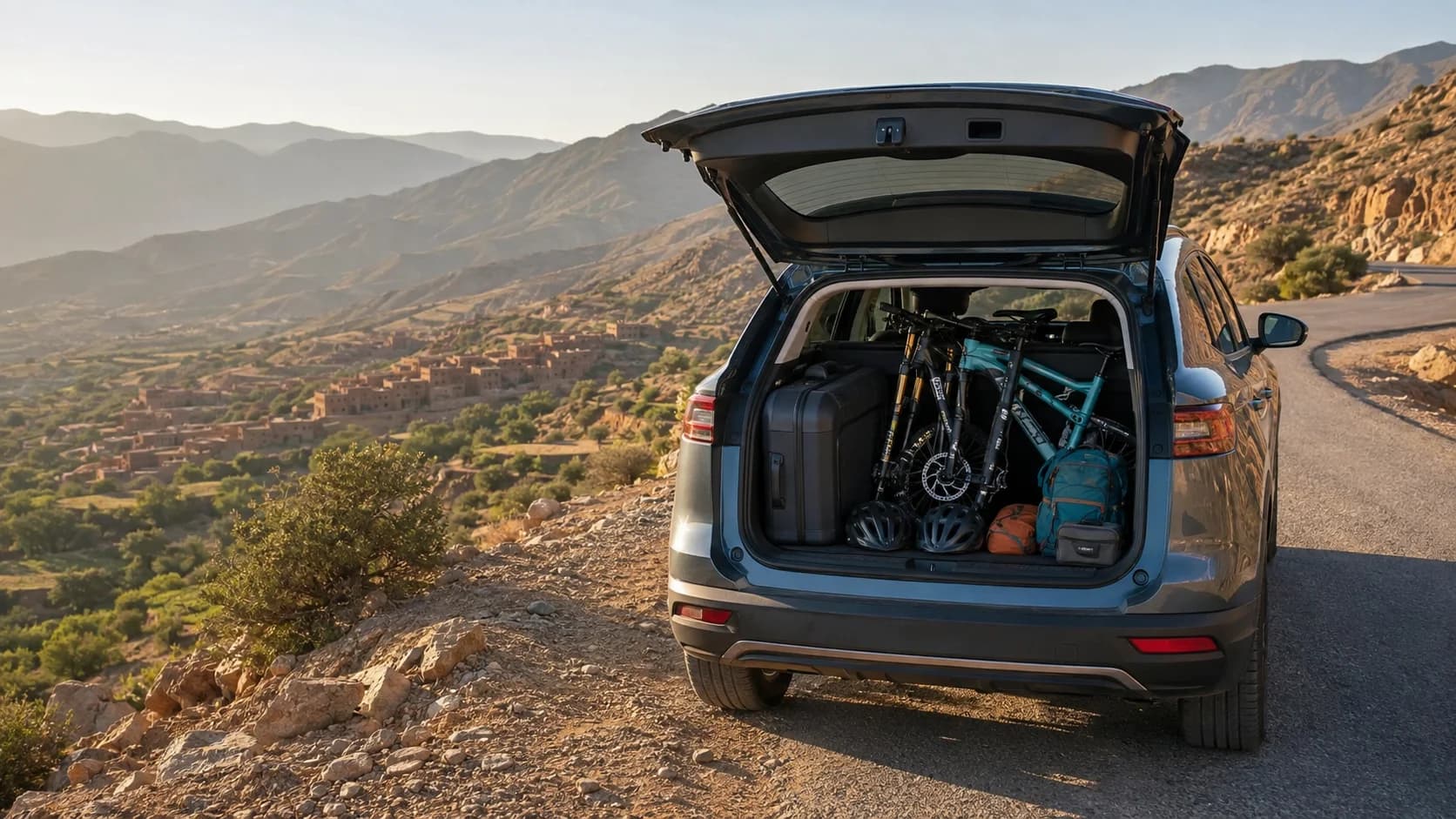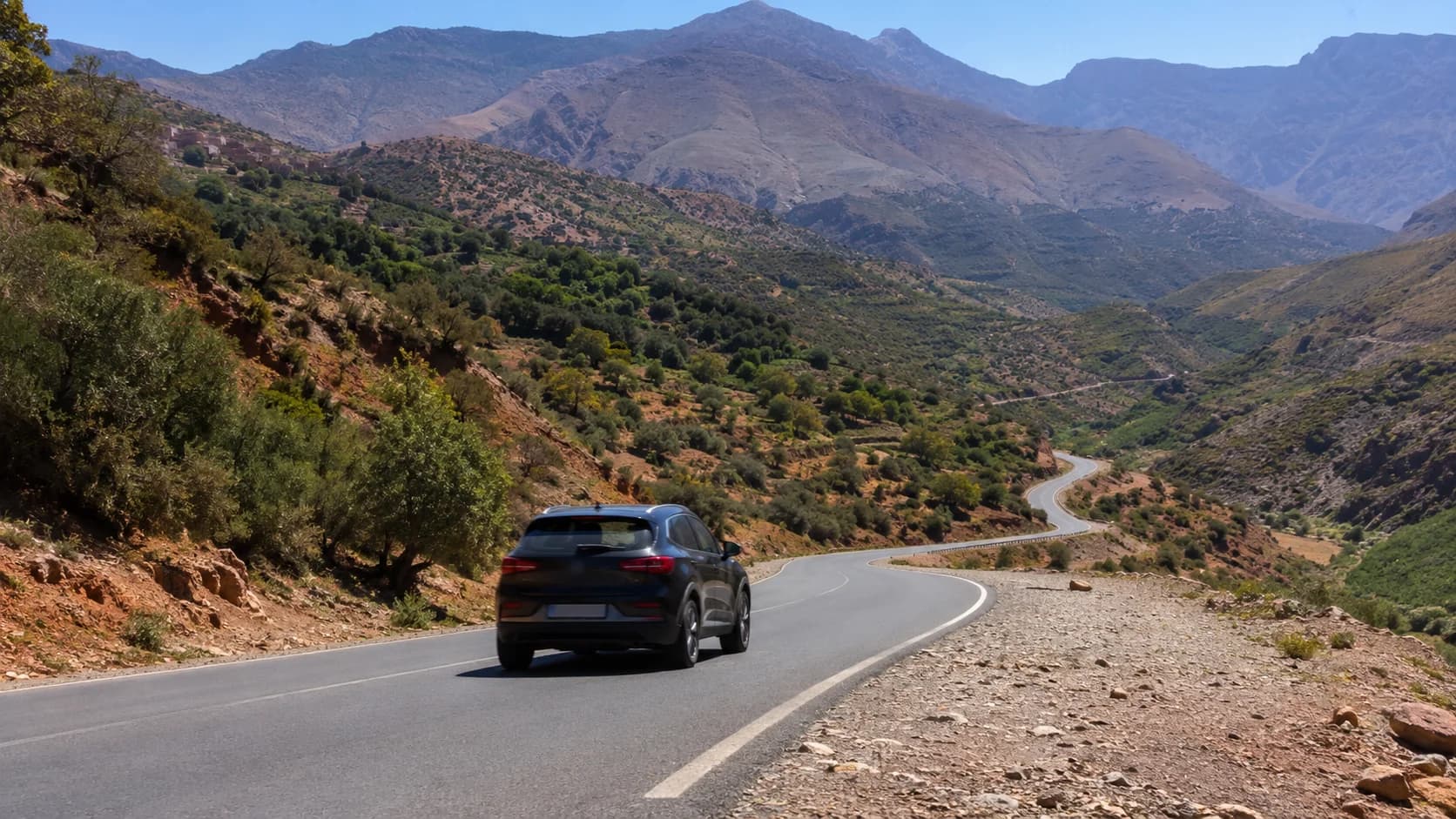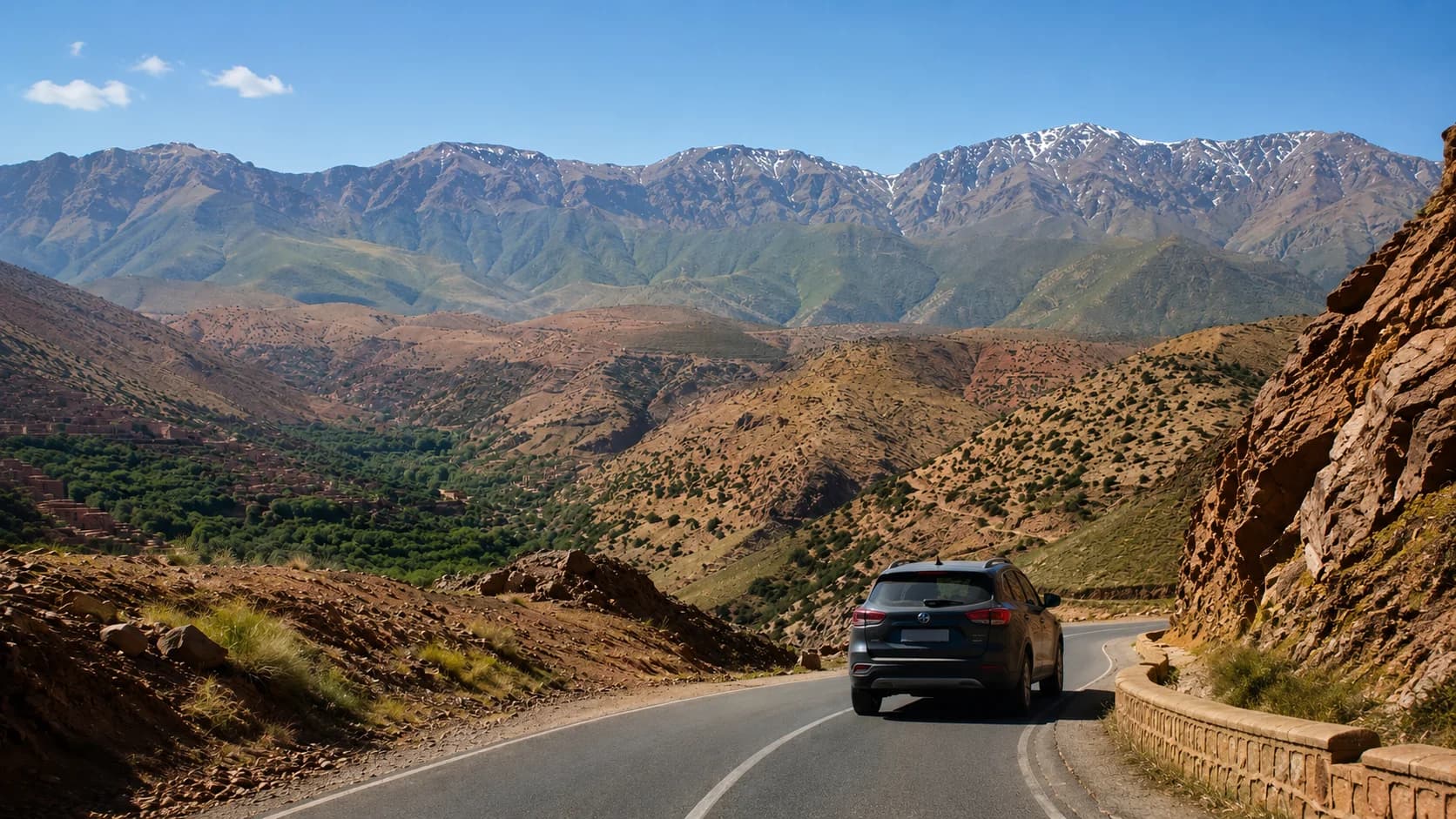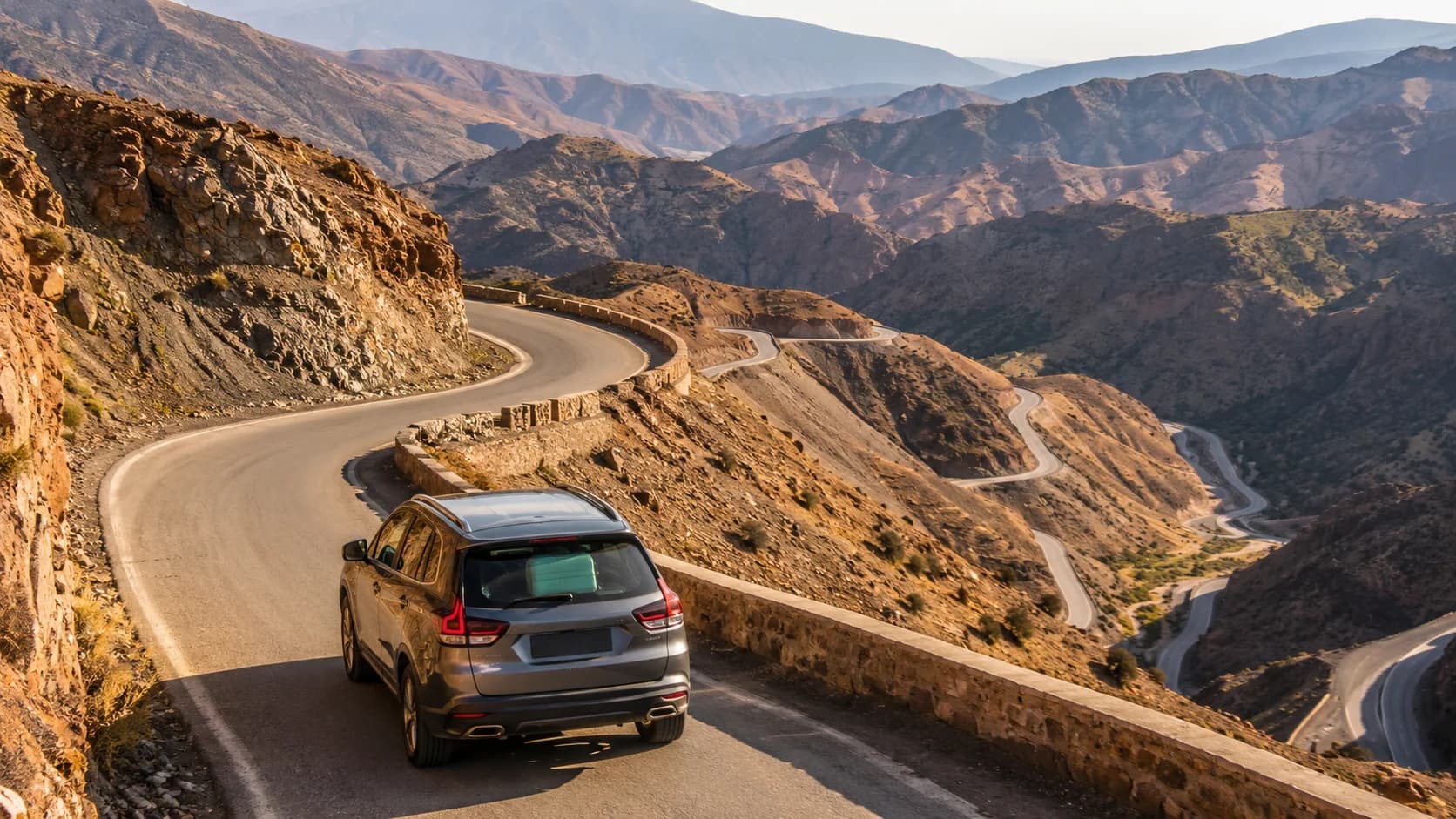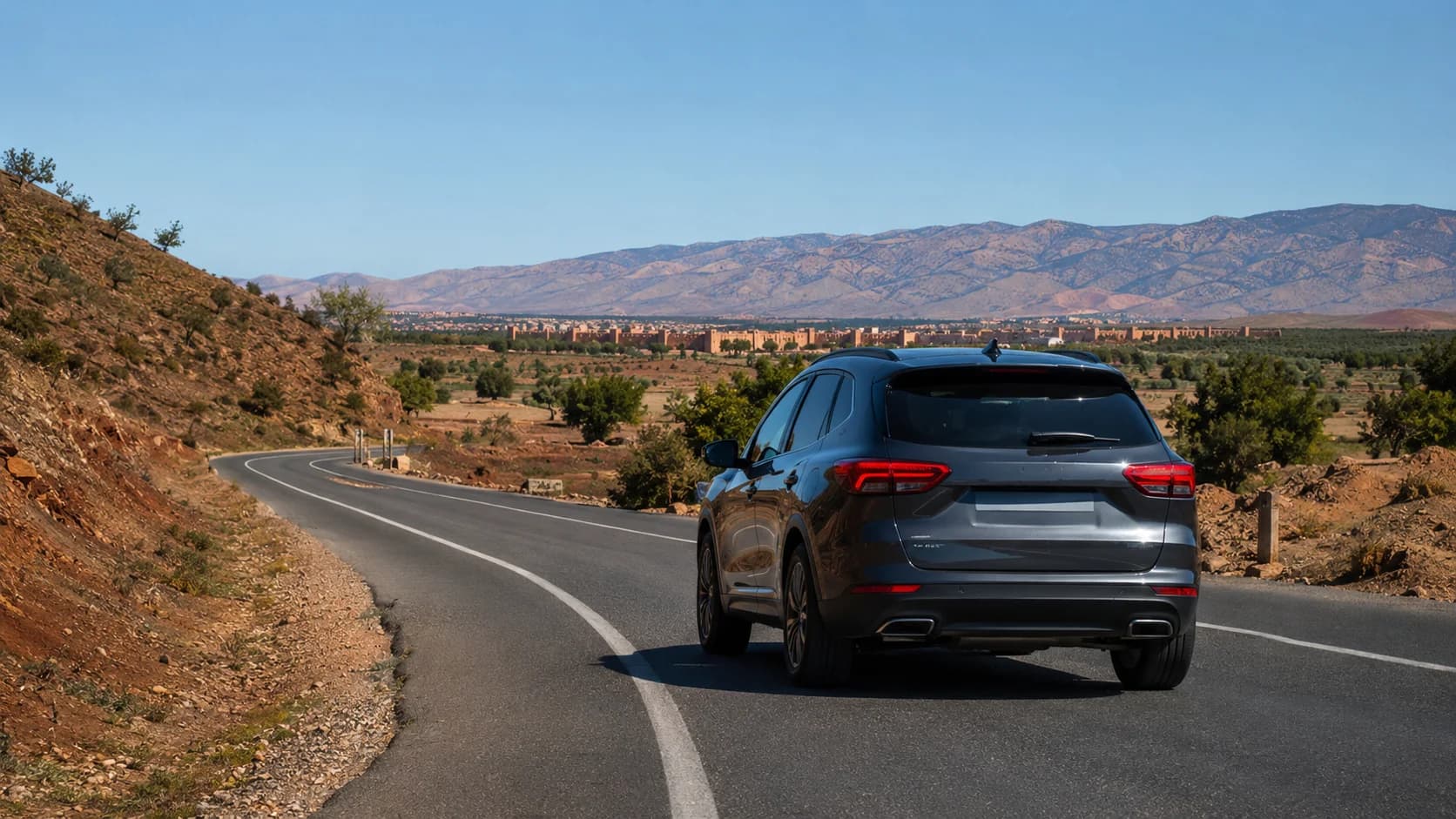









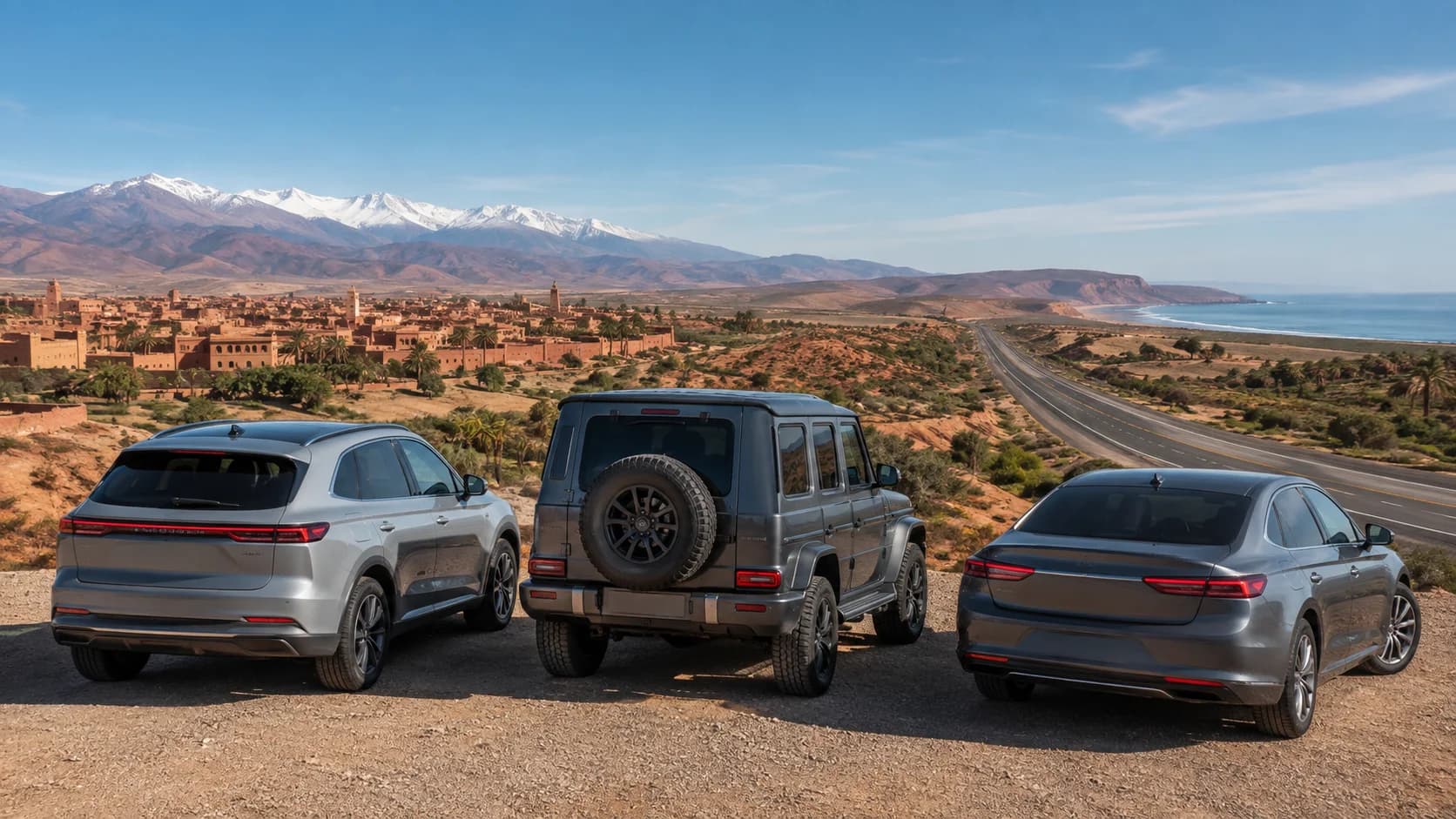
Yes, you can normally drive a Marrakech rental car across Morocco, provided that your route follows the rental agreement and the vehicle remains on approved roads. Standard journeys from Marrakech to Casablanca, Rabat, Tangier, Fes, Agadir, Essaouira, Ouarzazate and many other Moroccan destinations are commonly possible.
However, nationwide use does not mean completely unrestricted use. Mileage limits, unpaved roads, desert tracks, mountain conditions, one-way returns and international border crossings may require separate approval.
Before beginning a long Morocco road trip, share your itinerary with the rental provider and request written confirmation of the permitted routes, mileage conditions and return location.
Table of Contents
- Can You Drive Across Morocco with a Marrakech Rental Car?
- Where you can normally drive
- Cities, highways and long-distance routes
- Mountain, desert and remote-road considerations
- Mileage and long-distance terms
- One-way and different-city returns
- International border restrictions
- Choosing a sedan, SUV or 4x4
- Road-trip approval checklist
- Frequently asked questions
Can You Drive Across Morocco with a Marrakech Rental Car?
A rental car collected in Marrakech can generally be driven throughout Morocco on normal public roads. This includes popular routes to Casablanca, Rabat, Tangier, Fes, Chefchaouen, Agadir, Essaouira, Ouarzazate and Merzouga.
You should still confirm:
-
Whether the rental includes unlimited or capped mileage
-
Whether mountain and desert destinations are permitted
-
Whether unpaved roads are excluded
-
Whether you can return the car in another city
-
Whether your intended terrain requires an SUV or 4x4
-
Whether roadside assistance covers the entire itinerary
-
Whether the insurance remains valid on every planned route
The safest approach is to send the rental provider your complete itinerary before confirming the booking.
The answer to “can you drive a rental car across Morocco?” is normally yes, but subject to the provider’s rental conditions.
A car rented in Marrakech is not usually restricted to the Marrakech region. Most travellers can use it for normal journeys between Moroccan cities, coastal destinations, mountain towns and established desert gateways.
For example, a standard rental may be suitable for routes such as:
-
Marrakech to Casablanca and Rabat
-
Marrakech to Tangier or Chefchaouen
-
Marrakech to Fes and Meknes
-
Marrakech to Agadir and Essaouira
-
Marrakech to Ouarzazate
-
Marrakech to Merzouga using established paved roads
The important distinction is between nationwide road use and unrestricted vehicle use.
Nationwide use generally means that the car may travel between approved Moroccan destinations using public roads. Unrestricted use would imply that the vehicle can enter any track, cross borders, travel off-road or be returned anywhere without prior agreement. That is rarely the case.
The exact conditions depend on the rental company, vehicle category, insurance policy and route.
Where You Can Normally Drive
Most established Moroccan cities and tourist destinations are accessible using paved national roads, regional roads or motorways. A Marrakech rental car Morocco road trip can therefore cover a large part of the country without requiring specialist equipment.
Normal destinations may include:
-
Casablanca
-
Rabat
-
Tangier
-
Tetouan
-
Chefchaouen
-
Fes
-
Meknes
-
Ifrane
-
Agadir
-
Essaouira
-
Safi
-
El Jadida
-
Ouarzazate
-
Tinghir
-
Merzouga
Morocco’s official tourism website presents car rental as one of the available ways to travel around the country. Its motorway network also connects Marrakech with major destinations such as Casablanca, Rabat, Tangier, Fes and Agadir.
Nevertheless, the condition of the final section of a route matters. A destination may be permitted while a specific shortcut, rural track or off-road approach is not.
For example, driving to a desert hotel on a paved road may be permitted, while following an unmarked track beyond the hotel may not be covered.
Cities, Highways and Long-Distance Routes
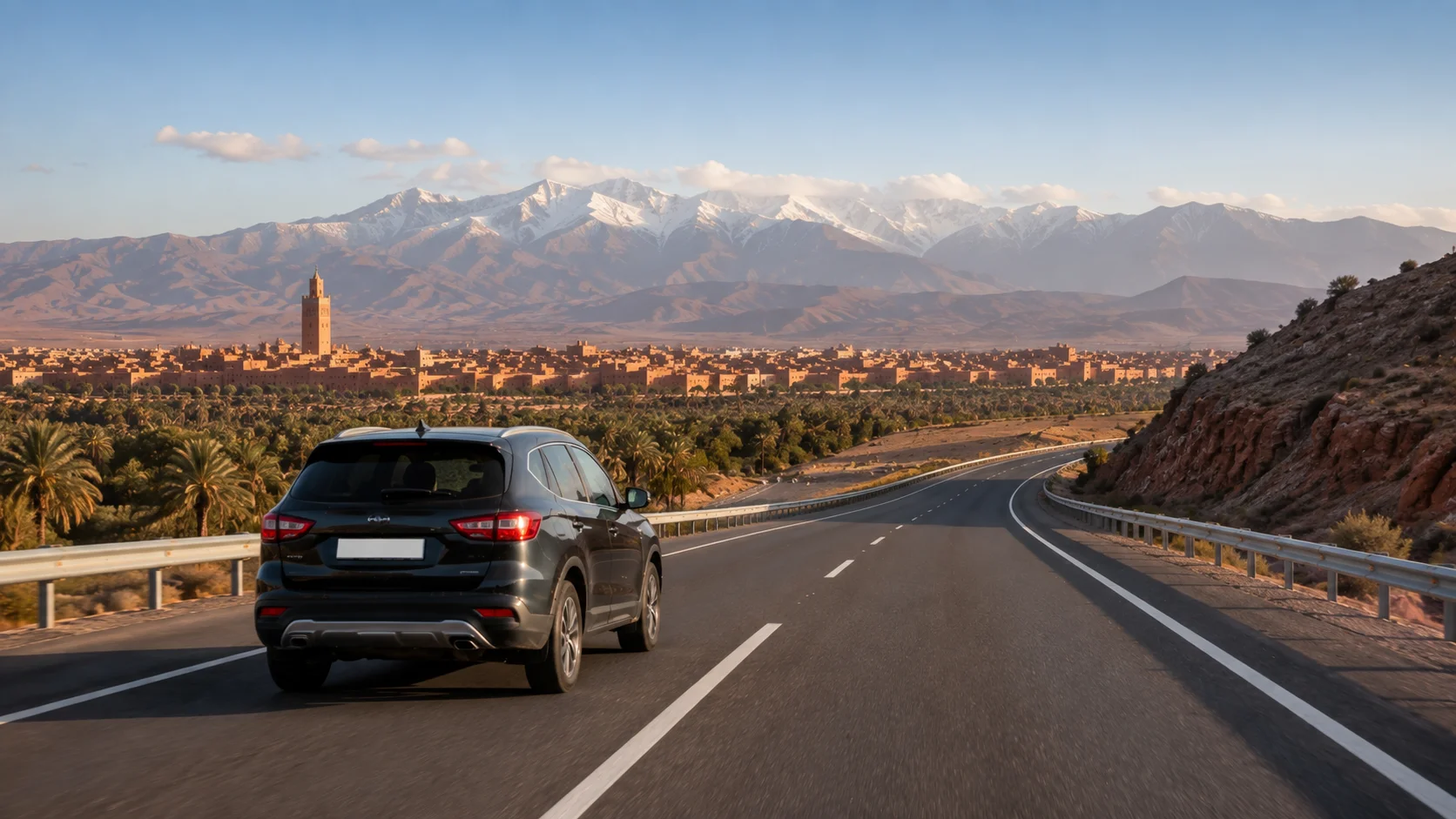
Morocco has an extensive toll motorway network operated by Autoroutes du Maroc. Major motorway corridors connect Marrakech with Casablanca and Agadir, while onward connections provide access toward Rabat, Tangier, Meknes, Fes and other northern destinations.
This makes multi-city travel practical, but distances can still be substantial.
Marrakech to Casablanca and Rabat
This is one of the easiest long-distance journeys from Marrakech. The motorway provides a relatively direct route, with service areas and toll stations along the way.
A sedan is normally sufficient for this journey, especially for one to four passengers travelling with standard luggage.
Marrakech to Tangier
Driving from Marrakech to Tangier is possible, but it is a long journey. Many travellers divide it with a stop in Casablanca or Rabat.
Before leaving, check the fuel level, tyre condition, planned rest stops and expected arrival time. Avoid planning an unfamiliar final section after dark.
Marrakech to Fes
The journey from Marrakech to Fes may pass through Casablanca and Rabat using motorway connections, or follow inland routes depending on your itinerary.
The motorway option is usually easier for travellers who prioritise predictable road conditions. Inland alternatives may be scenic but can require more concentration and additional driving time.
Marrakech to Agadir
The motorway between Marrakech and Agadir makes this a common rental-car route. It includes mountainous sections, so drivers should maintain a safe speed and allow additional space around larger vehicles.
Marrakech to Essaouira
The route to Essaouira is normally completed on a paved national road. A hatchback or sedan is generally suitable, although an SUV may provide more luggage space for families, surf equipment or longer coastal trips.
Marrakech to Ouarzazate and the southeast
The road toward Ouarzazate crosses the High Atlas. It is a normal tourist route, but mountain weather, roadworks, sharp bends and slower vehicles can increase the journey time.
Check current road conditions before departure, particularly during winter or periods of heavy rain.
Mountain, Desert and Remote-Road Considerations
A road shown on a digital map is not automatically appropriate for a rental car.
Some mapping applications may recommend shortcuts that leave the main paved road. These routes can become narrow, rough, sandy or difficult after rain. Mobile coverage may also be limited in isolated areas.
Mountain roads
Main roads through the Atlas and Rif mountains can usually be driven in a standard rental car when conditions are good. However, they may involve:
-
Steep gradients
-
Tight bends
-
Slow-moving trucks
-
Rockfall or roadworks
-
Fog, rain or winter snow
-
Limited lighting after sunset
A standard sedan can manage many paved mountain routes, but an SUV may be more comfortable when carrying several passengers and heavy luggage.
Desert destinations
You can often drive to established desert towns and gateways such as Ouarzazate, Zagora and Merzouga using paved roads.
The restriction usually begins when the journey leaves the public road and enters dunes, sand tracks, dry riverbeds or remote pistes.
A conventional rental car should not be driven directly into dunes. Even a rental 4x4 should not be treated as permission for independent off-road driving unless the provider has specifically approved the route.
For specialist desert areas, it is often safer to park at an agreed meeting point and continue with a local authorised transfer or excursion operator.
Unpaved roads
Insurance and roadside assistance may exclude damage caused on unauthorised, unpaved or off-road routes.
Possible exclusions can include:
-
Tyre and wheel damage
-
Underbody damage
-
Recovery from sand or mud
-
Damage caused by water crossings
-
Mechanical damage linked to improper terrain
-
Towing from inaccessible locations
Ask the provider to define what it considers an unpaved road. A maintained gravel access road and an isolated desert piste may be treated differently.
Mileage and Long-Distance Terms
One of the most important conditions for a multi-city trip is the mileage allowance.
An unlimited mileage car rental Marrakech offer generally allows the renter to travel without a daily kilometre cap. However, “unlimited” should still be checked carefully.
Confirm whether it applies:
-
For the complete rental period
-
To every vehicle category
-
During monthly or long-term rentals
-
To all approved Moroccan routes
-
Without a fair-use restriction
-
Without additional long-distance fees
Some rental agreements provide a fixed number of kilometres per day or for the total booking. Additional kilometres may then be charged at the rate stated in the contract.
For example, a journey covering Marrakech, Casablanca, Rabat, Tangier, Chefchaouen, Fes, Merzouga and Agadir can add several thousand kilometres. A low mileage allowance may therefore substantially change the final rental cost.
Calculate the approximate total distance before booking and add a reasonable margin for local driving, diversions and hotel access.
Also confirm whether your rental includes:
-
Motorway travel
-
Roadside assistance outside Marrakech
-
Replacement support in another city
-
Tyre assistance
-
A second driver
-
Long-distance use during consecutive days
Moroccan motorways are toll roads. Autoroutes du Maroc publishes toll information and provides service areas across the network, so drivers should budget separately for motorway charges.
One-Way and Different-City Returns
Being allowed to take a rental car across Morocco does not automatically mean that you can return it in any city.
A one way rental Morocco booking must normally be arranged before collection. The provider needs to confirm that it can receive or collect the vehicle at the requested destination.
Possible return cities from a Marrakech rental may include:
-
Casablanca
-
Rabat
-
Tangier
-
Fes
-
Agadir
-
Essaouira
Availability depends on the rental company’s operating network, staff coverage and vehicle logistics.
A one-way fee may apply because the company must return the car to its original location or reposition it for another booking. The price can depend on distance, vehicle category and return schedule.
When requesting a one-way rental, provide:
-
Collection date and time
-
Marrakech pickup location
-
Final return city
-
Exact return location
-
Estimated return time
-
Flight or train details, when relevant
-
Full itinerary
-
Vehicle category required
Do not drive to another city and request a last-minute return unless the provider has confirmed it. An unapproved return can cause additional fees and operational problems.
International Border Restrictions
Driving across Morocco is different from driving outside Morocco.
Do not assume that a Moroccan rental car can cross an international border, board an international ferry or enter another country.
International travel may require:
-
Written authorisation from the vehicle owner
-
Specific insurance coverage
-
Customs documentation
-
Temporary vehicle admission or export formalities
-
Permission from the rental company
-
Approval for the destination country
-
Additional roadside assistance arrangements
Moroccan customs maintains separate procedures for the temporary admission and movement of vehicles across international borders. Those procedures do not mean that a renter automatically has permission to export a vehicle belonging to a rental company.
In practice, many standard rental agreements prohibit international border crossings.
This may include travel toward:
-
Spain by ferry
-
Ceuta or Melilla
-
Mauritania
-
Algeria
-
Any other foreign destination
Never take the car onto an international ferry without explicit written approval and the required documents. Verbal permission from someone who is not authorised to amend the contract may not be sufficient.
Choosing a Sedan, SUV or 4x4
The best car depends on the route, passenger count, luggage and road surface.
Sedan rental
A sedan rental in Marrakech is usually suitable for motorway journeys, city-to-city travel and established paved tourist routes.
Choose a sedan for:
-
Marrakech to Casablanca
-
Marrakech to Rabat
-
Marrakech to Tangier
-
Marrakech to Agadir
-
Marrakech to Essaouira
-
Business travel
-
Couples or small families
-
Normal suitcases
Sedans often offer good fuel efficiency and comfortable motorway driving.
SUV rental
An SUV rental in Marrakech can be useful for longer itineraries, larger luggage loads and routes involving mountain areas or uneven access roads.
Choose an SUV for:
-
Family road trips
-
Four or five travellers with luggage
-
Atlas Mountain itineraries
-
Long multi-city journeys
-
Extra ground clearance
-
Improved luggage capacity
-
Greater comfort on mixed road surfaces
An SUV does not automatically permit off-road driving. The same route and insurance restrictions may still apply.
4x4 rental
A 4x4 rental in Marrakech may be appropriate for approved specialist routes, remote accommodation or journeys where additional traction and ground clearance are genuinely needed.
Choose a 4x4 when:
-
The rental provider recommends it for the itinerary
-
The accommodation has difficult authorised access
-
The route includes approved rough terrain
-
You are carrying equipment for a remote journey
-
Seasonal conditions make a higher-clearance vehicle preferable
A 4x4 is not a guarantee that every desert or mountain track is permitted. Written approval remains essential.
Road-Trip Approval Checklist
Before collecting the car, send your route to the rental provider and confirm the following points.
Route approval
List every major city and remote destination. Mention any desert camp, mountain lodge, rural guesthouse or isolated attraction.
Road surfaces
Ask whether all planned roads are paved. When a property provides final-access instructions, send them to the rental provider.
Mileage
Confirm whether the rental includes unlimited kilometres or a fixed allowance. Request the cost of excess kilometres in writing.
Vehicle category
Choose the car based on passengers, luggage and terrain rather than appearance alone.
Insurance coverage
Ask whether the insurance remains valid on mountain roads, maintained gravel roads and remote access routes.
One-way return
Confirm the exact return city, location, time and any relocation charge before booking.
Roadside assistance
Check the geographic coverage and the procedure to follow in case of a breakdown, flat tyre or warning light.
Documents
Keep the rental agreement, vehicle papers, driving licence, identification and assistance contact details accessible during the journey.
Written confirmation
Save the approved itinerary and rental terms on your phone. Written confirmation helps avoid misunderstandings during collection or while travelling.
Frequently Asked Questions
Can I drive a Marrakech rental car anywhere in Morocco?
You can generally drive it between approved Moroccan destinations on public roads. However, off-road areas, unpaved tracks, specialist desert routes and international borders may be restricted.
Can I take a rental car from Marrakech to northern Morocco?
Yes, journeys from Marrakech to Casablanca, Rabat, Tangier, Tetouan, Chefchaouen, Meknes and Fes are commonly possible. Confirm the mileage allowance and roadside-assistance coverage before departure.
Are unlimited kilometres included in Marrakech car rental?
It depends on the provider, vehicle and rental duration. Some bookings include unlimited mileage, while others have a daily or total kilometre allowance. Request the exact limit in writing.
Can I drive a rental car into the desert?
You can normally drive to established desert destinations using paved roads. Driving onto dunes, sand tracks or remote pistes may be prohibited or require special approval.
Do I need a 4x4 for mountain roads in Morocco?
Not necessarily. Main paved mountain roads can often be driven in a sedan or SUV. A 4x4 may be recommended for authorised rough roads, remote access or difficult seasonal conditions.
Can I return the car in another Moroccan city?
A different-city return may be available when arranged in advance. The provider must confirm the return location and any applicable one-way fee before collection.
Can a Moroccan rental car cross an international border?
Do not assume so. Many rental agreements prohibit international border crossings and ferry travel. Written permission, insurance and customs documents may be required.
Are unpaved roads covered by rental insurance?
Not always. Insurance policies frequently restrict or exclude unauthorised off-road and unpaved-road use. Confirm the exact road and coverage conditions before travelling.
What car is best for a long Morocco road trip?
A sedan is suitable for paved city-to-city journeys. An SUV offers more luggage capacity and comfort for family or mountain itineraries. A 4x4 should be chosen for approved specialist terrain.
Should I share my full itinerary with the rental provider?
Yes. Sharing your itinerary allows the provider to confirm route approval, mileage terms, vehicle suitability, roadside-assistance coverage and one-way return arrangements.
Plan Your Morocco Road Trip with Clear Conditions
A Marrakech rental car can give you the flexibility to explore Morocco’s imperial cities, Atlantic coastline, mountain landscapes and desert gateways in one journey.
The key is to distinguish nationwide use from unrestricted use. Standard public-road travel is commonly permitted, but off-road routes, international borders, one-way returns and specialist terrain require additional confirmation.
Planning a multi-city Morocco journey? Share your route with MarHire Car Marrakech to choose the right sedan, SUV or 4x4, understand the mileage terms and receive clear confirmation of where the vehicle can be used.