








The drive from Marrakech to Ait Ben Haddou is one of Morocco’s most famous road trips: a mountain crossing over the High Atlas, a descent toward the desert gateway of Ouarzazate, and a final arrival at one of the country’s most cinematic kasbah landscapes. Aït Ben Haddou is a UNESCO-listed ksar in Ouarzazate Province, known for its earthen architecture, old caravan-route history and film-location fame.
For travelers who want freedom, renting a car makes the route much more flexible than joining a fixed group tour. You can stop at viewpoints, pause for coffee in mountain villages, add Telouet or Ouarzazate, and choose whether to return the same day or sleep overnight. The road is beautiful, but it is also long and winding, so the right car and timing matter.
Table of Contents
- Where Aït Ben Haddou is and why it’s famous
- Distance and driving time from Marrakech
- The route over Tizi n’Tichka
- Day trip vs overnight in Ouarzazate
- Parking and visiting the ksar
- Combining with Telouet and Ouarzazate
- Best car for the journey
- Best time of day and season to go
- Film-fan stops along the way
- FAQs
Where Aït Ben Haddou is and why it’s famous
Aït Ben Haddou sits in the foothills on the southern side of the High Atlas, in the Ounila Valley area of Ouarzazate Province. UNESCO describes it as one of the most famous ksour in the valley and an outstanding example of southern Moroccan earthen architecture. A ksar is a fortified group of traditional dwellings, usually built with defensive walls, towers and compact houses inside.
The site is famous for three main reasons. First, it shows the old pre-Saharan building style of southern Morocco, with clay, earth and straw materials shaped into towers, walls and upper decorations. Second, it was linked to historic caravan routes between the south and Marrakech. Third, it has become one of Morocco’s most recognizable film backdrops, appearing in productions linked to desert kingdoms, ancient cities and fantasy worlds.
Aït Ben Haddou is not just a quick photo stop. The best visit includes time to walk through the lanes, cross toward the old ksar, climb carefully to the upper viewpoint and look back over the valley. The higher you go, the more you understand why filmmakers and photographers keep coming back.
Distance and driving time from Marrakech
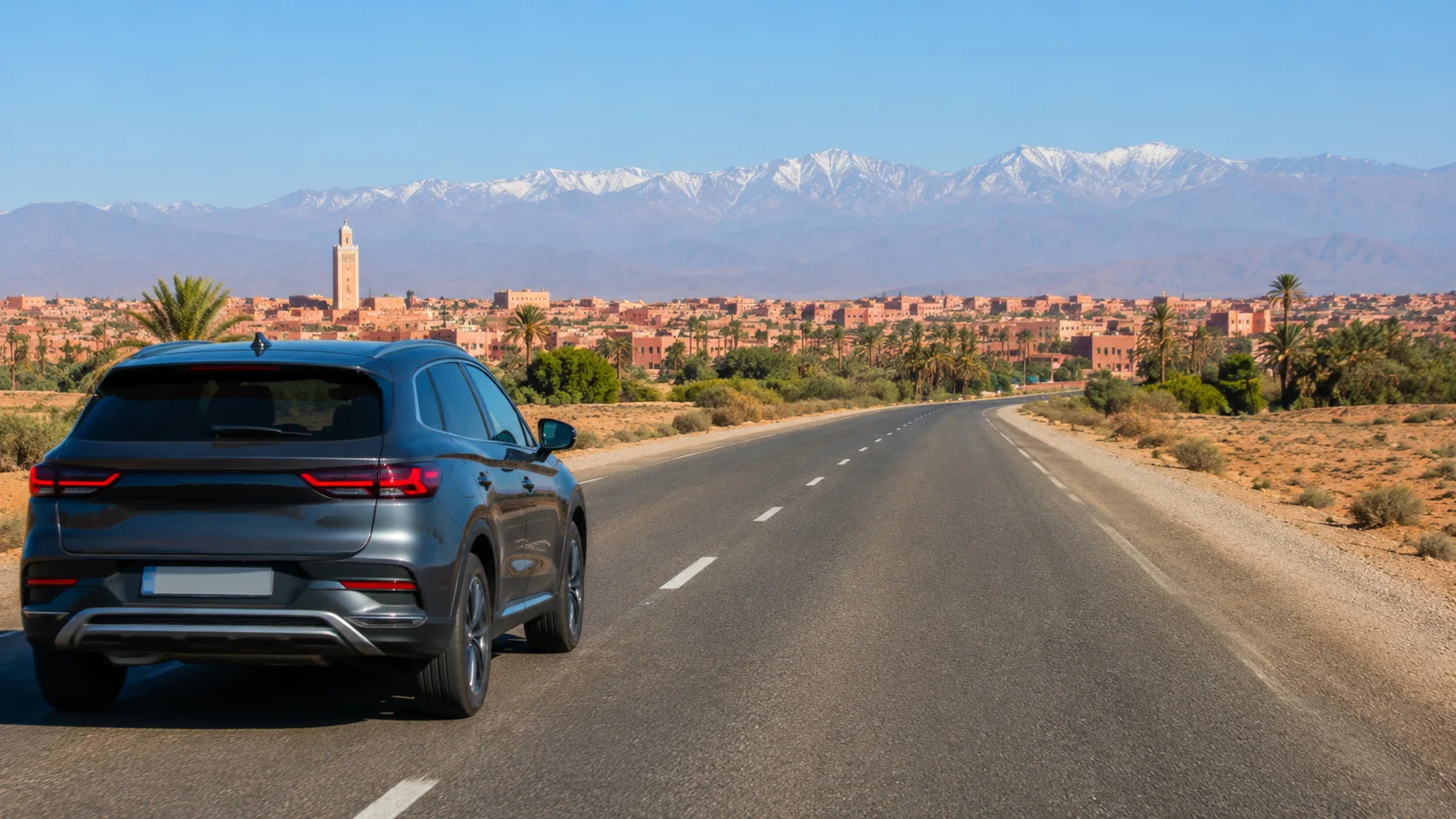
The distance from Marrakech to Aït Ben Haddou is around 180 km by road, depending on the exact pickup point in Marrakech and the route you take. The drive usually takes about 3.5 to 4 hours one way in normal conditions, but you should allow more time for photo stops, slow mountain traffic, weather, roadworks or lunch.
For a relaxed self-drive plan, think of the journey as a full-day road trip rather than a short transfer. A same-day return means around 7 to 8 hours of driving, plus the time you spend at the ksar. That is possible, but only if you leave Marrakech early and avoid making too many long stops on the way.
A smarter timing plan is to leave Marrakech around 7:00 or 7:30 in the morning. This gives you time to cross the mountains before the hottest part of the day, reach Aït Ben Haddou around late morning or midday, explore the ksar, and decide whether to continue to Ouarzazate or return before dark.
The route over Tizi n’Tichka
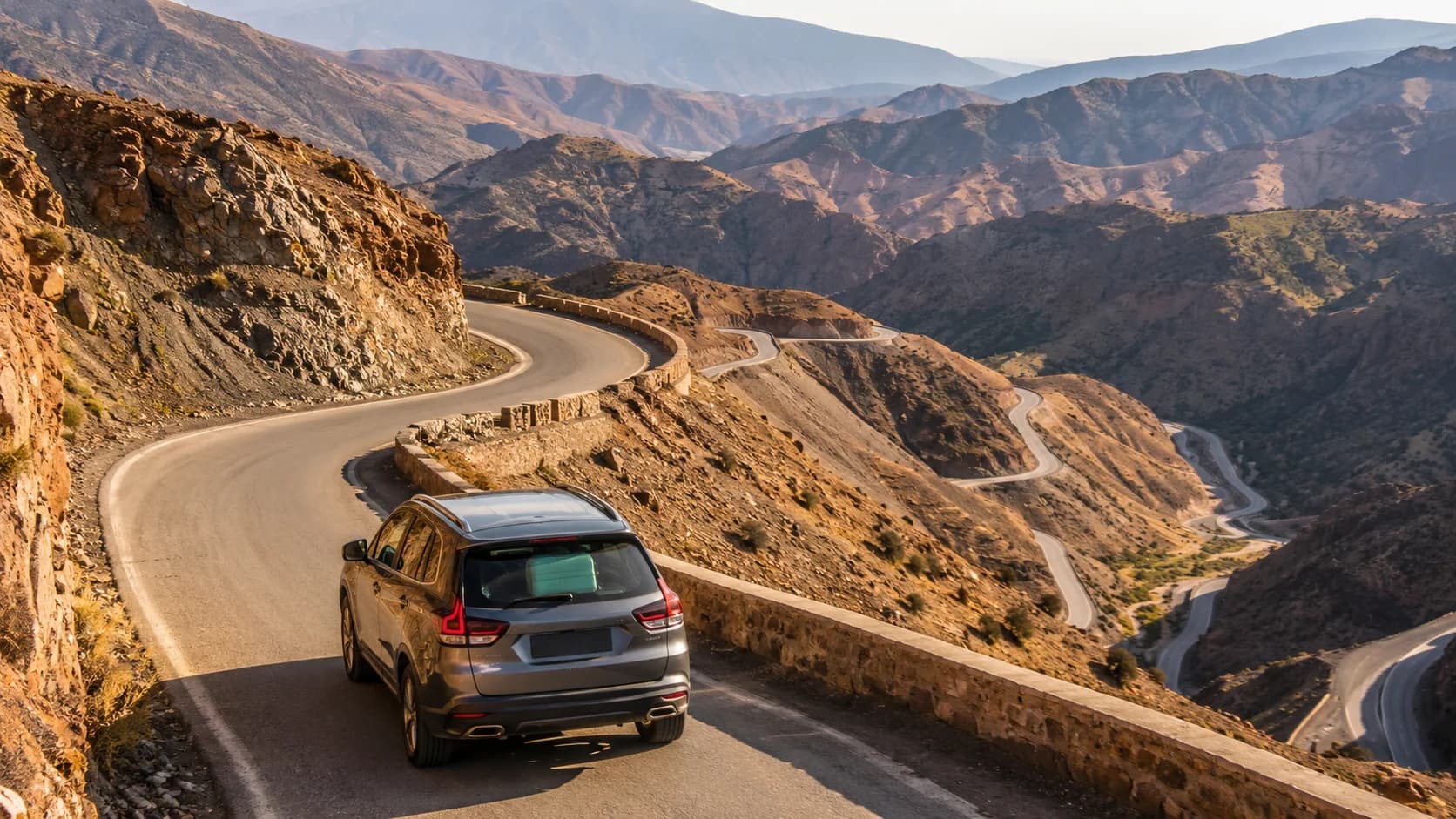
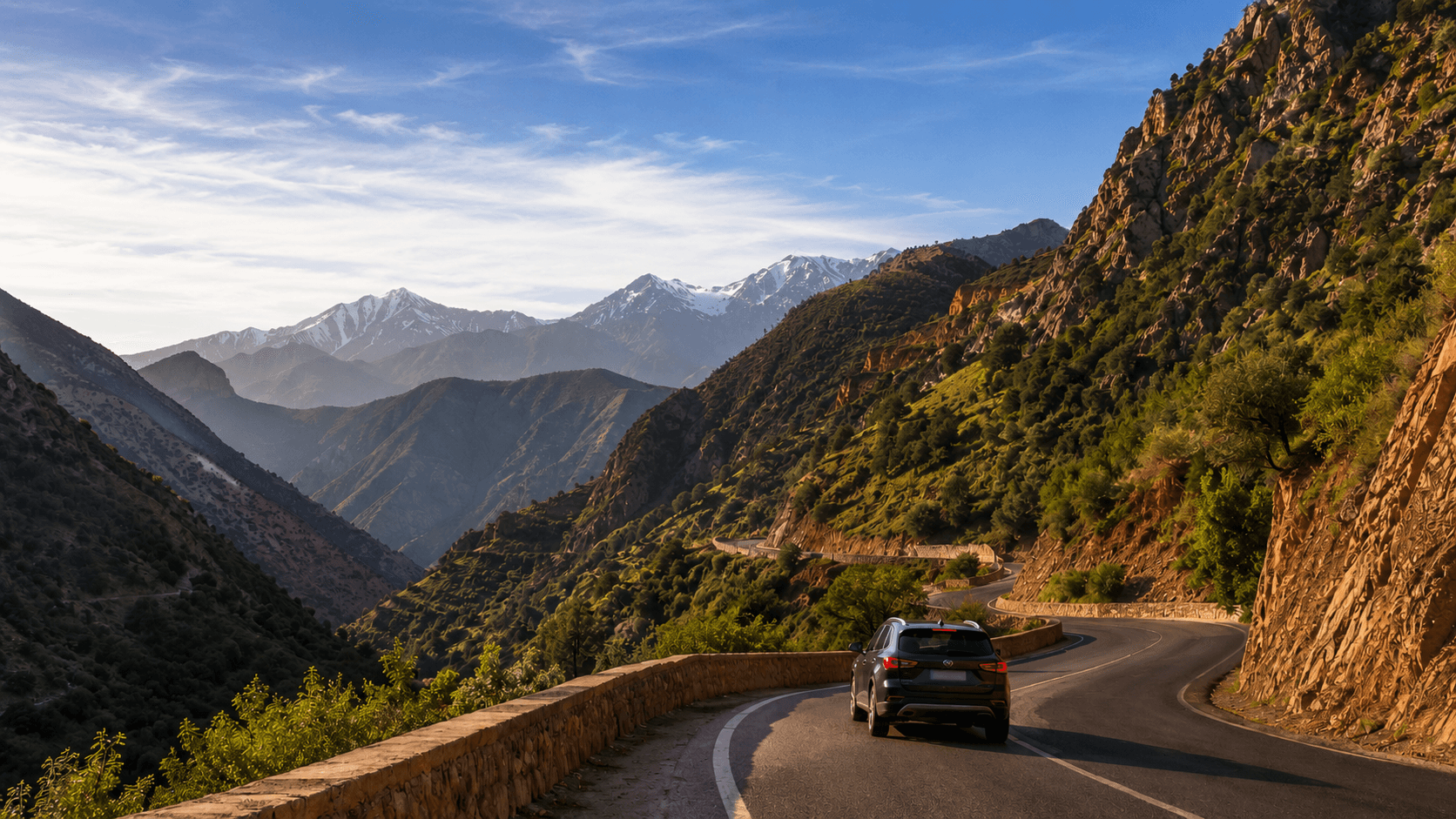
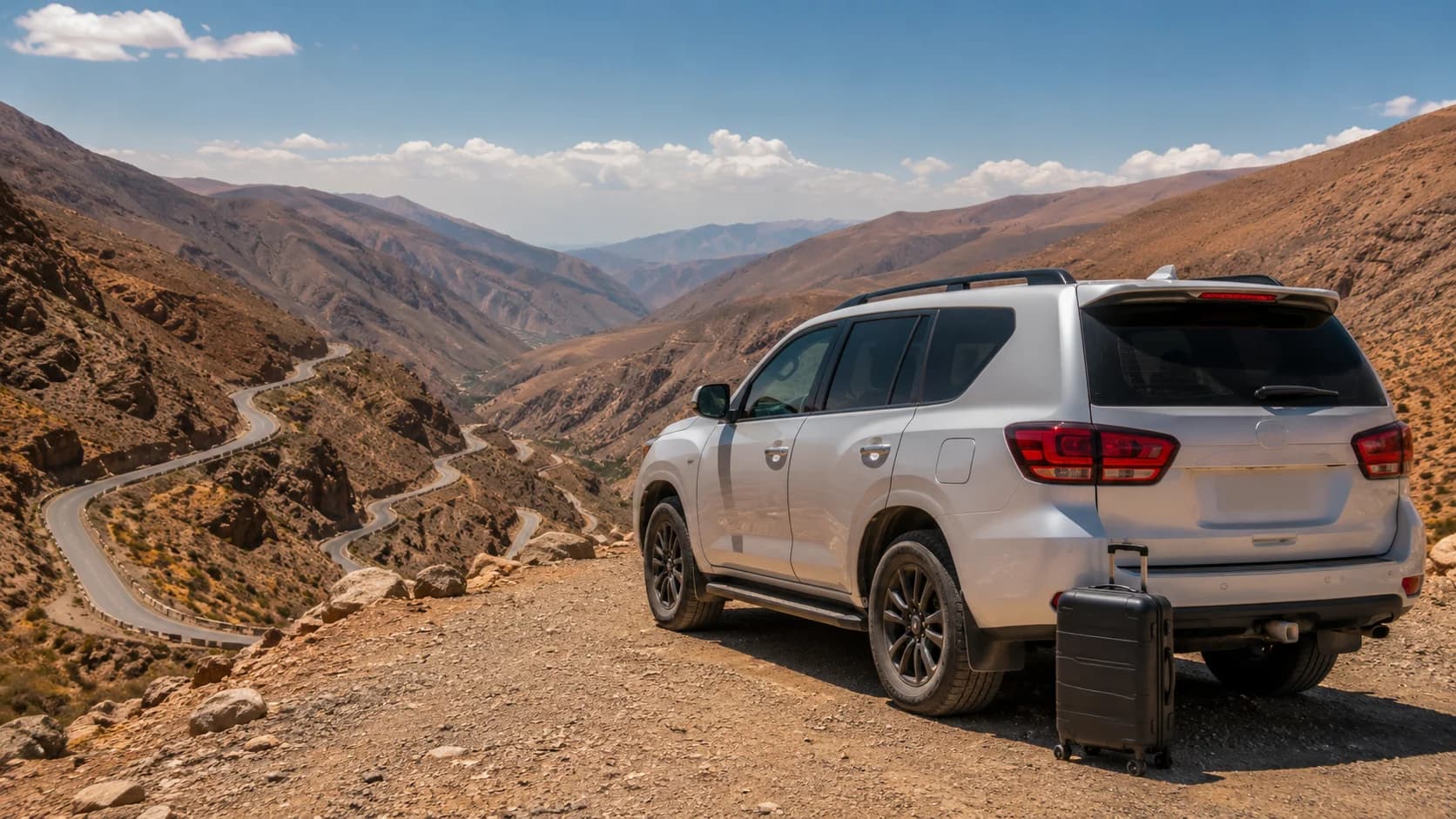
The classic route from Marrakech to Aït Ben Haddou follows the road toward Ouarzazate over the Tizi n’Tichka pass. This is the main High Atlas crossing between Marrakech and the southeast, linking the city with Ouarzazate and the desert routes beyond. The pass is known for mountain bends, changing altitude, panoramic viewpoints and slower driving than the map distance suggests.
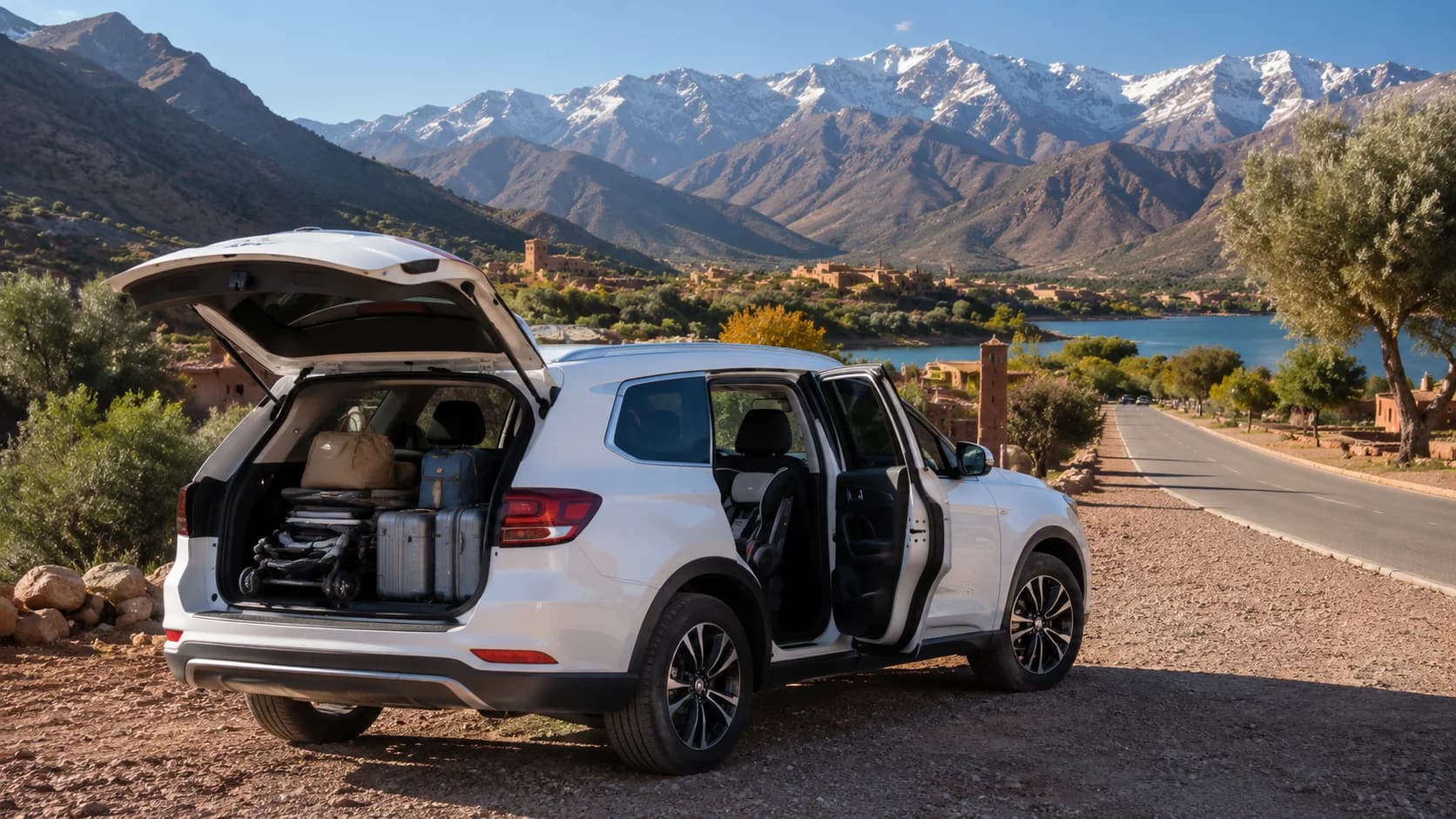
The first part of the drive leaves Marrakech and gradually climbs toward the mountains. The scenery changes from flat plains to red slopes, villages and sharper bends. As you get closer to the pass, the road becomes more dramatic. Expect curves, trucks, occasional gravel at the edge of the road and vehicles moving at different speeds.
After the pass, the road descends toward the Ouarzazate side. To reach Aït Ben Haddou, you turn off before Ouarzazate and continue toward the village. This last section feels calmer, with dry landscapes, kasbah-style buildings and open views toward the valley.
This is not a route for rushing. Drive smoothly, use lower gears on descents, keep distance from trucks, and avoid overtaking unless visibility is very clear. In winter, mountain weather can change quickly, and some sources advise checking conditions during colder months because the pass may be affected by bad weather.
Day trip vs overnight in Ouarzazate
Ait Ben Haddou day trip from Marrakech is doable, but it is a long day. It works best for travelers who have limited time and want to see the kasbah without changing hotels. The advantage is simple: you leave Marrakech in the morning and return at night. The downside is that most of your day is spent driving.
An overnight plan is more comfortable. You can visit Aït Ben Haddou in the afternoon or near golden hour, sleep in Ouarzazate or near the ksar, then visit Atlas Studios, Taourirt Kasbah or the surrounding valleys the next morning. This plan also makes the mountain driving less tiring because you are not forcing both directions into one day.
For families, photographers and film fans, overnight is usually the better choice. For travelers who only want the main viewpoint and a quick walk through the ksar, a day trip can still make sense, especially with a comfortable SUV and an early start.
Parking and visiting the ksar
Parking near Aït Ben Haddou is usually found in the newer village area, with roadside spaces and supervised parking areas close to the visitor route. Local visitor information notes that parking can be available along the road in the new village, while supervised car parks may charge a small fee.
Once parked, you normally continue on foot toward the old ksar. The visit involves uneven ground, steps, slopes and narrow passages, so comfortable shoes are important. The ksar is best explored slowly. Start with the lower lanes, then continue upward if you are comfortable with the climb.
The upper viewpoint is the highlight for many visitors. From there, you can see the clay architecture below, the valley around the village and the wide dry landscape that gives the site its film-set feeling. In summer, avoid climbing in the hottest part of the afternoon. In winter, bring a light layer because mountain and desert-edge temperatures can change fast.
Combining with Telouet and Ouarzazate
If you rent a car, one of the biggest advantages is the freedom to combine Aït Ben Haddou with extra stops. Telouet is often added by travelers who want a deeper kasbah route through the Ounila Valley. It makes the day more scenic, but it also adds time and requires more careful planning.
Ouarzazate is the easier add-on. It is close enough to combine with Aït Ben Haddou, especially if you are sleeping overnight. In Ouarzazate, travelers often visit film-related sites, kasbah architecture and desert-road viewpoints before continuing toward Skoura, Dades, Merzouga or back to Marrakech.
For a one-day route, do not overload the plan. Marrakech, Tizi n’Tichka, Aït Ben Haddou and a short Ouarzazate stop is already a long itinerary. For an overnight route, you can add Telouet or Ouarzazate without turning the day into a race.
Best car for the journey
You do not always need a 4x4 to reach Aït Ben Haddou on the main route in normal conditions. Many travelers complete the journey in a standard car. However, comfort matters because the road is long, winding and mountainous.
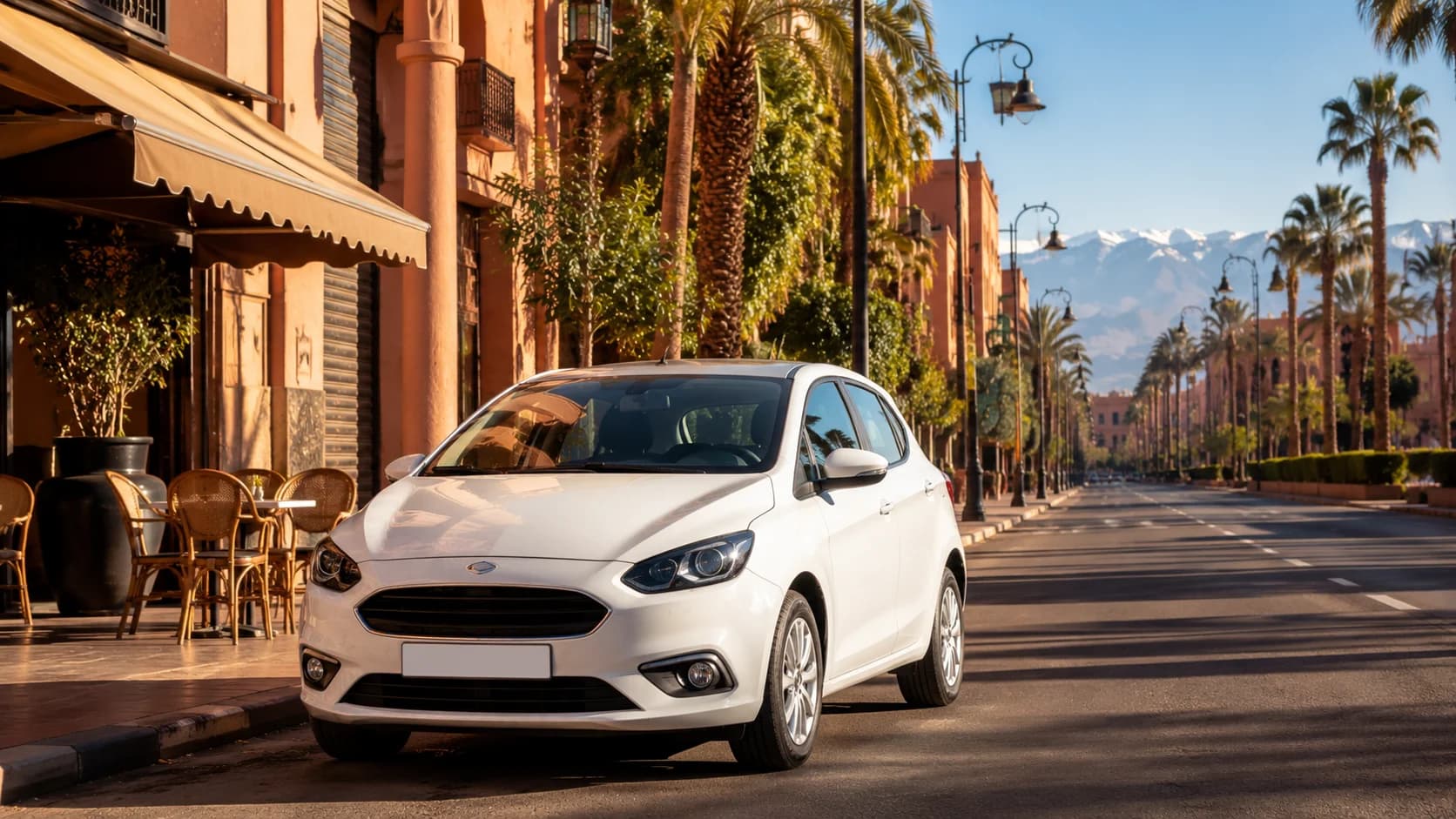
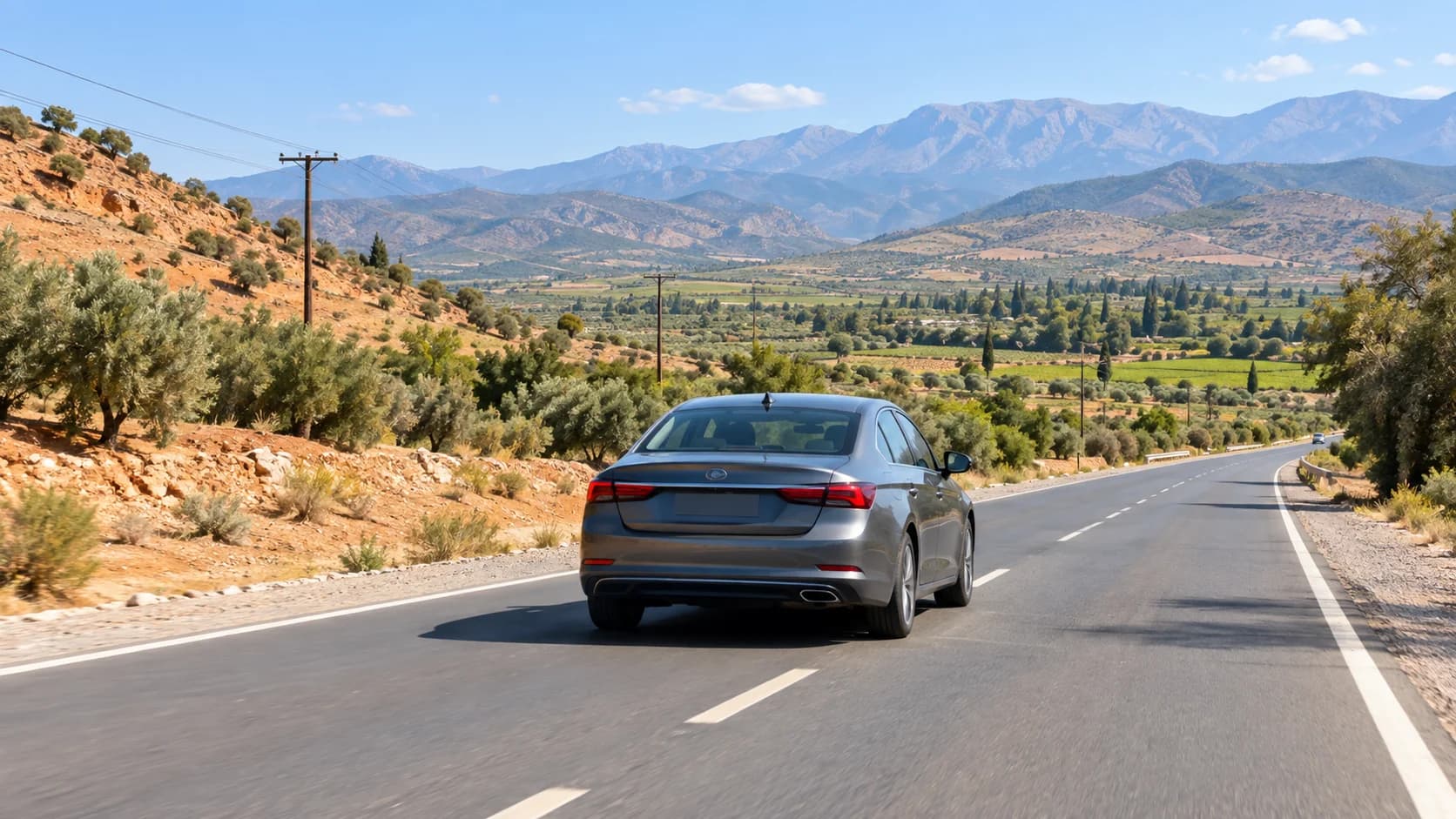
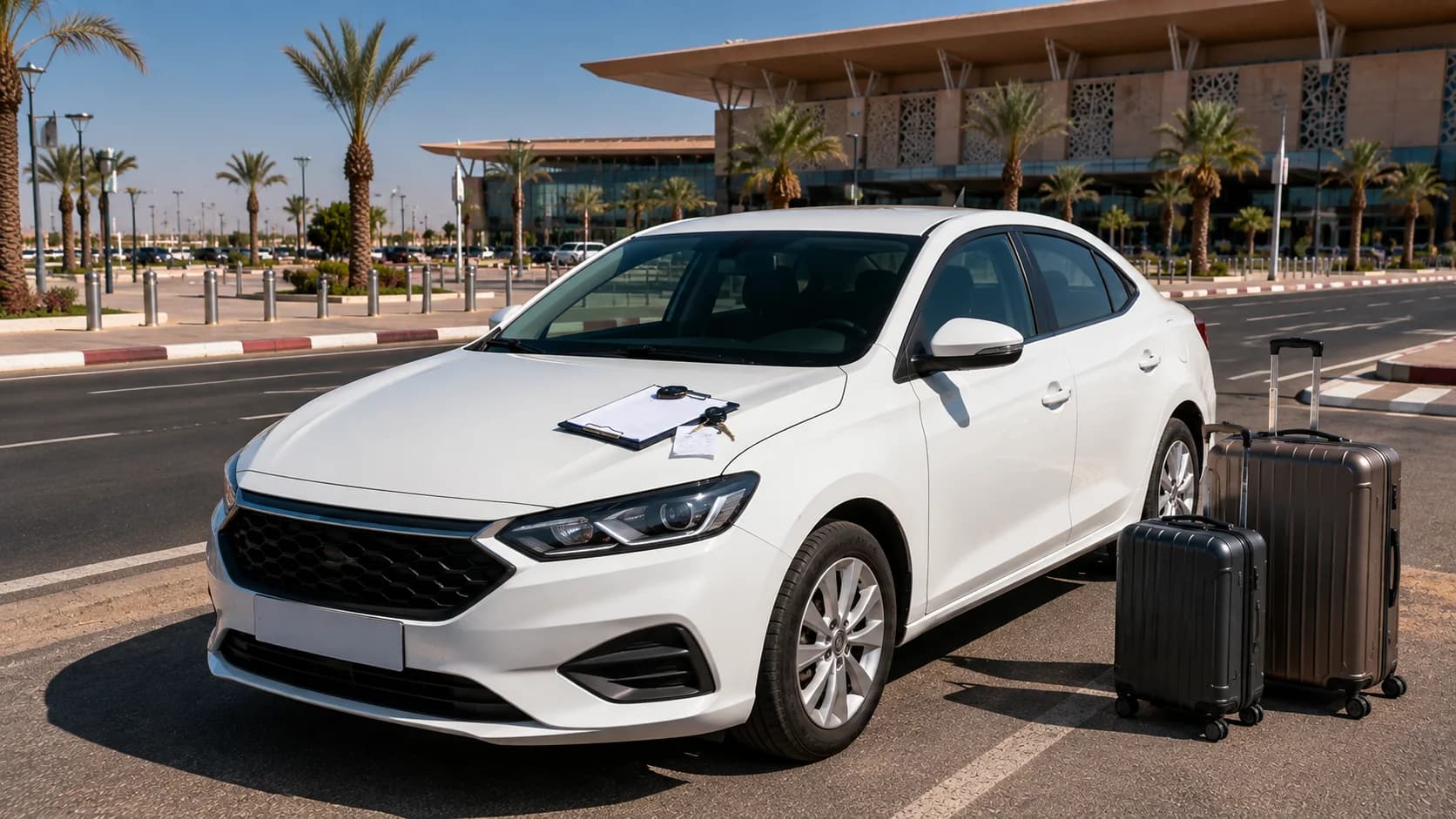
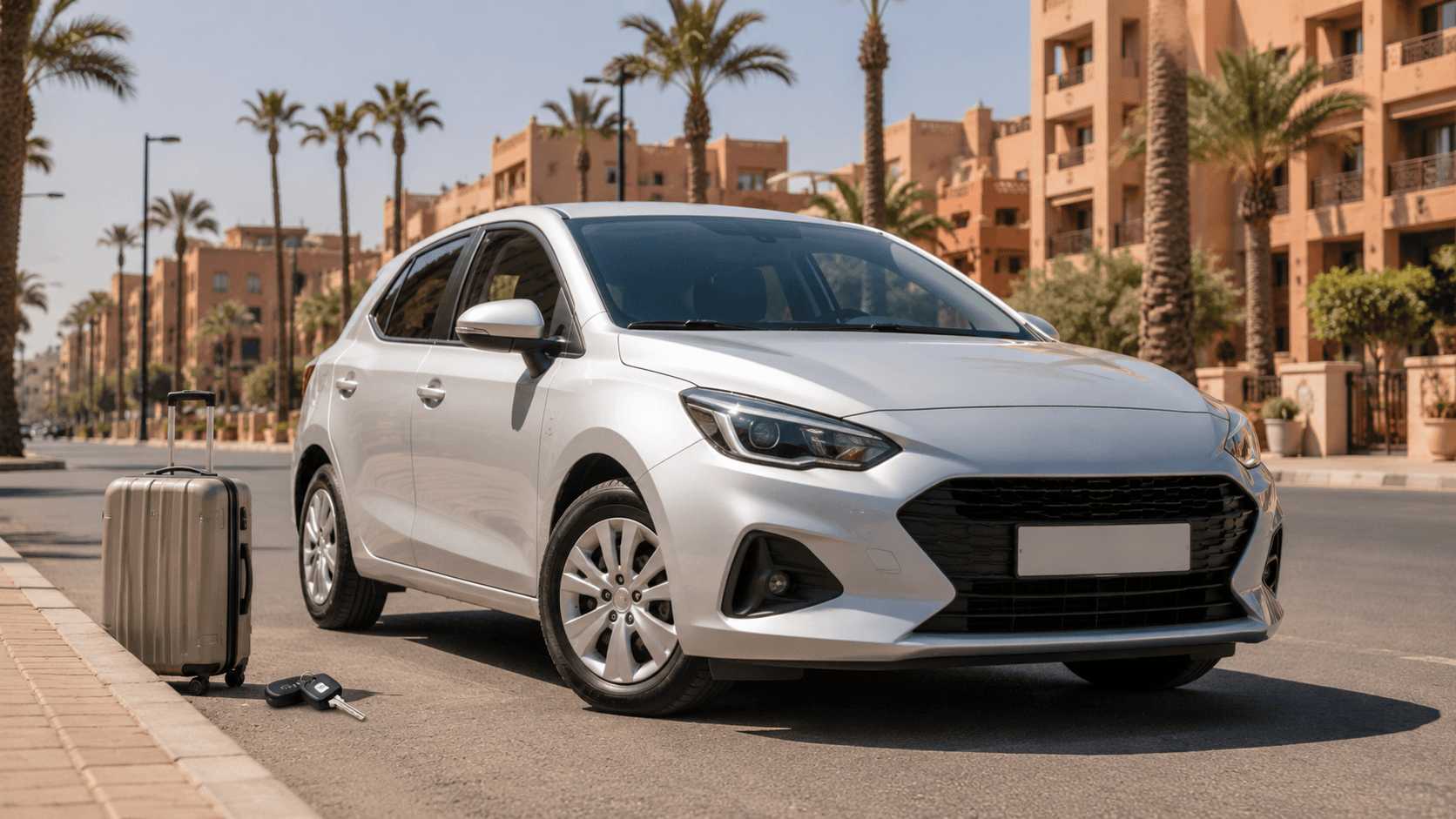
A sedan can work for two travelers with light luggage, especially if you only plan to stay on the main paved route. You can compare a comfortable sedan rental Marrakech if your priority is smooth road driving and lower fuel use.
For most visitors, an SUV is the better balance. An SUV rental Marrakech gives you a higher seating position, more comfort on mountain roads, better luggage space and a more relaxed feeling on uneven parking areas near kasbah stops.
A 4x4 rental Marrakech makes sense if you plan to continue beyond Aït Ben Haddou toward rougher routes, desert valleys, remote viewpoints or longer south Morocco itineraries. It is also a good choice for travelers who want extra confidence on mountain roads, especially with passengers and luggage.
Best time of day and season to go
The best time of day to visit Aït Ben Haddou is early morning or late afternoon. Morning is quieter and better for a long return drive. Late afternoon gives warmer light on the clay walls and is usually better for photography, but it works best if you are sleeping nearby or in Ouarzazate.
Spring and autumn are the most comfortable seasons for this road trip. The temperatures are easier for walking, the mountain drive is more pleasant and the light is often softer. Summer is possible, but you should start early, carry water and avoid climbing around midday. Winter can be beautiful, but the High Atlas route may bring colder weather, rain or snow risk in the mountains.
For a day trip from Marrakech, the safest plan is to leave early and return before full darkness. The mountain road is more tiring at night, especially if you are not used to the bends or local driving style.
Film-fan stops along the way
Aït Ben Haddou is strongly linked with film tourism. Architectural Digest notes its use as Yunkai in Game of Thrones and also mentions The Mummy and Gladiator being shot there. Movie-locations.com also identifies Aït Ben Haddou as the Moroccan location used for the African town where Maximus is sold into slavery in Gladiator.
Film fans can combine the ksar with Ouarzazate, often called Morocco’s cinema gateway because of its studios and desert backdrops. If you have time, plan the route as Marrakech to Aït Ben Haddou, then Ouarzazate, then overnight nearby. That gives you more time for photos, studio visits and golden-hour views without rushing back over the mountains.
Even if you are not a film fan, the cinematic feeling is part of the experience. The red walls, dry riverbed, towers and open valley create the impression of a place built for the screen, even though its real value is older and deeper than its movie fame.
Suggested one-day itinerary
Leave Marrakech around 7:00. Drive toward Tizi n’Tichka with one or two short viewpoint stops. Continue toward Aït Ben Haddou and arrive late morning or around midday. Park in the new village area, walk to the ksar and spend 1.5 to 2.5 hours exploring.
Have lunch nearby, then decide whether to add a short Ouarzazate stop or begin the return drive. If returning the same day, avoid leaving too late. The drive back over the mountains is easier when you still have daylight.
Suggested overnight itinerary
Day one: leave Marrakech in the morning, cross Tizi n’Tichka, stop at viewpoints, visit Aït Ben Haddou in the afternoon and sleep near the ksar or in Ouarzazate.
Day two: visit Ouarzazate, add a film-related stop or kasbah visit, then return to Marrakech at a relaxed pace. This itinerary is much better for travelers who want photos, comfort and less driving pressure.
Drive to the kasbah on your own schedule
Drive to the kasbah that starred in Gladiator and Game of Thrones with the freedom to stop where tours cannot. MarHire Car Marrakech can set you up with a comfortable SUV or 4x4 for the Marrakech to Ait Ben Haddou route, with flexible pickup, clear rental terms and the space you need for mountain roads, luggage and an unforgettable Ouarzazate-side adventure.
FAQs
How far is Aït Ben Haddou from Marrakech?
Aït Ben Haddou is around 180 km from Marrakech by road. The journey usually takes about 3.5 to 4 hours one way via the Tizi n’Tichka route, depending on stops and road conditions.
How long does it take to drive to Aït Ben Haddou?
Plan around 3.5 to 4 hours each way. For a more realistic travel day, allow extra time for mountain traffic, viewpoints, lunch and parking.
Can you visit Aït Ben Haddou as a day trip from Marrakech?
Yes, you can visit Aït Ben Haddou as a day trip from Marrakech, but it is a long day with around 7 to 8 hours of total driving. Start early and keep the itinerary simple.
Do I need a 4x4 to reach Aït Ben Haddou?
You do not usually need a 4x4 for the main paved route in normal conditions. However, an SUV or 4x4 is more comfortable for the mountain road, extra luggage and longer south Morocco routes.
Is Aït Ben Haddou worth the drive?
Yes, Aït Ben Haddou is worth the drive if you enjoy historic architecture, road trips, photography, film locations and High Atlas scenery. It is one of Morocco’s most iconic kasbah landscapes.
Where do you park at Aït Ben Haddou?
Most visitors park in the newer village area near the access to the old ksar. Some roadside spaces may be available, and supervised parking areas can charge a small local fee.
Which films were shot at Aït Ben Haddou?
Aït Ben Haddou is widely associated with productions such as Gladiator, The Mummy and Game of Thrones. Its earthen architecture and desert-edge landscape make it one of Morocco’s best-known filming locations.
Can I combine Aït Ben Haddou with Ouarzazate?
Yes. Aït Ben Haddou and Ouarzazate combine very well, especially if you sleep overnight. For a one-day return from Marrakech, keep the Ouarzazate stop short.
Is the drive doable in one day there and back?
Yes, but it is tiring. A same-day return is best for confident drivers who leave early and avoid returning too late at night.
What’s the best time of day to visit?
Early morning and late afternoon are best. Morning is better for a Marrakech day trip, while late afternoon is better for photography if you stay overnight nearby.