







Morocco toll roads are some of the easiest routes to use when driving from Marrakech to Casablanca, Agadir, Rabat or other major cities. The autoroute network saves time, avoids many slower national-road sections and gives drivers regular access to fuel, toilets, cafés and rest areas. The main thing to understand before you leave Marrakech is simple: toll costs depend on the exact entry and exit gate, and payment at the péage can be made by cash, bank card or Jawaz electronic pass. ADM, Morocco’s motorway operator, publishes toll prices by vehicle class and route section.
Table of Contents
-
Morocco's autoroute network from Marrakech
-
How péage toll booths work
-
Paying tolls: cash, card and lanes to use
-
Typical toll costs to Casablanca, Agadir and beyond
-
Autoroute vs national roads: time vs scenery
-
Carrying cash and small change
-
Speed limits and rest stops
-
Tolls on a longer road-trip budget
-
Toll tips before you set off
-
FAQs
Morocco's autoroute network from Marrakech
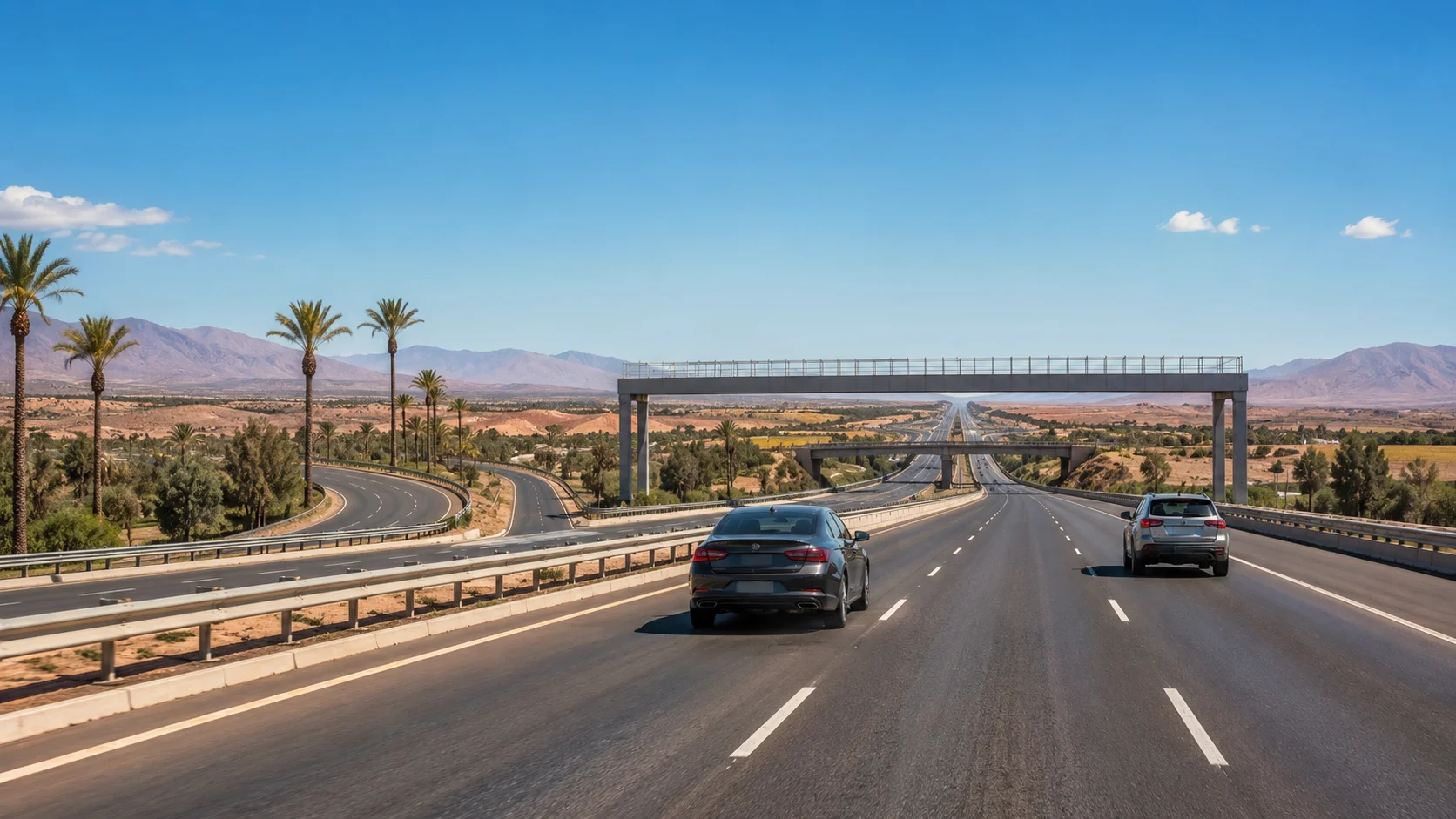
Marrakech is well connected to Morocco’s motorway system. From the city, the most useful autoroute routes are north toward Casablanca, Rabat and Tangier, and southwest toward Agadir. This makes Marrakech a practical starting point for business trips, beach escapes, airport transfers and longer Morocco road trips.
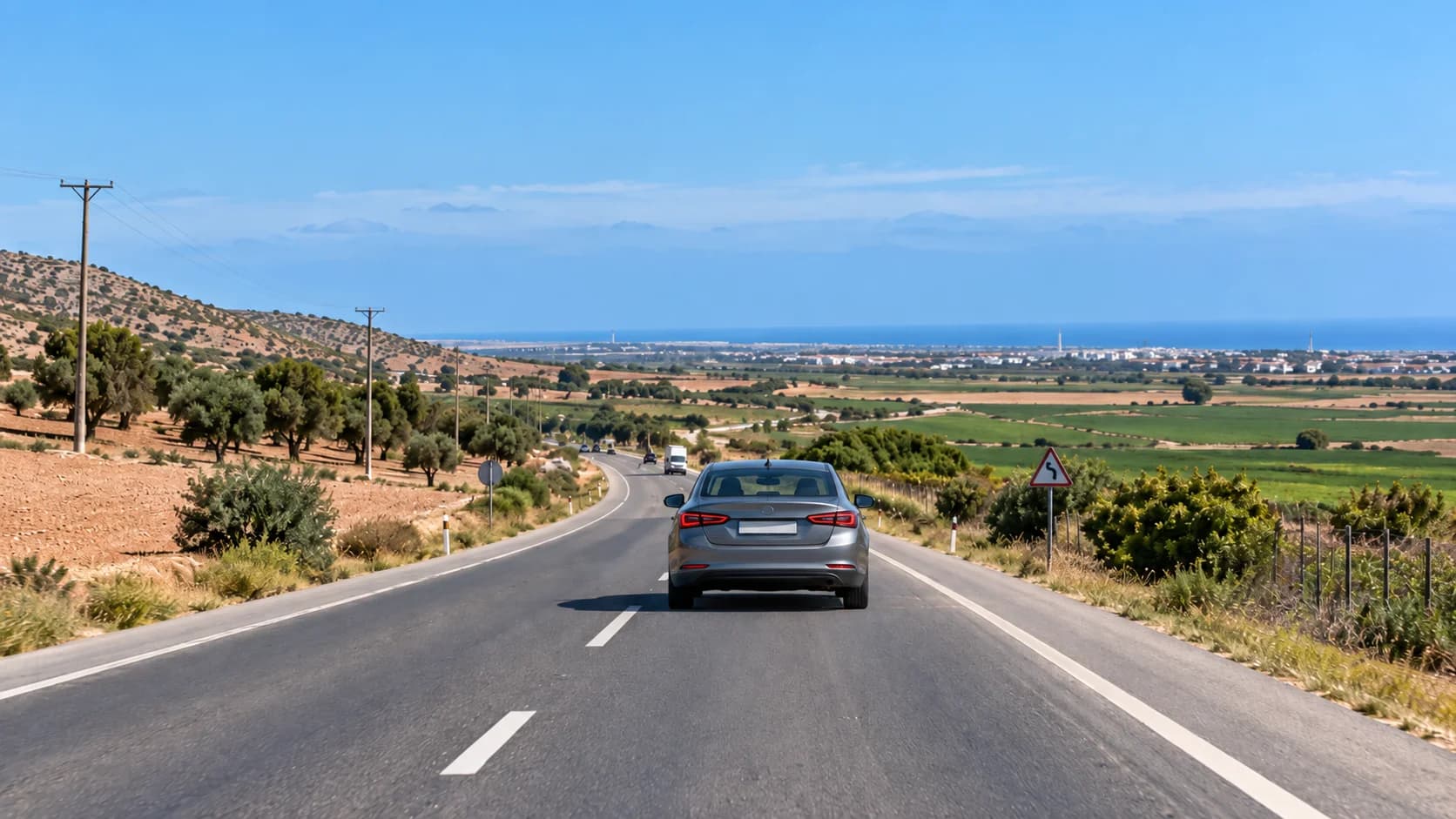
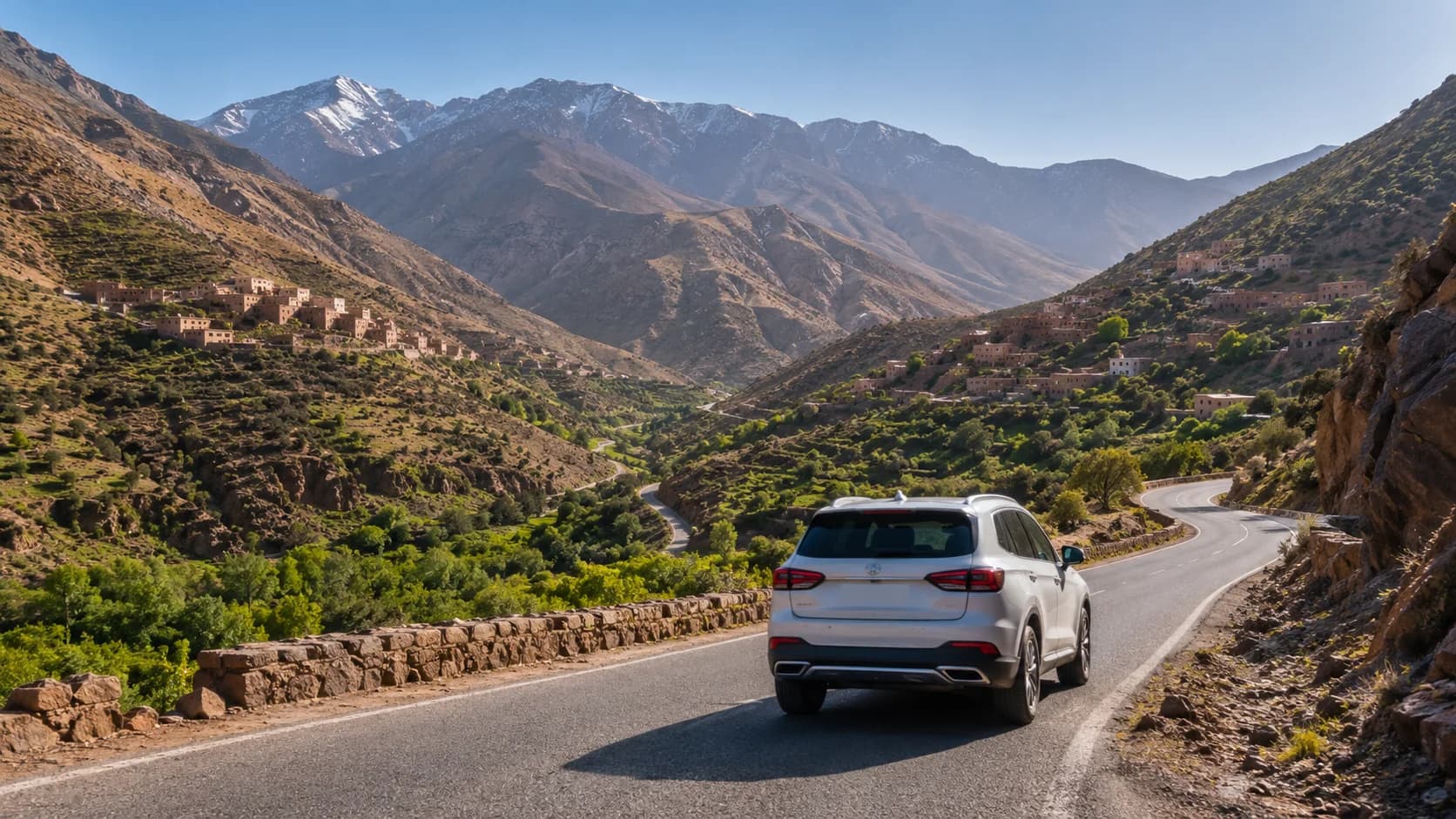
The autoroute is usually the best choice when time matters. A drive to Casablanca is smoother by motorway than by slower national roads, especially if you are heading to meetings, Mohammed V Airport or a same-day return. The Marrakech to Agadir autoroute is also useful because it crosses longer mountain-style sections in a more predictable way than older roads.
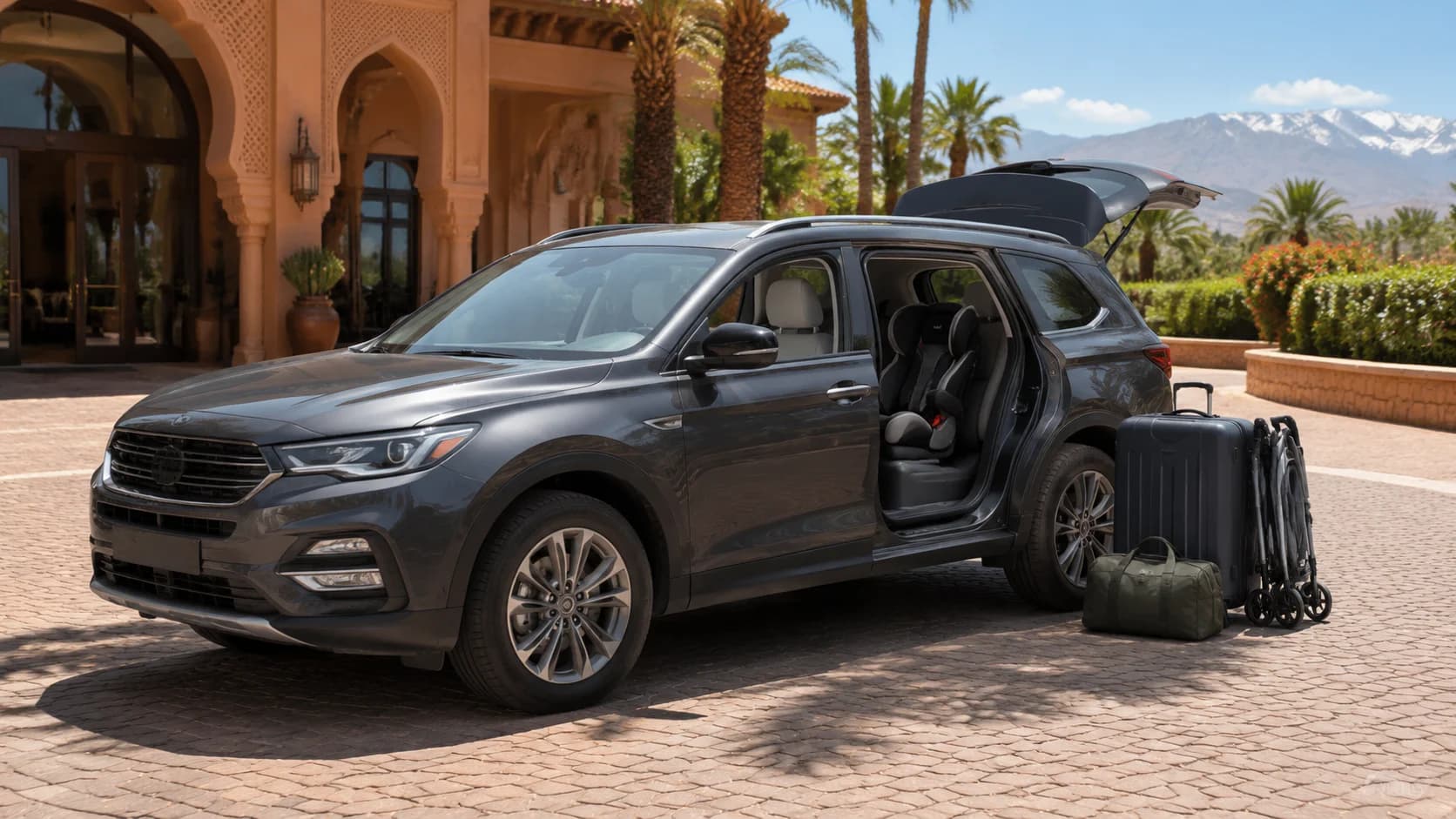
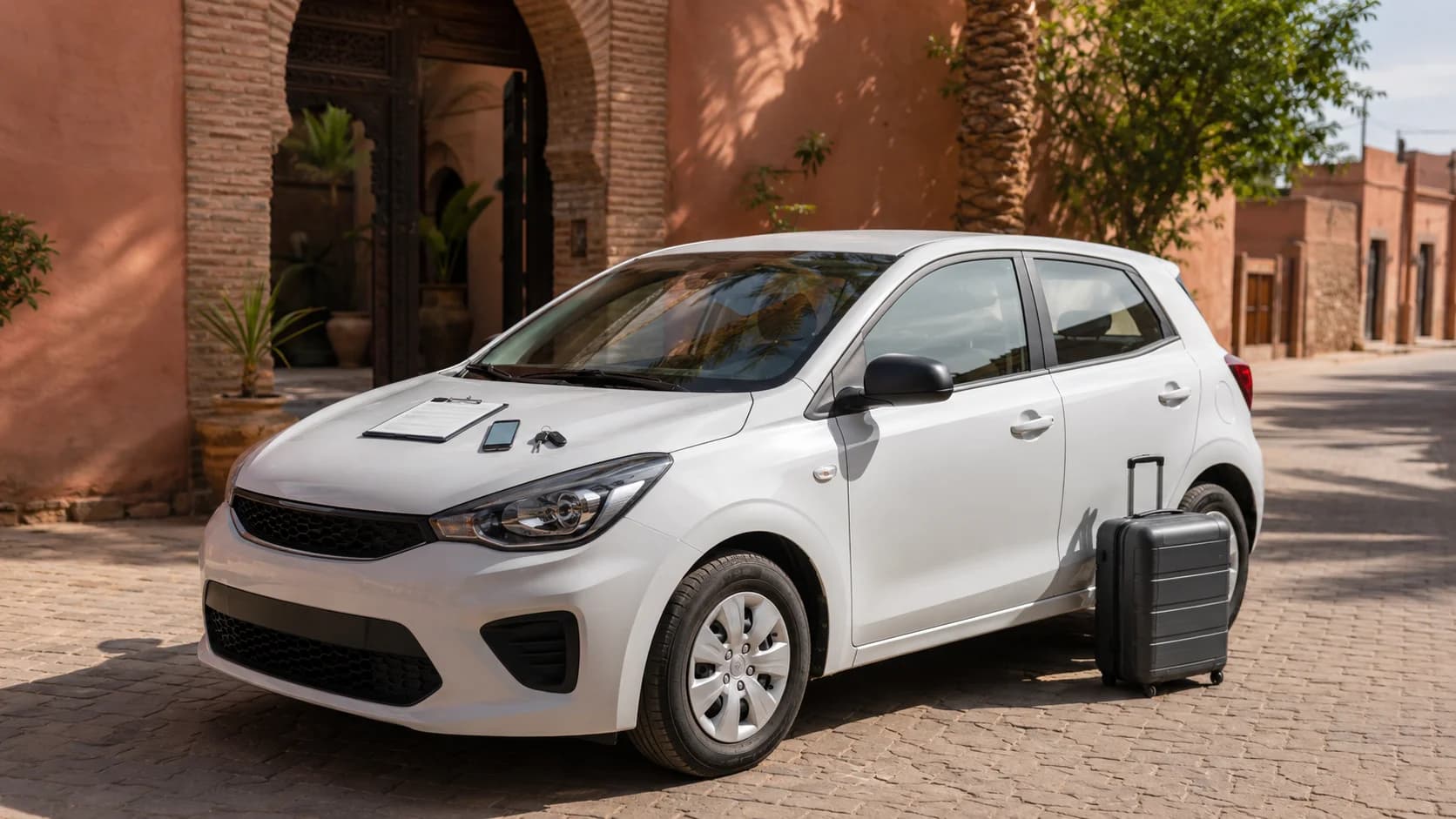
For long highway days, choose a comfortable car category. A sedan rental Marrakech works well for couples, small families and business travelers who want comfort with efficient fuel use. For luggage, family trips or routes beyond the main cities, an SUV rental Marrakech gives more space and a higher driving position.
How péage toll booths work
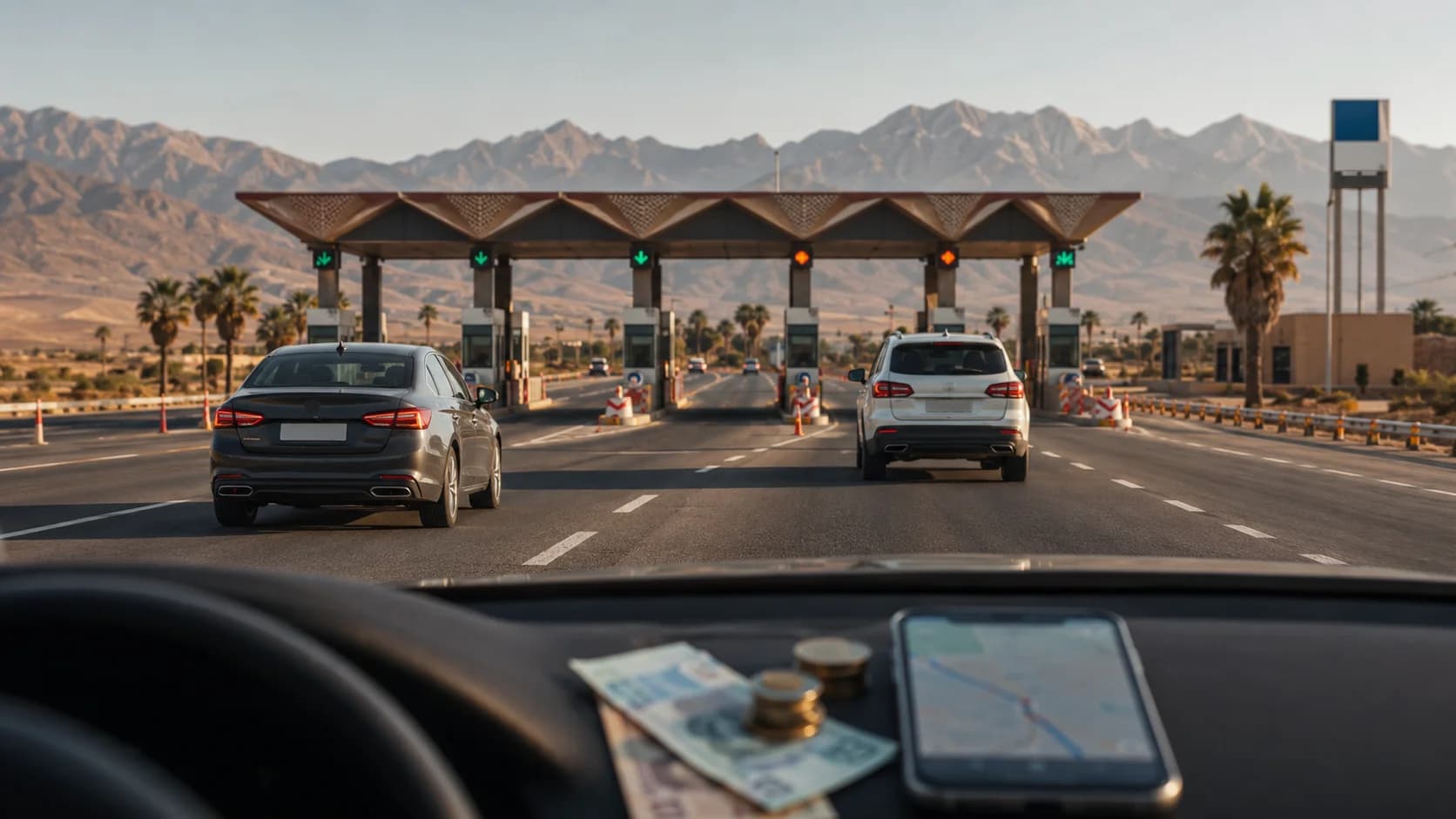
Moroccan toll booths are called péage stations. On most journeys, you enter the autoroute through a toll gate, follow the motorway, then pay when you exit or pass a main payment barrier. Some sections can include several toll points depending on the route.
The system is simple if you slow down early and choose the correct lane. Lanes are marked for different payment types, especially Jawaz lanes for electronic toll pass users. If you do not have a Jawaz pass, avoid lanes that are clearly reserved for Jawaz only.
At the booth, take or keep your ticket if the system gives one, then pay the correct toll at the exit. For most visitors, the easiest habit is to keep a small toll budget in cash and use staffed lanes whenever possible.
Paying tolls: cash, card and lanes to use
ADM lists the accepted motorway payment methods as Jawaz, bank cards, network card and cash. For tourists and rental car drivers, the most practical options are cash and bank card, while Jawaz depends on whether the vehicle is equipped with an active pass.
Cash is still the safest option to rely on because it is quick, widely understood and useful if a card terminal is slow or unavailable. Keep Moroccan dirhams in small notes and coins, especially for shorter sections around Casablanca or Marrakech.
Card payment can work at toll booths, but you should not depend on one card only. International cards can sometimes fail for technical reasons, and it is easier to continue your journey when you have backup cash.
Jawaz is Morocco’s electronic toll payment system. ADM explains that it lets users pass through dedicated lanes without stopping fully, using lanes marked with the Jawaz pictogram, and the recommended lane speed is 20 km/h.
Typical toll costs to Casablanca, Agadir and beyond
Toll prices vary by vehicle class and by the toll gates used. Most standard rental sedans and many normal passenger cars fall under Class 1, which ADM describes as vehicles with 2 axles and height less than or equal to 1.30 m. Larger vehicles may fall into a higher class, so vans and taller vehicles can cost more.
For Marrakech to Casablanca, budget around 90 to 100 MAD for a standard car when using the motorway to the Casablanca area. ADM’s grid shows Class 1 prices from Nouaceur to Marrakech Palmeraie at 83 MAD, Nouaceur to Marrakech Tamensourte at 84 MAD and Nouaceur to Marrakech Targa at 89 MAD. Casablanca access or bypass sections can add a small extra toll depending on the city exit used.
For Marrakech to Agadir, budget around 75 to 95 MAD for a standard car depending on whether you join or leave from Targa, Tamensourte, Palmeraie or another Marrakech-side gate. ADM’s grid lists Marrakech Targa to Amskroud at 74 MAD, Marrakech Tamensourte to Amskroud at 82 MAD and Marrakech Palmeraie to Amskroud at 93 MAD for Class 1.
For shorter trips outside Marrakech, tolls can be lower. For example, Marrakech Palmeraie to Chichaoua is listed at 39 MAD for Class 1, while Marrakech Targa to Chichaoua is listed at 20 MAD. These differences show why the exact toll gate matters.
For longer routes toward Rabat, Tangier, Fes or Beni Mellal, the motorway budget grows quickly because you cross multiple sections. A good rule for a long Morocco road trip is to set aside a separate toll envelope and check the official ADM tariff grid before departure.
Autoroute vs national roads: time vs scenery
The autoroute is usually the best option when you want a calm, direct and predictable drive. It is ideal for airport connections, business travel, family travel, night arrivals and long distances where you do not want to pass through every small town.
National roads can be cheaper because they avoid tolls, but they are often slower. You may pass through villages, roundabouts, local traffic, trucks, cyclists and speed-limit changes. For scenic stops, national roads can be enjoyable. For time-sensitive travel, the autoroute is usually worth the toll.
The best choice depends on the trip. Marrakech to Casablanca is normally better by autoroute. Marrakech to Agadir is also usually worth the toll because the motorway is more comfortable and predictable. For shorter local drives, the national road can make sense if you are not in a hurry.
Carrying cash and small change
Even if you plan to pay by card, keep cash ready before leaving Marrakech. A simple setup is to carry a mix of 10 MAD, 20 MAD, 50 MAD and 100 MAD notes. This helps at toll booths, parking areas, fuel stops and small roadside purchases.
Do not keep all cash in the trunk or inside luggage. Keep your toll money in the front cabin, safely stored but easy to reach before the booth. This avoids last-second searching when cars are waiting behind you.
If you are driving a rental car, ask at handover whether the vehicle has an active Jawaz pass. Some rental cars may have it, but many drivers still pay manually. Never assume the pass is active unless the rental team confirms how it works and how charges are handled.
Speed limits and rest stops
Moroccan autoroutes are built for faster long-distance travel, but you still need to respect posted limits. ADM’s own site refers to motorway driving at 120 km/h, and drivers should always follow road signs because limits can change near toll gates, works, junctions and curves.
Rest stops are one of the biggest advantages of using the autoroute. ADM says its motorway network has 60 rest and service areas, including 58 service areas and 2 rest areas, spaced around every 50 km on average. These areas may include fuel, food, toilets, rest space and Jawaz recharge services.
Plan a break every two hours, especially on hot days or after arriving on a flight. On the Marrakech to Agadir route, the road can feel long and bright, so a planned coffee or fuel stop makes the drive more relaxed.
Tolls on a longer road-trip budget
Tolls are not usually the biggest cost of a Morocco road trip, but they can add up. A Marrakech to Casablanca return trip can be roughly 180 to 200 MAD in tolls for a standard car, depending on exits. A Marrakech to Agadir return can be roughly 150 to 190 MAD, depending on the Marrakech gate and Agadir-side exit.
For a multi-city route like Marrakech to Casablanca, Rabat, Tangier and back, tolls should be planned as a separate line in your budget. Add fuel, parking and possible one-way drop fees if you are returning the car in another city.
This is where unlimited kilometers are useful. With MarHire Car Marrakech, highway days are easier to plan because distance does not become an extra kilometer charge on most rentals. You still pay fuel and tolls, but your route is not limited by a daily kilometer cap.
For premium comfort on long autoroute days, a luxury car rental Marrakech can make sense for executive trips, hotel transfers, wedding travel or long drives where comfort matters more than the lowest daily rate.
Toll tips before you set off
Check your route before leaving Marrakech and identify the expected autoroute entry. Marrakech has several possible toll gates, and the cost can change depending on whether you use Palmeraie, Targa, Tamensourte or another nearby gate.
Keep small cash ready, even if you prefer card. Use staffed lanes if you are unsure. Avoid Jawaz-only lanes unless your rental car has an active pass and you know how the charges will be handled.
Do not leave toll planning until the booth. Put your wallet, cash and card somewhere safe but accessible. Keep your eyes on lane signs and slow down early when approaching the péage.
Finally, match the car to the route. For Marrakech to Casablanca, a sedan is comfortable and efficient. For Marrakech to Agadir, family luggage or mountain-side weather, an SUV can feel more stable and spacious. Planning highway days from Marrakech? A comfortable sedan or SUV from MarHire Car Marrakech makes long autoroute drives effortless, with unlimited kilometers so distance never costs you extra.
FAQs
How much are tolls from Marrakech to Casablanca?
For a standard Class 1 car, budget around 90 to 100 MAD from Marrakech to the Casablanca area. ADM lists Nouaceur to Marrakech Palmeraie at 83 MAD, Nouaceur to Marrakech Tamensourte at 84 MAD and Nouaceur to Marrakech Targa at 89 MAD, with small extra tolls possible depending on the Casablanca exit used.
How do you pay tolls on Moroccan highways?
You can pay Moroccan motorway tolls with cash, bank card, Jawaz electronic pass or network card. For most visitors, cash is the easiest backup because it works even if card payment is slow.
Can I pay Moroccan tolls with a card?
Yes, ADM lists bank cards as an accepted toll payment method. Still, carry some cash because card terminals and international cards can sometimes be unreliable during travel.
Is the autoroute from Marrakech to Agadir worth the toll?
Yes, for most travelers it is worth it. The autoroute is faster, smoother and easier to plan than slower national-road alternatives. For a standard car, budget around 75 to 95 MAD depending on the Marrakech toll gate.
How fast can you drive on Moroccan autoroutes?
The common motorway limit is 120 km/h where posted and conditions allow. Always follow the signs because limits can drop near tolls, roadworks, junctions and curves.
Do rental cars work with the Jawaz electronic toll?
Some rental cars may have Jawaz, but you should not assume it is active. Ask the rental team before leaving. If the vehicle does not have confirmed Jawaz access, use the normal cash or card lanes.
Are there rest stops on the Marrakech autoroutes?
Yes. ADM says the motorway network has 60 rest and service areas, spaced around every 50 km on average. These are useful for fuel, toilets, food, rest and sometimes Jawaz services.
Is it cheaper to take national roads instead of the highway?
Yes, national roads can be cheaper because they avoid tolls. However, they are usually slower and less predictable, especially with local traffic, towns, trucks and speed changes. For long routes, the autoroute usually saves time.
Do I need cash for toll booths in Morocco?
You should carry cash even if you plan to pay by card. Small notes and coins make toll booths faster and help if a card is refused or the lane does not process your card smoothly.
How much should I budget for tolls on a road trip?
For a simple Marrakech to Casablanca or Marrakech to Agadir return, budget around 150 to 200 MAD for a standard car depending on the exact gates. For a multi-city road trip, check ADM’s tariff grid before departure and add a separate toll budget. ADM also recommends its ADM Trafic tools for checking toll prices, traffic and service areas before travel.