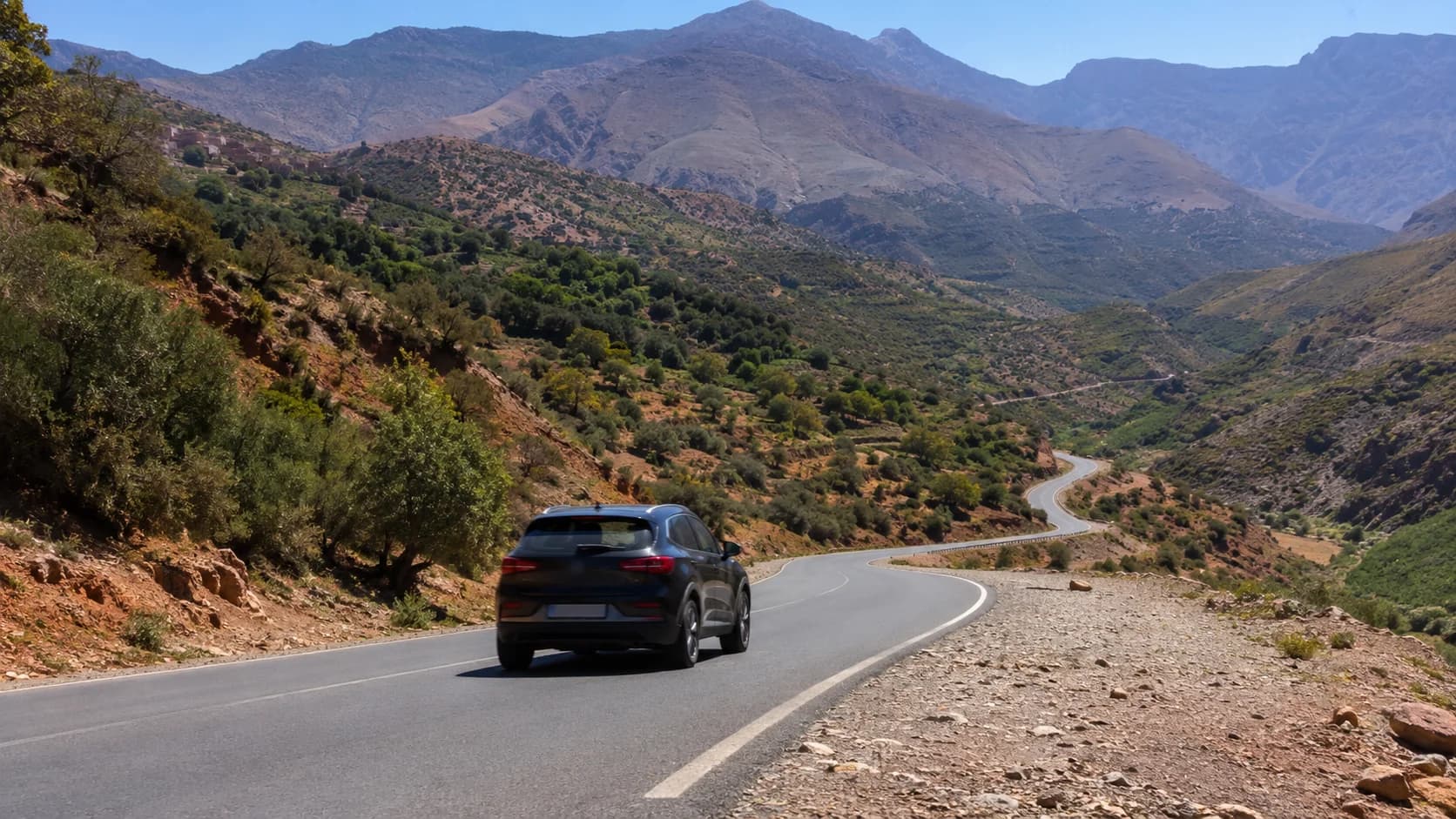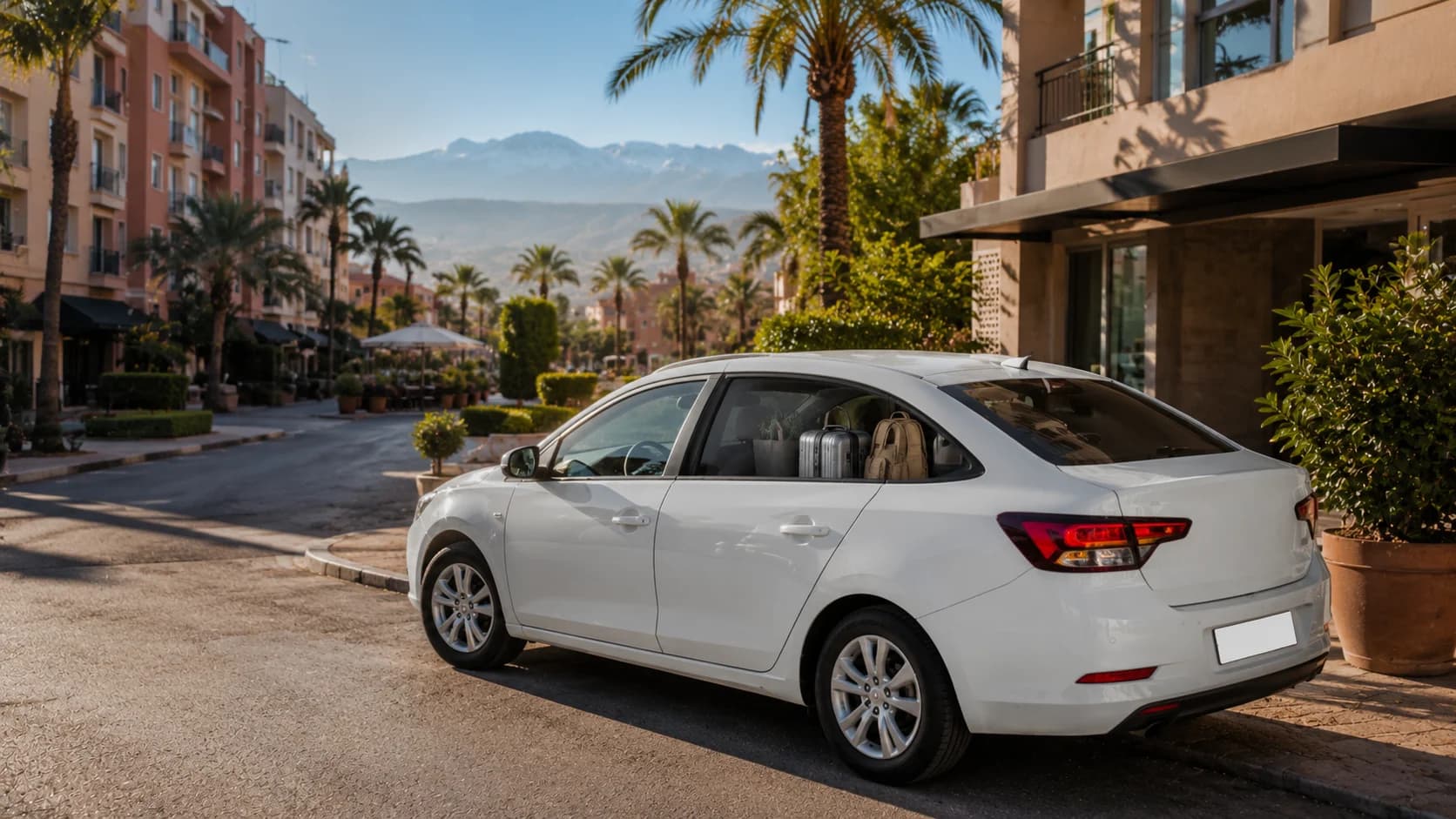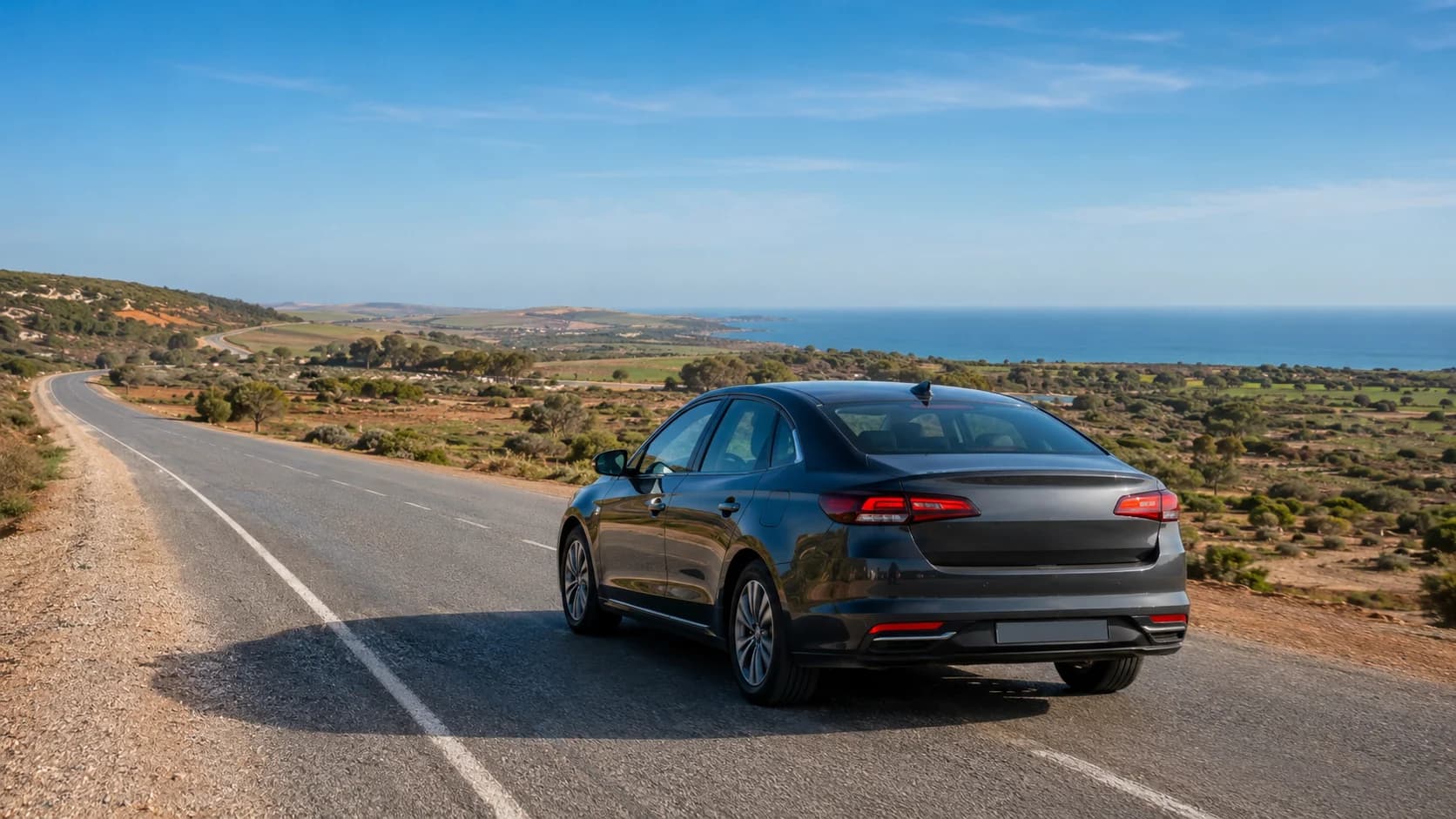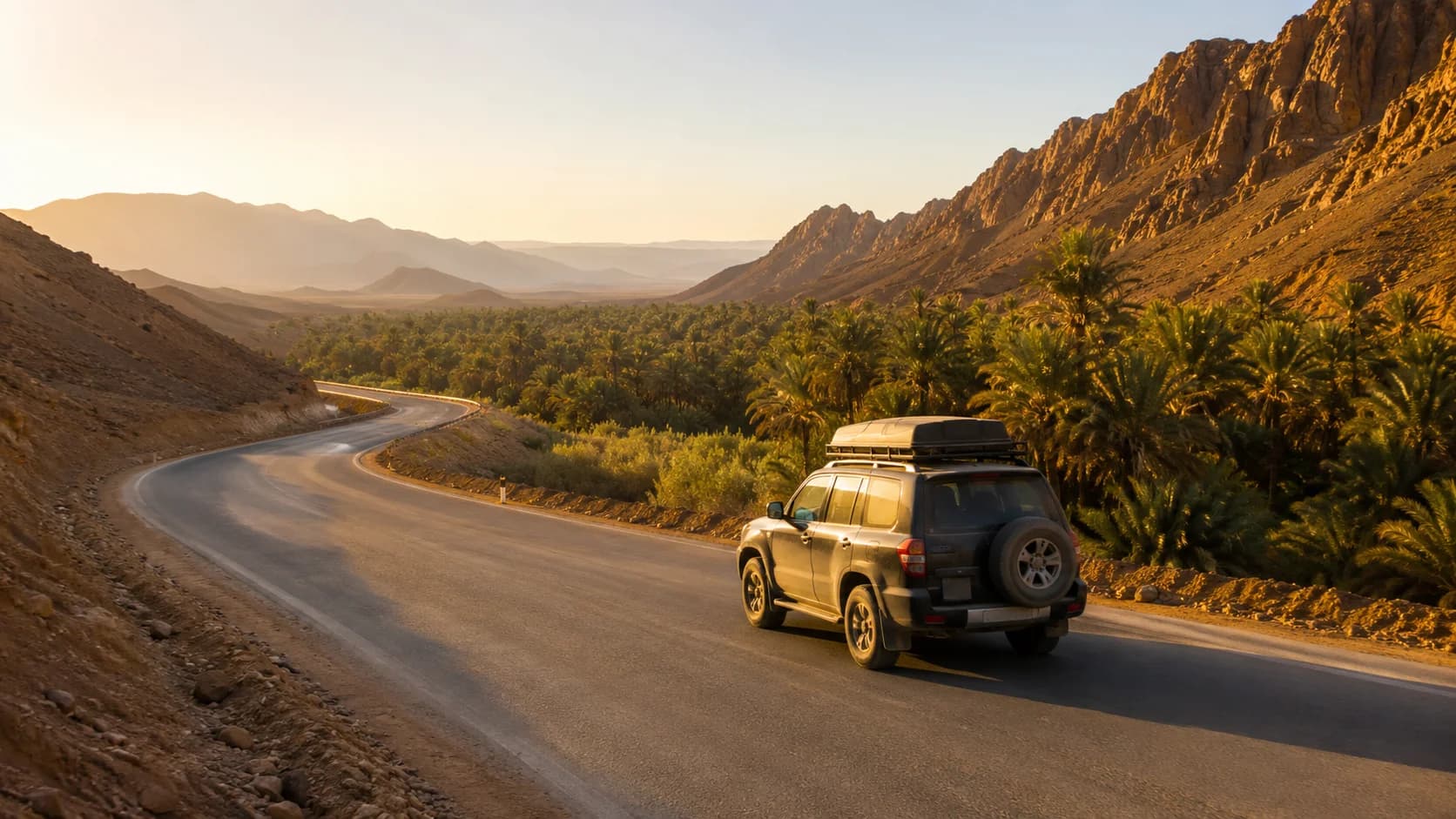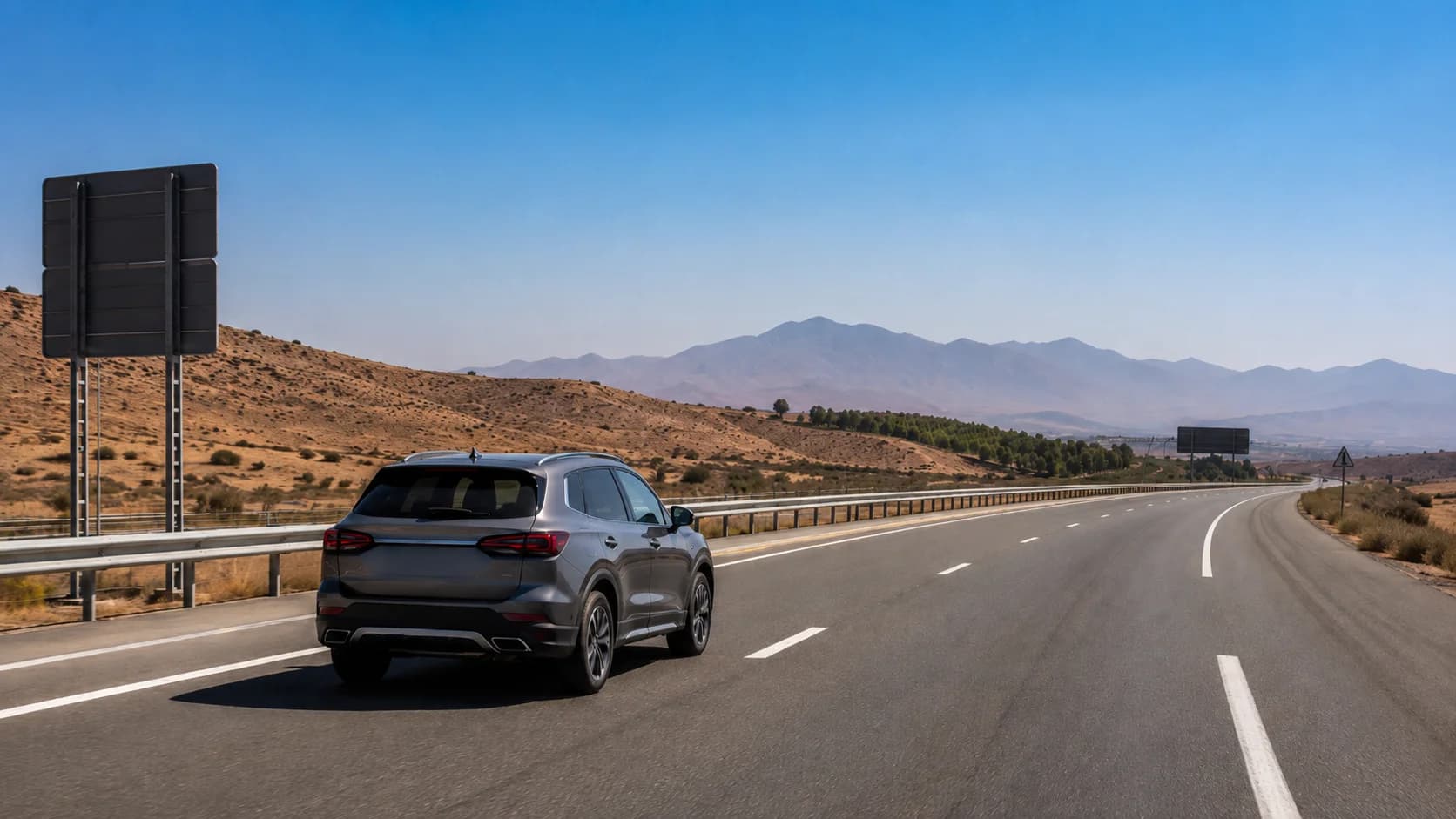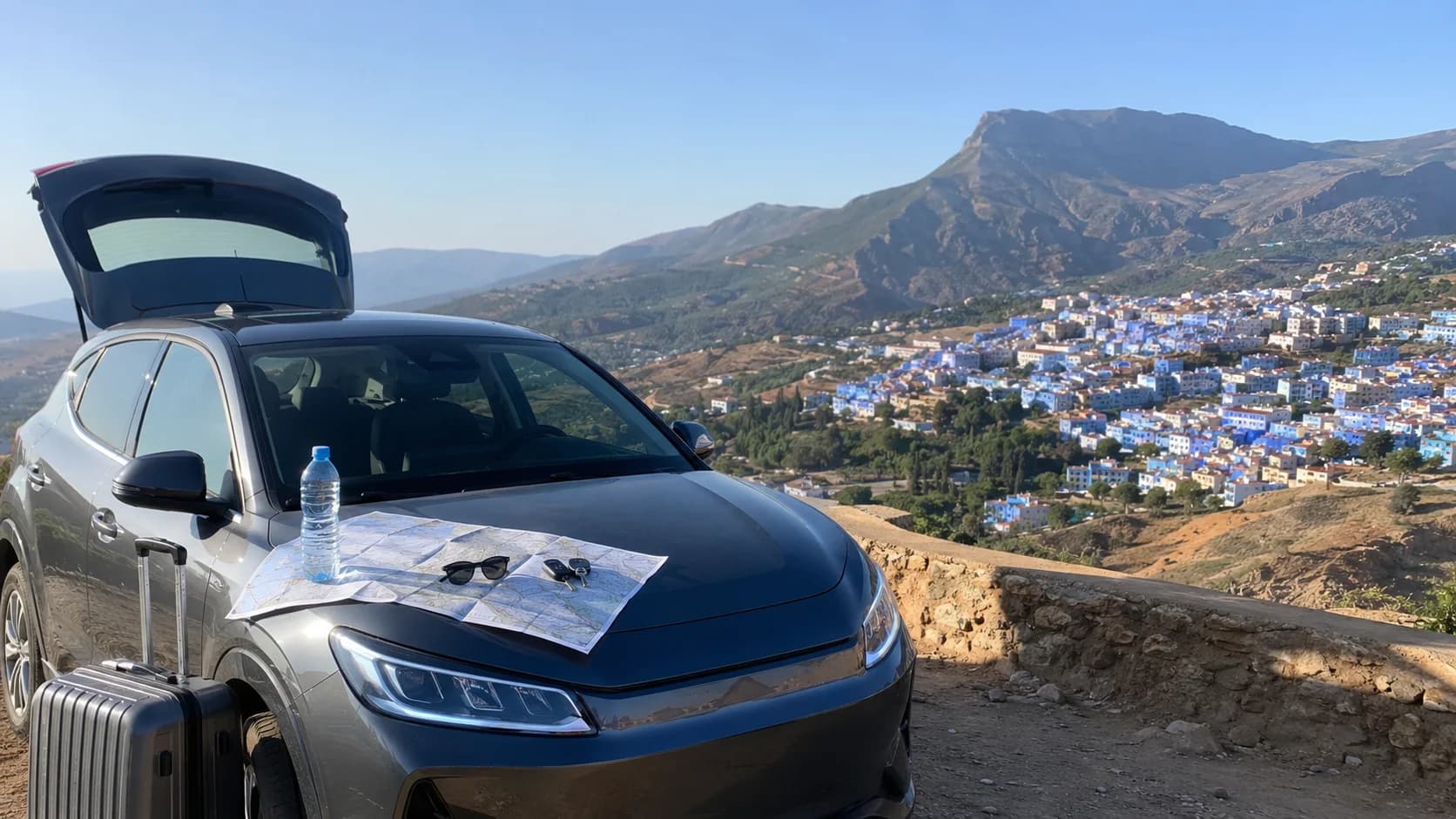









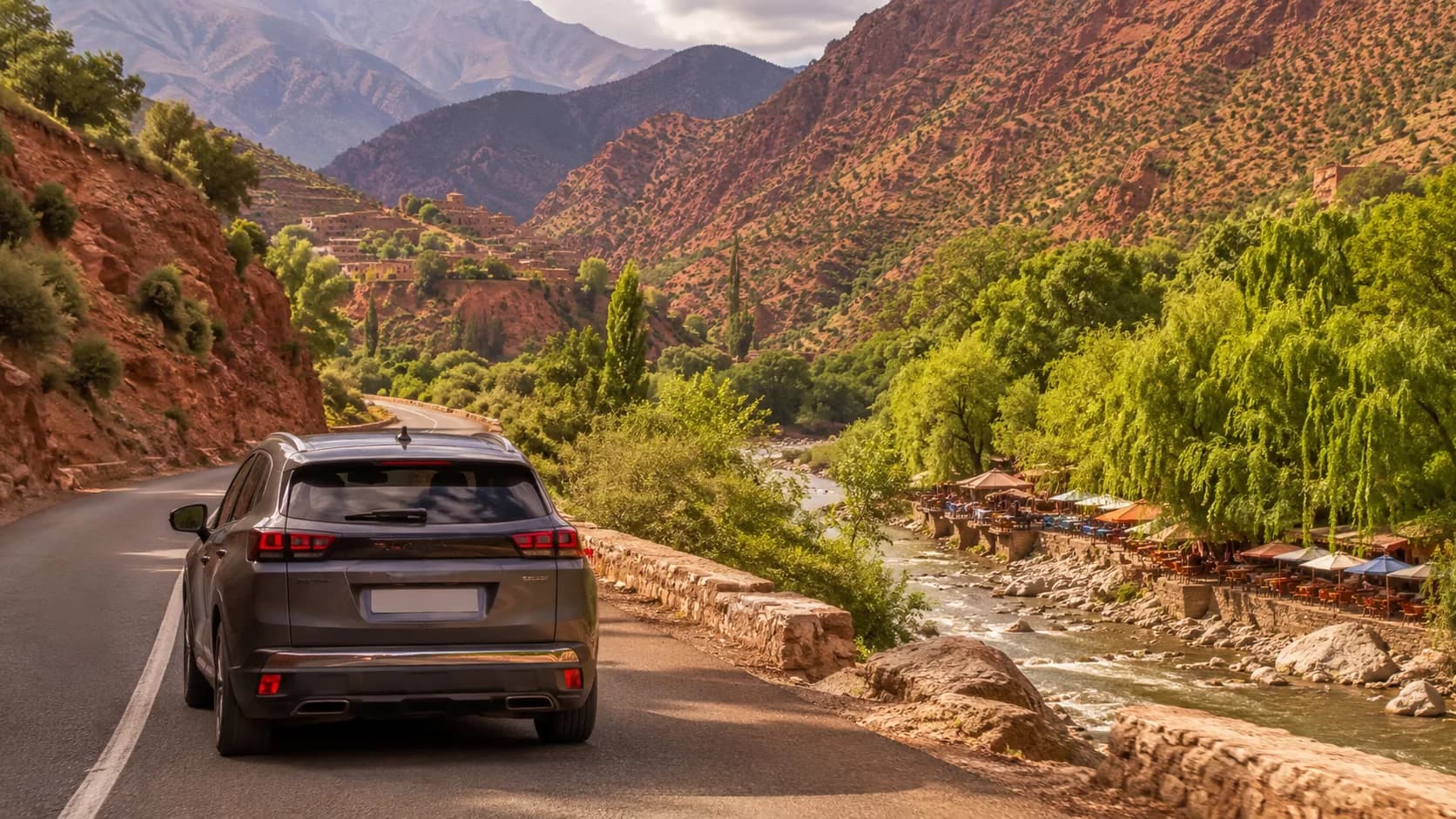
Ourika Valley from Marrakech is one of the easiest Atlas foothills day trips because it gives you mountain views, river cafés, Berber villages and the Setti Fatma waterfalls without needing a long road trip. The official Marrakech tourism guide lists Marrakech to Ourika as 68 km, with a typical route time of about 1 hour 49 minutes, while Setti Fatma is commonly described as roughly 70 km from Marrakech.
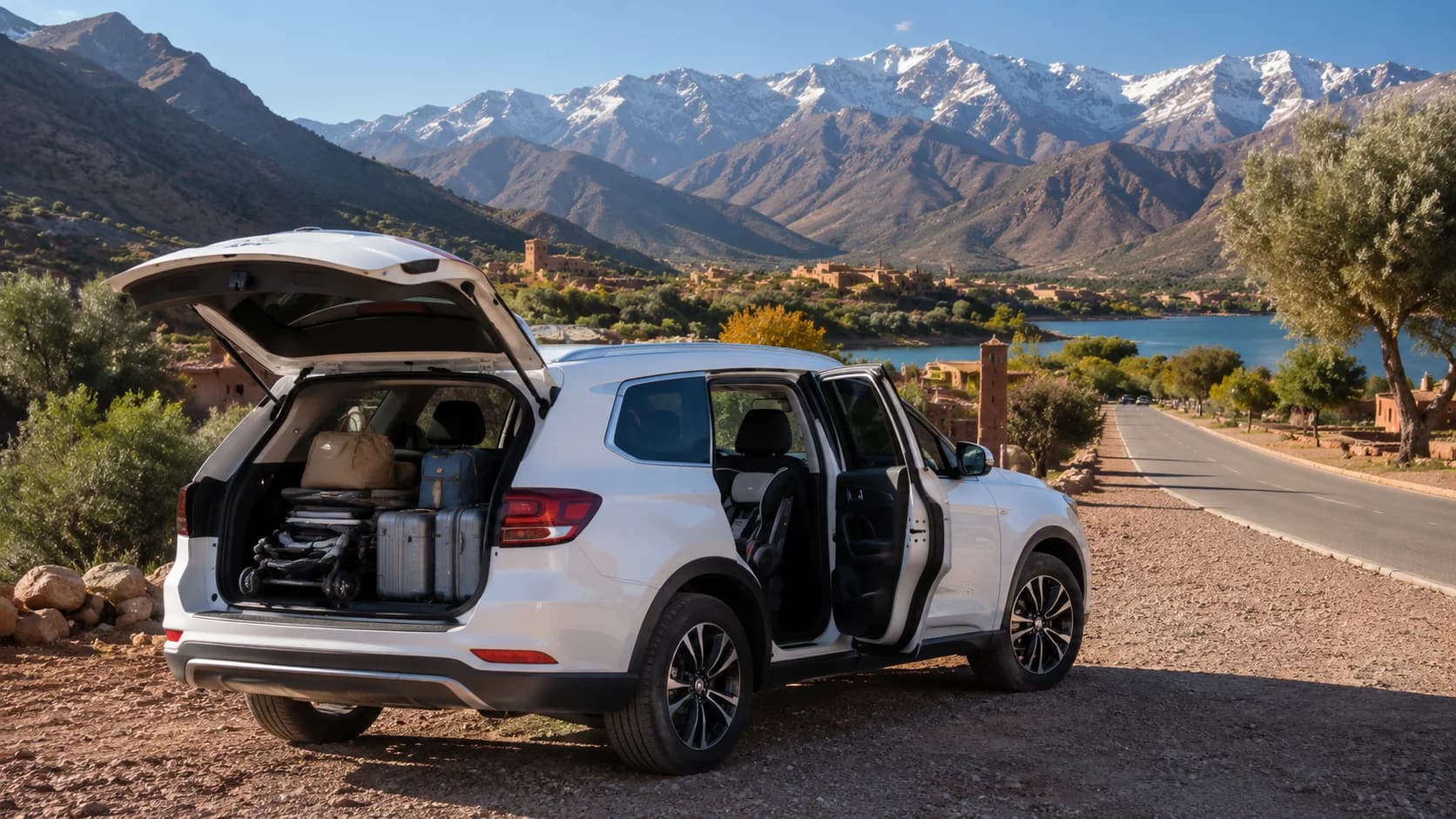
For most travelers, you do not need a 4x4 for the normal Ourika Valley day trip by car in dry weather. A sedan can manage the main paved route, but an SUV is more comfortable for the final valley road, luggage, higher seating and uneven parking areas. A 4x4 makes more sense if you want to add mountain detours, travel in winter, continue toward higher roads or combine Ourika with Oukaïmeden.
Table of Contents
- Why Ourika is the easiest Atlas day trip
- Distance and drive time from Marrakech
- The road to Setti Fatma: conditions and tips
- Do you actually need a 4x4?
- Parking and the waterfall walk
- Stops along the valley
- Best season and time to leave
- Combining Ourika with Oukaïmeden
- Self-drive vs guided: which suits you
- FAQs
Why Ourika is the easiest Atlas day trip
The Ourika Valley from Marrakech works so well because it changes the feeling of your day quickly. You leave the heat, traffic and busy streets of Marrakech, then move toward a greener valley shaped by the High Atlas Mountains. Morocco’s official tourism office describes Ourika as a fertile valley carved by water flowing down from the High Atlas, with fruit trees, nut trees, white-capped peaks and traditional villages on the hillsides.
That is why Ourika is ideal for travelers who want a real Atlas foothills day trip from Marrakech without committing to a long drive to Ouarzazate, Imlil or the deep mountain passes. It gives you a relaxed mix of scenery, stops, tea by the river, roadside viewpoints and a walk toward the Setti Fatma waterfalls.
The biggest advantage is flexibility. With your own rental car, you can stop at viewpoints, avoid rushed group timing, spend longer in Setti Fatma or return to Marrakech before evening traffic. For this type of trip, many travelers choose SUV rental Marrakech because it feels more comfortable on valley roads while still being easy to drive from the city.
Distance and drive time from Marrakech
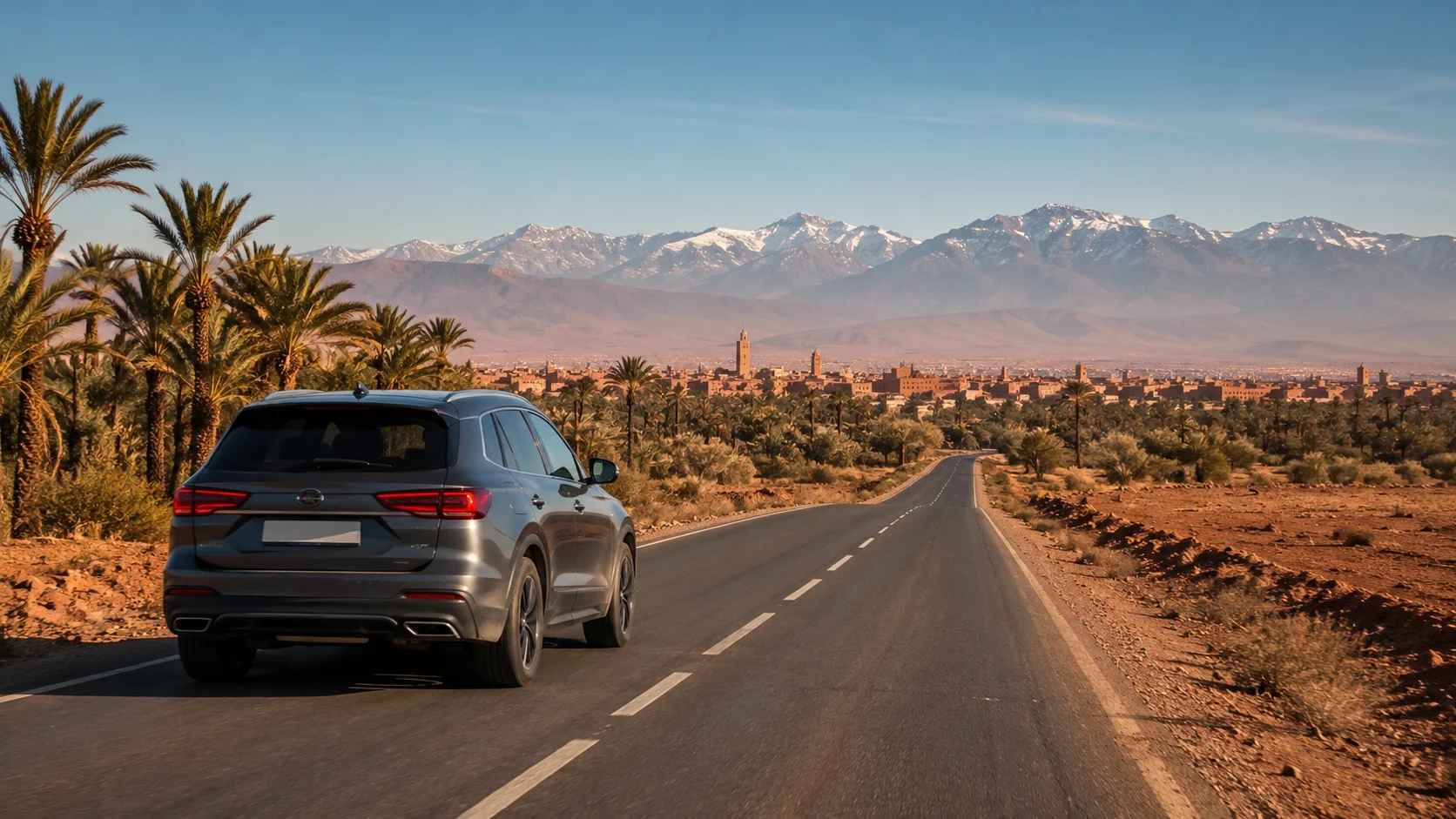
The route from Marrakech to Ourika is short compared with most Atlas trips. Visit Marrakech lists the Marrakech to Ourika route at 68 km, with a route time of about 1 hour 49 minutes, while another official road-trip entry for the wider Ourika route lists 126 km for a one-day itinerary.
In real travel planning, allow more time than the map suggests. Leaving central Marrakech, hotel pickup, fuel, photo stops, slow village sections, weekend traffic and parking in Setti Fatma can all add time. A relaxed plan is to count around 1.5 to 2 hours each way, especially if you want to reach Setti Fatma rather than only the lower valley.
A good day plan looks like this: leave Marrakech around 8:00 or 8:30, stop once or twice on the valley road, reach Setti Fatma late morning, walk to the waterfalls before lunch, eat by the river, then return before sunset. This keeps the day easy and avoids driving the final stretch in the dark.
The road to Setti Fatma: conditions and tips
The normal drive from Marrakech toward Ourika and Setti Fatma is not an extreme mountain route. It is a popular road-trip corridor, and Visit Marrakech classifies Ourika routes under Atlas Drive and Mountain Drive experiences, including routes suitable by car, motorbike, motorhome, coach and bike.
Still, it is not the same as driving inside Marrakech. The road becomes narrower as you enter the valley. You may meet local traffic, parked cars, pedestrians near cafés, small roadside stalls and curves where you need to reduce speed. After rain, the shoulders and parking edges can be muddy or uneven, so drive calmly and avoid rushing.
Use these simple driving tips:
- Leave early so you are not climbing the valley road at the same time as the busiest tour traffic.
- Keep distance behind taxis, minibuses and motorcycles.
- Slow down before village sections, even when the road looks clear.
- Do not rely only on estimated app timing because stops and parking can change the day.
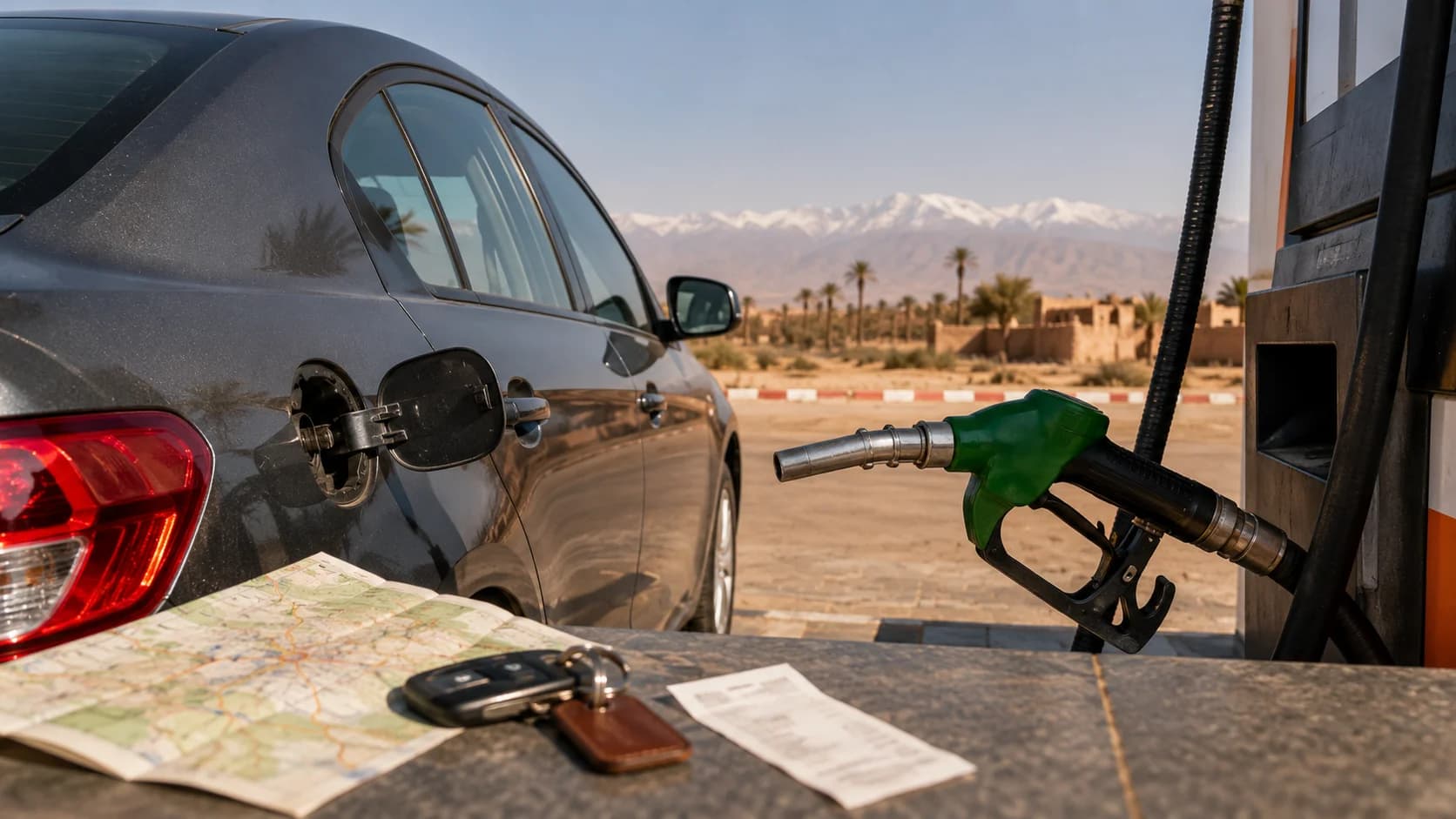
- Fill fuel before leaving Marrakech if you want a stress-free return.
For a simple valley day with two to four passengers, a sedan is enough in dry weather. For extra comfort, higher seating and better confidence near Setti Fatma parking, sedan rental Marrakech is the budget-friendly option, while an SUV is the easier choice for families or travelers carrying bags.
Do you actually need a 4x4?
No, you do not usually need a 4x4 to drive from Marrakech to the Ourika Valley and Setti Fatma on a normal dry-weather day. The main route is used by regular cars, taxis, tour vans and local vehicles. A compact sedan can handle the standard day trip if you drive carefully and keep to the main road.
A 4x4 becomes useful when your plan goes beyond the simple Ourika Valley day trip. Choose 4x4 rental Marrakech if you want more ground clearance, plan mountain detours, travel after heavy rain, visit higher routes, or combine Ourika with Oukaïmeden. Oukaïmeden is a ski-station area in the High Atlas near Marrakech, and official tourism content describes the climb there as a major altitude route.
For most visitors, the best choice is not “4x4 or nothing.” It is about matching the car to the plan. Choose a sedan for a simple road trip, an SUV for comfort and flexibility, and a 4x4 for mountain confidence or winter conditions.
Parking and the waterfall walk
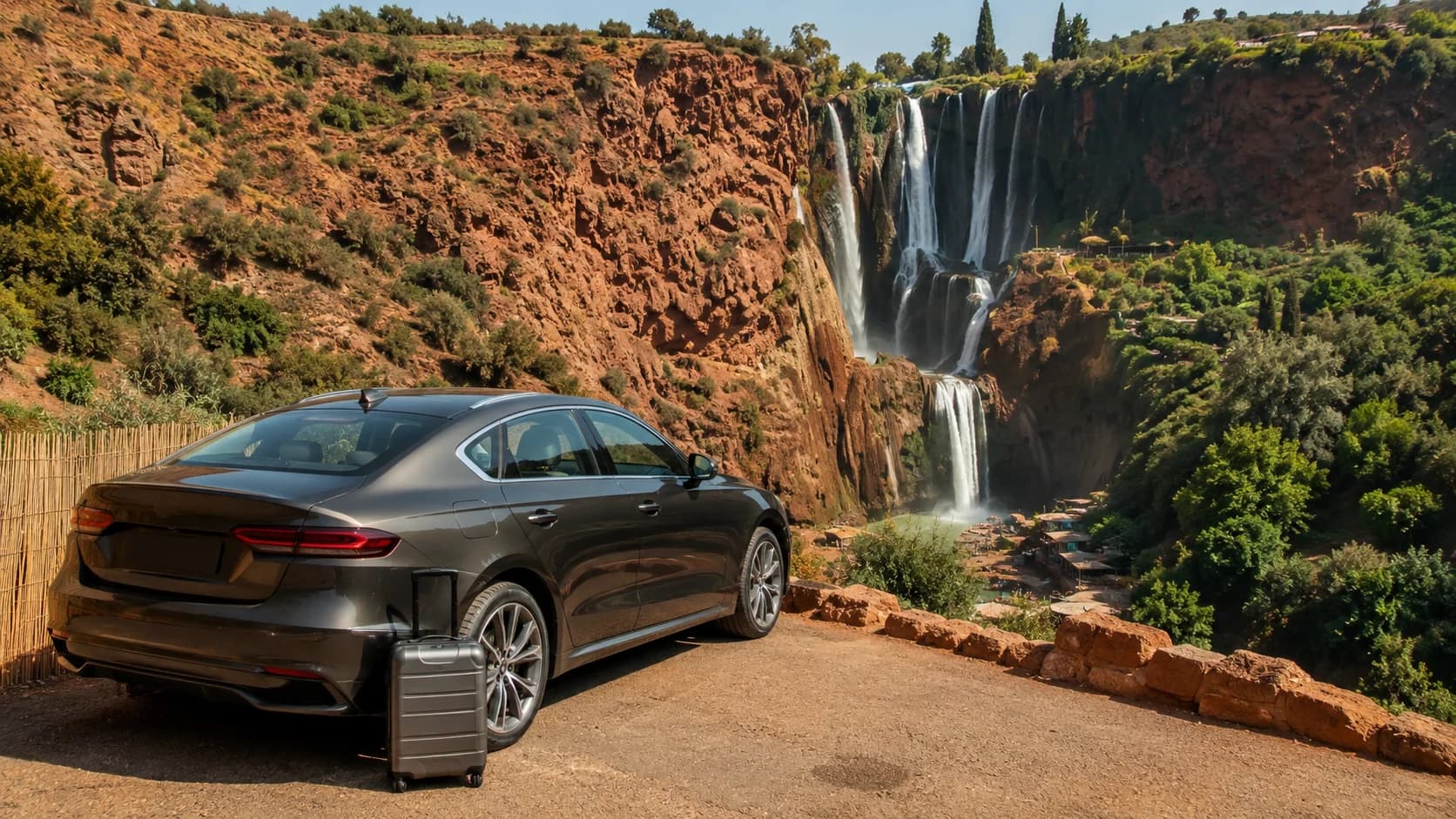
The main waterfall visit starts around Setti Fatma village. Setti Fatma is known for its waterfalls and hiking trails, and Visit Marrakech describes it as a village in the Atlas Mountains about 70 km from Marrakech.
Parking is usually handled near the village entrance or along designated local parking areas, depending on how busy the day is. Weekends, Moroccan holidays and warm spring days can be crowded, so arrive before lunch if you want easier parking. Keep small cash for parking, tea stops and local guides.
The walk to the first waterfall is the part many visitors underestimate. It is not a flat city walk. The path can include stones, narrow sections, steps and wet areas near the water. Wear shoes with grip, keep your hands free and avoid rushing. The first waterfall is the easiest target for most travelers. Going farther toward upper cascades can be more demanding, so only continue if the path feels comfortable and conditions are safe. The Guardian’s 2025 travel feature describes the Setti Fatma falls as Ourika’s most popular draw, with most visitors focusing on the first cascade before returning toward the village.
Stops along the valley
The best Ourika Valley day trip by car is not only about reaching Setti Fatma. The drive itself is part of the experience. The valley road gives you several easy stops for photos, mint tea, small local shops, river views and mountain backdrops.
Tnine Ourika is one of the most useful stops if your day matches the weekly market. A local food source in the area describes Souk Tnine Ourika as a large Monday market with fresh produce, local sellers, cafés and an Atlas mountain backdrop.
You can also stop at river cafés closer to the upper valley. These are best for a slow lunch after the waterfall walk, not before it. If you eat too early, the day can become slower and you may reach the waterfall path when it is more crowded.
A simple stop order works well:
- Marrakech departure
- Lower valley viewpoint
- Tnine Ourika if it is market day
- Setti Fatma parking
- Waterfall walk
- River lunch
- Slow return before sunset
Best season and time to leave
Spring is one of the best times to visit Ourika Valley because the valley feels greener, the river has more life and the mountain views can be clear. Summer is also popular because travelers use the valley as a cooler escape from Marrakech heat, but weekends can be busy. Autumn is calmer and often pleasant for driving. Winter can be beautiful, especially with snow visible on higher Atlas peaks, but weather can change faster on mountain routes.
For timing, leave Marrakech early. An 8:00 to 8:30 departure gives you a calmer drive, better parking and more freedom to enjoy Setti Fatma before the midday rush. If you leave after 10:00, the trip can still work, but it becomes more of a lunch-and-viewpoints day than a full waterfall day.
Avoid planning the return too late. The valley road is easier in daylight, and you will enjoy the drive more if you are not trying to navigate village sections after dark.
Combining Ourika with Oukaïmeden
Combining Ourika with Oukaïmeden is possible, but it changes the day completely. Instead of a relaxed valley trip, it becomes a longer mountain-driving itinerary. Oukaïmeden is listed by Visit Marrakech as one of the Al Haouz adventure destinations, and Morocco’s tourism office describes it as a ski-station climb in the Atlas Mountains near Marrakech.
This combination is best for travelers who really enjoy driving, mountain views and early starts. It is not ideal if your main goal is only to relax by the river, walk to the Setti Fatma waterfalls and return to Marrakech comfortably.
For this combined route, an SUV is strongly recommended and a 4x4 is better in winter or uncertain weather. Do not add Oukaïmeden late in the afternoon. The higher road deserves daylight, patience and enough time for the return.
Self-drive vs guided: which suits you
Self-drive is best if you want freedom. You choose your departure time, stop where you want, take photos without rushing and return when you are ready. It is also better for travelers who want to compare vehicles and choose the right comfort level before leaving Marrakech.
A guided trip is better if you do not want to think about parking, route timing or finding the waterfall path. It can also help if you prefer having local context during the walk or if you are nervous about mountain-road driving.
For most confident drivers, self-drive is the better Ourika Valley day trip by car. The route is close enough to Marrakech, the scenery is easy to enjoy, and a good vehicle gives you more flexibility than a fixed tour. If the plan includes only the valley and Setti Fatma, book an SUV or sedan. If the plan includes higher Atlas roads, winter conditions or Oukaïmeden, choose a 4x4.
Drive Ourika Valley Your Way
Escape the city heat in about an hour and drive yourself toward the Atlas foothills with MarHire Car Marrakech. Choose an SUV for comfort, a 4x4 for mountain confidence or a sedan for a simple valley day, then enjoy Ourika Valley, Setti Fatma, tea stops and waterfalls at your own pace.
FAQs
How far is the Ourika Valley from Marrakech?
The official Marrakech tourism road-trip listing gives Marrakech to Ourika as 68 km, while Setti Fatma is commonly described as about 70 km from Marrakech.
How long does it take to drive to Ourika Valley?
Plan around 1.5 to 2 hours each way for a relaxed trip from Marrakech to Setti Fatma, especially with traffic, stops and parking. Visit Marrakech lists Marrakech to Ourika at about 1 hour 49 minutes.
Do I need a 4x4 for the Ourika Valley?
No, not for the normal dry-weather drive to Ourika and Setti Fatma. A sedan can work, an SUV is more comfortable, and a 4x4 is better for winter, detours or higher mountain roads.
Can you drive to Setti Fatma from Marrakech?
Yes. Setti Fatma is a popular village in the Atlas Mountains known for waterfalls and walking trails, and it is commonly listed at around 70 km from Marrakech.
Where do you park for the Ourika waterfalls?
Most visitors park around Setti Fatma village or nearby local parking areas, then continue on foot toward the waterfalls. Arrive before lunch for easier parking, especially on weekends.
Is the Ourika Valley worth a day trip?
Yes. It is one of the easiest ways to experience Atlas foothills, mountain scenery, river cafés, traditional villages and the Setti Fatma waterfalls in one day from Marrakech. Morocco’s tourism office describes it as a popular day trip from the Red City.
What is the best time of year to visit Ourika?
Spring and autumn are the easiest seasons for scenery and comfortable driving. Summer is popular for escaping Marrakech heat, while winter can be scenic but needs more attention to weather and road conditions.
Is the road to Ourika Valley difficult?
The standard route is not difficult in dry weather, but the final valley sections can be narrow, busy and slower than city roads. Drive calmly, leave early and avoid returning after dark.
Can I combine Ourika with the ski resort Oukaïmeden?
Yes, but it becomes a longer mountain day. Oukaïmeden is a High Atlas ski-station area near Marrakech, so choose an SUV or 4x4 and keep the drive in daylight.
Is it better to drive myself or take a tour?
Drive yourself if you want flexibility and comfortable stops. Take a guided trip if you prefer not to manage parking, route timing or the waterfall walk.