






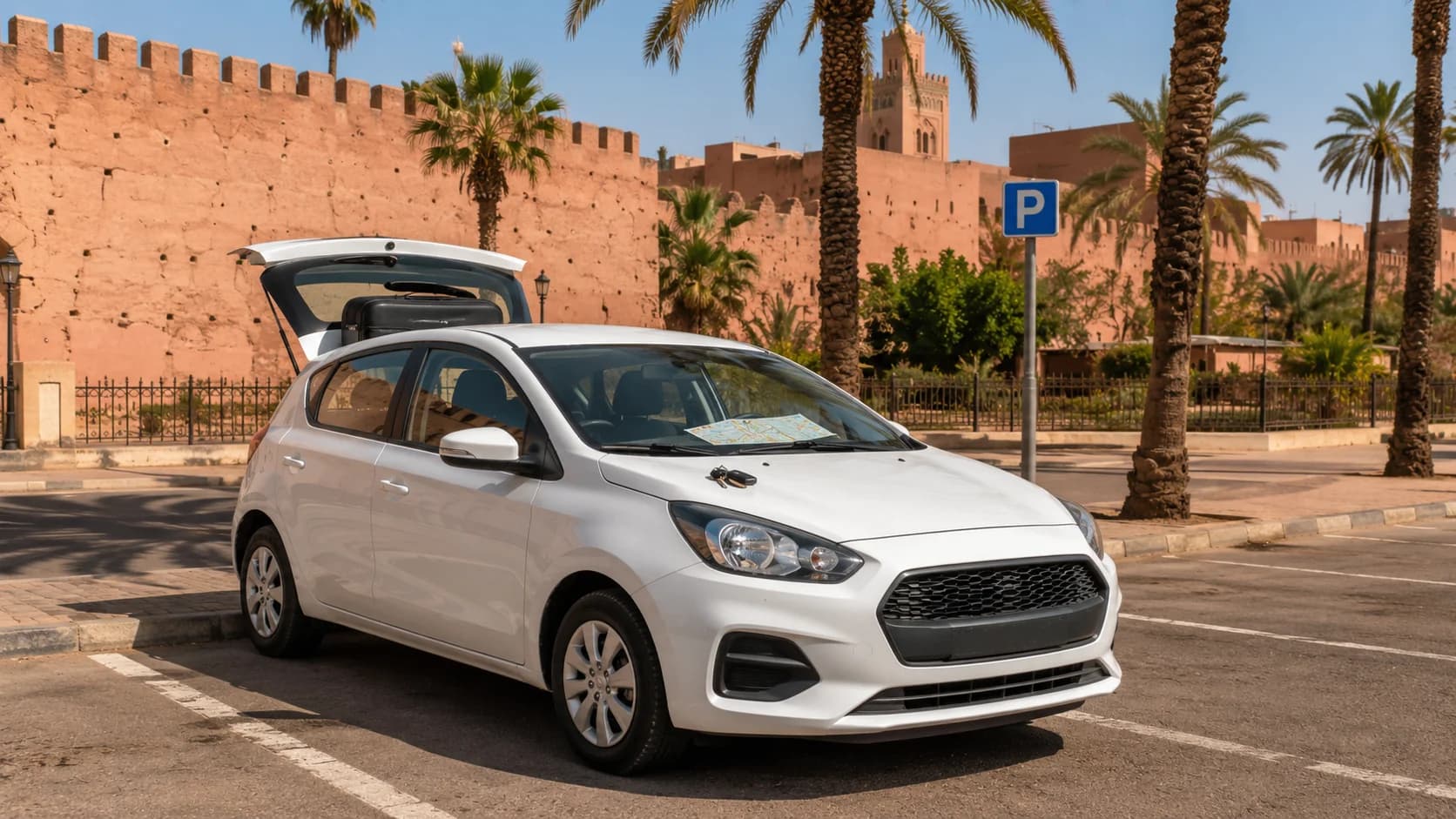
Parking in Marrakech can feel confusing at first, especially if you are arriving by rental car and staying near the Medina, Jemaa el-Fna, Gueliz or Hivernage. The system is a mix of official paid car parks, street parking, local gardiens, hotel spaces and private lots. Once you understand how it works, it becomes much easier to park safely, agree the price, avoid stress and choose the right car for the city.
Table of Contents
-
How parking works in Marrakech
-
Paid car parks and the blue "P" sign
-
Street parking and the gardien system
-
How much parking costs, day vs night
-
Handing over your keys, is it normal?
-
Parking near the Medina, Gueliz and Hivernage
-
Overnight and multi-day parking safety
-
Parking on day trips outside the city
-
Quick parking etiquette tips
-
FAQs about parking in Marrakech
How parking works in Marrakech
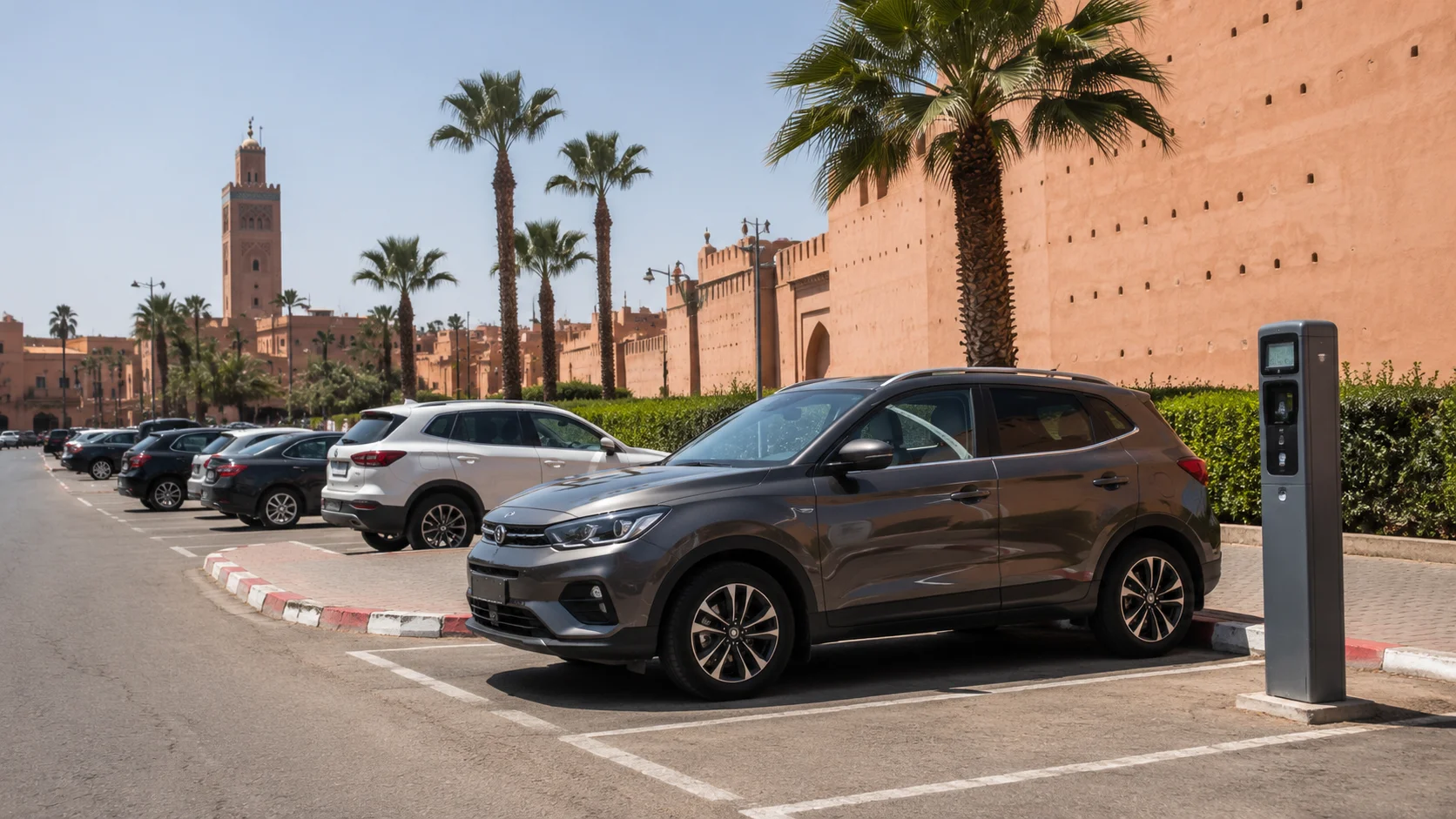
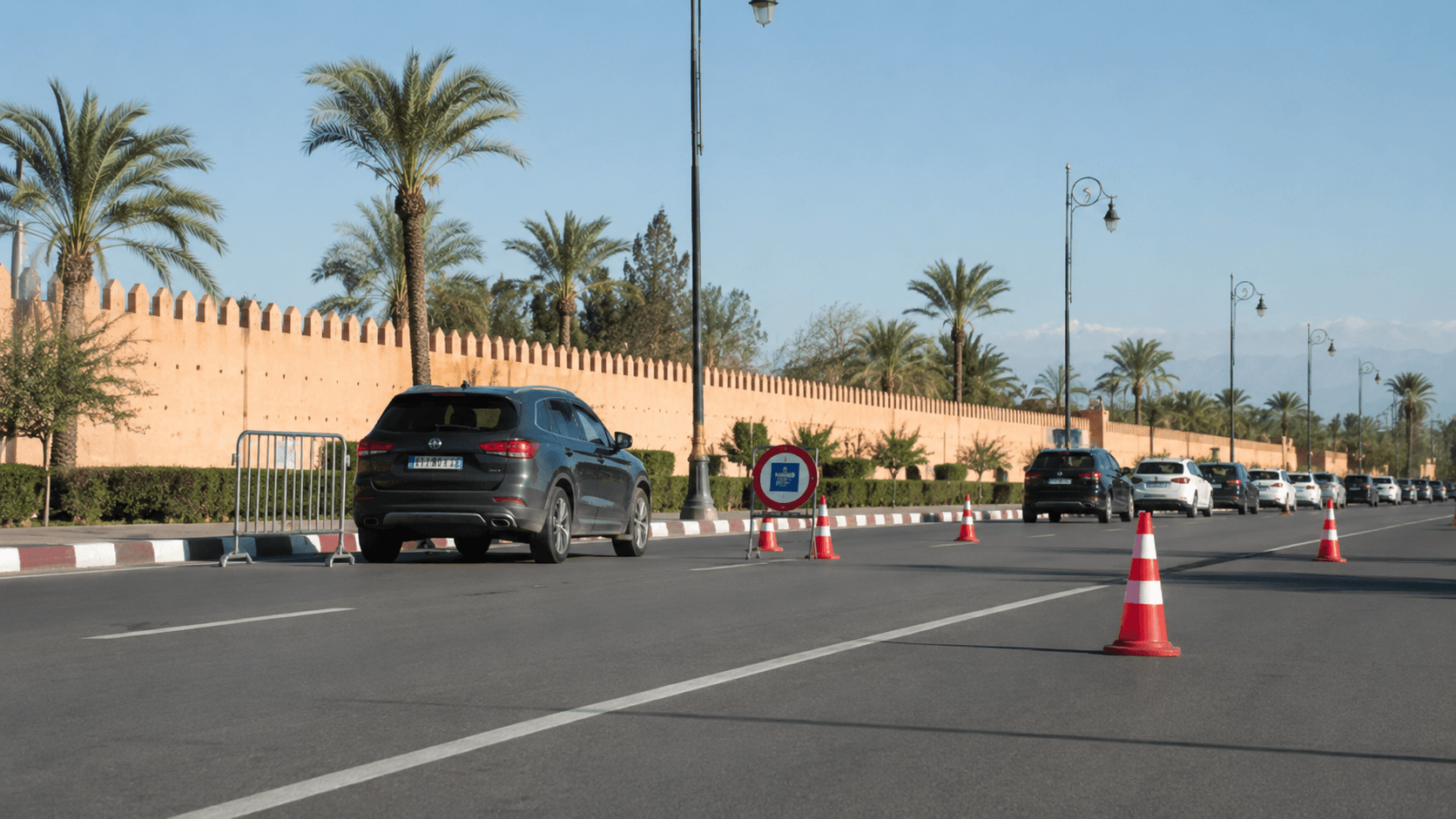
Parking in Marrakech is not the same as parking in many European cities. You will find some official car parks, some underground parking, some hotel parking and many informal street spaces managed by local parking attendants known as gardiens. In busy areas, especially around the Medina, Jemaa el-Fna, Koutoubia, Gueliz and Hivernage, the easiest option is usually not to search street by street. It is better to choose a known paid parking area, ask your riad or hotel for the closest safe lot, then walk or take a short taxi to the final door.
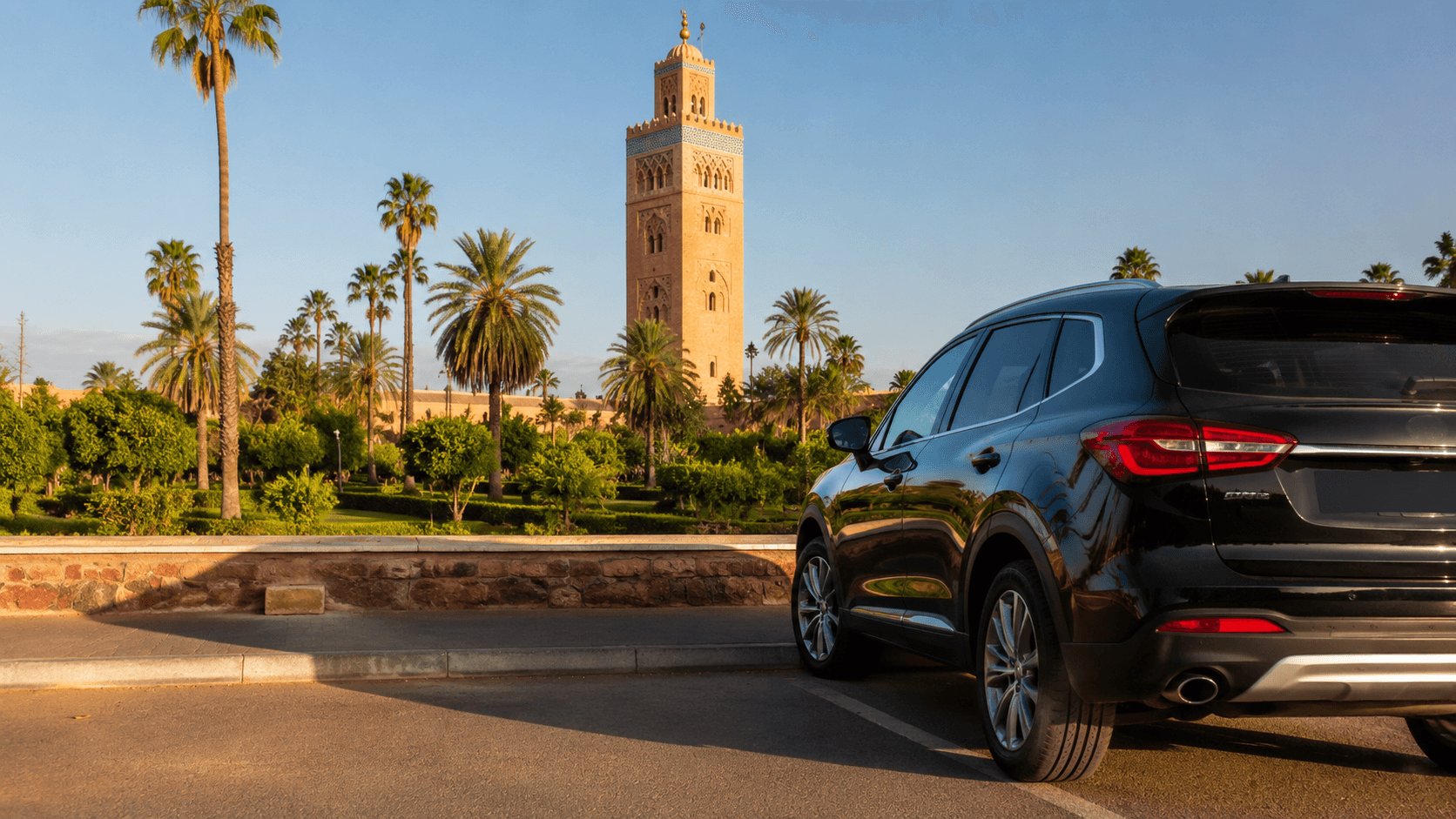
The Medina is the old heart of Marrakech, with historic gates, ramparts, souks and narrow streets. UNESCO lists the Medina of Marrakesh as a World Heritage site and describes its important monuments, including Koutoubia Mosque, the Kasbah, ramparts, monumental gates and Jamaa El Fna. That historic layout is beautiful for walking, but it is not designed for easy car access.
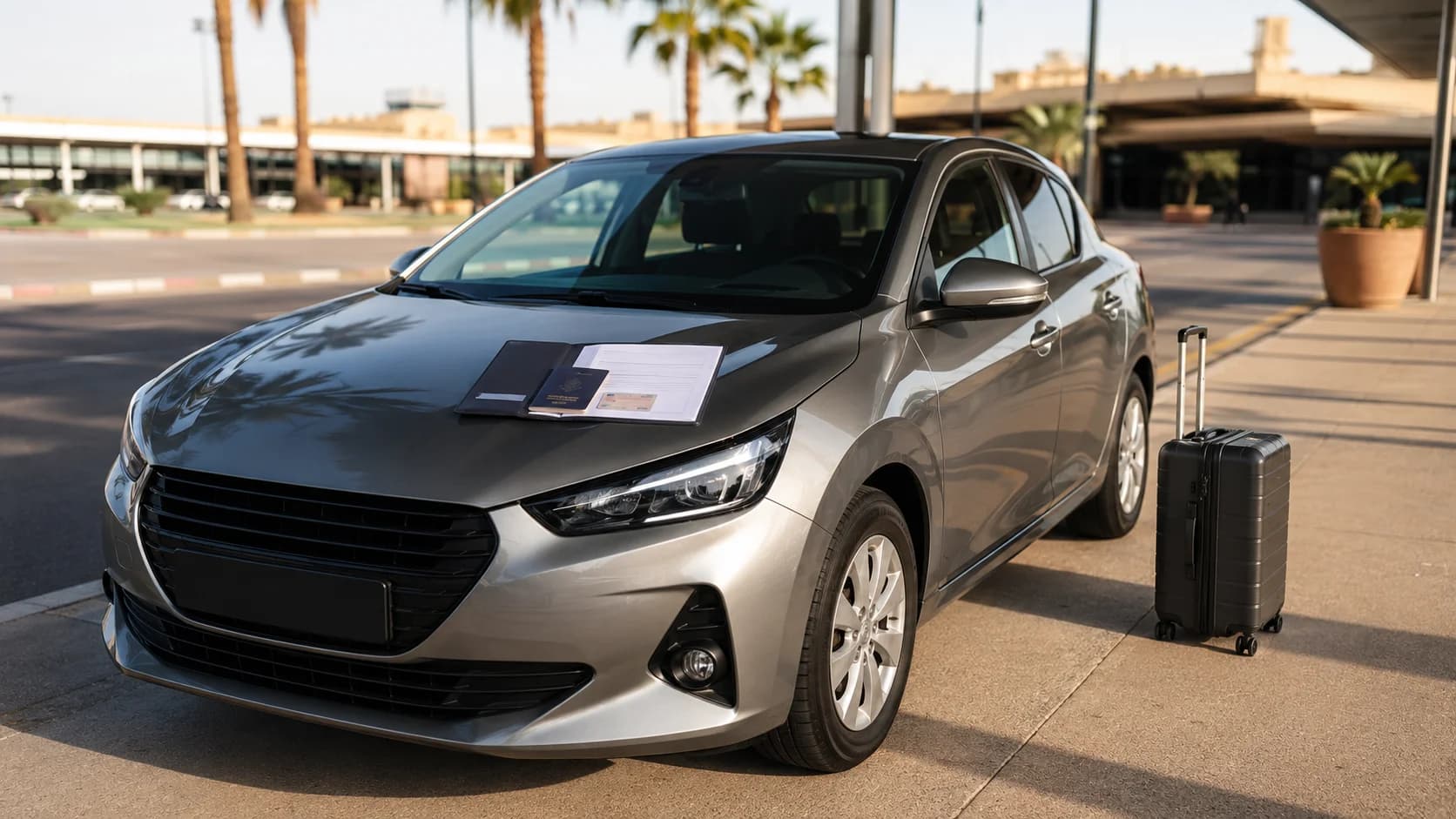
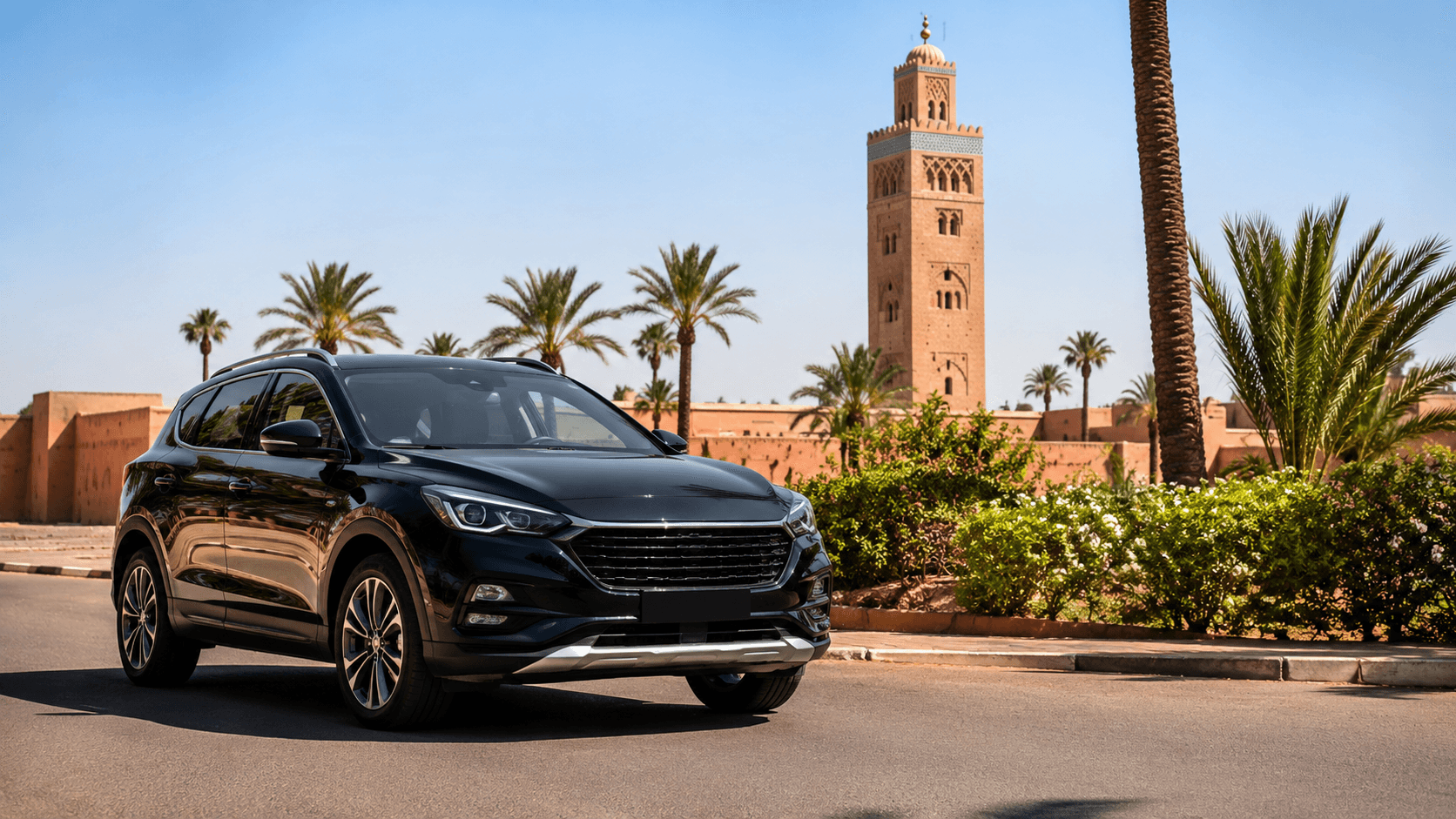
For most visitors, the smart rule is simple: drive to the edge of the area, park in a visible and supervised place, then continue on foot. This is especially useful if you rent a compact city car or an automatic car, because small vehicles are easier to place in tight spaces and easier to manage in traffic.
Paid car parks and the blue "P" sign
When you see a blue "P" sign in Marrakech, it usually means there is a public or private parking area nearby. These may be open-air lots, fenced lots, underground parking or supervised spaces near a hotel, shopping centre or tourist zone. Around high-traffic areas, a proper paid car park is usually more predictable than stopping randomly on a busy street.
Paid car parks are useful because the price is clearer, there is usually an entrance or attendant, and the location is easier to find again after your visit. Near the Medina, published local guides often recommend using secure parking around the edges instead of trying to enter the old streets. One Marrakech parking guide mentions a parking area near Jemaa el-Fna and Koutoubia with a reported fee structure of 10 dirhams for the first hour and 1 dirham for each additional hour, but you should always confirm the current price before leaving the car.
If you are staying in a riad, ask the riad for the exact parking name, not just the gate name. Many riads are inside pedestrian lanes, so the closest place to stop by car may still be five to ten minutes away on foot. Good riads usually know which parking attendants are reliable and which gate is easiest for luggage.
Street parking and the gardien system
The gardien is the local parking attendant. In many parts of Morocco, including Marrakech, a gardien may guide you into a space, watch the car and help you leave. This system can feel unusual if you are not used to it, but it is normal in Morocco. It is common around markets, cafés, restaurants, beaches, tourist sites and busy streets.
The important point is to agree the price before walking away. Do not wait until you return if the location feels unclear. A simple question such as "chhal parking?" or "how much for parking?" is enough. If the attendant says a high number, ask if that is for one hour, several hours or overnight.
For street parking, one Marrakech travel guide gives a rough reference of about 3 to 5 dirhams during the day and about 10 to 15 dirhams at night, depending on the location. Treat this as a guide, not a fixed citywide tariff, because busy tourist areas, event nights and overnight parking may cost more.
How much parking costs, day vs night
Marrakech parking cost depends on where you park, how long you stay and whether the car is supervised overnight. In a normal street space away from the busiest tourist points, a short stop may cost only a few dirhams. In busier areas near the Medina, Jemaa el-Fna or popular restaurants, expect the price to be higher. Overnight parking normally costs more than a short daytime stop.
As a practical visitor estimate:
Daytime street gardien: often around 3 to 10 MAD
Evening or night street gardien: often around 10 to 20 MAD
Busy tourist parking: often around 20 to 60 MAD depending on duration
Overnight supervised parking: often around 30 to 80 MAD depending on location
Airport parking: official Marrakech Menara parking information lists 6 DH for 1 hour, 22 DH for 5 to 12 hours and 42 DH for 12 to 24 hours for outdoor cars. The same source lists Parking 1 with 740 spaces, Parking 2 with 460 spaces and Parking 3 with 350 spaces.
Prices can change, so confirm the amount at the entrance. For a rental car, the cheapest space is not always the best space. A clear, supervised, easy-to-find parking lot is usually worth a few extra dirhams.
Handing over your keys, is it normal?
Sometimes a gardien may ask you to leave the keys. This can happen when cars are parked in rows and the attendant may need to move one vehicle to let another leave. It is more common in tight lots, restaurant parking areas or crowded overnight spaces.
For a rental car, you should be careful. Do not leave the keys unless you fully trust the place, the parking is known by your hotel or riad, and the arrangement is clearly normal for that lot. If you are unsure, choose another parking area where you can keep the keys.
Before leaving the car anywhere, remove valuables, take your documents, lock the car and take a quick photo of the parking location. Keep the parking ticket if there is one. If the attendant gives you a small paper, do not lose it, because it may be needed when you return.
Parking near the Medina, Gueliz and Hivernage
Parking near the Medina is the most important part of the trip to plan. Jemaa el-Fna is one of the busiest places in Marrakech, and Morocco’s official tourism website describes it as a lively cultural square with food, lights, storytellers, musicians and performers. That atmosphere is exactly why visitors love it, but it also means traffic and parking can be difficult at peak times.
For the Medina, aim for parking near the outer edge instead of trying to drive deep inside. Common practical areas include parking near Koutoubia, Bab Doukkala, Bab Laksour, Bab Ghmat or other gates depending on your riad. Always ask your accommodation which gate is easiest, because the closest point on Google Maps is not always the easiest point for luggage.
In Gueliz, parking is usually easier than in the Medina. Streets are wider, hotels often have parking, and shopping centres may have underground spaces. A local parking guide mentions Carré Eden in Gueliz as an underground option with hourly parking and overnight availability, although prices should be checked on arrival.
In Hivernage, parking is often connected to hotels, restaurants and event venues. It can be easier than the Medina, but evening demand can rise around popular restaurants and nightlife streets. If you are visiting for dinner, arrive earlier and confirm whether the restaurant has parking or only street gardien spaces.
Overnight and multi-day parking safety
For overnight car parking Marrakech visitors should focus on visibility, supervision and access. Avoid leaving a rental car overnight in a quiet, dark side street if you have a better option nearby. Choose a supervised lot, hotel parking, riad-recommended parking or a well-known guarded area.
Before leaving the vehicle overnight, remove luggage from view. Do not leave passports, wallets, cameras, laptops, bags, sunglasses or shopping bags inside the car. Even in a guarded area, the best safety habit is to leave the interior empty and clean.
If you need multi-day parking while staying inside the Medina, ask your riad to arrange it before arrival. The best riads will tell you the exact gate, the parking name, the approximate nightly cost and whether someone can meet you with a luggage cart. This matters because some Medina streets are pedestrian only or too narrow for normal car access.
Parking on day trips outside the city
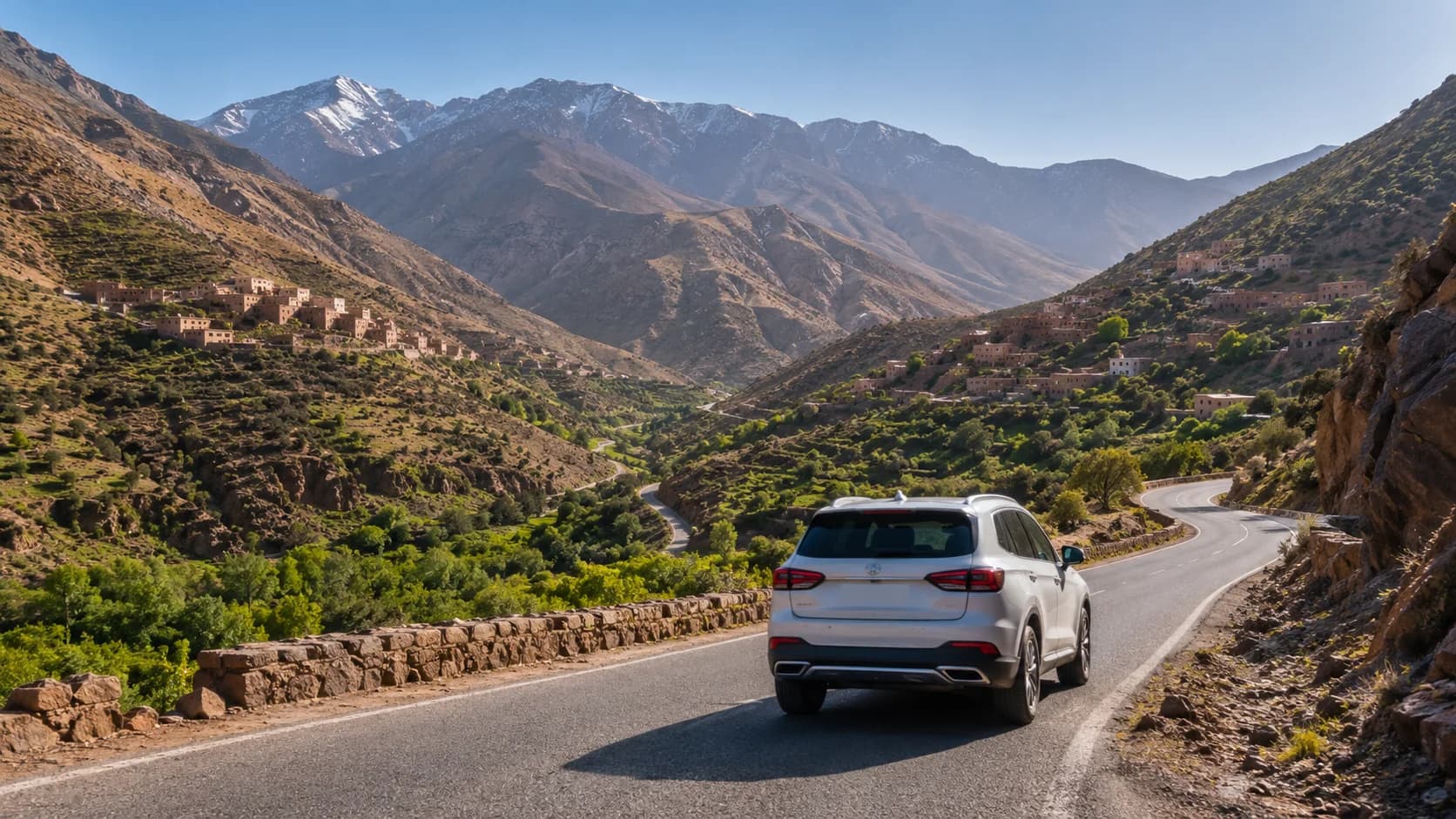
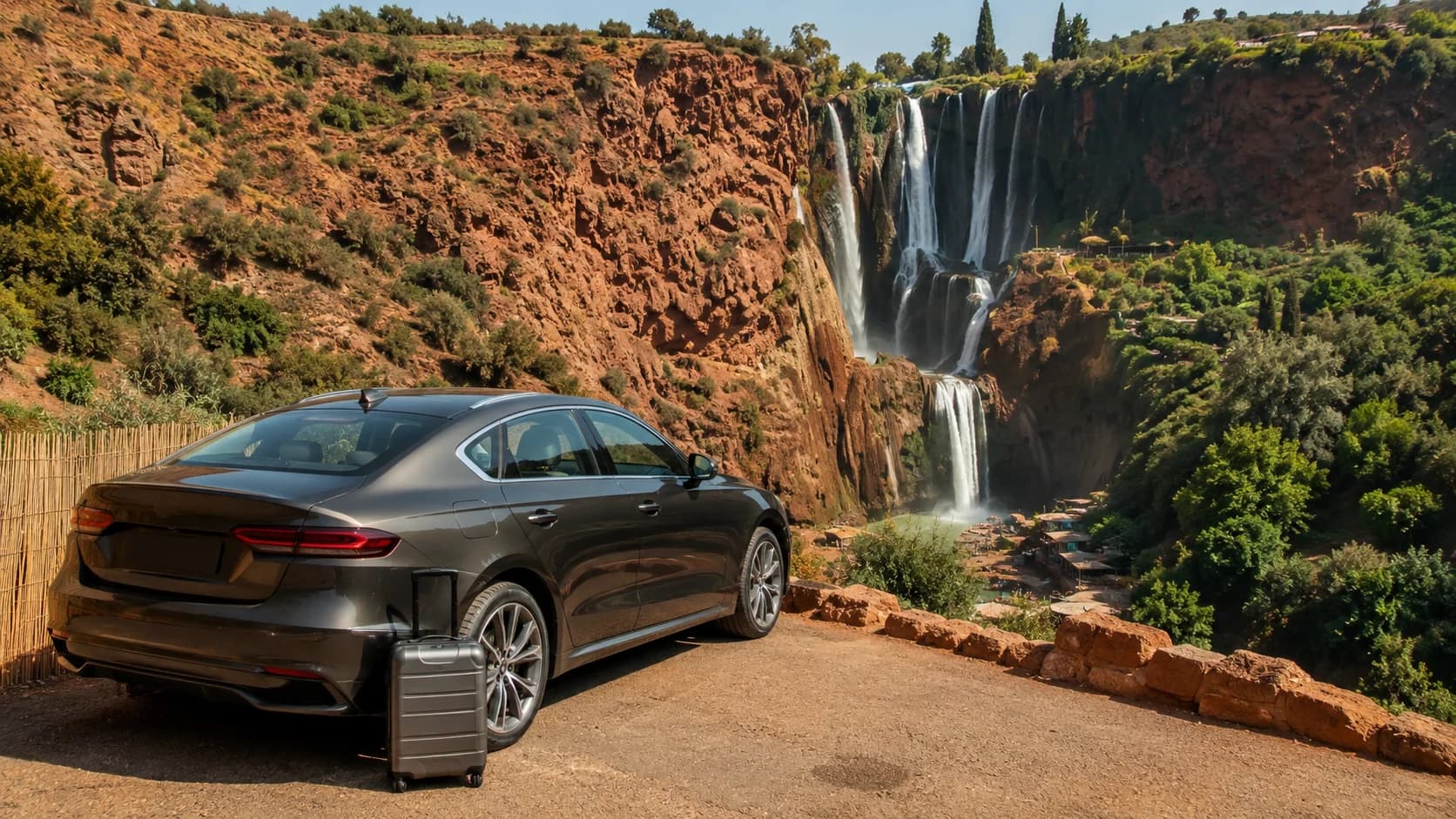
If you rent a car for trips outside Marrakech, parking becomes much easier once you leave the centre. On day trips to Ourika Valley, Agafay, Ouzoud, Imlil or Essaouira, you will usually find local parking near restaurants, viewpoints, waterfalls, trail starts or tourist stops. The gardien system is common in these places too.
For day trips, keep small coins and 10 or 20 dirham notes ready. Ask the price before you leave the car, especially near waterfalls, valley viewpoints or popular lunch stops. If a restaurant says parking is included, confirm whether the gardien still expects a small tip.
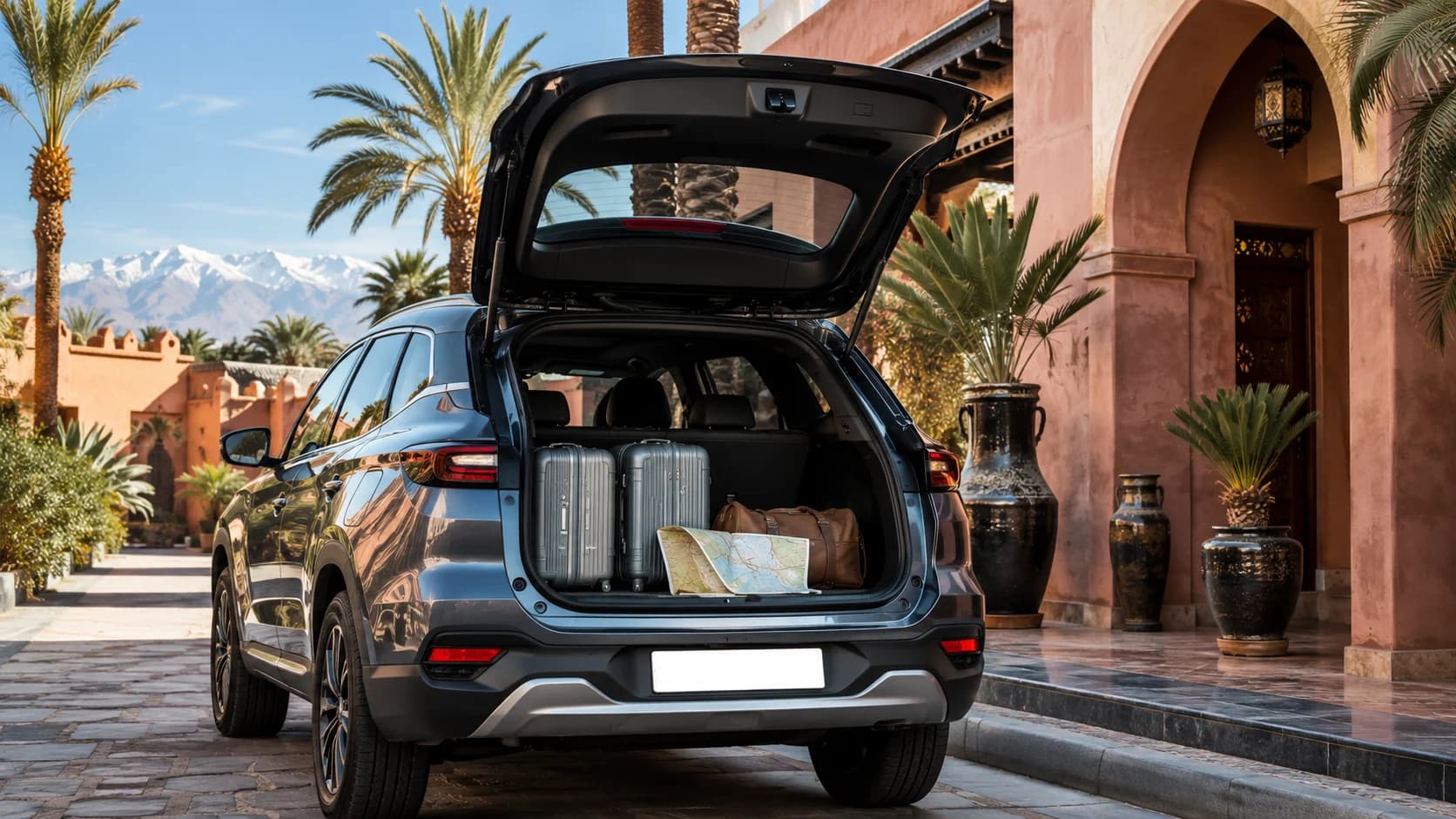
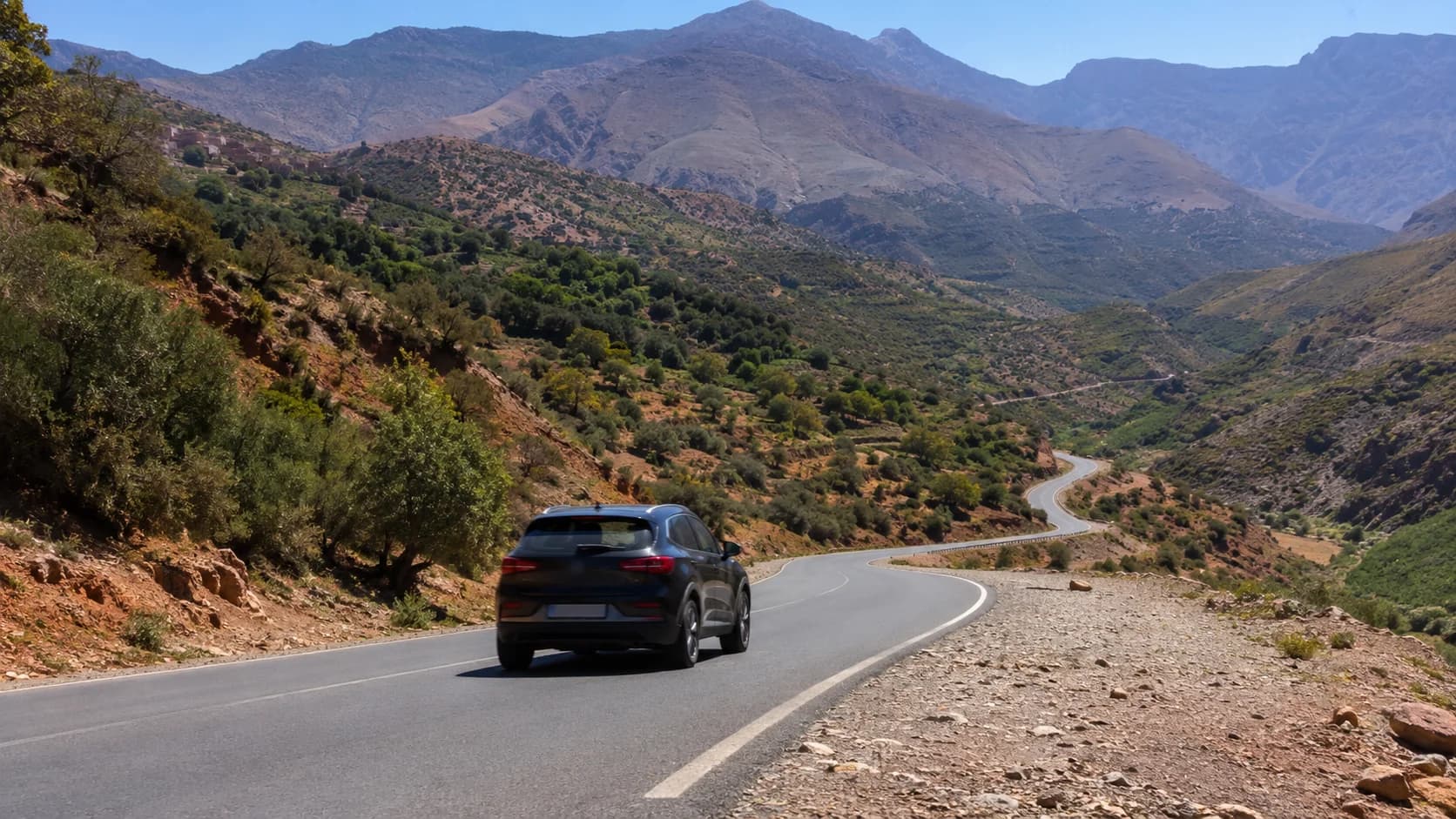
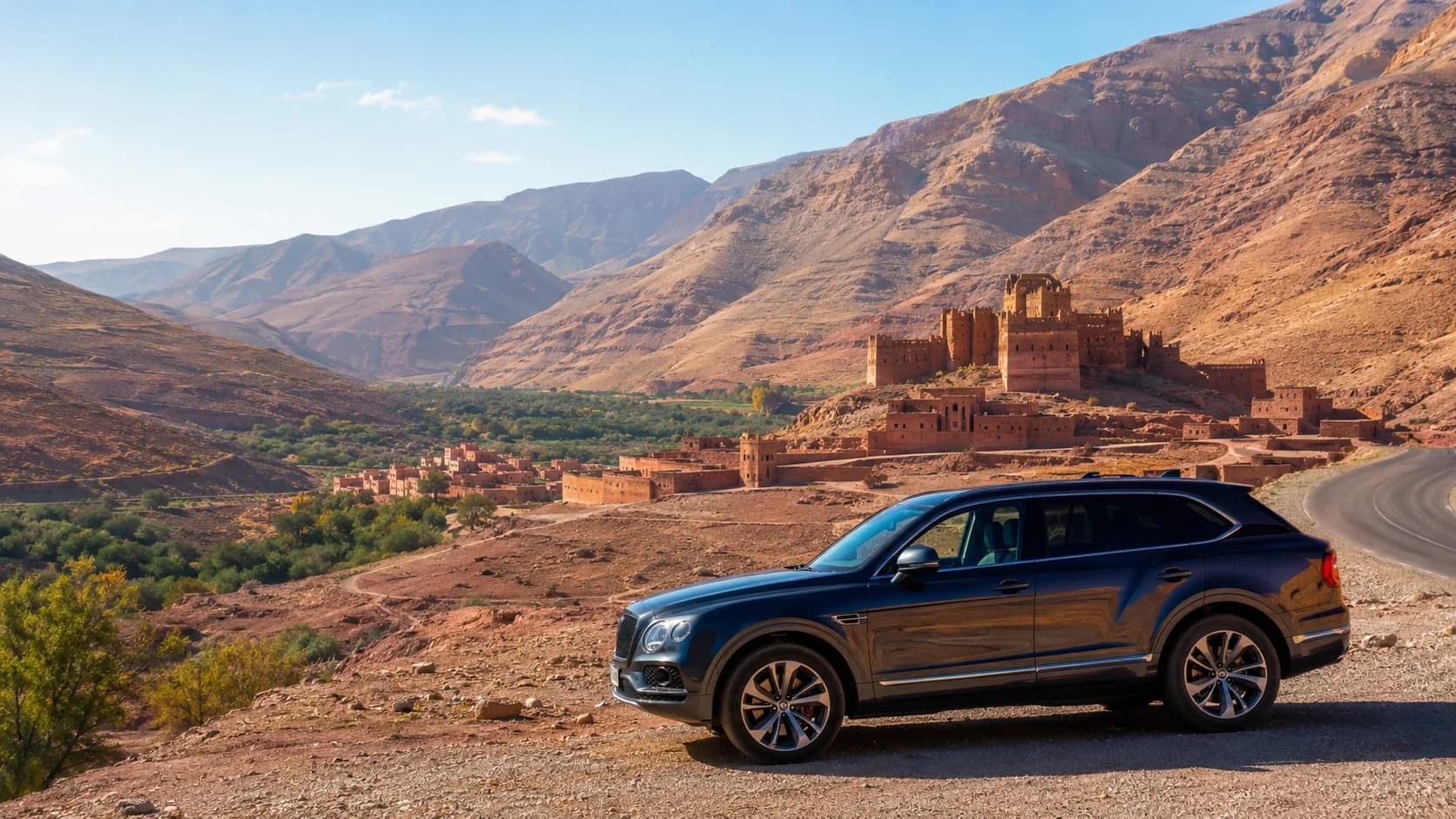
A rental car is useful for day trips, but inside central Marrakech it is better to park once and walk. That is why many travelers choose a small car for the city or an SUV only if they are planning mountain roads, luggage-heavy trips or longer routes outside Marrakech. For city-friendly travel, a cheap car rental Marrakech option is easier to park and usually more economical. For Ourika, Ouzoud, Agafay or longer countryside routes, SUV rental Marrakech may offer more comfort and clearance. If you prefer simpler city driving, car rental Marrakech can make traffic, roundabouts and stop-start parking easier.
Quick parking etiquette tips
Agree the price before leaving the car. This avoids confusion when you return.
Keep small cash ready. Many parking attendants will not have change for large notes.
Do not block entrances, garage doors, hotel access or narrow Medina lanes.
Ask your riad or hotel for the safest parking, not just the closest parking.
Take a photo of the location, the entrance and any ticket you receive.
Do not leave valuables visible in the car.
Be calm and polite with gardiens. A few words of French, Arabic or simple English usually work.
If the parking feels wrong, move to another place. Marrakech has many options, and peace of mind is worth more than saving a few dirhams.
FAQs about parking in Marrakech
How much does parking cost in Marrakech?
Short street parking can cost a few dirhams, while evening, tourist-area and overnight parking usually costs more. As a rough guide, expect around 3 to 10 MAD for a short daytime street stop, 10 to 20 MAD for evening street parking and more for supervised overnight lots. Always confirm the price before leaving the car.
What is a gardien and do I have to pay them?
A gardien is a local parking attendant who helps you park and watches the car. In many Marrakech streets, it is normal to pay them a small amount. Agree the price first, especially if you plan to stay overnight or return late.
Where can I park near the Marrakech Medina?
The best option is usually to park near the edge of the Medina, close to a gate or known parking area, then walk to your riad, restaurant or souk. Ask your accommodation for the best gate and the safest parking name before arrival.
Is it safe to park a rental car overnight in Marrakech?
Yes, if you choose a supervised lot, hotel parking or riad-recommended parking. Avoid dark side streets, remove all valuables and keep the parking ticket or attendant reference safe.
Should I tip the parking attendant?
If the price is already agreed, you do not need to overpay. However, rounding up a few dirhams is common when the attendant helps with parking, watches the car for a long time or assists you when leaving.
Is it normal to leave your car keys with the attendant?
It can happen in tight parking lots, but it is not something you should do automatically with a rental car. Only leave keys if the parking is trusted, recommended by your hotel or riad, and clearly managed. If unsure, choose a space where you keep the keys.
Where can I park near Jemaa el-Fna?
Look for supervised parking around the Medina edge, especially around the Koutoubia side or nearby gates depending on your route. Avoid trying to drive directly into the busiest pedestrian streets near the square.
Are there secure paid parking lots in Marrakech?
Yes. Marrakech has paid lots, hotel parking, shopping centre parking and supervised open-air parking areas. In busy tourist zones, secure paid parking is usually better than searching for a random street space.
How do I find parking on day trips like Ourika or Ouzoud?
Most popular day trip stops have local parking areas with gardiens near restaurants, viewpoints or trail access. Ask the price before leaving the car and keep small cash ready.
Can I get fined for parking in the wrong place?
Yes. You can be fined or towed if you park where stopping is not allowed, block traffic, block an entrance or ignore local restrictions. When unsure, use a paid lot or ask a local attendant before leaving the car.
Final advice
Parking in Marrakech is manageable when you understand the local system. Use paid lots near the Medina, agree prices with gardiens, avoid leaving valuables inside and plan overnight parking before you arrive. For the easiest experience, choose a compact or automatic rental if you will mostly drive in the city, or choose an SUV if your Marrakech trip includes valleys, mountains and longer day routes.
Park with peace of mind. Rent a compact, easy-to-park car from MarHire Car Marrakech, and the local team can point you toward safer lots and gardien spots near your riad, hotel or pickup area.