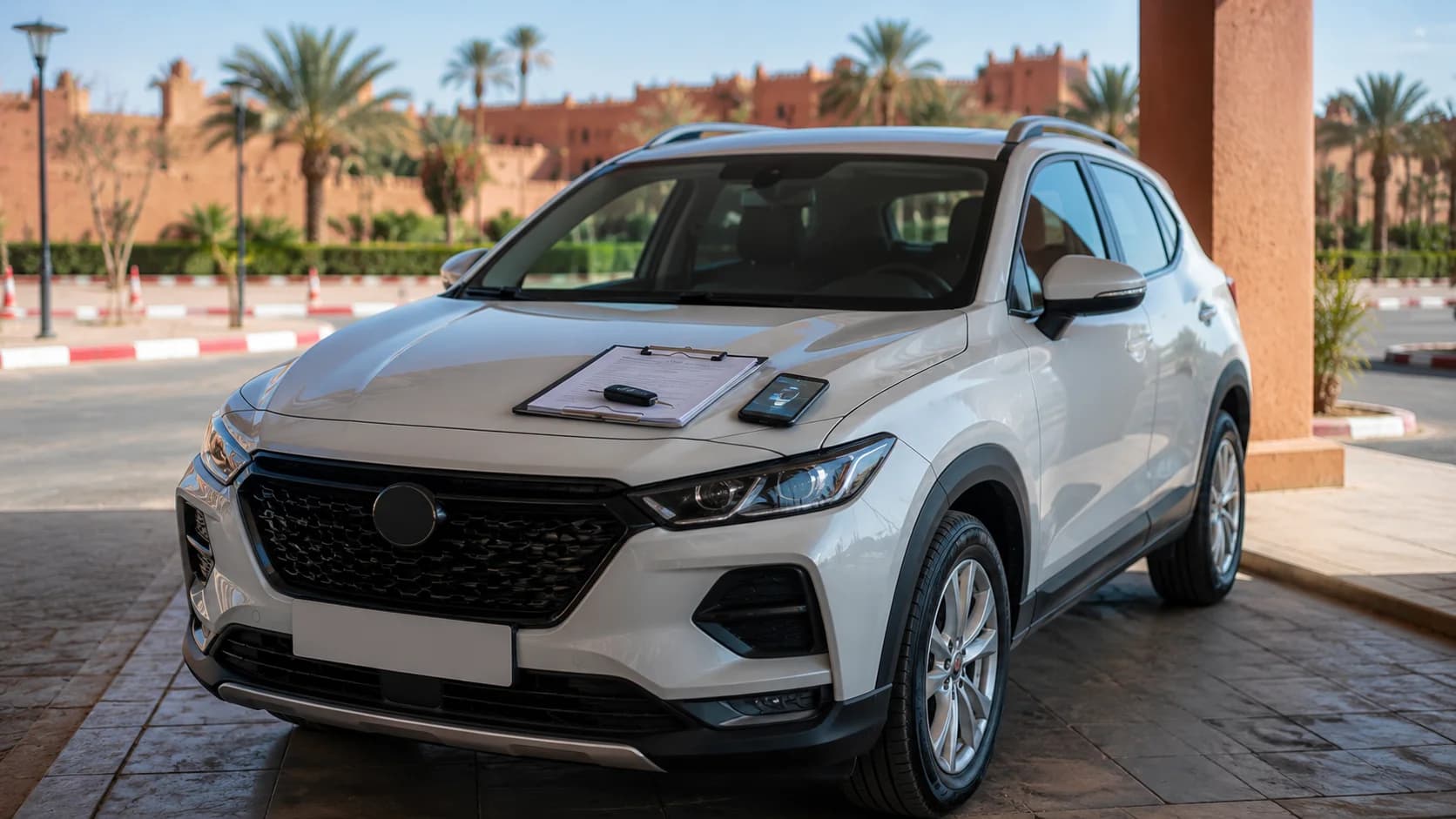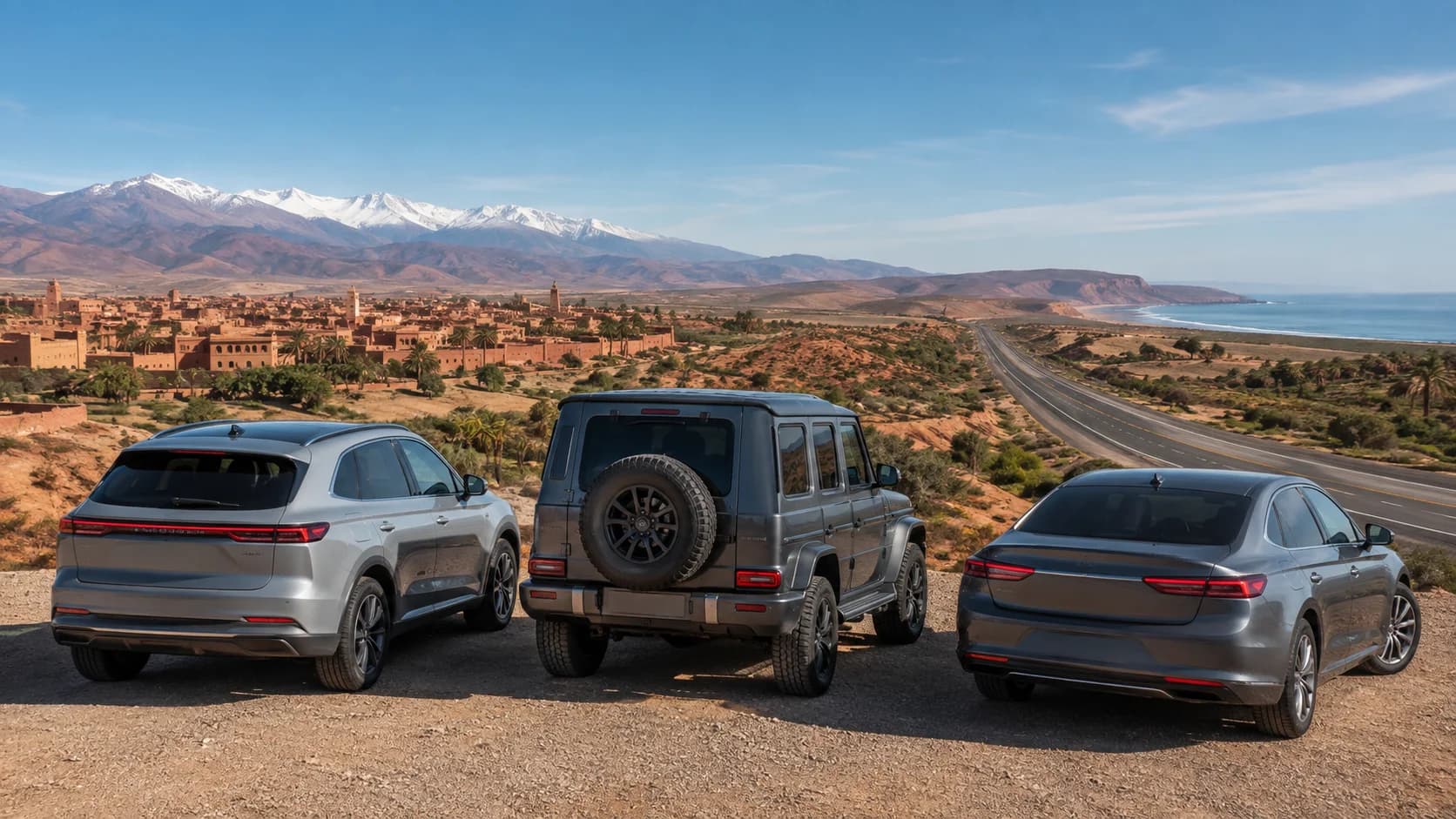








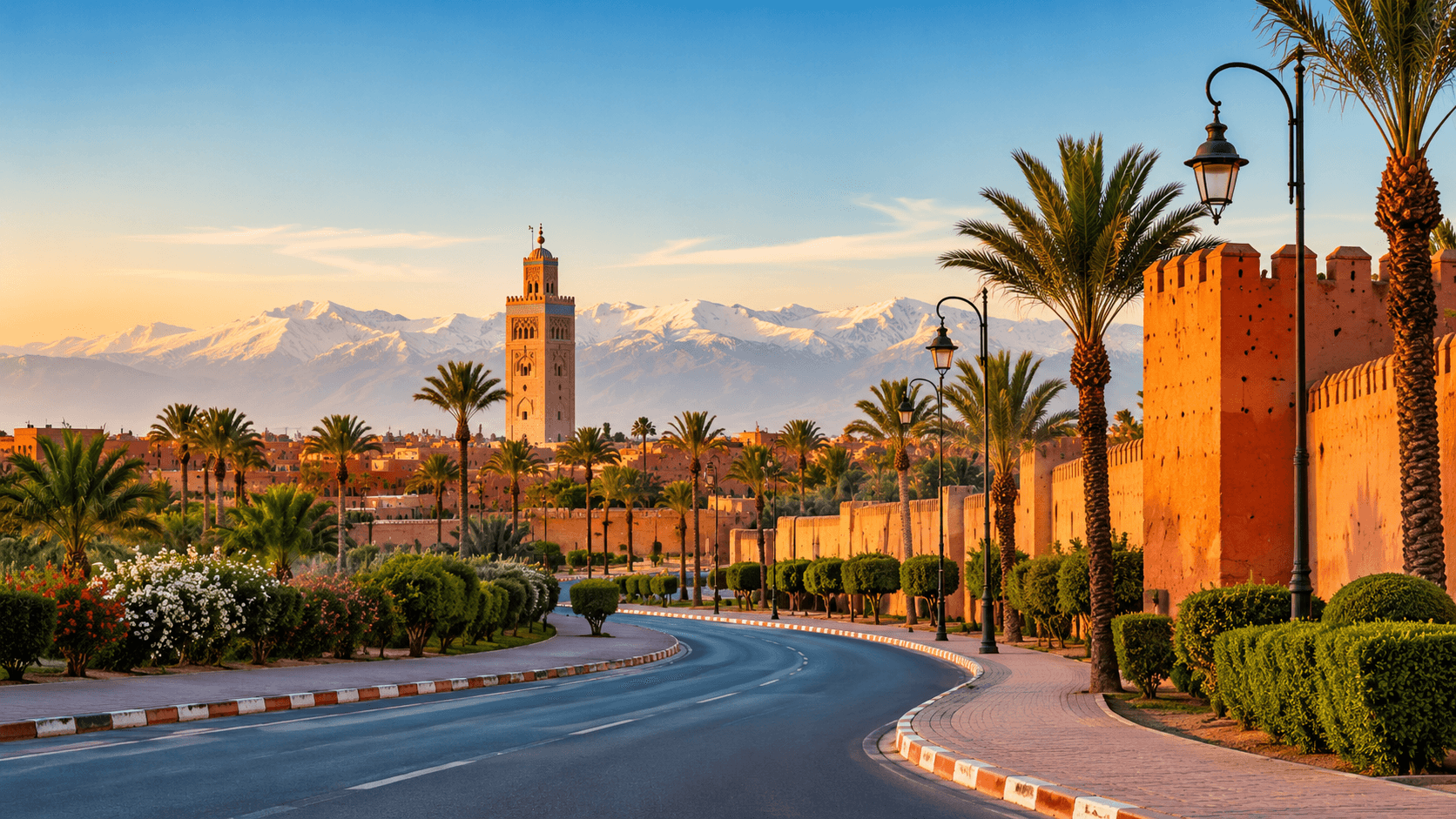
Driving in Marrakech is often very different from what first-time visitors expect. Before arriving, many travelers read warnings online about chaotic traffic, scooters everywhere, and seemingly unpredictable driving behavior. Then they arrive and discover something surprising: Marrakech traffic actually has its own rhythm.
The key is understanding that driving here is less about strict rule-following and more about awareness, communication, and confidence. Local drivers are constantly reading each other's intentions, making eye contact, using subtle signals, and adapting to changing road conditions.
The good news is that thousands of tourists successfully drive in Marrakech every week. Once you understand the local flow, driving becomes far less stressful than many travel forums suggest.
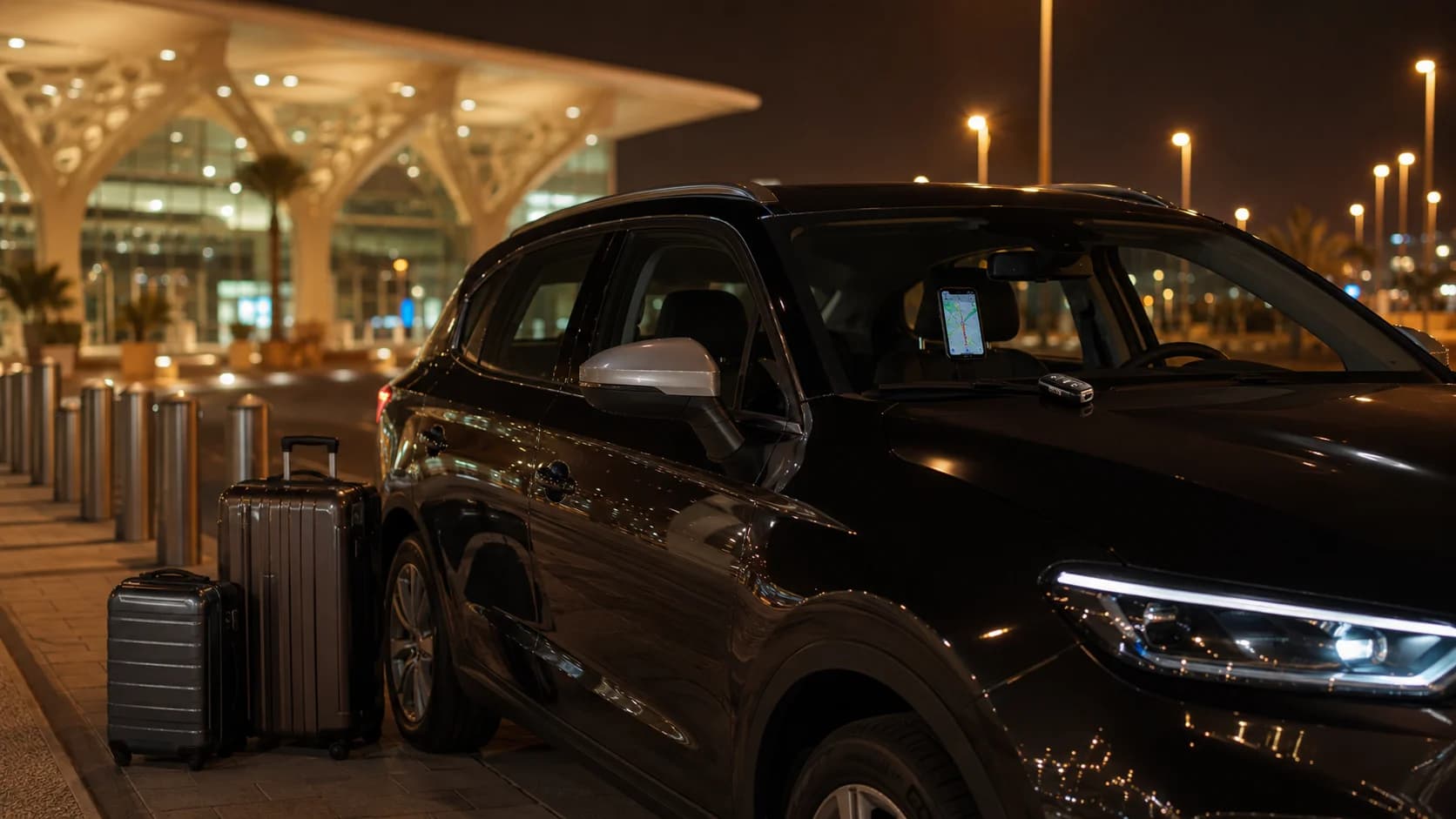
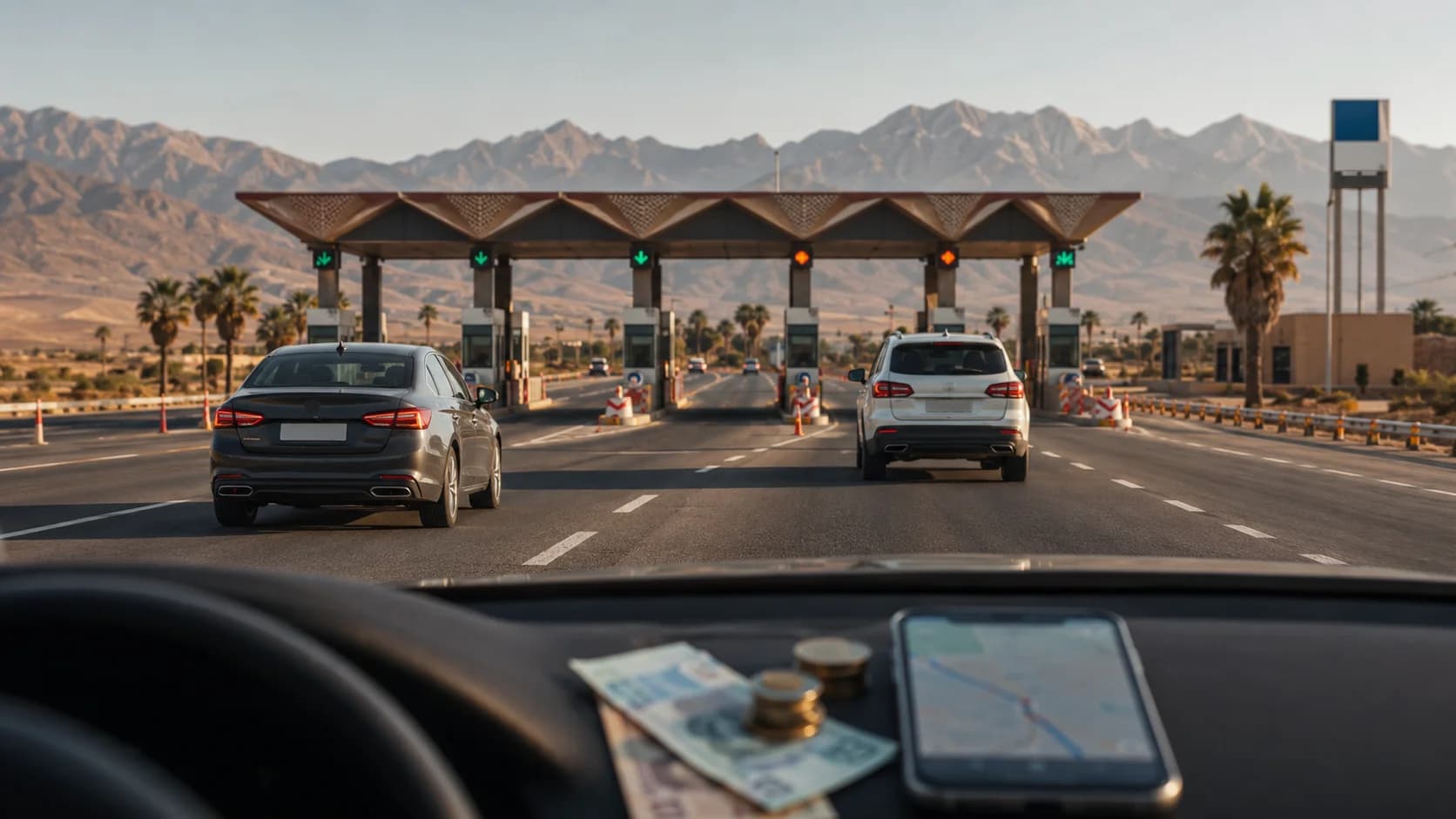
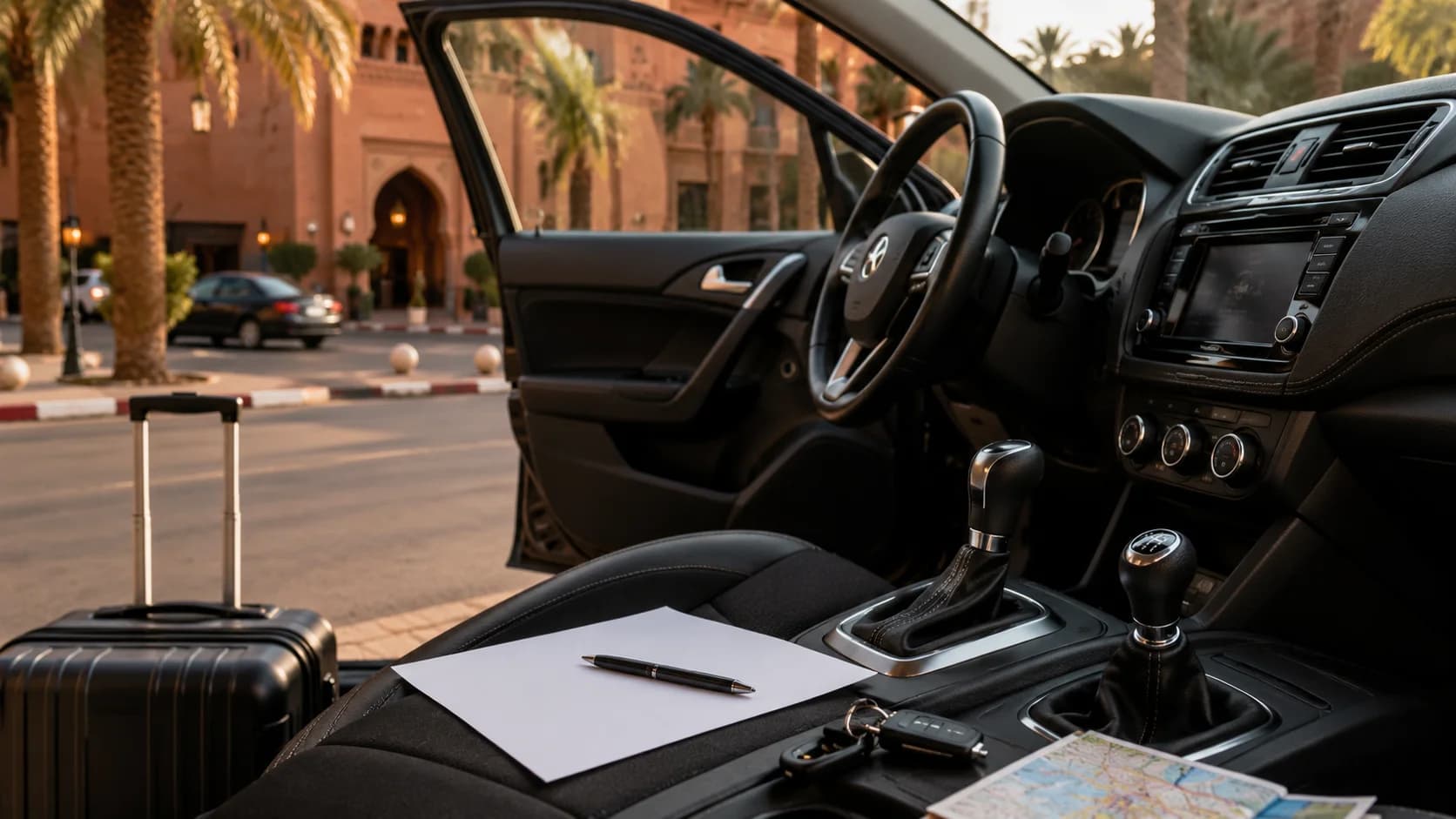
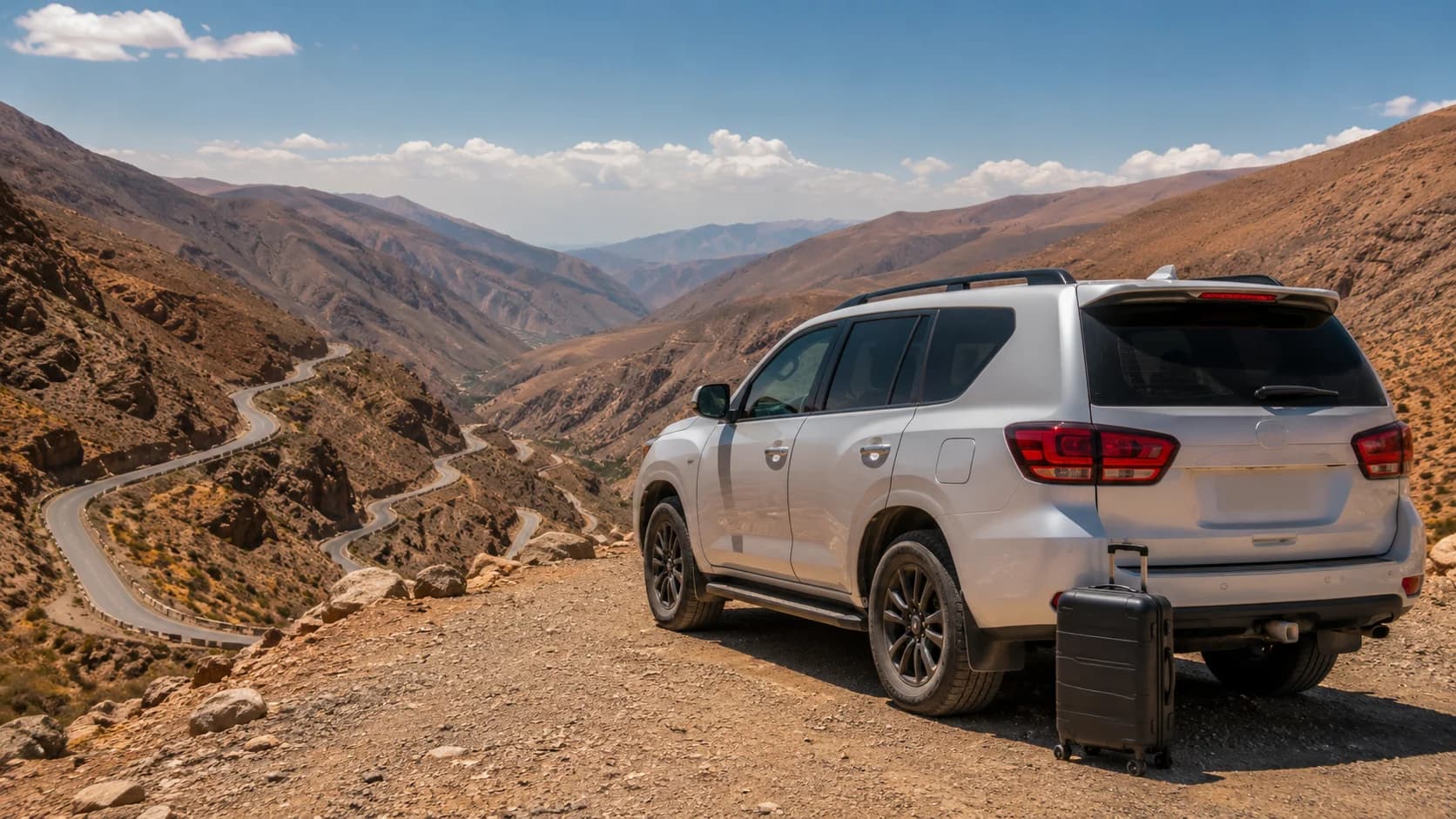
This guide shares practical driving in Marrakech tips from people who drive these roads daily, helping you feel comfortable behind the wheel whether you're collecting a rental car at the airport, exploring Gueliz, or starting a road trip into the Atlas Mountains.
The Marrakech Driving Mindset: Calm and Assertive Wins
The biggest mistake visitors make is approaching Marrakech traffic with fear.
The second biggest mistake is driving too aggressively.
The best approach sits somewhere in the middle.
What Local Drivers Expect
Drivers in Marrakech generally expect you to:
- Make decisions confidently
- Maintain a predictable speed
- Signal your intentions
- Keep moving when appropriate
- Stay aware of your surroundings
Hesitation often causes more confusion than decisive driving.
For example, if you're entering a roundabout and have a safe gap, local drivers expect you to take it. Waiting too long can create uncertainty for everyone around you.
Stay Calm
Traffic can look busy, especially around:
- Gueliz
- Avenue Mohammed V
- Bab Doukkala
- Route de Casablanca
- Marrakech Menara Airport
However, most city traffic moves at relatively moderate speeds.
Take a deep breath, stay focused, and remember that local drivers navigate these roads every day.
Don't Rush
Moroccan cities reward patience.
If you miss a turn:
- Continue safely
- Let GPS recalculate
- Avoid sudden lane changes
The few extra minutes are always better than a stressful maneuver.
How Marrakech Roundabouts Really Work
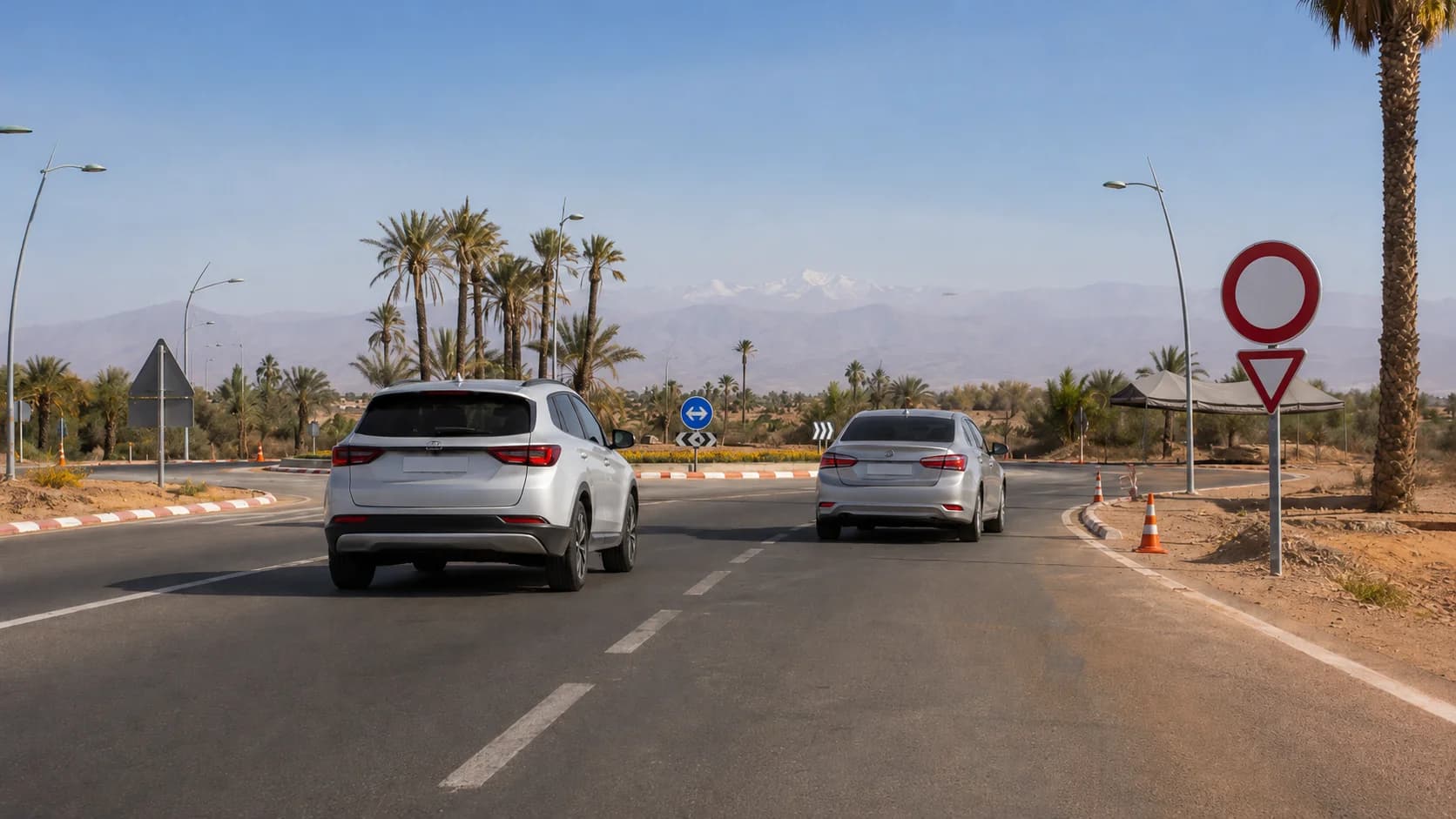
Among all Marrakech traffic tips, understanding roundabouts is probably the most valuable.
You'll encounter them everywhere.
Expect Heavy Traffic Flow
Many roundabouts in Marrakech are large and busy, particularly near:
- Airport routes
- Gueliz
- Major boulevards
- Shopping districts
Traffic can appear intimidating at first because vehicles enter continuously.
Look Beyond the Car in Front
Local drivers constantly scan:
- Vehicles approaching from multiple angles
- Scooters filtering through traffic
- Pedestrians near exits
Train yourself to look ahead rather than focusing only on the vehicle directly in front.
Signal Early
Signaling clearly helps everyone understand your intentions.
When exiting:
- Signal before your exit
- Check mirrors
- Expect scooters nearby
Don't Stop Unnecessarily
Stopping suddenly inside a roundabout creates confusion.
Keep moving smoothly whenever it is safe to do so.
Practice During Quiet Hours
If you're nervous, take your first drives:
- Early morning
- Mid-morning
- Late evening
Traffic is lighter and roundabouts are easier to learn.
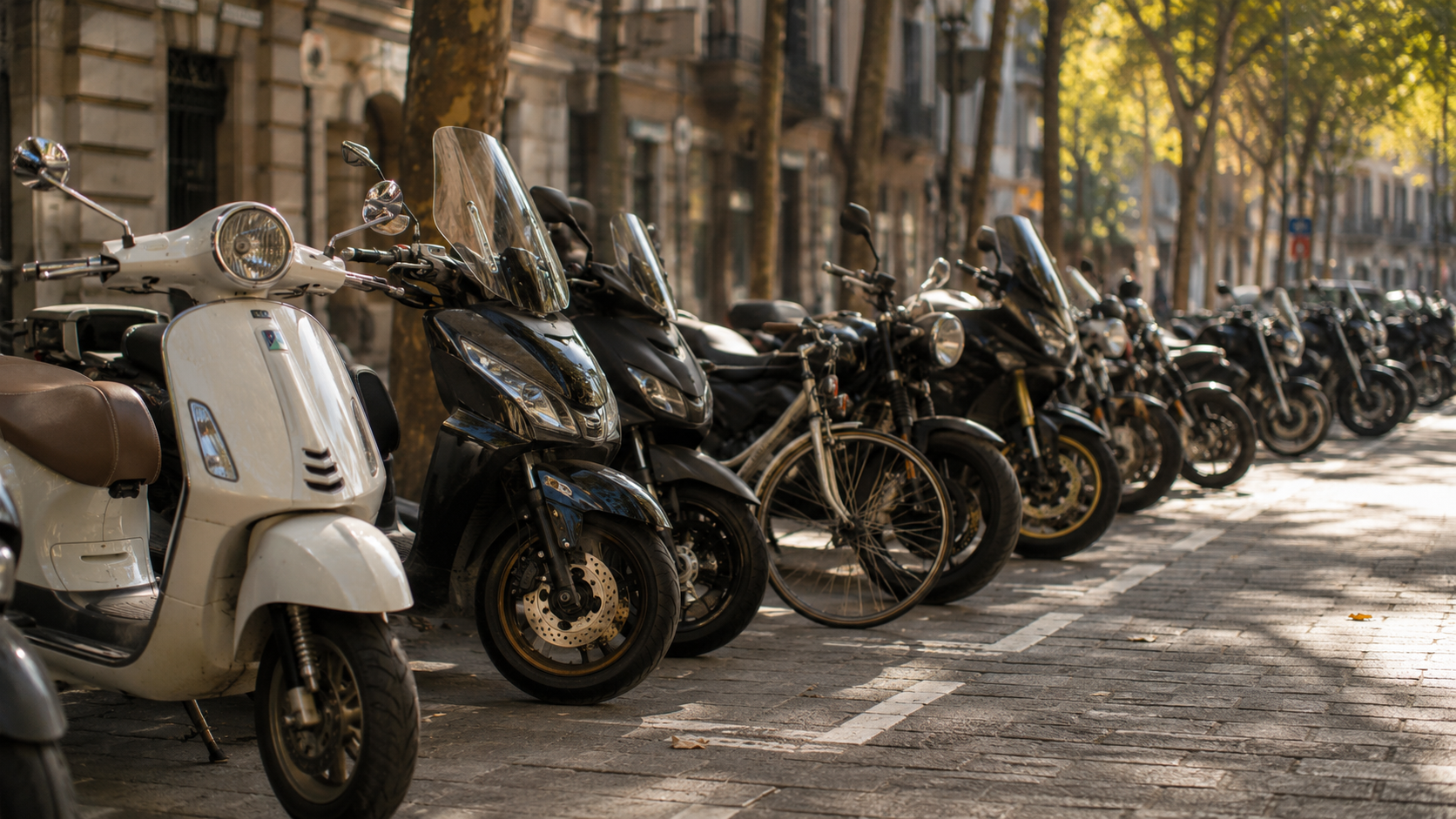
Scooters, Motos and Bikes: Reading the Flow
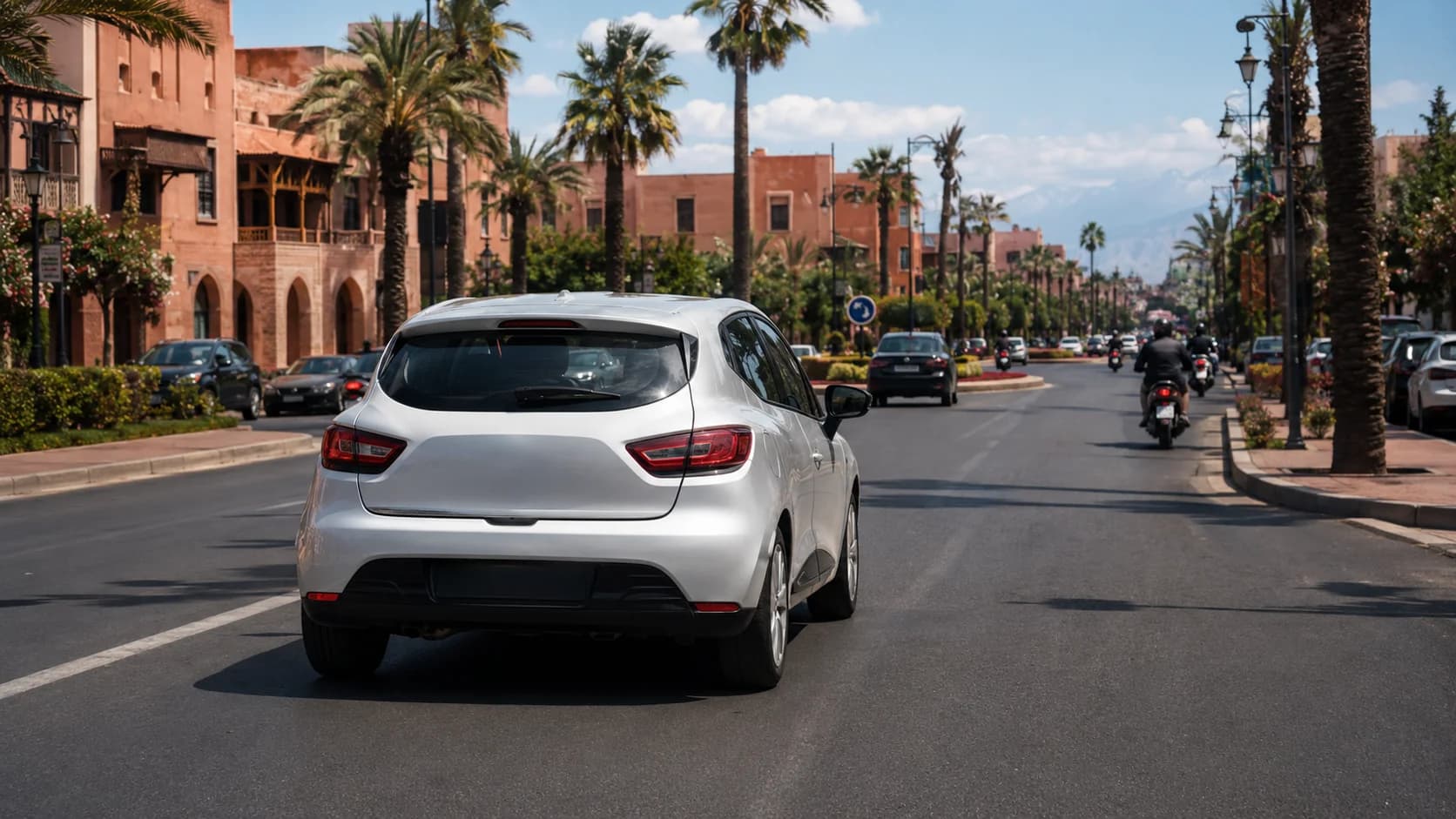
One thing every visitor notices immediately is the number of scooters.
Understanding Marrakech scooters driving behavior is essential.
Scooters Are Everywhere
You'll find scooters:
- Between lanes
- Beside parked cars
- Near curbs
- At roundabouts
- Approaching from behind
This doesn't mean they're dangerous.
It simply means you must constantly check mirrors.
Leave More Space
When stopping:
- Leave additional room around your vehicle
- Avoid crowding scooters
- Expect them to filter forward at traffic lights
Check Mirrors Before Everything
Before:
- Turning
- Changing lanes
- Parking
- Opening doors
Always check mirrors carefully.
Many scooters occupy spaces that cars normally wouldn't.
Predict Their Movement
Experienced local drivers anticipate scooter behavior.
Expect riders to:
- Move through gaps
- Overtake slowly
- Filter at intersections
The smoother your driving, the easier it becomes to share the road.
Horns, Headlights and Hand Signals Decoded
Many tourists assume horns indicate anger.
In Marrakech, that is often not the case.
The Horn Is Communication
A quick horn tap may simply mean:
- "I'm here."
- "I'm passing."
- "Be aware."
Most short horn uses are informational rather than aggressive.
Headlight Flashes
Drivers may flash headlights to indicate:
- They're approaching
- They're entering traffic
- They want to continue through a junction
- They're making their presence known
Treat flashes as communication, not confrontation.
Hand Signals
You'll occasionally see:
- Waving through
- Pointing directions
- Thank-you gestures
Local driving culture often relies on visual communication.
Being observant helps enormously.
Stay Relaxed
Visitors sometimes become nervous when hearing frequent horns.
After a day or two you'll realize much of it is simply part of everyday traffic communication.
Lane Discipline (And Where It Disappears)
Road markings exist throughout Marrakech, but local traffic sometimes uses available space flexibly.
Main Roads
Major boulevards generally follow clear lane discipline.
Examples include:
- Avenue Mohammed VI
- Route de Casablanca
- Airport roads
- Major ring roads
Driving here feels familiar to most visitors.
Busy Intersections
Near congested junctions, traffic can become more fluid.
Drivers often:
- Position themselves early
- Create space where possible
- Adjust continuously
This may look chaotic, but there's usually an underlying flow.
Avoid Sudden Moves
The best strategy is simple:
- Hold your line
- Signal clearly
- Move gradually
Abrupt lane changes cause problems everywhere, including Marrakech.
Let Faster Drivers Go
If another driver wants to pass:
- Stay predictable
- Allow space
- Continue calmly
There is no benefit in competing for road position.
Pedestrians, Carts and the Unexpected
One rule applies throughout Morocco:
Always expect the unexpected.
Pedestrians May Cross Anywhere
People frequently cross roads outside designated crossings.
Remain especially alert near:
- Markets
- Schools
- Bus stops
- Shopping areas
Horse Carts and Hand Carts
Depending on the area, you may encounter:
- Delivery carts
- Market transport
- Horse-drawn vehicles
These move more slowly and require patience.
Tourists Can Be Unpredictable
Visitors often:
- Stop suddenly
- Step into roads while taking photos
- Focus on landmarks instead of traffic
Drive defensively around tourist zones.
Watch Parked Vehicles
A parked vehicle can suddenly:
- Pull out
- Open a door
- Release passengers
Reduce speed when passing parked rows.
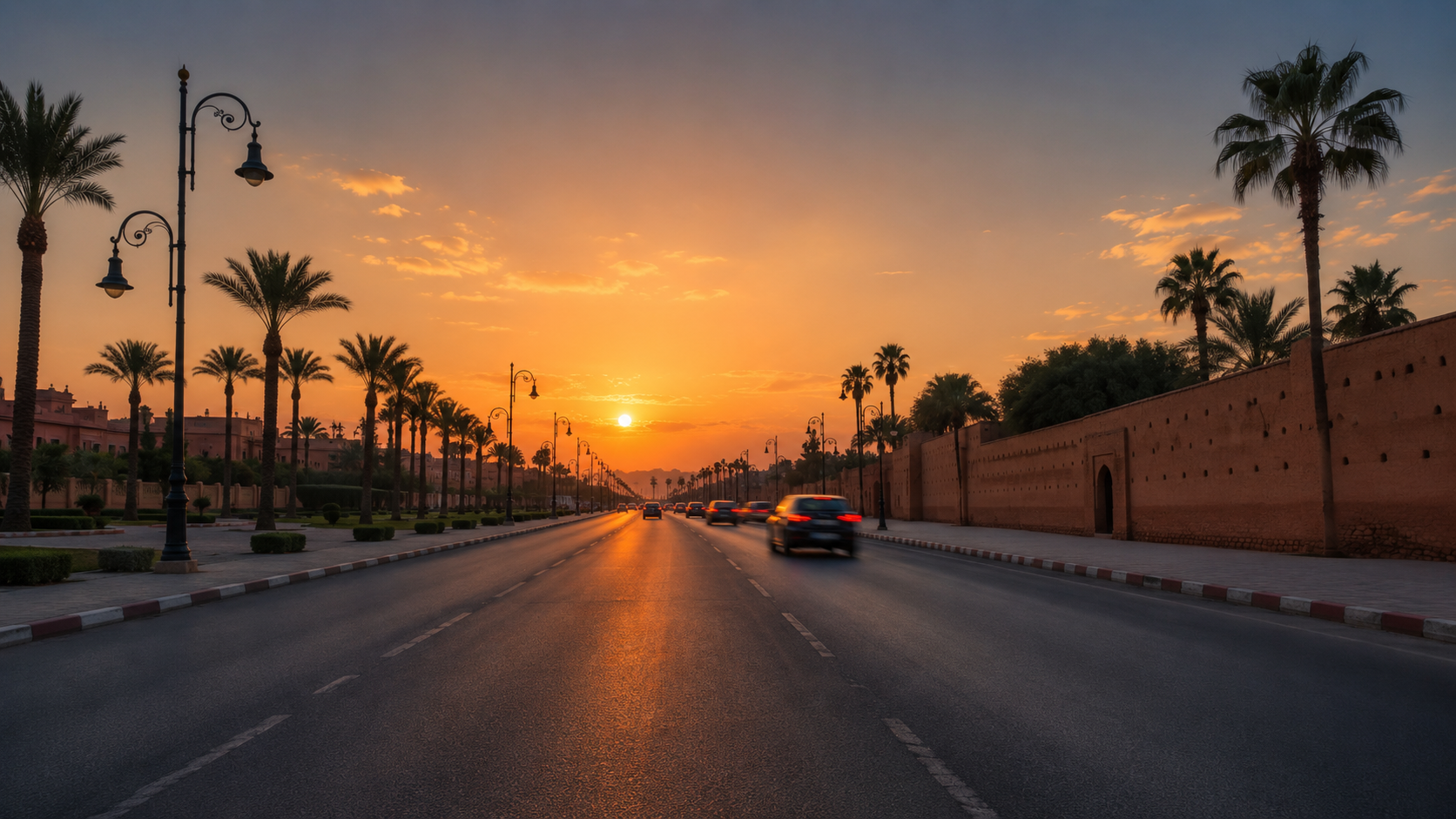
Best Times of Day to Drive in Marrakech
Timing makes a huge difference.
Easiest Driving Periods
Most visitors find these times easiest:
Early Morning
- Less traffic
- Easier parking
- Cooler temperatures
Mid-Morning
- Steady but manageable flow
Late Evening
- Roads often become calmer
Busiest Periods
Expect heavier congestion:
- Around school runs
- Late afternoon
- End-of-workday periods
Airport Travel
Allow extra time when driving to or from Marrakech Airport.
Traffic conditions can change quickly depending on:
- Flight schedules
- Tourist arrivals
- Seasonal demand
Leaving early reduces stress significantly.
Streets and Areas to Avoid by Car
Some parts of Marrakech simply aren't enjoyable to drive through.
The Medina
This is the most important rule.
Avoid attempting to drive deep into the medina.
Many streets are:
- Extremely narrow
- Congested
- Difficult to navigate
- Not designed for cars
Jemaa el-Fnaa Surroundings
Roads around the main square can become crowded with:
- Pedestrians
- Scooters
- Delivery traffic
- Visitors
Parking nearby and walking is usually easier.
Souk Areas
Market districts are best explored on foot.
Trying to drive close often creates unnecessary stress.
Choose Accessible Districts
For easier driving and parking, consider staying in:
- Gueliz
- Hivernage
- Palmeraie
- Resort areas outside the center
Quick Reactions: Defensive Driving Habits That Work
Defensive driving is the secret to a relaxed Marrakech experience.
Scan Constantly
Keep checking:
- Mirrors
- Side streets
- Pedestrian activity
- Scooter movement
Awareness prevents surprises.
Leave Space
Maintain a comfortable gap ahead.
Extra space gives you more reaction time.
Plan Ahead
Look further down the road.
You'll spot:
- Traffic slowdowns
- Roundabouts
- Pedestrians
- Lane changes
before they become immediate problems.
Stay Predictable
Other drivers can work around almost anything except unpredictability.
Signal clearly.
Brake smoothly.
Maintain steady positioning.
Keep Emotions Out of Driving
If another driver makes an unexpected move:
- Stay calm
- Continue safely
- Focus on your own driving
Stress rarely improves decision-making.
When to Just Park and Walk
Sometimes the smartest driving decision is not driving at all.
Explore the Medina on Foot
Walking allows you to enjoy:
- Souks
- Riads
- Cafés
- Historic sites
without worrying about parking.
Use Parking as a Base
Many experienced visitors:
- Park near the medina.
- Spend several hours exploring.
- Return to the vehicle afterward.
Save the Car for What It Does Best
Rental cars are perfect for:
- Airport transfers
- Day trips
- Mountain drives
- Coastal routes
- Multi-city journeys
They are less useful inside the oldest parts of Marrakech.
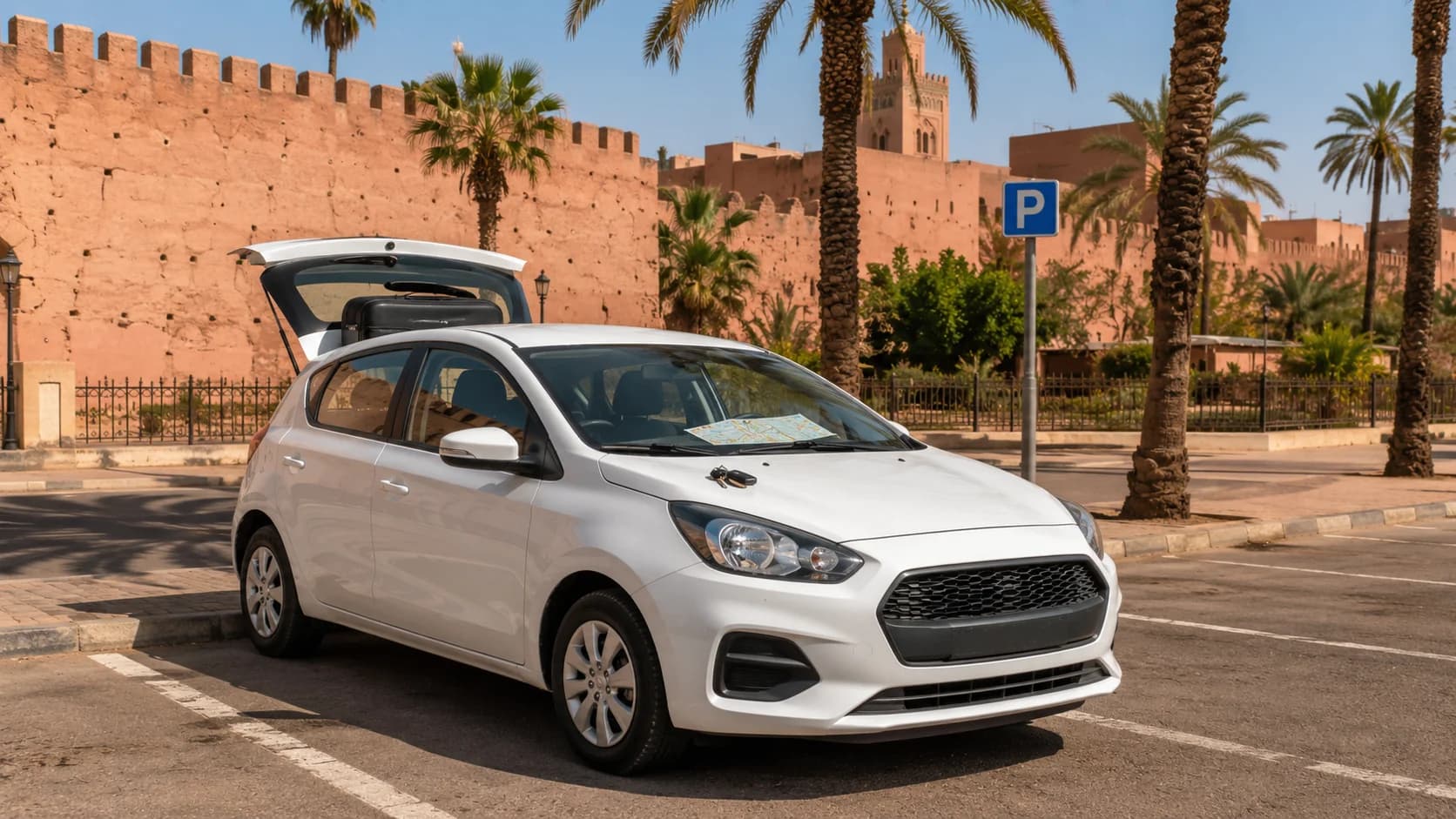
Why Compact Cars Are the Best Choice for Marrakech
After years of serving visitors in Marrakech, one recommendation consistently stands out:
Choose a compact vehicle whenever possible.
Advantages include:
- Easier parking
- Better maneuverability
- Lower fuel costs
- Less stress in traffic
- Better visibility in tight spaces
For most couples and small families, a hatchback is often the ideal city car.
Explore available options here:
Frequently Asked Questions
Is driving in Marrakech stressful for tourists?
It can feel intimidating initially, but most visitors adapt quickly. Understanding local traffic flow, staying calm, and driving predictably make a huge difference.
How do roundabouts work in Marrakech?
Roundabouts are common throughout the city. Watch traffic carefully, signal your exits clearly, and keep moving smoothly when it is safe to do so.
Why do drivers flash their headlights?
Usually as a communication tool. Drivers may be indicating their presence, signaling intentions, or acknowledging other road users.
Are scooters dangerous to drive near?
Not necessarily. The key is awareness. Check mirrors frequently, leave space, and expect scooters to filter through traffic.
What's the best time to drive in the city?
Early mornings and mid-mornings are often the easiest periods with lighter traffic and simpler parking.
Should I drive inside the Medina?
Generally no. Most areas are not suitable for cars. It's usually easier to park nearby and continue on foot.
What car size is easiest for Marrakech traffic?
Compact hatchbacks are typically the easiest option thanks to their maneuverability, fuel efficiency, and ability to fit into smaller parking spaces.
Drive Marrakech With Confidence
Marrakech traffic isn't as intimidating as its reputation suggests. Once you understand the local rhythm, roundabouts, scooter flow, and communication style, driving becomes surprisingly manageable.
A nimble, new-model hatchback makes Marrakech traffic far easier. MarHire Car Marrakech offers compact city cars with full insurance included, no deposit, unlimited kilometers, free cancellation, and free delivery to your hotel or Marrakech Airport.
Compare available vehicles and find the right city car for your Morocco adventure in just a few minutes.