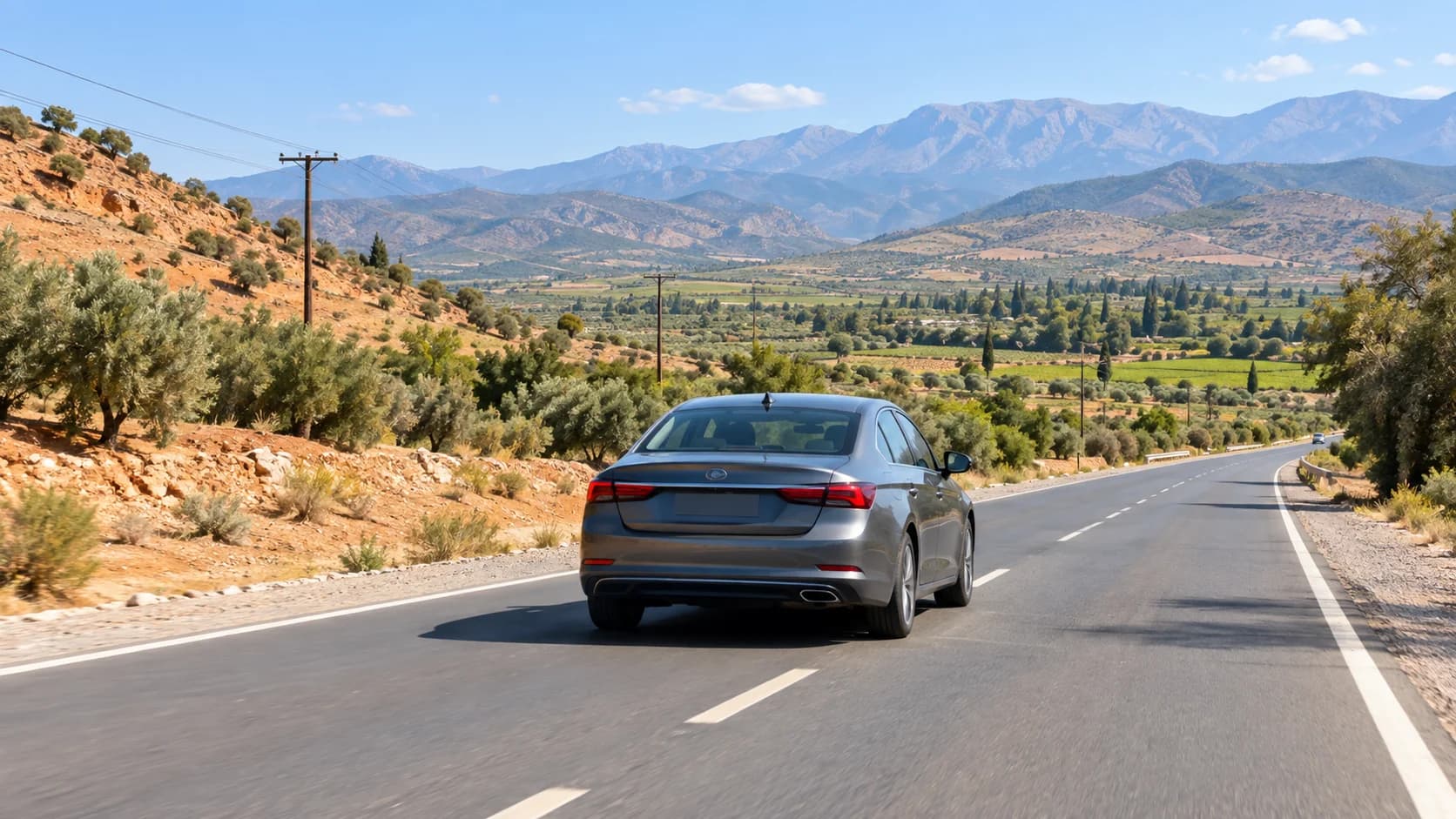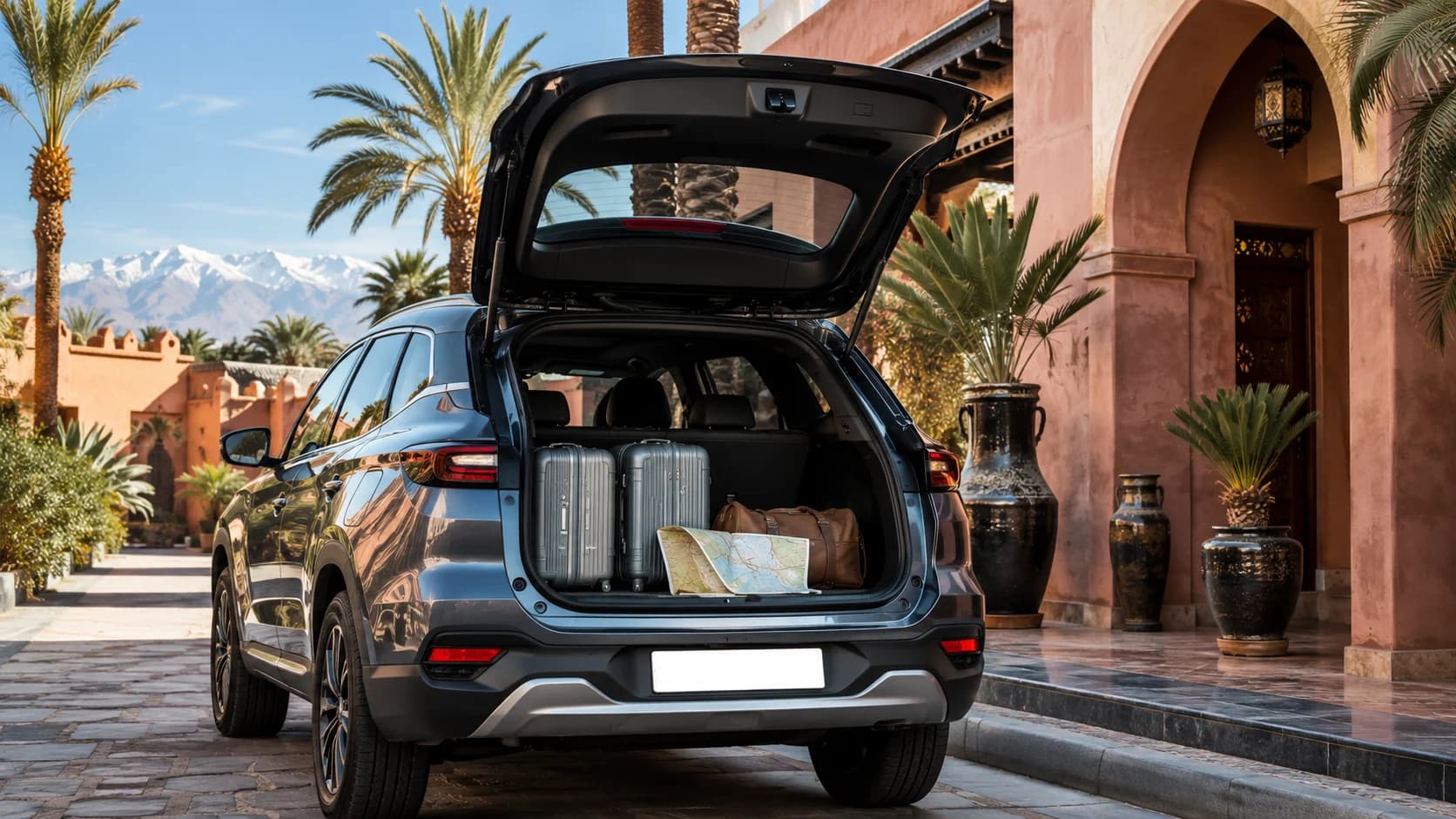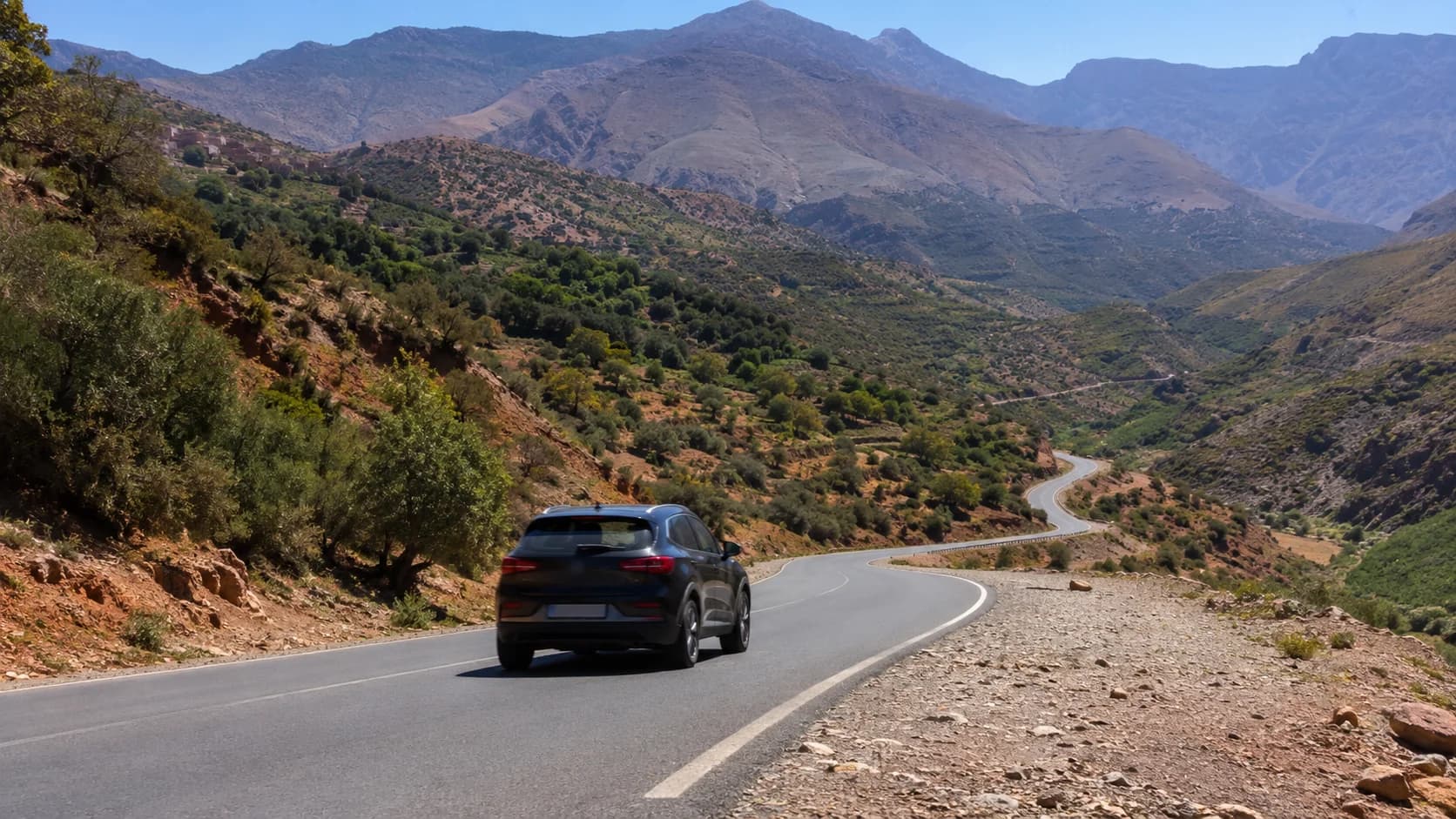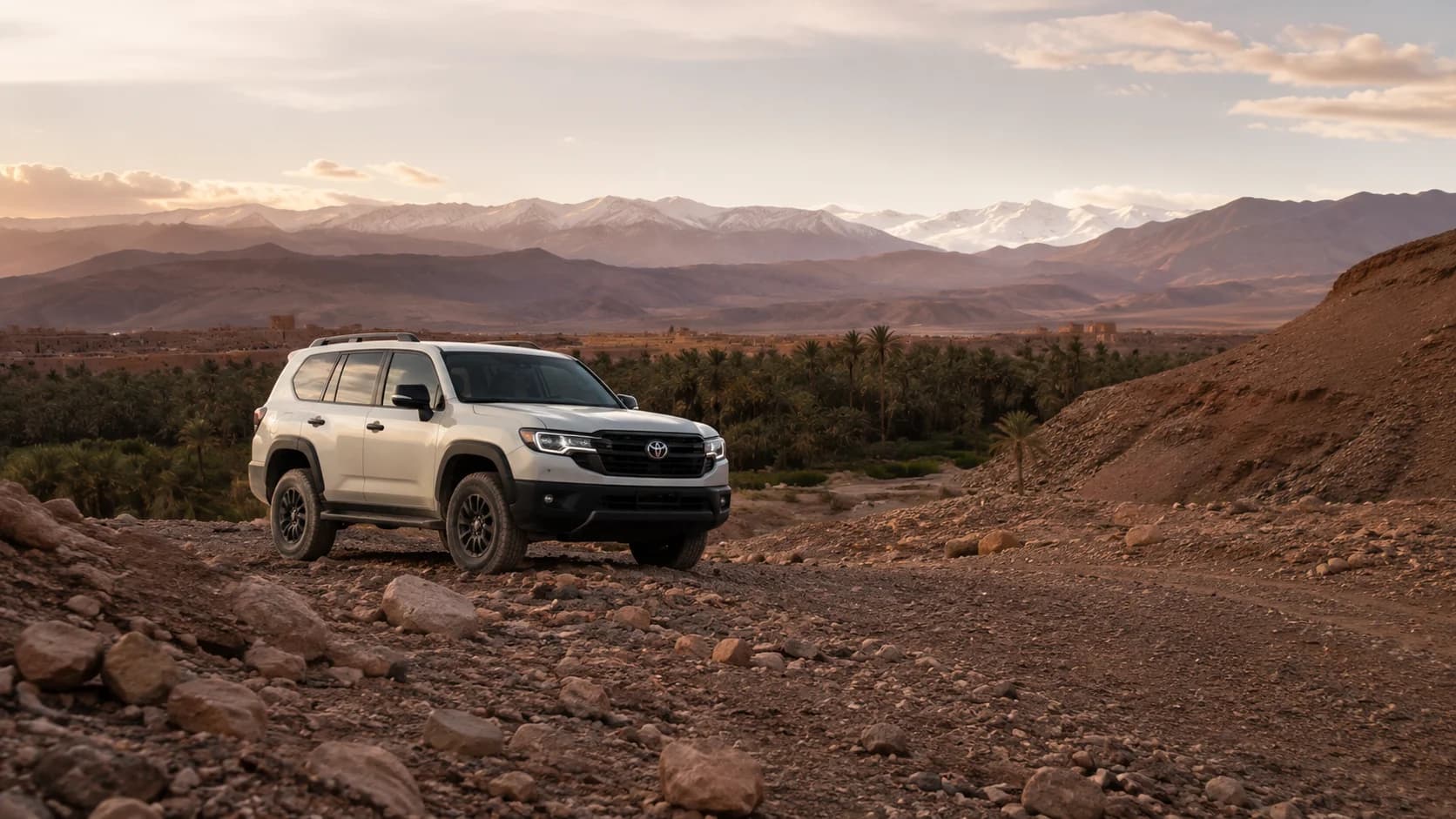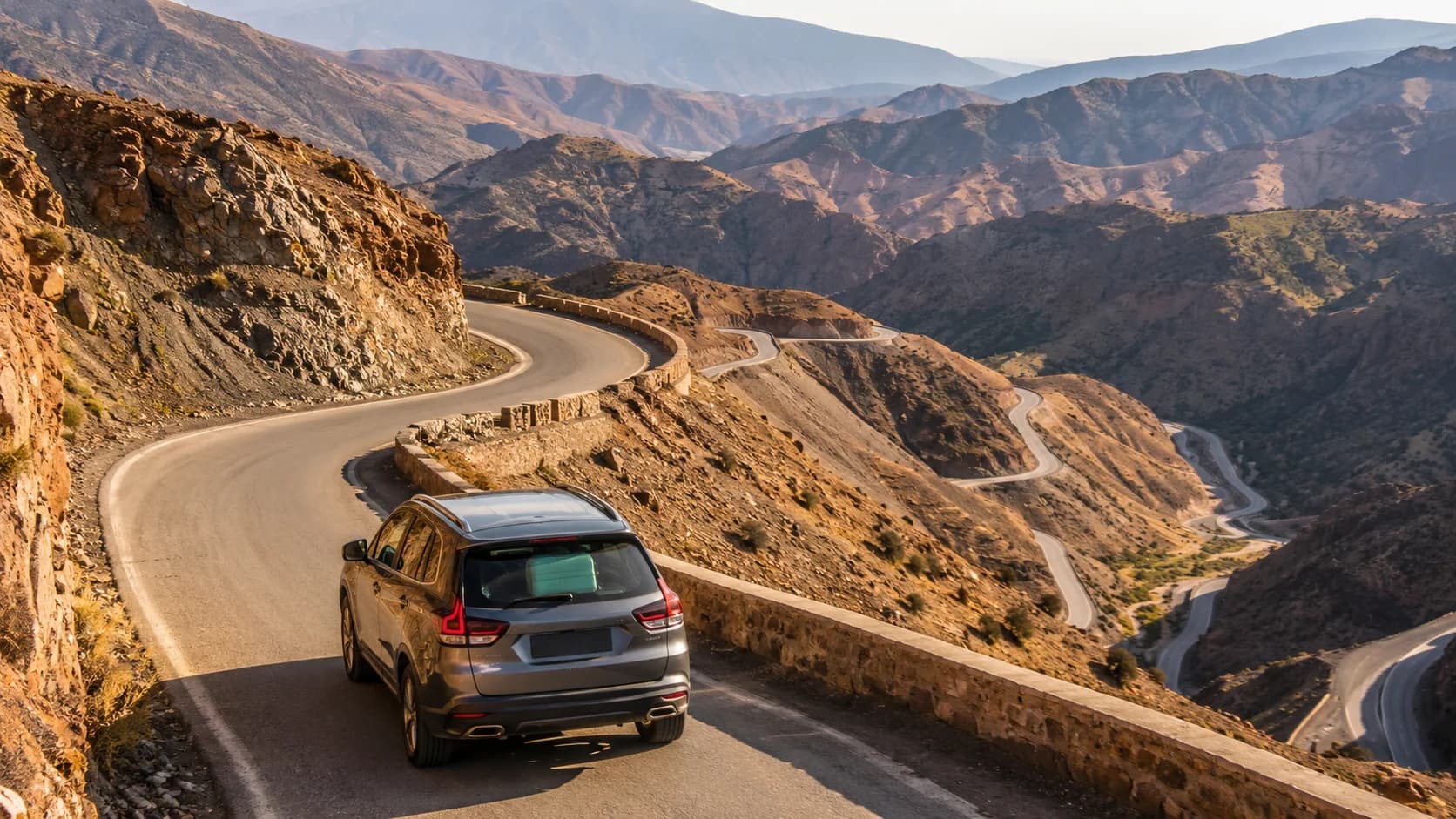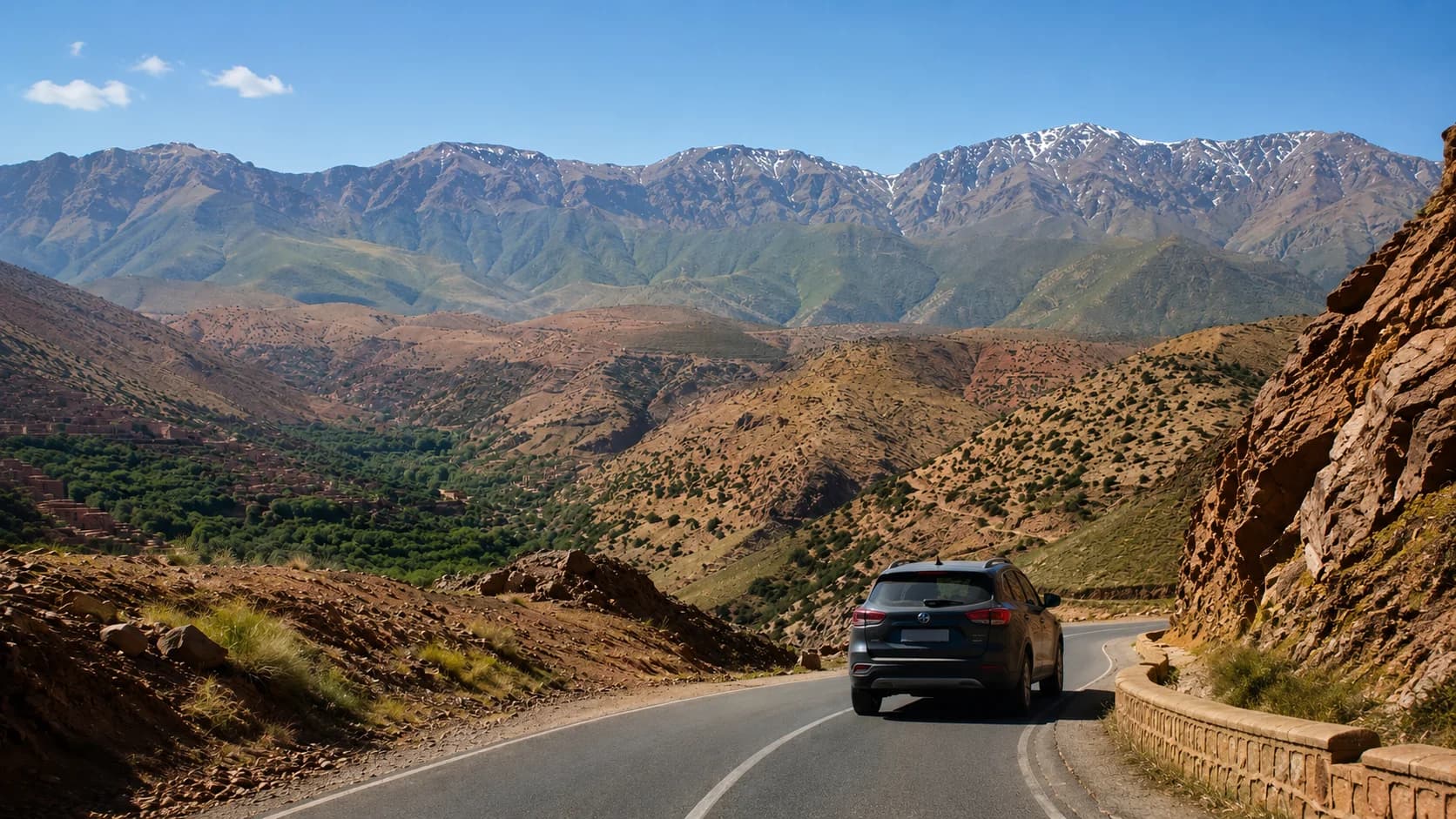






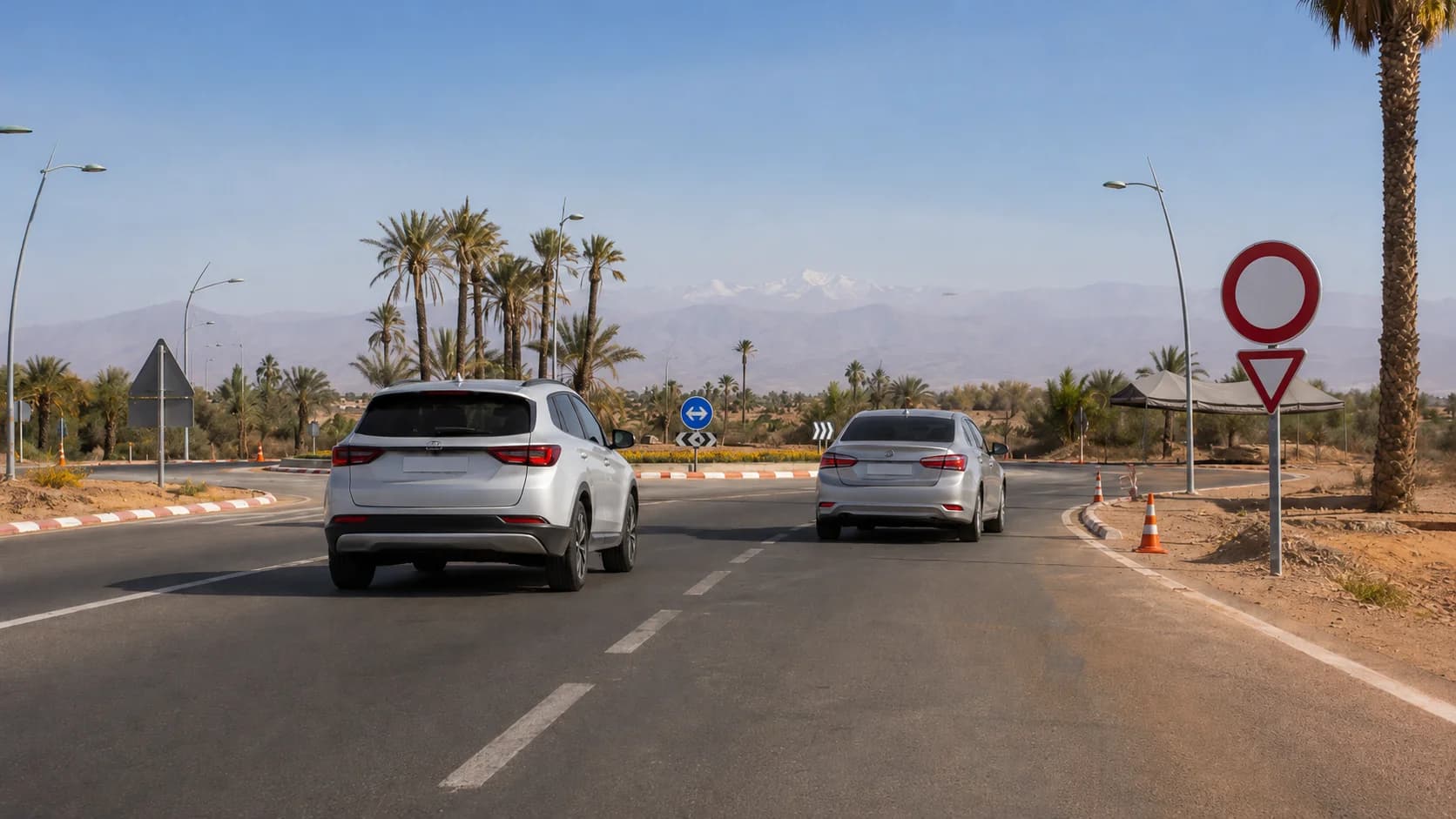
Driving beyond Marrakech is one of the best ways to explore Morocco at your own pace, but it also means understanding a few local road habits before you leave the city. The most important driving rules Morocco visitors should know are simple: respect speed signs, slow down for checkpoints, read roundabouts carefully, keep documents ready and never treat rural roads like open highways.
Table of Contents
-
The rules that matter most for visitors
-
Speed limits in town, on national roads and autoroutes
-
Speeding fines and how police enforce them
-
Police checkpoints: what to expect and how to behave
-
Roundabout priority: the confusing part
-
Road signs and language on Moroccan roads
-
Seatbelts, phones and zero-alcohol rules
-
Headlight flashing and local road etiquette
-
Staying calm and legal on every drive
-
FAQs
When driving from Marrakech to places like Agafay, Ourika, Essaouira, Ouarzazate or the Atlas Mountains, keep your speed conservative, watch for sudden limit changes at village entrances, stop politely at police checkpoints and follow road signs over driver habits. Moroccan speed limits can be 20, 40 or 60 km/h in built-up areas, generally 80 km/h on national roads with some 100 km/h sections, and 120 km/h on autoroutes. NARSA, Morocco’s national road-safety agency, lists these limits and explains that speeding fines increase depending on how far above the limit you drive.
1. The Rules That Matter Most for Visitors
Most tourists do not get into trouble because Moroccan roads are impossible. They get into trouble because they miss small details: a speed sign at the entrance to a village, a police stop sign, a “Cédez le passage” sign before a roundabout or a sudden change from open road to urban traffic.
The first rule is to drive on the right and overtake on the left only when it is clearly safe. The second rule is to follow posted signs even when local drivers seem faster. The third rule is to stay patient. Scooters, pedestrians, animals, taxis, delivery vans and buses can all appear quickly, especially around Marrakech exits and smaller towns.
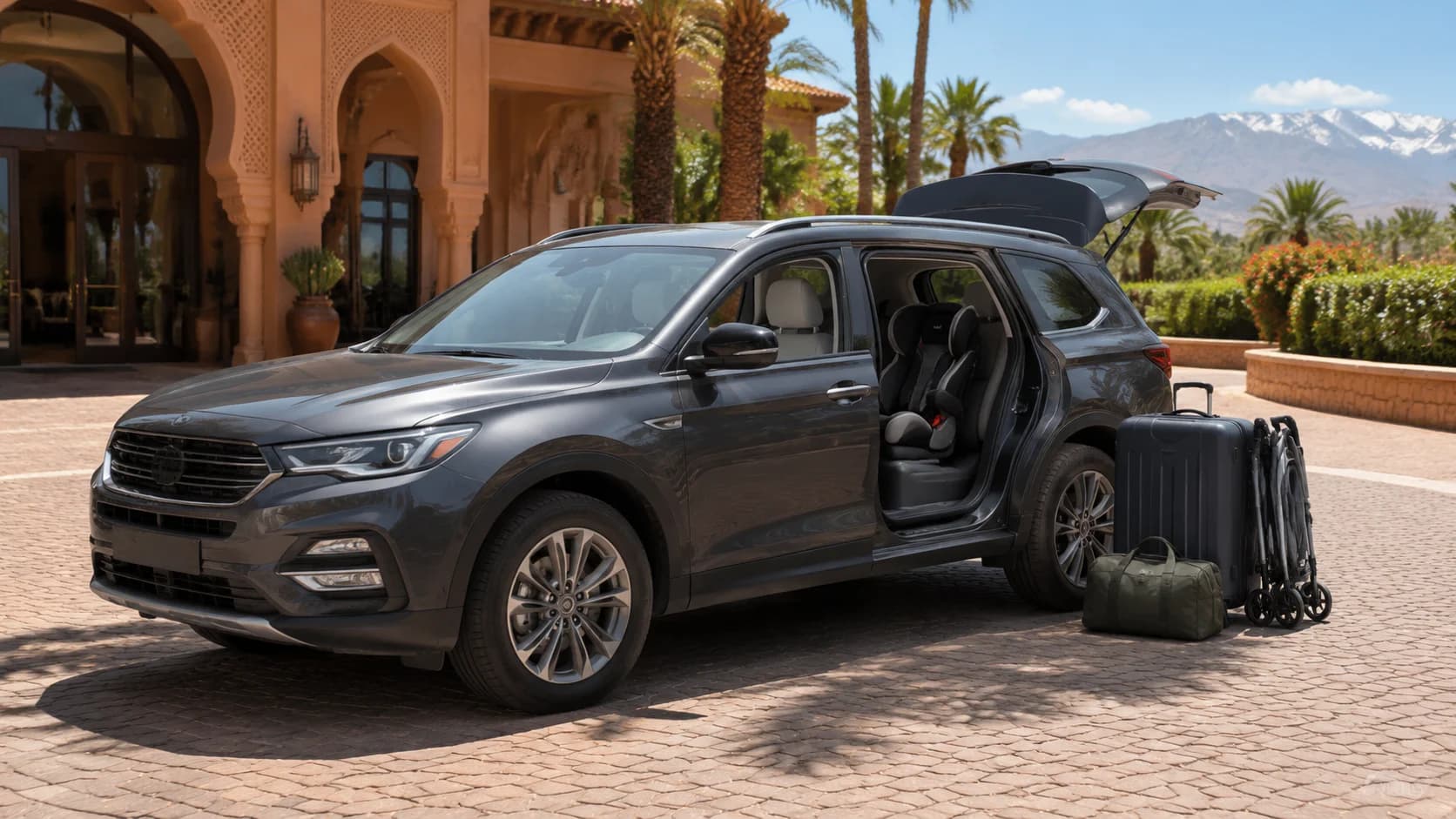
If you are planning a simple road trip, a small car through cheap car rental Marrakech is usually enough for city exits, Agafay and paved day trips. For mountain routes, family luggage or higher ground clearance, SUV rental Marrakech gives more comfort and confidence.
2. Speed Limits in Town, on National Roads and Autoroutes
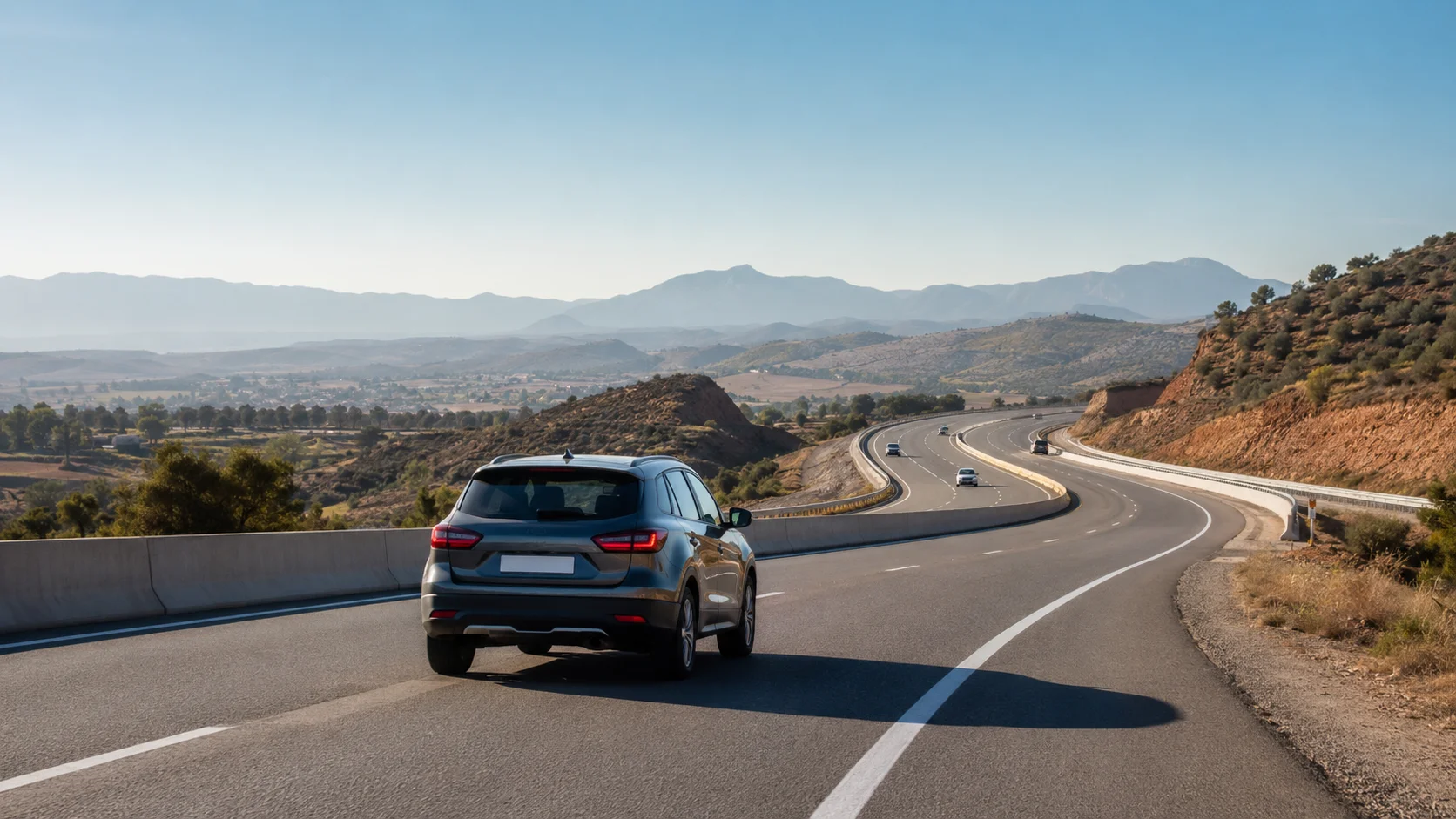
Speed limits in Morocco are not one single number. They depend on the road type, the surrounding area and the sign in front of you. NARSA explains that built-up areas may be limited to 20, 40 or 60 km/h depending on the location. National roads are generally limited to 80 km/h, although some sections can allow 100 km/h. Autoroutes are limited to 120 km/h.
For tourists leaving Marrakech, the biggest mistake is not usually high-speed motorway driving. It is the change of rhythm. You may be on a fast road, then suddenly pass shops, houses, a school, a market entrance or a police control zone. That is where limits often drop and enforcement becomes more likely.
For relaxed driving, use this simple rule: in Marrakech and villages, slow down early; on national roads, do not assume 100 km/h unless the signs allow it; on autoroutes, keep to 120 km/h or below and stay out of the fast lane unless overtaking.
3. Speeding Fines and How Police Enforce Them
Morocco enforces speed limits through police checks, mobile controls and fixed radar systems. NARSA lists the speeding penalty scale clearly: less than 20 km/h over the limit is a 300 MAD fine; 20 to under 30 km/h over is a 500 MAD fine with 2 points; 30 to under 50 km/h over is a 700 MAD fine with 4 points; and 50 km/h or more above the limit is treated as a more serious offense.
For rental drivers, the practical advice is simple: do not rely only on GPS speed warnings. Watch the road signs, especially when approaching towns, junctions, petrol stations and roundabouts. If there is a fine, ask politely for the official explanation and receipt. Morocco also has an online infractions platform for radar-related violations, and NARSA says fixed-radar offenses can include fines, point withdrawal and online payment options.
A comfortable sedan rental Marrakech is a good choice for autoroute and national-road driving because it feels stable without encouraging the heavy, fast driving style that causes most fines.
4. Police Checkpoints: What to Expect and How to Behave
Police checkpoints Morocco visitors see on the road are usually routine. They may appear at city exits, town entrances, roundabouts, junctions and longer intercity routes. Canada’s official travel advice for Morocco notes that checkpoints are frequent and advises travelers to carry identification and vehicle documents at all times.
When you approach a checkpoint, slow down before the officer signals. Do not roll through fast. Look for hand signals, stop signs or cones. If waved through, continue slowly. If asked to stop, pull over safely, lower the window and stay polite.
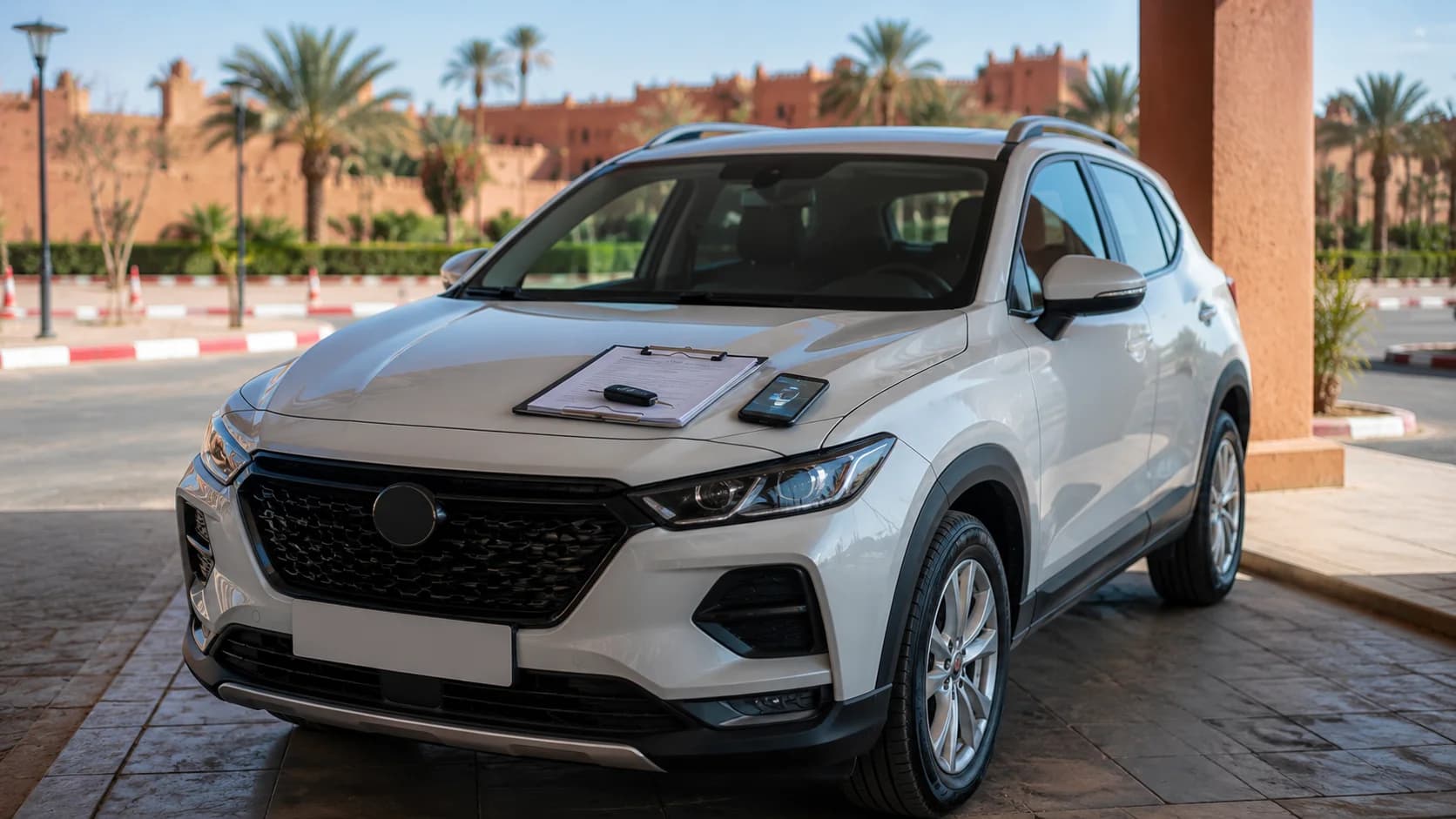
Keep these documents easy to reach: passport or ID, driving license, rental agreement, insurance document and vehicle registration paper. With a MarHire Car Marrakech rental, the handover team can show you which documents are in the car before you leave, so you are not searching at the roadside.
Most checkpoint conversations are short: where are you coming from, where are you going and can I see your papers? Answer calmly. Do not argue, do not make jokes about police and do not offer unofficial payments. If there is a legal fine, ask for the official receipt.
5. Roundabout Priority: The Confusing Part
Roundabout priority Morocco rules can feel confusing because not every circular junction works the same way. NARSA explains the difference between a “carrefour à sens giratoire” and a “rond-point”: in the first, vehicles already on the circle have priority; in the second, priority to the right applies, meaning vehicles entering may have priority.
That is the legal reason many tourists feel uncertain. In real driving, the safest approach is to slow down, read the signs and observe the traffic before entering. If there is a “Cédez le passage” sign or yield markings, give way to vehicles already circulating. If there are traffic lights, follow the lights. If there is no clear sign and local traffic is behaving differently, reduce speed and avoid forcing your way in.
Use indicators clearly. Signal right before leaving the roundabout. Do not change lanes suddenly inside the circle. If you miss your exit, continue around calmly rather than cutting across lanes.
6. Road Signs and Language on Moroccan Roads
Road signs Morocco tourists see are usually understandable because symbols follow familiar international-style designs. Direction signs often use Arabic and French, and some routes also include Amazigh/Tifinagh, especially on certain motorway signs. Morocco’s road-sign system is regulated through official signage rules, and common sign types include warning signs, priority signs, prohibition signs, speed limits and police or gendarmerie stop signs.
The most important words for visitors are simple. “Cédez le passage” means give way. “Ralentir” means slow down. “Douane” means customs. “Gendarmerie” refers to the gendarmerie. “Police” is clear. “Péage” means toll.
Do not wait until the last second to read signs. On roads leaving Marrakech, direction boards can appear before busy junctions, and lane choices matter. If your route is unfamiliar, let the passenger handle navigation or set your map before moving. Never hold the phone while driving.
7. Seatbelts, Phones and Zero-Alcohol Rules
Seatbelts are mandatory and should be worn by everyone in the vehicle, including rear passengers. NARSA states that not wearing a seatbelt can lead to a fine from 300 to 500 MAD and 1 point withdrawn if the offender is the driver.
Using a phone while driving is also treated as a serious risk. NARSA says mobile-phone use while driving can lead to a severe fine, point withdrawal and even license suspension if an accident involves phone use. The safest rule is simple: mount the phone for navigation before moving, use voice guidance and stop somewhere safe if you need to touch the screen.
For alcohol, do not take chances. NARSA describes driving in a proven state of drunkenness as a criminal offense, with penalties that can include loss of 6 points, license withdrawal from six months to one year and fines up to 10,000 MAD. For tourists, the practical rule is zero alcohol before driving.
8. Headlight Flashing and Local Road Etiquette
On Moroccan roads, oncoming drivers may flash their headlights for different reasons. Sometimes it is a warning about a police checkpoint, radar, animals, a hazard, roadworks or your headlights. It is not an invitation to speed up. Treat it as a reason to become more alert and slow down gently.
Local road etiquette is based on predictability. Keep right when you are not overtaking. Do not block the left lane on dual carriageways or autoroutes. Use indicators early. Leave extra space for scooters and taxis. At night, reduce speed because pedestrians, cyclists and animals can be harder to see outside city areas.
When a faster driver comes close behind you, do not panic. Stay steady, keep your lane and let them pass only when the road makes it safe. Your job is not to drive like locals. Your job is to drive legally and calmly.
9. Staying Calm and Legal on Every Drive
The easiest way to stay legal when leaving Marrakech is to build extra time into your route. Do not plan a tight schedule from Marrakech to Essaouira, Ouarzazate or Ourika. When you are rushed, you miss speed signs, roll too fast into roundabouts and become nervous at checkpoints.
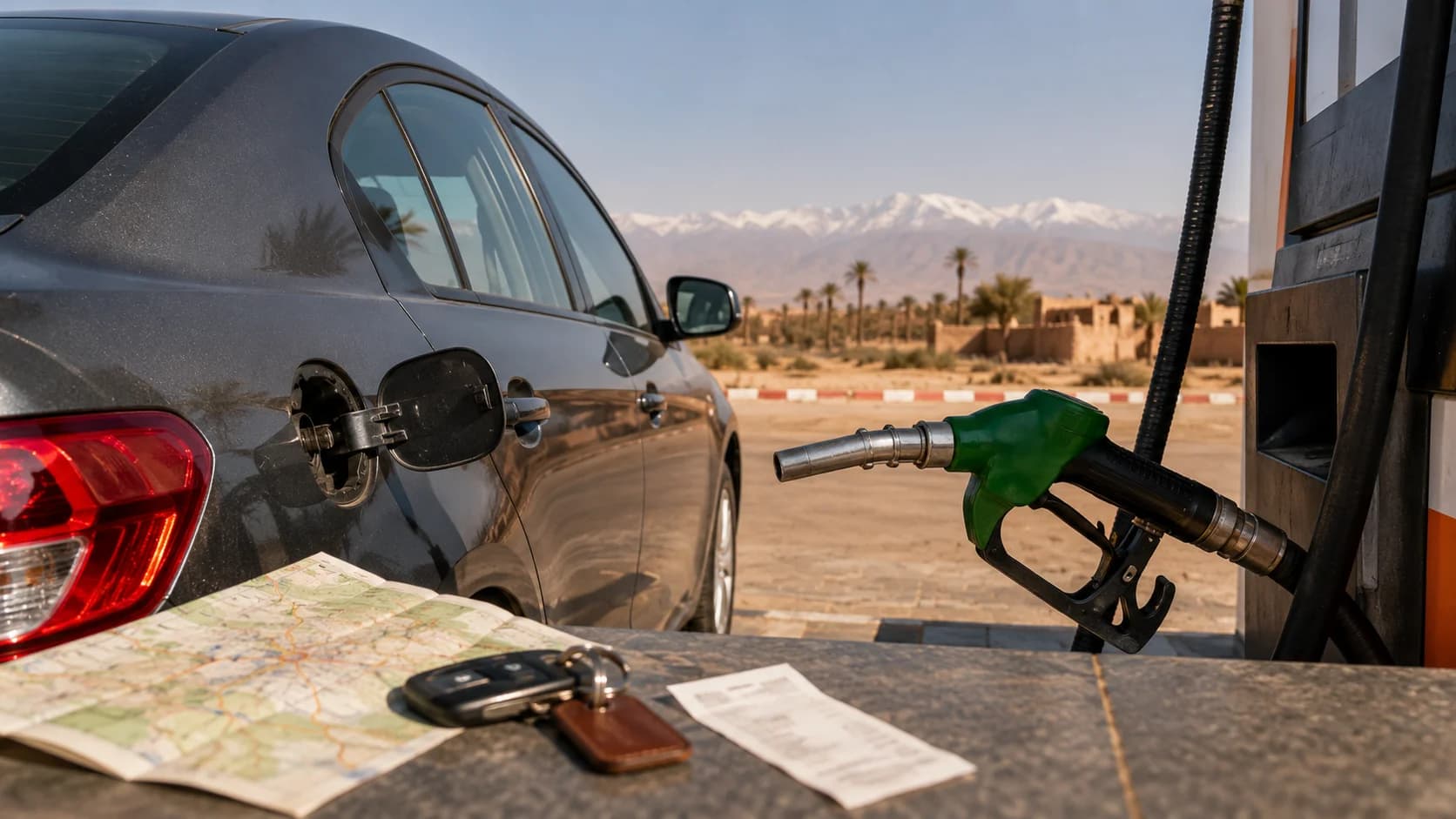
Before leaving, check fuel, tires, lights, documents and your route. Take photos at handover, understand your insurance and ask the rental team where the papers are kept. Every MarHire Car Marrakech rental includes full insurance and 24/7 support, so if you ever have a question at a checkpoint or during a drive, you can ask for help instead of guessing.
Driving out of Marrakech is not about being afraid of Moroccan roads. It is about understanding the rhythm. Respect the limits, stay polite with police, read roundabouts carefully and keep your attention on the road. Do that, and your self-drive trip becomes much easier.
FAQs
What are the speed limits in Morocco?
In built-up areas, limits can be 20, 40 or 60 km/h depending on the zone. On national roads, the limit is generally 80 km/h, with some sections allowing 100 km/h. On autoroutes, the maximum is 120 km/h. Always follow posted signs because local limits can change quickly.
What happens at a police checkpoint in Morocco?
You slow down, follow the officer’s signal and either continue or stop. If stopped, you may be asked for your driving license, passport or ID, rental contract and vehicle papers. Checkpoints are common, and official Canadian travel advice says drivers should carry identification and vehicle documents at all times.
What is the fine for speeding in Morocco?
NARSA lists speeding fines by how far above the limit you drive: 300 MAD for less than 20 km/h over, 500 MAD and 2 points for 20 to under 30 km/h over, 700 MAD and 4 points for 30 to under 50 km/h over, and more serious legal treatment for 50 km/h or more above the limit.
Who has priority on a Moroccan roundabout?
It depends on the type of circular junction and the signs. NARSA explains that in a “carrefour à sens giratoire,” vehicles already on the circle have priority. In a traditional “rond-point,” priority to the right can apply. The safest tourist habit is to slow down, check for yield signs, obey traffic lights and avoid forcing entry.
Are road signs in Morocco in English?
Usually no. Road signs are commonly in Arabic and French, with symbols that are easy to recognize. Some routes also show Amazigh/Tifinagh. Tourists can still navigate well because speed signs, stop signs, warning signs, arrows and motorway signs use familiar visual formats.
Is there a zero-alcohol limit for drivers in Morocco?
The safest rule for visitors is zero alcohol before driving. NARSA says driving in a proven state of drunkenness is a criminal offense and can lead to severe penalties, including point loss, license withdrawal and a fine up to 10,000 MAD.
Why do oncoming cars flash their headlights?
It can mean there is a police checkpoint, radar, hazard, animals, roadworks or another issue ahead. Do not treat flashing headlights as permission to speed. Slow down gently, check your mirrors and become more alert.
Can the police fine tourists on the spot?
Yes, tourists can be fined if they break road rules. If this happens, stay polite and ask for the official explanation and receipt. For radar-based infractions, NARSA also describes online consultation and payment options through Morocco’s infractions platform.
Are seatbelts mandatory in the back seat?
Yes, passengers should wear seatbelts in all seats. NARSA states that not wearing a seatbelt can result in a fine and point withdrawal if the offender is the driver.
Is using your phone while driving illegal in Morocco?
Yes. NARSA warns that phone use while driving is a serious offense that can lead to fines, point withdrawal and stronger consequences if an accident is linked to phone use. Set your navigation before moving and stop safely before touching your phone.
Drive Easy and Legal Beyond Marrakech
A self-drive trip from Marrakech should feel exciting, not stressful. Choose the right car, keep your documents ready, follow road signs and drive with patience. With MarHire Car Marrakech, every rental includes full insurance and 24/7 support, so you are covered if you ever have a question on the road, at a checkpoint or before leaving the city.